Hall of Fame Ethics… Rock and Roll Hall of Fame,That Is

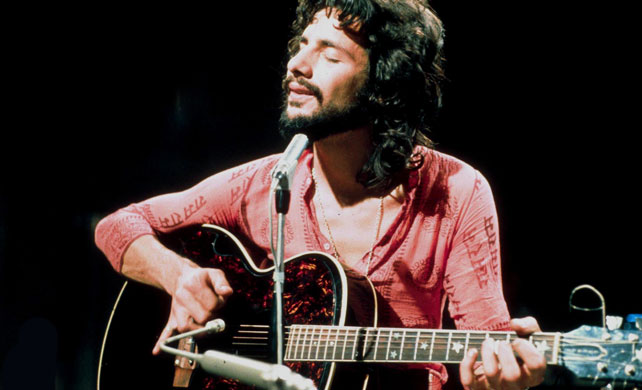
Cat Stevens

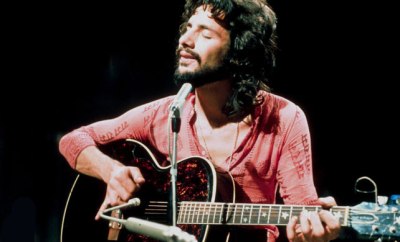
Conservative blogress Kathy Shaidle pleaded with voters not to enshrine Yusuf Islam, a.k.a Cat Stevens, into Cleveland’s Rock and Roll Hall of Fame, and then, when they added him anyway, expressed her disgust. Her objections were not based on music criticism (as would be justified with nominees like Yes), nor on Cat’s honor blocking more worthy nominees (like, say, The Zombies). She objects to Yusuf Islam on political and ethical grounds, complaining that during his activist days and perhaps even now, he qualified as a Muslim radical.

It doesn’t matter. Cat Stevens belongs in the Rock and Roll Hall of Fame because of his art, not his character. His character is irrelevant to the reach, influence and value of his art, as are his politics. The Rock and Roll Hall of Fame makes no pretense of making difficult measurements of an artist’s character, unlike the Major League Baseball Hall of Fame in Cooperstown, which has come up on Ethics Alarms frequently. Baseball players are cultural icons and societal heroes, whose symbolic exploits on the field of play evoke and inspire young people as well as the rest of us, embodying positive traits like courage, perseverance, fortitude, sacrifice, team play, loyalty, honor, fairness and honesty. As derided as it is by sportswriters and jaded fans who would like to see both the baseball Hall and its rosters filled with enabled and highly paid cheaters, felons, thugs, miscreants, deadbeat dads, and worse—like those of professional football and basketball—the character clause holds baseball players, at least those who want to be remembered as great ones, to a higher standard. And that higher standard is relevant to the game they play and our appreciation of it.

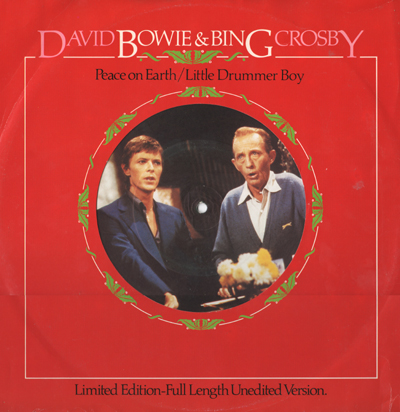
The character of artists, however, are simply accompanying trivia to the artist’s contributions to society. If there was a character clause in the Crooner’s Hall of Fame, Frank Sinatra and Bing Crosby might be barred from entry, meaning that it would then be the Imitators of Frank Sinatra and Bing Crosby Hall of Fame. For entrance to the Classical Composers Hall of Fame, Mozart and Wagner (and a lot more) would need to buy a ticket. Don’t get me started on the Novelist’s Hall of Fame, or the Hall of Fame for American Playwrights. Beautiful, transcendent, moving and immortal works have issued from ugly, warped, cruel and diseased minds, and it has always been thus, in Rock and Roll as well as every other art form. Picking on Cat Stevens, among all the others, smacks of anti-Muslim bigotry to me. Sure, I hated Cat’s politics; I hated John Lennon’s politics too.

It’s the art, and only the art, that matters.

______________________________

Sources: PJ Media 1, 2
Here Is A Law Suit To Root For

birthdaycake1The continuing charging of licensing fees for commercial use of that most public of songs, “Happy Birthday,” has been an annoying anomaly for as long as I can remember. Why did TV families always sing some lame approximation or substitute when a character had a birthday? Just last week, I expressed my chagrin when Tom Selleck’s extended family on “Blue Bloods” brought out  granddad  Len Cariou’s birthday cake, blazing with candles, as they sang, “For He’s A Jolly Good Fellow!” Who sings that at a birthday party today? People who don’t want to be held up for the licensing rights for a song over a century old, that’s who. I believe the first time this issue imposed itself on my consciousness was when they sang some lame birthday song stand-in on “The Flintstones.”

Jennifer Nelson, a film-maker, has had enough. She was producing a documentary movie about the song, and naturally wanted it to be performed at one point in her film. Like many before her, she was told she would have to pay $1,500  via a licensing agreement with Warner/Chappell, the publishing arm of the Warner Music Group, which acquired the rights to the song  in 1988.  Nelson’s company paid the fee and is now seeking certification for a class action law suit arguing that “Happy Birthday”  is in the public domain, and has been. Warner/Chappell collects about $2 million a year in licensing fees for it, and the suit seeks return of the  fees it collected over  the last four years. The lawsuit cites the research of Robert Brauneis, a professor at the George Washington University Law School and the author of a 68-page article titled “Copyright and the World’s Most Popular Song.” In the study, Professor Brauneis demonstrates, to his satisfaction at least, that the Hill sisters,  Mildred and Patty, wrote a song in the late 1800s with the same melody called “Good Morning to All.” Nobody is certain who wrote the lyrics referring to a birthday, but it was in popular use as early as 1911. Continue reading

Oh, Shut Up, Kate: Let’s End The Obligatory “God Bless America” Rendition

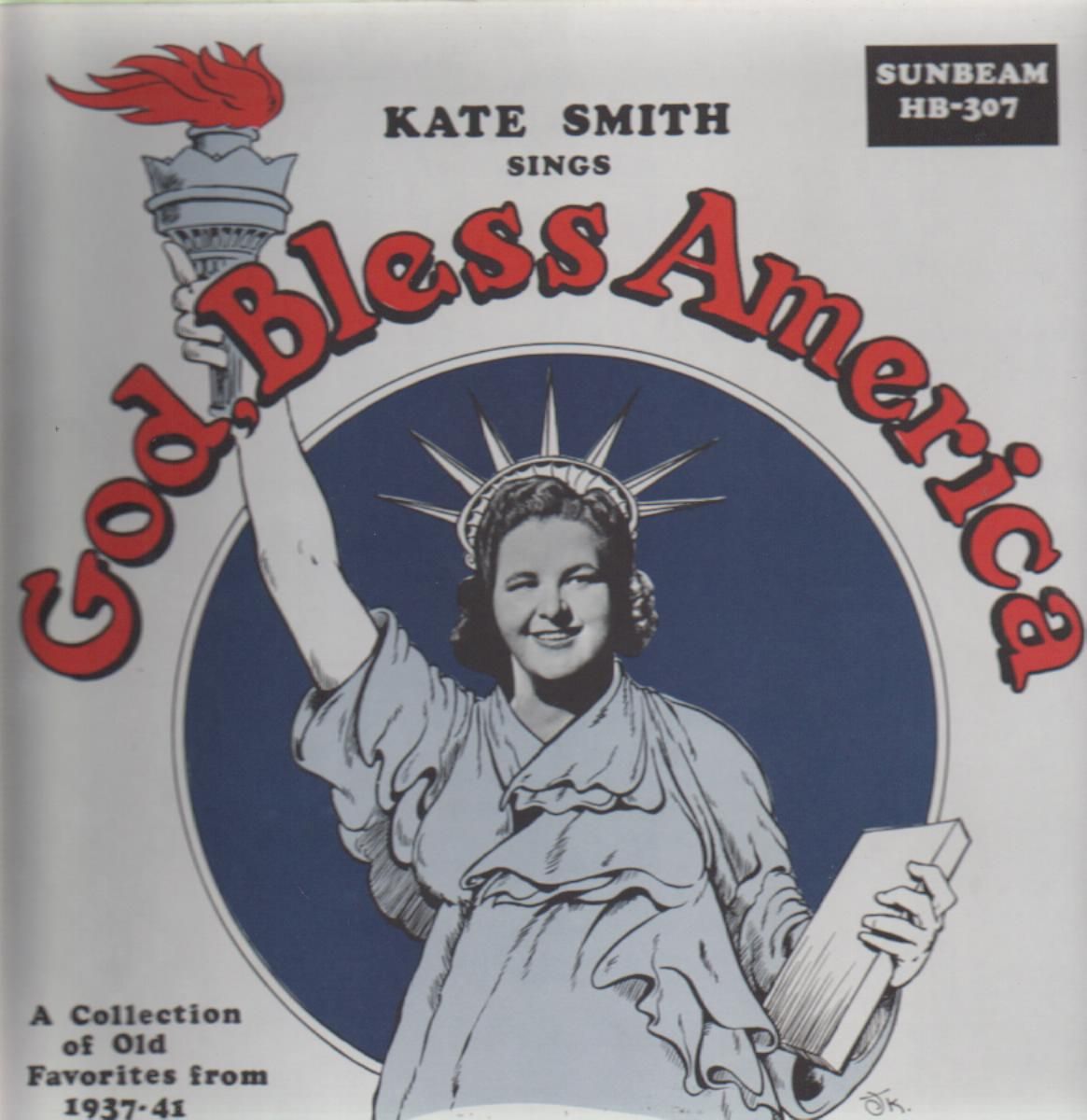
kate_smith-sings_god_bless_america

My father hated “God Bless America.” He particularly hated jumbo 40’s singer Kate Smith’s rendition of it, which he believed exploited patriotism and combined it with sentimentality and schmaltz to get ratings and sell records. Smith had an unadorned clarion belt that particularly suited Irving Berlin’s blunt melody, and for 30 years she used the song as her signature, as much as Judy Garland used “Somewhere Over the Rainbow.” Whenever Smith appeared on a TV variety show like The Hollywood Palace, he would order me to change the channel (yes, I was the family remote) for fear that he would have to hear her sing that song.

I assumed that was the reason why I have felt queasy about Major League Baseball’s 7th inning stretch ritual, installed in 2001, of having a recording of Kate or a live singer ring out the Irving Berlin standard at every major league baseball game since the Twin Towers fell.  In today’s Washington Post, however, a Methodist minister—my father was also a Methodist, as much as he was anything—explained why he refuses to stand for the song. He nailed it.

James Marsh writes, Continue reading

Ethics Dunce: Pop Star Katy Perry

When is a sincere apology unethical? Here’s a good example.

Abused and Abuser. Someone please tell Katy Perry which is which.

Abused and Abuser. Someone please tell Katy Perry which is which.

Pop singing star Katy Perry registered an ethically responsible objection via Twitter regarding the Chief Keef song “Hate Being Sober.” She wrote,

“Just heard a new song on the radio called ‘I hate being sober’ I now have serious doubt for the world.”

Me too, Katy.  The artist responsible for this paean to intoxication, however, took offense, and decided to rebut Katy’s tweet with an obscene, abusive, misogynist attack:

“Dat bitch Katy Perry Can Suck Skin Off Of my Dick Ill Smack The Shit out her”

Thus chastened (or intimidated?), Perry apologized to him, writing that she really liked the song, and wasn’t “a hater”: Continue reading

Unethical Quote of the Week: Lauryn Hill

“I was put into a system I didn’t know the nature of…. I’m a child of former slaves. I got into an economic paradigm and had that imposed on me. I sold 50 million units…Someone did the math, and it came to around $600 million. And I sit here before you trying to figure out how to pay a tax debt? If that’s not like enough to slavery, I don’t know what is.”

Singer-songwriter, actress, rapper and hip-hop artist Lauryn Hill, complaining to the judge as she was sentenced to three months in prison and a $60,000 fine for failing to pay taxes on her earnings of approximately $1.8 million between 2005 and 2008.

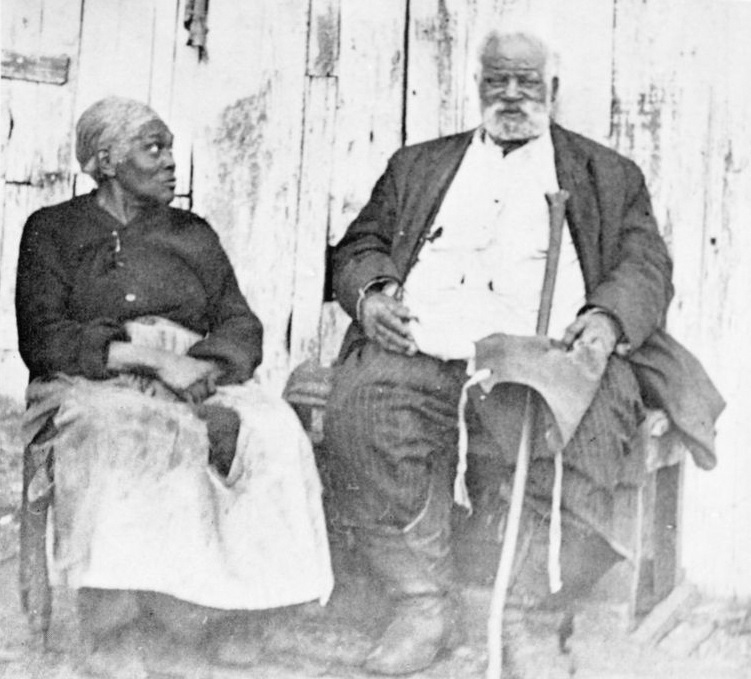
slave couple

Lauryn Hill’s parents. OK, not really. Metaphorically, perhaps. You better ask Lauryn.

Now let’s see…Hill’s statement is…

  • An abdication of responsibility. Hill has been in the entertainment business, and wonderfully successful at it, since she was 18 and landed a continuing role on the soap opera, “As the World Turns.” Few “know the nature of” the strange world of stardom, agents, performing contracts and the rest that goes with the highest levels of American show business when they enter it, but most manage to learn the basics, and most also manage to pay their taxes. Hill has had plenty of time to learn “the system,” whichever one she was referring to. She is also a native-born natural citizen, and I’m sure the reality of income taxes didn’t escape her notice for all these years. Continue reading

Are Musicals Reviewed By Ignoramuses?

STEPHEN SONDHEIM

OK, but Stephen: compared to you, everyone is an ignoramus!

Stephen Sondheim completed his personal memoirs about his career in American musicals more than a year ago, but they are so thoughtful, detailed and dense that I keep discovering new treasures, provocative observations by a first-rate mind. Yesterday, I found one that was buried in a footnote, in the middle of a technical tangent that most readers, like me in my first tour through the books, probably skimmed.

Sondheim pointedly did not use his erudite analysis and reflections in his two retrospectives (“Finishing the Hat” and “Look! I Made a Hat!”) to settle scores with critics, a group that obviously annoyed and to some extent handicapped him over the course of his long career. In this brief footnote, however, the composer/lyricist delivers a withering verdict:

“The sad truth is that musicals are the only public art form reviewed mostly by ignoramuses.”

At the end of the note, he repeats the indictment, this time changing the description to “illiterates.” Sondheim is accusing theater critics of engaging in professional conduct they are incompetent to perform, rendering expert opinions that are not really expert, and as a result, misinforming the public and undermining the efforts of serious artists, like him.  If he is right, not only are the critics unprofessional and unethical, the media organs that hire and publish them are unethical as well. Continue reading

Ethics Dunce: Rapper and Hip-Hop Music Mogul Ryan Leslie

I wouldn't mess with this guy. No way.

I wouldn’t mess with this guy, Ryan.  No way. But be my guest…

The real mystery for me in this silly scenario is why the rapper would think he could publicly promise a $1 million reward and not have to make good on it. Any rational theories will be received with pleasure.

Ryan Leslie, who has penned a hit song or two and performs as a hip-hop artist himself, had his laptop and external hard-drive stolen while he was on tour in Cologne, Germany two years ago. Apparently he felt that the demos and songs on the equipment had potential, because he offered $20,000 for the laptop and hard-drive’s return. When that didn’t work, he upped the reward to $1 million. A man named Armin Augstein found the computer while walking his dog in a park not far from where the computer had been taken, and he turned it over to German police. When the man claimed his reward, Leslie refused to hand it over, claiming that Augstein must have been involved in the theft, though police found no evidence supporting that allegation. Continue reading

Ethics Heroes: Papa Roach

Ethics Alarms’ 2011 Commenter of the Year tgt, who found this story and passed it on, asks,

“How is a horrible stoner rock band more ethical than everyone in politics?”

It’s a great, if sorrowful, question.

A.V. Club has a feature (which could be called “Start a Feud”) in which it asks a rock performer what song he or she hates, and why.  Jenn Wasner, one half of the Baltimore indie-folk duo Wye Oak (“a blend of Southern culture and Northern sensibilities…”) submitted to this invitation to get in trouble, and fingered the song in the video above, “Scars,” by Papa Roach.

Criticizing the work of other artists in the same field is unprofessional at best, gratuitously unkind and disrespectful. Papa Roach’s members would have been within their rights to fire back something less than complimentary in defense, at very least the observation that ethical musicians don’t take gratuitous shots at one another. What the band did however, was this: it sent Wasner flowers. Wasner was convinced it was some kind of diabolical trap, and tweeted as much. The band tweeted back: Continue reading

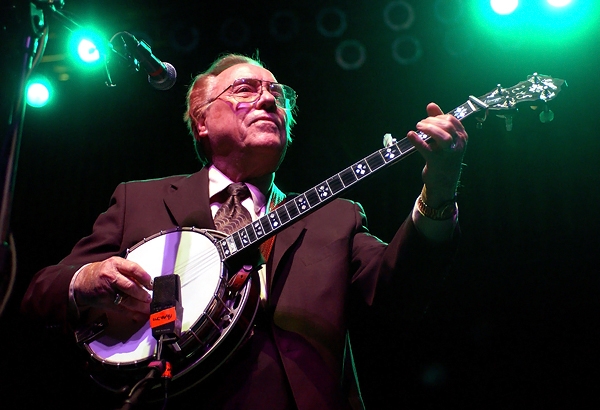
Ethics Quote of the Week: Earl Scruggs, Banjo-picker (1924-2012)

“If you don’t let things develop, it’s like keeping something in a bag and not letting it out to fly”

—-Bluegrass innovator and legend Earl Scruggs, who died yesterday, in an interview he gave in 2000. He was talking specifically about creating new sounds and kinds of music, but his larger point applies to everything in life, and is an ethical one.

Earl Scruggs almost single-handedly changed the banjo from an instrument associated with clowns and minstrel shows to a vital element in American music. His single-hand was his right hand, as he perfected a three-fingered playing style that gave the banjo as much range and depth as a guitar, cello or violin. With his long-time partner Lester Flatt, he injected bluegrass music into the American mainstream with his music for the film “Bonnie and Clyde,” and, of course, TV’s “The Beverley Hillbillies.”

What Earl Scruggs recognized was that just as the fact that “everybody does it” doesn’t make something right, the reverse is also true. The fact that “everybody” hasn’t been doing something, or even that it has never been done or even considered, doesn’t automatically make it wrong. Ethics doesn’t impose rules to freeze societal standards and values, but to give us systems to evaluate whether standards of conduct and values need adjustment or reconsideration. Often we hear the verdict “Now that’s just wrong!” to condemn something that may not be wrong at all, but just surprising, non-traditional and strange to those who never imagined such a thing. Too often that confusion of wrong and different inhibits creativity, innovation, and change for the better. That’s why innovation and condemnation are frequently linked, and why boldness and courage are prerequisites for positive change. Continue reading

Incompetent Elected Official of the Month: Indiana State Senator Vaneta Becker

"All right, Jimi, you're busted. That will be $25!"

Indiana State Senator Vaneta Becker wants to establish a law that would impose a fine of $25 on any performer or citizen who significantly alters the lyrics or melody of The Star-Spangled Banner.  “I don’t think the National Anthem is something we ought to be joking around with,” she has said. “Singing our national anthem is a sign of gratitude to those who have served our country.”

One may notice a theme among those chosen here as incompetent elected officials: the complete unfamiliarity with core American values and ideals, often displayed in a misguided effort to protect those values. This is known as “ignorance,” or perhaps, in extreme cases, “utter stupidity.”  My presumption is that being ignorant or stupid renders an official incompetent to discharge the duties of lawmaking. Am I expecting too much? Continue reading