Ethics Quiz: Who is the Most Incompetent Elected Official—the DA Who Doesn’t Care If A Convicted Prisoner Is Really Guilty, Or The Assemblywoman Who Doesn’t Know About The First Amendment?

California Assemblywoman Fiona Ma. " First Amendment? Where the heck did THAT come from?"

For this weekend’s Ethics Alarms quiz—the blog’s 2000th post!—I am asking readers to help me determine the Incompetent Official of the Week, when two unusually qualified candidates are running neck and neck.

Candidate A is McLennan County (Texas) District Attorney Abel Reyna:  Defense attorney Walter M. Reaves has filed a motion asking for DNA testing as part of his efforts to exonerate Anthony Melendez, currently serving a life sentence for the 1982 slayings of three teenagers in Waco.  Reaves says the test is needed because DNA analysis was not available when Melendez was convicted, and Melendez still maintains that he is innocent. D.A. Reyna, however, opposes the test. Why? He argues that such testing shows a lack of faith and support of the jury system, and what the jury has decided usually ought to be free of such post-trial attempts to discredit the verdict.

In other words, the D.A. believes that it is better to honor the jury system by letting an incorrect verdict stand than to use newly available scientific evidence to set an innocent man free.  Continue reading

Roger Williams, Consequentialism, and “Born Free”

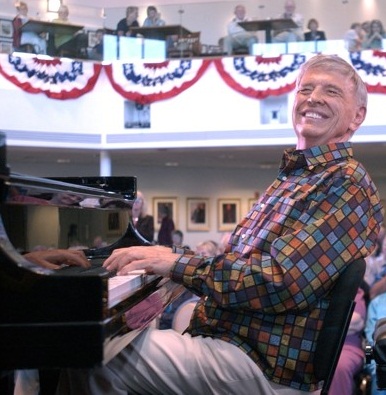
Roger Williams in his 80's. Take THAT, Drake!

Roger Williams, the pianist whose hit renditions of songs like “Autumn Leaves” and “Born Free” are pop culture generational touchpoints, died this week. One item in his obituary has double ethical significance:

“While majoring in piano at Drake University in Des Moines, he began developing a style that was a fusion of jazz, classical and pop. When a school official overheard him playing the tune “Smoke Gets in Your Eyes,” he was expelled because the school had a “classics-only” policy…”

It is both encouraging and depressing to learn that school administrators were just as doctrinaire, unreasonable, unfair, incompetent, stupid and willing to abuse their power while playing with the lives of young people back in the 1940’s as they are today—encouraging, because that generation seems to have come through it pretty well; depressing, because this field appears to have a flat learning curve.

Mainly, however, Williams’ run-in with music snobs at Drake beautifully illustrates what is wrong with the consequentialist argument that we should assess the ethical nature of an act based on its consequences. Continue reading

Scent Branding, Mind-Control, and Ethics

Agreed: this is scary. We're not there yet. We don't even know if "there" exists.

A recent article on the web that purported to explore the ethics of “scent branding” was fascinating for two reasons.

First, “scent branding” is a term I had never encountered before, for a practice that I had not focused on. About five seconds of thought, however, made me realize that indeed I was aware of the phenomenon, and had been for quite a while. “Scent branding”—using fragrances in a commercial environment to create a desired atmosphere and to prompt positive feelings, recollections and emotions from patrons—has been around a long, long time, though not under that label. When funeral parlors made sure that their premises smelled of flowers rather than formaldehyde, that was a form of scent branding. Progress in the science of scent allowed other businesses to get into the act: I was first conscious of the intentional use of smell when I spent a vacation at the Walt Disney World Polynesian Villages Resort. The lobby and the rooms had a powerful “tropical paradise” scent, a mixture of beach smells, torches and exotic fauna. It was obviously fake, like much in Disney World; also like much in Disney World, I found it effective, pleasant, and fun. I certainly didn’t think of it as unethical. I was normal in those days, however.

Well, more normal.

The second aspect of the article, entitled “Is it Ethical to Scent Brand Public Places?”, that caught my attention was that it had an obvious agenda. The piece was opposed to scent branding, and set out to find the practice unethical in order to justify condemning it. Continue reading

Wanted, Desperately Needed, and Lacking: Professionals, Adults and Values in the Media

What? Is there something wrong?

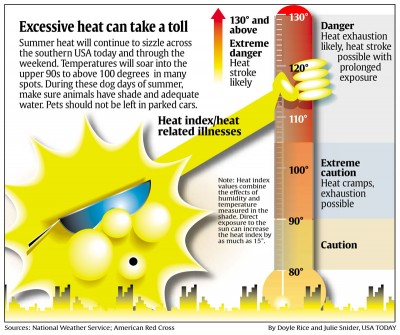
There is not a lot to say about the graphic above, other than:

  1. It is crude.
  2. It is funny.
  3. It is intentional.
  4. It is inappropriate for a general audience newspaper
  5. A competent editor should have caught it, and
  6. The graphic artist needs a warning and a reprimand.

The media, its staff, celebrities and assorted vulgarians and boors seem to be determined to make public square America as uncivil as a locker room, as crude as a peep show, and as juvenile as a junior high school farting contest. Professionals, including USA Today editors and publishers, can either do their duty and discourage this intentional rudeness in their products and services, or shrug it away. Similarly, our culture needs to decide if we are going to just define our deviancy down some more, and accept gratuitous sexual innuendo that will gradually make the whole population into a bunch of snickering Beavises. Continue reading

Comment of the Day: “Batter Up! The Hypocrisy of Bigotry Victims Discriminating”

This Comment of the Day from Matt, on my post about gay softball leagues discriminating against bisexuals, is actually two days old.  It was COtD-worthy when it first arrived, but edged out on a competitive day. It is a unique perspective on the issue, and a case of better late than never.

“Its funny… I sing in a gay men’s chorus; we handle music that’s beautiful and “traditional” as well as music that can be emotionally challenging, music about the coming out process or what it means/feels like to be a gay man in society… we’ll sing anything, really, and our primary mission as a chorus is promoting understanding and awareness through music.

“That said, we have straight male singers… we have about 180 men on stage performing, and a handful of them are straight or bi. Ask any of us what we feel about that and the first response you’ll hear is “What, you think *we* are gonna discriminate?” Continue reading

From Hero to Idol: Congratulations, Scotty McCreery!

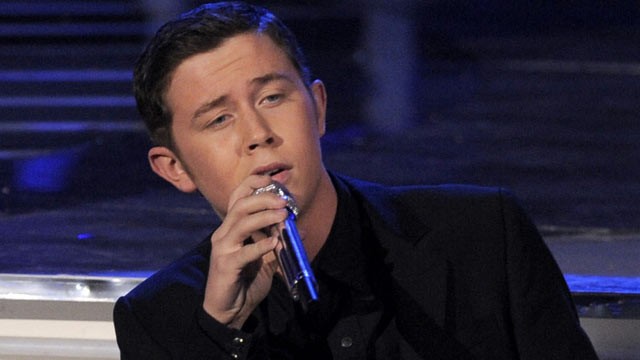
Way back in March, long before the 2011 edition of American Idol had winnowed its hopeful singers down to the final thirteen, 17-year-old Scotty McCreery earned an Ethics Hero here by bravely taking responsibility for the mistreatment of another contestant in the group segment of the audition process at a time when the judges seemed to be in the mood to make someone pay for it. The incident has been forgotten, but it showed Scott to be a young man of unusual integrity and courage. Little did Ethics Alarms realize  that he was also the singer to beat, and nobody beat him. Last night, he was crowned the American Idol.

Fame and fortune changes people, as we all know, and too often for the worse. Still, McCreery’s prospects of holding on to his core values look strong, because his character looks strong, and everyone, whether or not they follow American Idol and whether or not they groove to Scotty’s milieu, Country-Western music, should applaud the entry of a talented and ethical young man into the popular culture.

Congratulations, Scotty. In March we knew you were good; we didn’t know you were this good.

Ethics Night on “American Idol,” As An Ethics Hero Is Born

Ethics Hero, Scotty McCreery

“American Idol’s” group portion of its winnowing process always is the most fascinating chapter of its yearly saga, as the singing competition briefly shifts into full reality show mode. I’ve never been convinced that it was a fair method to judge aspiring singers who were competing as solo acts, as it frequently results in superior vocalists being dumped because they couldn’t sing harmony, learn choreography and lyrics under pressure, or play well with others. I know you have to get that mass of ambition and ego reduced to 24 people somehow, but group day is the equivalent of throwing darts at a dartboard.

It makes for great ethics scenarios, though. The format guarantees it, as the contestants have to form groups of four or five in a cruel process reminiscent of choosing sides for pick-up baseball games, guaranteeing that some people will end up feeling like the fat kid who always gets chosen last, if at all.

Last night there were several featured ethics dramas, with the judges, as they have been all season, being less than consistent in their responses to them. Continue reading

National Anthem Ethics

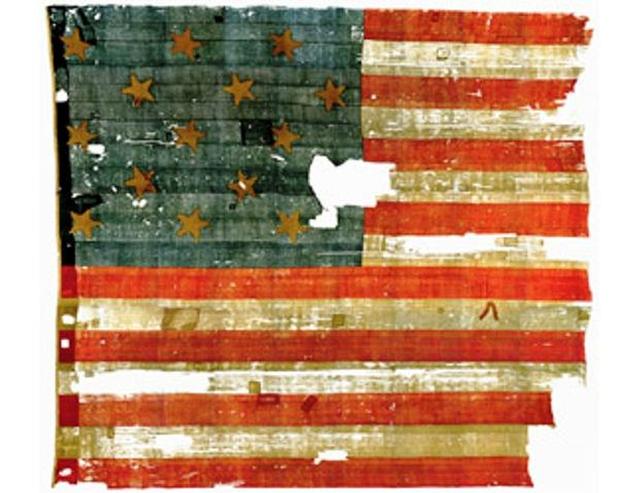
Pop songbird Christina Aguilera has been ridiculed and condemned in every forum imaginable for botching the lyrics of “The Star Spangled Banner” at the Super Bowl. The last time a performer got this kind of abuse for a National Anthem performance (not counting Roseanne Barr’s infamous crotch-grabbing,  off-key screeching of the anthem to begin a San Diego Padres game, which was not so much a performance as a clinical demonstration of what boorishness looks and sounds like) was when the late Robert Goulet massacred the lyrics before a national radio audience to introduce the Cassius Clay-Sonny Liston Heavyweight Championship fight. The incident haunted Goulet the rest of his life, although he was a good sport about it.

As with Goulet (he was Canadian, for heaven’s sake!), the condemnation of Aguilera is not merely unfair, but ignorant. Continue reading

Ethical Song Lyrics to Remember, by Morey Amsterdam

Today Dick Van Dyke, who is about to turn 85, was interviewed on NPR’s funny game show, “Wait, Wait…Don’t Tell Me!” The star of my all-time favorite sitcom was moved to sing the lyrics to “The Dick Van Dyke Show” famous theme. I had heard them sung by Dick before, but I had forgotten how good they were, both lyrically and philosophically. They were written by the late comic Morey Amsterdam, who played joke-machine Buddy Sorrel on the show, and convince me that he is someone I would have liked to have known. He was a wise man.

Here are Morey’s lyrics (You know the tune, I hope!): Continue reading

The Counterfeit Classic Musical Act Problem

It isn’t new, and there is no way to stop it, but we need to complain a little louder about the false promotion of counterfeit musical acts for concerts and fairs. It may be legal, but it is misleading and dishonest. Continue reading