Who’s That Woman On The Cover of “O” Magazine?

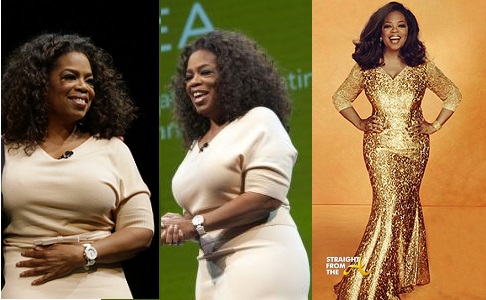
l, c: O yesterday; r: Cover O.

l, c: O yesterday; r: Cover O.

By purest coincidence, I was looking through a magazine rack at CVS yesterday and taking notice of how well Oprah Winfrey has been keeping the pounds off lately. Then, this morning, I saw footage of her walking across a stage to announce her latest venture, something to do with chai tea. Mama mia! The woman I saw smiling and waving, presumably the real Oprah, was easily 50 pounds heavier than the look-alike who has been gracing the cover of recent O’s, though I will say, as mitigation, that the strategically shot March cover has a graphic over OW’s gut.

I could not care less how much Oprah weighs or what she looks like. However, an ethical narcissistic—and what else can you call a woman who publishes a magazine named after herself that has her as the cover model for every single issue?—has limited choices:

  • Keep yourself in fabulous shape, so you are fit to be a cover girl (by your own standards)
  • Don’t put yourself on the cover when you don’t feel cover-worthy
  • Use cartoons, or
  • Let it all hang out.

Not an ethical option: showing your loyal, trusting readers that you look one way, when in fact you look a whole lot fatter.

Yes, yes, I know—photoshopping, airbrushing, make-up, glamor photos, “it’s done all the time.” This is Oprah’s magazine, her image and her body, and pictures communicate. Her covers say “This is what I look like, be like me.” If she doesn’t look like her covers or even close, that’s an outright, calculated lie. It’s really as simple as that.


Hot Off The Presses! “Portrait Of An Ethics Dunce” By Alec Baldwin

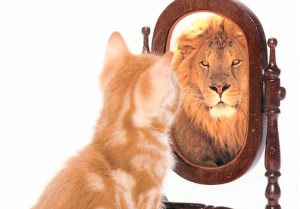
CatLionMirrorThis isn’t the real title of Alec Baldwin’s epic orgy of narcissism  and self-pity in the latest New York Magazine; that would be “Good-bye, Public Life!” It is, however, the more accurate and descriptive title, and although it is annoying and occasionally colon-disturbing to be trapped in Baldwin’s mind for the ten minutes or so it might take to wade through this opus, I think it is well worth it. For Baldwin provides us all with a frightening case study of how self-absorption and arrogance precludes an ethical world view, and with it responsibility, accountability, fairness, empathy, respect, perspective, honesty...the works.

The essay is obviously intended to make Baldwin look as good as possible; its whole thesis is that he is maligned, misunderstood, the constant target of knaves and fools, and a victim of circumstance. Yet with every statement, he makes it brilliantly clear that it isn’t everyone else, but him. He is a juvenile, egomaniacal jerk. The evidence is right in front of his face, but he just can’t see it; he teems with hate for everyone else. Alec’s hit  list includes former employers, colleagues, companies and the United States of America. Here’s a partial list (I must have missed someone) of those Baldwin, while protesting what a great guy and how misunderstood he is, spits on in his farewell: Andrew Sullivan, Anderson Cooper, Harvey Levin, stage director Dan Sullivan, Shia LaBeouf , Joe Scarborough, Mika Brzezinski., Rachel Maddow,  MSNBC producer Jonathan Larsen, MSNBC chief Phil Griffin , Capital One, AT&T, New York Mayor Bill de Blasio, New York, Broadway, the Huffington Post, Kim Kardashian, Roger Ailes, Fox News, MSNBC, Breitbart, and both the liberal and conservative media.

If the point of the rant is to make us feel sorry for Baldwin, it works, at least for me. I feel sorry for anyone so socially inept and self-deluded that he can write what reads like a candid confession of a pathologically hostile and inconsiderate attitude toward the rest of mankind and think it is a persuasive defense of his actions and character. This is a man who called a male reporter a “toxic little queen” in a hateful twitter attack and says now that he didn’t realize that phrase might be considered offensive by gays. This is man who has had ugly public confrontations with reporters, photographers and flight attendants, and just can’t understand why people are giving him the cold shoulder, except that he is positive he doesn’t deserve it. They are throwing mud on him, he says:

“In the New Media culture, anything good you do is tossed in a pit, and you are measured by who you are on your worst day. What’s the Boy Scout code? Trustworthy. Loyal. Helpful. Friendly. Courteous. Kind. Obedient. Cheerful. Thrifty. Brave. Clean. Reverent. I might be all of those things, at certain moments. But people suspect that whatever good you do, you are faking. You’re that guy. You’re that guy that says this.”

And to prove how unfair this is, Baldwin pour out his heart in this essay, which insults everyone he can think of.

You really owe it to yourself to read it all. It will take some tolerance and determination, but  “Good-bye, Public Life!”might constitute the most valuable public service Alec Baldwin has ever performed, until he actually keeps his promise for once (he has previously sworn that he was going to leave the country) and exits public life. I am certain that once finished, you will, as I did, say a little prayer that if your ethics alarms ever show signs of becoming this dysfunctional, someone will be kind enough to slap you silly, sit you down, and confront you with the harsh reality that you are becoming an insufferable asshole, and need to shape up quickly, lest you end up like poor Alec Baldwin, a deluded, incurable, Ethics Dunce.
To Get Your Christmas Ethics Off To The Right Start…

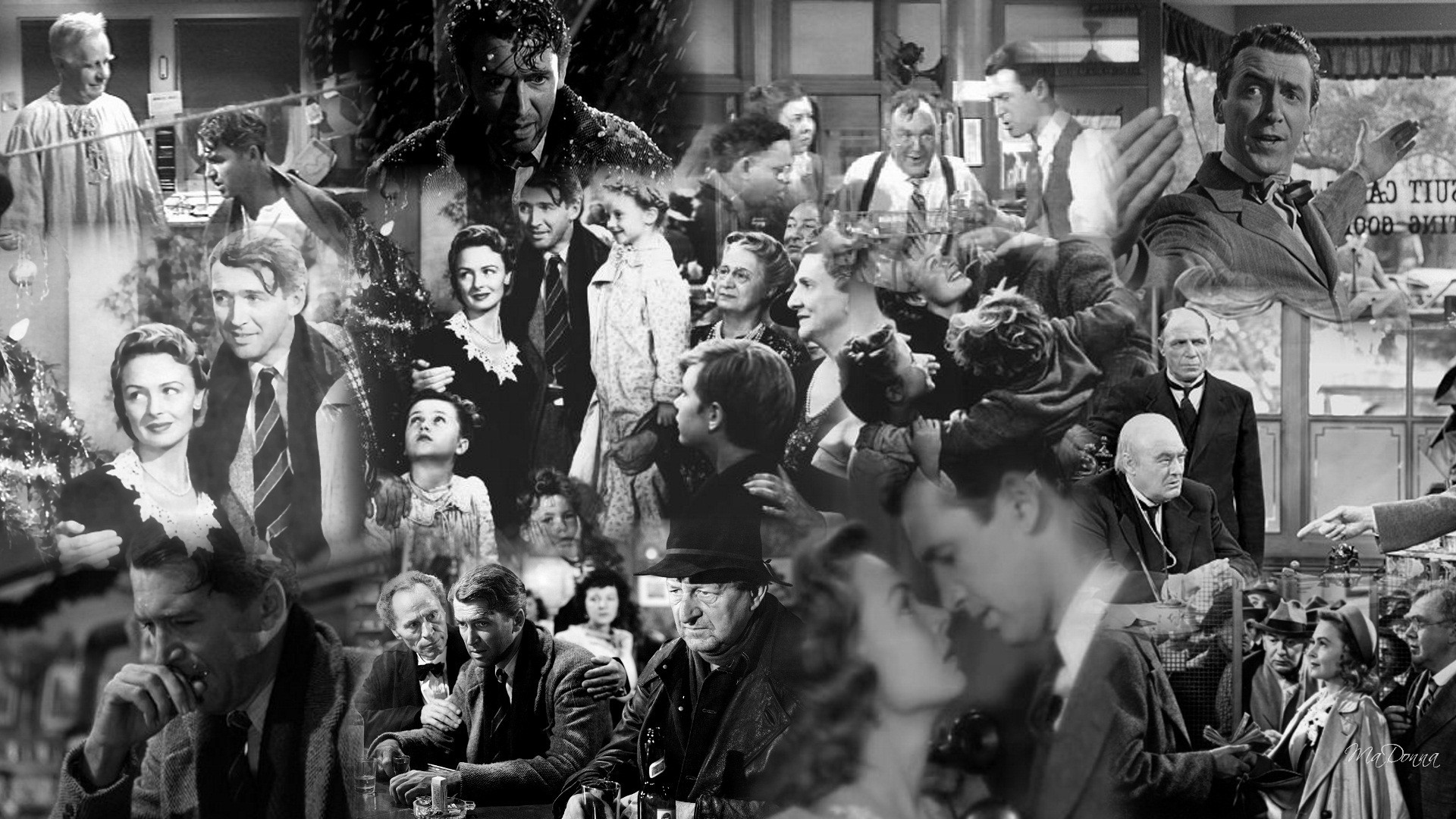
its-a-wonderful-life-collage-73136

…the Complete Ethics Alarms “It’s A Wonderful Life” Ethics Guide is here.

Just in case you forgot!

The Unprofessional Cause Of Unprofessional Lawyer Brian Zulberti

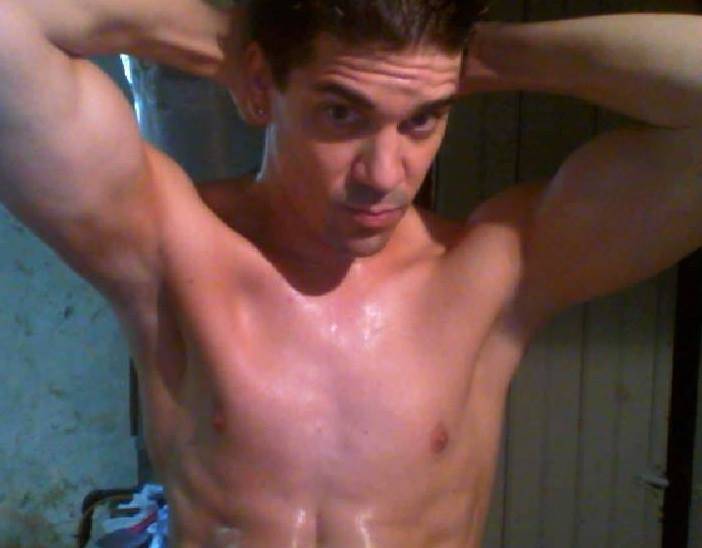
Brian ZYoung Brian Zulberti may be nice guy. He may even be a competent lawyer, though the chances of his being able to demonstrate that are diminishing daily. Nevertheless, his quixotic and misguided, and dare I say it, really stupid, quest to show that professionalism, judgment and character are not properly relevant to the practice of law is an exercise in hubris that must fail, deserves to fail, and of course, will fail, leaving him to pick up the pieces of fifteen minutes of media fame purchased at the price of a reputation. It looks like he’s having fun, and that’s something, I guess. Ten years from now, I doubt that he’ll think it was worth it.

Shortly after passing the Delaware Bar, Zulberti, a 2009 law school grad,  emailed the entire Bar membership asking for a job. In lieu of his résumé;  he attached a photo of himself in a Villanova Law muscle shirt that would be more at home on a dating site for the shallow. The web also contained his half-naked selfies, and various websites with varying motives picked up the story. Interviewed on YouTube, Zulberti proclaimed that being true to himself was more important to him than getting hired, and that he wasn’t about to change his Facebook privacy settings to portray himself as a traditional, dignified, applicant for legal work.

Let me pause here to say that in many ways I sympathize with Zulberti. Continue reading

“Hot Mom” Maria Kang Is A Self-Obsessed Narcissist, and Yes, There’s A Reason Humility Is An Ethical Virtue

Kang

Lots of Americans are obsessed with outward appearances, unreasonably devoted to being attractive at all costs and for as long as possible,convinced that their own priorities are what everyone should embrace, and feel superior as a result. Most don’t go out of their way to broadcast these obnoxious attitudes and to accuse others of being inferior, rationalizing slugs while thrusting their cosmetic successes in the faces of those who no longer can squeeze int their fashion jeans.

Maria Kang, pictured above in all her buff glory, did, reaped the predictable result, and now is being called the aggrieved victim while she remains resolutely self-righteous.

Yechhh. Continue reading

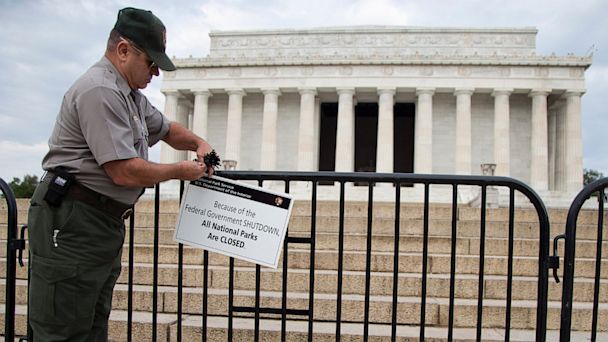
Ten Ethics Observations On The Government Shut-Down

lincoln_memorial

Stipulated: I am not in generally favor of government shutdowns, just as I do not favor strikes, boycotts, Massada-style mass suicides, wars, or any other destructive tactics, strategies and actions in response to impasses over important matters. Sometimes, however, they are necessary and responsible. Sometimes, they are not.

1. It is fascinating reading the comments on the shutdown from my friends on Facebook. It is startling how many of them simply parrot back partisan talking points they have heard on CNN and MSNBC, but especially striking are the angry rants of the government employees who appear to take the shutdown as a personal affront. How dare the evil Republicans disrupt their lives, their paychecks, their work schedule, their vacations! I wonder if my friends have the same reactions to labor strikes, wars and national disasters. Do they really believe that those elected officials struggling to decide on crucial matters of policy, firmly believing in a course that is right for the nation and reaching an impasse, should just shrug off the serious implications of the issue at hand and say, “But, hey, Joe Finsterwald will have a tough time if his agency has to shut down, and the Bradys’ DC vacation will be ruined, so the heck with it: go ahead with that law we think will be a disaster for the country. We’ll back off.” Do those Facebook complainers really think that would be responsible governance? You know, guys, this isn’t personal: it’s called politics and two party government. It’s part of the deal. Disagree with the policy arguments if you have the knowledge and perspective to do so, but taking the position that the entire business of running the country revolves around your convenience over the next few days or weeks is as juvenile as it is irresponsible. If you work for a private company, you risk disruptions because of business failures, competition and re-organizations. If you work for the government, you risk things like this. It’s not only about you.

2. What various polls show about what the American public believes or doesn’t believe is irrelevant, and anyone on either side of the dispute who cites them as support for the Affordable Care Act or gutting the Affordable Care Act is either naive or trying to deceive. Continue reading

How Amy Bouzaglo Makes Us Better People

Run away! But pay attention!

Run away! But pay attention!

I’m not going to take back every negative thing I’ve ever said about reality shows, but there is no getting around it: now and then an episode of one of them is a better training film for good ethics than  “Leave It To Beaver,” “Star Trek, The Next Generation,” and “Father Knows Best” combined.

A case in point was a recent episode of “Kitchen Nightmares,” a Fox reality show that sends chef and restaurateur Gordan Ramsay to turn around failing eateries, usually by his browbeating them into basic management competence and the use of fresh ingredients. This time, however, Ramsay was pitted against the proprietors of Amy’s Baking Company Bakery Boutique & Bistro in Scottsdale Arizona, specifically the eponymous Amy Bouzaglo, a textbook narcissist who dominates her much older husband and partner, abuses employees, and treats all criticism and constructive suggestions as a personal attack. Continue reading

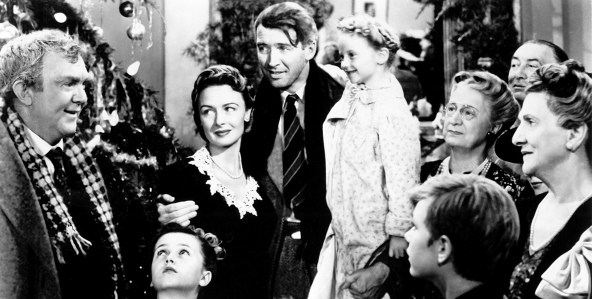
The Complete “It’s A Wonderful Life” Ethics Guide [UPDATED]

 Frank Capra’s 1946 masterpiece “It’s A Wonderful Life” is one of the great ethics movies of all time, perhaps the ethics movie of all time. In 2011 I prepared a guide through its complex ethics thicket. The post was divided into three separate posts, and I eventually combined them s0 readers can have the pleasure, if one can call it that, of watching the film like I do: having ethics arguments the whole way through. And now, here is your guide. Additions are welcome and encouraged.

1. “If It’s About Ethics, God Must Be Involved”

The movie begins in heaven, represented by twinkling stars. There is no way around this, as divine intervention is at the core of the fantasy. Heaven and angels were big in Hollywood in the Forties. Nevertheless, the framing of the tale advances the anti-ethical idea, central to many religions, that good behavior on earth will be rewarded in the hereafter, bolstering the theory that without God and eternal rewards, doing good is pointless.

We are introduced to George Bailey, who, we are told, is in trouble and has prayed for help. He’s going to get it, too, or at least the heavenly authorities will make the effort. They are assigning an Angel 2nd Class, Clarence Oddbody, to the job. He is, we learn later, something of a second rate angel as well as a 2nd Class one, so it is interesting that whether or not George is in fact saved will be entrusted to less than heaven’s best. Some lack of commitment, there—then again, George says he’s “not a praying man.” This will teach him—sub-par service!

2. Extra Credit for Moral Luck Continue reading

Ethics Dunce: The “Lady in Red”

Now that the John Edwards trial is over—it ended with an acquittal on one charge and deadlocked jurors on the rest—it’s time to heap some deserved contempt on the so-called “Lady in Red,” the alternate juror whose courtroom demeanor became such a distraction that it prompted the judge to send all the alternate jurors home. From the Washington Post:

“She walked in flipping her hair, smiling broadly at [Edwards], batting her long eyelashes, cocking her head playfully. She was just an alternate juror, but suddenly she was the most watched person in the cramped federal courtroom. Commentators had dubbed her the “Lady in Red” after she bopped into the courtroom last week in a revealing, off-the-shoulder red top. Others just called her the “flirty one,” interpreting her vivacity as some kind of courtship dance, though no one can say for sure whether that was her intent.” Continue reading

American Idol Ethics, Group Day, 2012

Johnny Keyser

American Idol’s Group Day is the one stretch of the show that is more reality show than competition, and it usually delivers the best ethics dramas of the season. Last year, for example, the Group Day chaos—all the Idol wannabes have to form combos and rehearse an a capella number in harmony, often fighting, crying or collapsing in the process—produced a moment of courage and character when Scotty McCreery, the eventual winning Idol, stepped up and took full responsibility for the rotten conduct of his group, which had tossed out another young man at the last minute to take McCreery in.

This year there were ethics heroes and dunces, but mostly dunces. A real gem was the awful stage mother of competitor Brielle Von Hugel, who was filmed in rehearsals complaining how weak a singer her daughter’s fellow group member Kyle Crews was. After Crews crashed and burned in the performance, and was the only member of the group cut, Mrs. Von Hugel was shown insincerely telling him what a “good voice” he had. Kudos to Idol’s director for immediately re-running her backstage slamming of the kid’s voice in the previous episode. Continue reading