Slate’s Unethical “Redskins” Blackout

You know what Redskins really means, don't you? It means standing up to political correctness bullies.

You know what Redskins really means, don’t you? It means standing up to political correctness bullies.

Via the usually rational reporter David Plotz, we learn that Slate has decided that the Political Correctness Gods will no longer allow the on-line magazine to use the name of Washington’s NFL team when it is reporting on Washington’s NFL team. This is, of course, presumptuous, arrogant, and lousy journalism. It is not the media’s job to re-make the world into what pleases them. Slate doesn’t like the Redskins name so it’s not going to publish it. This seems to be the current mode of operation in the media today–it is no longer dedicated to reporting and commenting on the news, but rather reporting and commenting on the news it doesn’t find “offensive.”

The Redskins, as a team nickname, is certainly the strongest case for those who believe in censorship of team names with ethnic or national origins. The NCAA has already gone way beyond any rational execution of that mission however, and even in the case of Redskins, an unquestionably racist term when applied to Native Americans, the objection to a sports  team name with supposedly negative historical implication has a lot of the “a chink in the armor” nonsense about it. For in Washington, D.C. and in football bars and Sunday afternoon gatherings, Redskins is not a slur, and does not refer to native Americans. It is the name given to a squad of NFL players who play pro football in the name of Washington, D.C., and a franchise that is worshiped in the city. When the name is used, it is not aimed at Native Americans or intended to denigrate them. It does not refer to Native Americans, and not intended to give offense. It is intended to designate the football team, because that is the team’s name. How can someone be offended at the use of a name that is not intended and is not a slur in the context of the use in question? There two answers to this: 1) Most people, including rational Native Americans, aren’t, and 2) Because such people want to be offended.

The name “Redskins” was never intended as a slur, as I have explained here before. Continue reading
More Graduation Ethics: The Cap And The Feather

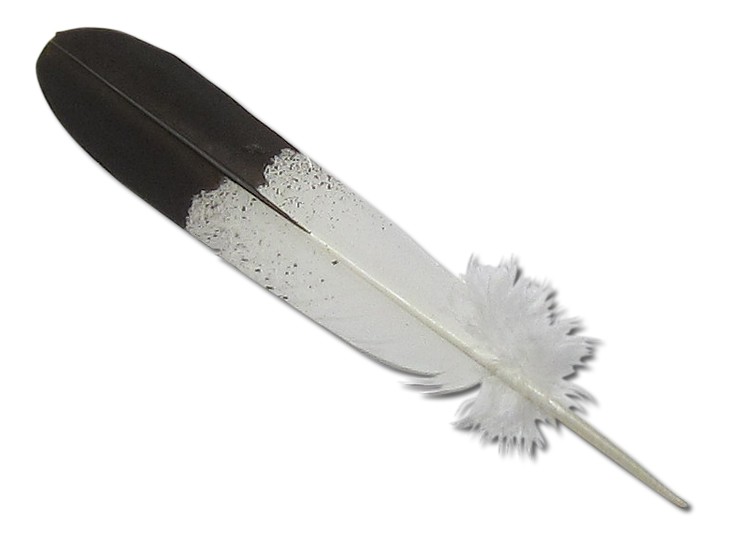
eagle feather

In contrast to the Roy Costner saga, we have the graduation conduct of Chelsey Ramer, proud member Poarch Creek Band of Indians and a graduating senior at  Escambia Academy High School in Atmore, Alabama. Four years ago, graduating members of her tribe had worn ceremonial eagle feathers in their caps at the school’s graduation procession and the handing out of  diplomas. The school tool no action then, because it was taken by surprise, but this year, Chelsey’s class was presented with new dress code, as well as a contract seniors had to sign in order to participate in graduation ceremonies.

It forbade any “extraneous items during graduation exercises.” It also said students violating the agreement would not receive their diplomas until appropriate disciplinary actions were taken and students paid a whopping $1,000 fine.

Chelsey says she refused to sign the contract.  She decided that honoring her heritage with an eagle feather on her cap was worth whatever consequences that resulted. She wore the feather, and now the school is demanding that she pay the thousand dollar fine to receive her transcripts and diploma.

Ethics findings: Continue reading

The Ethics Conundrum of Jim Thorpe’s Body

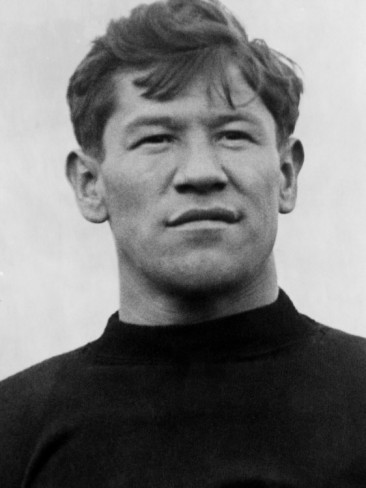
Jim Thorpe: Native American, Olympic Champion, baseball star, football star...football.

Jim Thorpe: Native American, Olympic Champion, baseball star, football star…football.

One thing is for certain: Jim Thorpe doesn’t care. The great Native American athlete whose sports legacy was as sterling as his life was tragic died in 1953, recognized by the country he honored with his record-breaking performance in the 1912 Olympics, but like so many of his race, mistreated and exploited by it as well. Since his death, however, a bizarre battle over his body has raged, and it is a perfect example of the Roshomon-like nature of  ethics in some situations. What is the right thing, the fair thing, the ethical thing? The answer sometimes depends on whose viewpoint is applied, and objectivity, the ideal viewpoint we strive for, doesn’t even exist. In an ethical conflict, moreover, there are good ethical principles on both sides of a dispute.

In Jim Thorpe, Pennsylvania, the ethical verdict of what occurred in a Pennsylvania  court last month is clear: the town has been double-crossed. A federal judge ruled that Thorpe’s remains, which lie in a mausoleum built by the town, can be moved to Oklahoma by his family, to be buried on lands belonging to his tribe. In 1953, however, two Pennsylvania towns signed a contract with Thorpe’s widow, committing them to consolidate and rename themselves after the Olympic, football and baseball legend, in return for being able to house Thorpe’s body and reap the tourism benefits of doing so. The contract was valid, if venal in inspiration: Mrs. Thorpe wanted and received cash in return. But a bargain is a bargain, and Thorpe’s presence and name has defined the town for over half a century. Losing Thorpe means losing the town’s identity and signature feature, which is a calamity. Continue reading

Political Correctness, Abuse of Power, the Redskins, and Spite

I’m sure glad I don’t own the Washington Redskins.

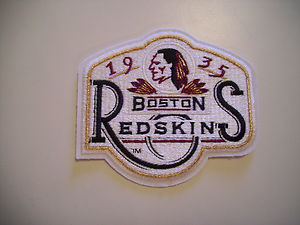
Boston RedskinsI say this without even considering the current problem of having a head coach who let the franchise player ruin his knee. I’m glad I’m not Dan Snyder because the annual sniping about his team’s unfortunate name pulls me in opposite directions ethically and emotionally, and I don’t enjoy being Rumpelstiltskin.*

If I owned the Washington Redskins and was being pragmatic as well as ethical, I’d just bite the bullet (oops! Is that phrase banned now?) and change the team’s name. The debate is stupid, but it’s a distraction no sports franchise needs. I would dig in my heels against political correctness zealots who demand that the Atlanta Braves, Kansas City Chiefs, Chicago Blackhawks and other Native American-themed names get tossed in the ash heap of history, but “redskins” is undeniably a term of racist derision, despite the fact that it isn’t that in the context of football. In football, it just means those NFL players in red and gold that a whole city worships year round.

If, however, I wanted to take a much needed stand against the unethical tactics of political correctness bullies everywhere, refuse to yield to an argument that is as dishonest as it is illogical , I might well do what Snyder has done so far out of pure orneriness and spite, which is to say to the team’s critics, “Stick it!” Continue reading

Ethics Hero Emeritus, Sort of: Russell Means (1940-2012)

“Fly swift, like an arrow.”

Clarence Darrow, the greatest of all American criminal defense lawyers, admired more than one criminal. One he especially admired was John Brown, the radical, violent and possibly insane abolitionist whose deadly 1859 raid on Harper’s Ferry, Maryland was a terrorist act by any definition. Brown was hung for it, but he became a martyr for the anti-slavery movement, and his raid a rallying point for its cause. Darrow believed that some societal wrongs were so resistant to law and democracy that their grip could only be loosened by violence, and so he extolled men like Brown, whom he regularly eulogized in public with a fiery speech that concluded,

“The earth needs and will always need its Browns; these poor, sensitive, prophetic souls, feeling the suffering of the world, and taking its sorrows on their burdened backs.  It sorely needs the prophets who look far out into the dark, and through the long and painful vigils of the night, wait for the coming day.  They wait and watch, while slow and cold and halting, the morning dawns, the sun rises and waxes to the noon, and wanes to the twilight and another night comes on.  The radical of today is the conservative of tomorrow, and other martyrs take up the work through other nights, and the dumb and stupid world plants its weary feet upon the slippery sand, soaked by their blood, and the world moves on.”

I immediately thought of Darrow’s words about Brown* when I learned that Russell Means had died this week at the age of 72. Clarence Darrow would have loved Russell Means. Continue reading

Indians, Pirates, Greeks, Intellectual Property, and Political Correctness

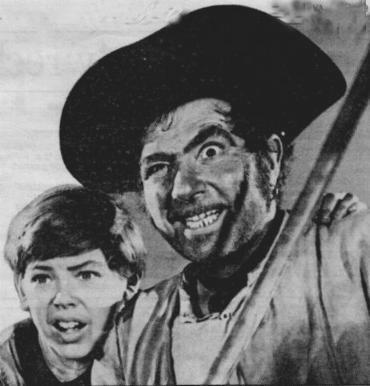
The always understated Robert Newton as Long John Silver. You owe his estate a quarter every time you say “Arg!”

Here I am banging my forehead with the palm of my hand for not realizing that all of the rhetoric flying around about how horrible it is that people in the U.S. can get away with denigrating religions would spark yet another round of political correctness applied to team names and mascots. Perhaps this was inevitable when a vestige of an earlier controversy along these lines invaded the Elizabeth Warren-Sen. Scott Brown race: some of Brown’s staff were seen doing the old Atlanta Braves “tomahawk chop” to mock Professor Warren’s beneficial delusion that she is a bona fide Native American. The political correctness police were all over this one, though the logic, as in a lot of political correctness, was strained: doing a famous fake Indian gesture to mock a fake Indian political candidate is an insult to…real American Indians? Even after the real Cherokees have announced that Warren’s pretensions of affirmative-action worthy Native American status is offensive to them? I’m afraid  those who are empowered by being offended are just too creative for me—I don’t get it.

Nor do I get an earnest essay by  Paul Lukas on the ESPN website, titled “Time to Re-think Native American Imagery.” I am on record as believing that the assault on Native American symbols and imagery for school and team names is just more cynical power-mongering by convenient victims, with the exception of the Washington Redskins, the one team with an undeniably racist name that ought to offend everybody. Still, it is obvious that the political correctness thugs will keep chipping away, counting on their persistence and the eventual bureaucratic shrug (“Oh, what the hell—it’s only a name. Let’s just give them what they want!”) to give them a victory–whereupon they will find something else to be offended about.  Continue reading

Ethics Dunces: Massachussetts Democrats

Then again, the values of Massachusetts Democrats in choosing Senate candidates has a certain consistency…

95.7 percent of the 3,500 delegates attending the Massachusetts state Democratic convention in Springfield, Mass. endorsed faux-Cherokee Harvard professor Elizabeth Warren for U.S. Senator.  Since Warren’s support exceeded 85%, Marisa DeFranco, the only declared opposition to Warren’s nomination to oppose Republican Senator Scott Brown’s bid for re-election, will not have the chance to test Warren in a primary.

Since no Democratic candidate had ever won more than 86 percent of the vote in the 30 years of the state party’s endorsement process, the party’s doubling down on the thoroughly disgraced Warren is a stunning rejection of ethical principles.

Warren, just this week, admitted that she had told Harvard that she was a Cherokee after she had been hired, prompting the University to list the blue-eyed, blonde-haired scholar as “a woman of color” in its diversity statistics. She had explicitly denied this for months. She has shown to be a plagiarist, a liar, a fake, and a hypocrite, and an inept politician as well. Her party’s response to all of this was to make it impossible for its members to reject her at the polls, and to nominate a candidate of integrity to oppose Brown.

What does the conduct of Massachusetts Democrats demonstrate? Continue reading

Recipe Rationalizations

Go ahead: tell him that recipes are trivial.

The Elizabeth Warren recipe plagiarism is turning into a fascinating study of whether objectivity and fairness can survive partisanship. So far, the results are depressing.

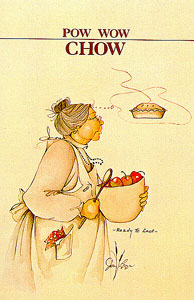
There is increasingly persuasive evidence that the recipes contributed by “Elizabeth Warren, Cherokee” to the cookbook “Pow Wow Chow” were not Native American recipes passed down over generations as Warren represented them, and that she 1) knew this and 2) intentionally misrepresented and disguised their origins while lifting them, barely altered, from other published sources. Faced with this, Warren supporters are falling back on classic rationalizations rather than accepting, reluctantly, the obvious import of the data: their candidate is an untrustworthy faker.

Howie Carr, the Boston radio talk-show host who initially uncovered the plagiarism in “Pow Wow Chow,” reveals more details of one of Warren’s apparent thefts in today’s Boston Herald. For her version of the recipe for “Herbed Tomatoes” that she lifted from the September 1959 edition of Better Homes and Gardens, Warren made a few strategic changes, Carr reports.  She cut one the “one-half teaspoon monosodium glutamate” from the ingredients ( “Apparently MSG was not available at the Muskogee Stop & Shop in 1856,” writes Carr) and also eliminated the option of using margarine rather than butter, since “I Can’t Believe It’s Not Buffalo Grease” was not on the shelves of her elusive Cherokee ancestors. This indicates an intent to deceive by Warren, in addition to her plagiarism.

Central to the defenses offered for Warren by Democrats are the following classic rationalizations: Continue reading

“Pow Wow Chow” Follow-Up: My Breitbart Interview On Harvard and Professor Plagiarism

Michael Patrick Healy, an author and conservative activist, interviewed me today regarding what Harvard Law School’s response ought to be if indeed Elizabeth Warren engaged in plagiarism with her contributions, as “Elizabeth Warren, Cherokee”, to the cookbook “Pow Wow Chow.”

His article, including the interview, are on the Breitbart Big Government site, here.

The Significance of “Pow Wow Chow”

Great title, by the way….

There is mostly bad ethics news for Elizabeth Warren fans from the re-discovery of the 1984 cookbook she contributed to called “Pow Wow Chow,” but some good news too. The good news is that the 28 year-old cook book, edited by her cousin and listing the current Harvard professor and Democratic Senate contender as a contributor named “Elizabeth Warren, Cherokee,” shows that Warren didn’t just concoct her claims of Cherokee heritage to achieve minority status to help her get faculty jobs through university diversity hiring policies. Oh, she intentionally employed her dubious heritage credentials to get that edge, no doubt about it. But the cookbook shows that though she was only 1/32 Native American by the most generous calculations and was assuming that lineage on the basis of hearsay alone, Elizabeth Warren really had convinced herself that she is a Cherokee, and probably believes it to this day. Hence her obsession with being able to call herself a Native American appears less opportunistic and more, well, nuts. [ Note: for a thorough though excessively sympathetic review of Warren’s claims, read this, in The Atlantic.]

In fact, it looks like a severe case of Sixties Liberal Delusion Syndrome, also known as Billy Jack Disease. Warren talks and writes like a stereotype campus liberal, and like her Sixties campus forbears, she must have figured out in early adulthood that kinship with oppressed minorities is the antidote to white guilt and the ticket to a perpetual state of self-righteousness and victimization. If my diagnosis is correct,  Warren’s lockstep liberal mindset seized upon her family lore about American Indian heritage, and installed it as a cornerstone of her self-image as a foe of the capitalist, white-dominated American power structure. I am sorry I doubted her; I now think it is likely that she has long thought of herself as a true Cherokee. True, I think that is ridiculous; I think extending that attenuated minority identification into a resume enhancement, allowing her to displace more deserving candidates, is indefensible; and I think her obsession calls her judgement and stability into question. But at least she wasn’t lying. About that.

Yes, this is the good news.

The bad news is that Warren’s contributions to the cookbook appear to be misrepresented and stolen. Continue reading