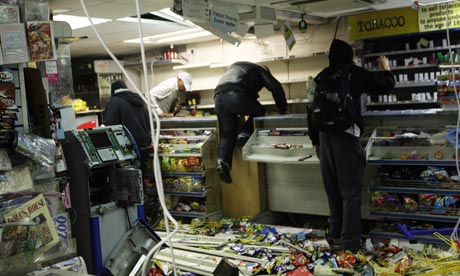
Another Harvey Ethics Quiz On Looting….

The comments on the Ethics Quiz on shooting looters was edifying. Now let’s examine the question of “legal looting,” according to a Yale Law School professor.

In a post for Bloomberg, Stephen L. Carter argues that “Peacefully taking what you need from a supermarket isn’t the same as looting.” he writes in part,

Should we conclude that people taking food from an empty store during an emergency are not committing a crime? That’s exactly what we should conclude — they are not lawbreakers — but it’s important that we understand exactly why.

Let’s start by considering our own instincts. If I were trapped and my family was starving, I would grab the food; I suspect most readers would too. Already our instincts tell us, then, that the moral situation in which we find ourselves is different when a disaster has struck. I believe, very deeply, in the importance of strong property rules. In an emergency, however, we should interpret the rules differently…. A well-known example in the Model Penal Code posits a hiker who, trapped by a blizzard, breaks into a cabin and eats the food to survive. The hiker has taken both food and shelter without the permission of the owner. By choosing to violate a property rule rather than starve to death or die of exposure, the hiker has selected the lesser of two evils. This is one form of the defense known as “necessity,” and is generally considered to mean that there is no crime.

(You need to read the whole post to fairly consider Carter’s argument.)

Your Ethics Alarms Hurricane Harvey Ethics Quiz of the Day is…
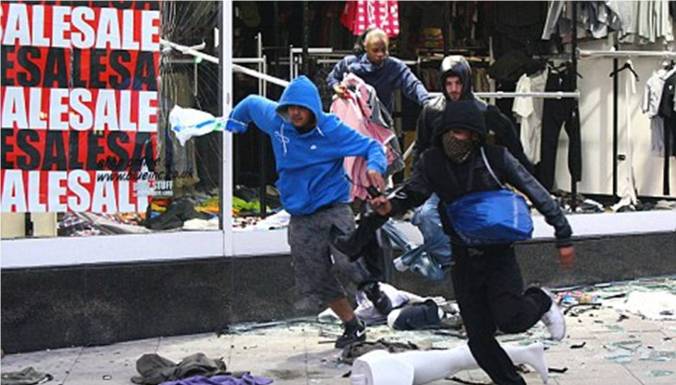
Is looting an abandoned supermarket for food still a crime?

Continue reading

Ethics Quiz: Looters

Looting has been reported in Houston. There are not too many species of human detritus lower than those who take advantage of natural disasters to prey on their neighbors, so the question arises, is it ethical for a city government to order police to shoot them?

This question usually arises in the context of martial law. A curfew has in fact been declared in Houston to minimize the looting; presumably an announcement that looters will be shot on sight will be even more effective deterrence. There are good reasons to discourage looting with strong measures. The conduct threatens civilized society itself, because it is not civilized conduct. If looting becomes widespread, the rule of law is suspended, and worse crimes may follow. In a situation like Houston’s, looting also forces law enforcement to choose between rescuing property and rescuing people. If police openly make the choice to let looters loot while they devote their attention elsewhere, then Looting Season has been declared officially open.

Over the years we have occasionally heard that orders were given to shoot looters on sight, but few looters have been shot. Usually the order is enough, which suggests that the order to shoot is a bluff, but usually an effective one.

Police shoot unarmed citizens alarmingly frequently already, however: that’s one order that shouldn’t be given in jest. Presumably most looters are unarmed; I’m not going to concern myself with the question of whether armed looters can be ethically shot. The answer to that is yes, especially when they shoot at rescuers, as apparently some have in Houston. No, your Ethics Alarms Ethics Quiz of the Day is this:

In a natural disaster, is the order to shoot looters on sight ethical?

Continue reading

Accountability Lessons, Oil Spill Ethics, and Obama’s Leadership Failure

President Obama has shown his inexperience and unfamiliarity with executive leadership ethics in many ways since he took office, but none are likely to be more damaging than his unease with accountability. He had better learn fast.

It is not surprising that so many mayors lose their jobs as the result of blizzards. Budget limitations guarantee that a city’s snow removal capabilities are set to the most likely levels of snowfall and not the extraordinary, once-in-a-decade event, yet when that once-in-a-decade event arrives, it will not do for the mayor to blame the budget or the weather or the City Council or the lack of a magic wand. The public doesn’t want to hear any of that: they want to be able to drive to work. They want the leader to fix the problem, because that’s what leaders are supposed to do. If a leader can’t fix the problem, he had better look as if he is doing everything possible and impossible to try. And he had better make it clear that he understands and accepts that it is his job. Continue reading

Provocative Ethics Reading for a Sunday

If your endangered Sunday newspaper is as shrunken from cost-cutting as mine, you may need some extra reading material as you wait breathless for the results of the House vote on health care reform. Here are some provocative ethics pieces from around the web:

The Ethics Verdict on Haitian Luxury Cruises

Luxury cruise lines and their passengers are being condemned in some quarters for continuing to dock their ships at Haiti’s private beaches while the rest of Haiti is in the midst of destruction, death and horror. “Royal Caribbean is performing a sickening act to me by taking tourists to Haiti,” one critic wrote one poster on CNN’s “Connect the World” blog. “Having a beach party while people are dead, dying and suffering minutes away hardly makes me want to cruise that particular line,” wrote another. Continue reading