Baby-Switching Ethics

http://www.youtube.com/watch?v=djB_bqUrI9A

The song from H.M.S. Pinafore tells the story amazingly well.

In Johannesburg, South Africa, a horrendous situation resembling the plot-resolving song from “H.M.S. Pinafore” may be reaching an unusual resolution for such cases—a sensible and ethical one. The families never suspected until one of the mothers underwent tests when her ex-husband refused to pay child support. One of the mothers wanted her biological child back, while the other wants to keep the child she had raised. A judge now has to decide.

The court asked the University of Pretoria’s Centre for Child Law to investigate and make a report n what would be in the children’s best interests. The experts’ answer: “The recommendation is that the children should stay with the parents who have raised them and should also be permitted to have contact with their biological parents.”

Exactly. Let’s hope that the court follows the recommendation, the only ethical one. Four years old is too old for this wrong to be set right without making it worse. What about three years old, though? Where do we draw that line? Furthermore, I am assuming that the two families are more or less equally fit, able and qualified to raise children. What if the investigation showed that one family was clearly more advantageous for a child: better educated parents with more resources and experience with children, living in a safer community? Then what would be the calculation of “the right thing”? The benefit of one child would be the detriment of the other, a zero sum game. In such a case, would fairness govern, rather than the best interests of the children? Why should one child be cheated out of the better life awaiting him, because of a nurse’s mistake? Fortunately, we don’t have those details, so we can make a confident abstract ethics judgement without confounding factors and issues. Continue reading

Perfect Timing: The Tamir Rice Shooting

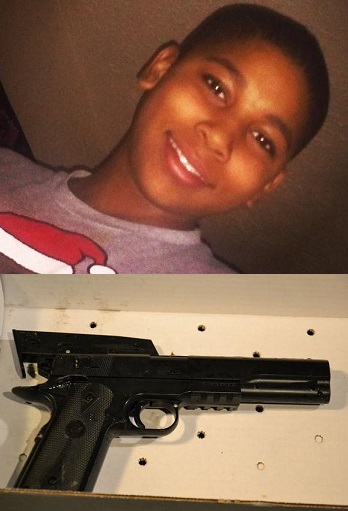
The boy and his toy.

The boy and his toy.

Unluckily for poor Tamir Rice, Cleveland, its police Department and Officer Timothy Loehmann, but luckily for the race-hucksters, activists and anti-police zealots determined to sell the position that white police have a secret hunting license for black kids, we have this latest tragedy, with another unarmed black child, this one just 12-years-old, killed by police.

Although it will doubtlessly not be portrayed that way in the media, there were many contributing factors to Tamir’s death. He was carrying a realistic pellet gun revolver in a park, and this is not a good idea. The guns are very realistic, especially from a distance. An observer called in a 911 alarm…I suppose the citizen can’t be blamed for being cautious, but in an earlier age, when toy guns looked like toy guns and the idea of a kid shooting anyone for real was unimaginable, this would have never happened.

Incredibly, the dispatcher didn’t relay to the officers the information from the caller that the gun was “probably fake.” The police excuse for that obviously crucial mistake was “We need to get that information to that zone car.”  Get the information that someone is wielding a real gun when there is already reason to believe it might be fake? There is never a need to get bad and potentially deadly information out fast. If nothing else, this is negligence, and would fuel a powerful lawsuit.

Then the officers arrived, encountered the kid, and apparently shot him dead without using a megaphone to warn the boy to drop his pellet gun. Not only did they assume the gun was real, thanks to the incomplete dispatcher report, but the shooting officer was a rookie. Would a more experienced cop have kept a cooler head? Continue reading

Ethics Dunce: “Girls” Creator/Actress Lena Dunham

Dunham

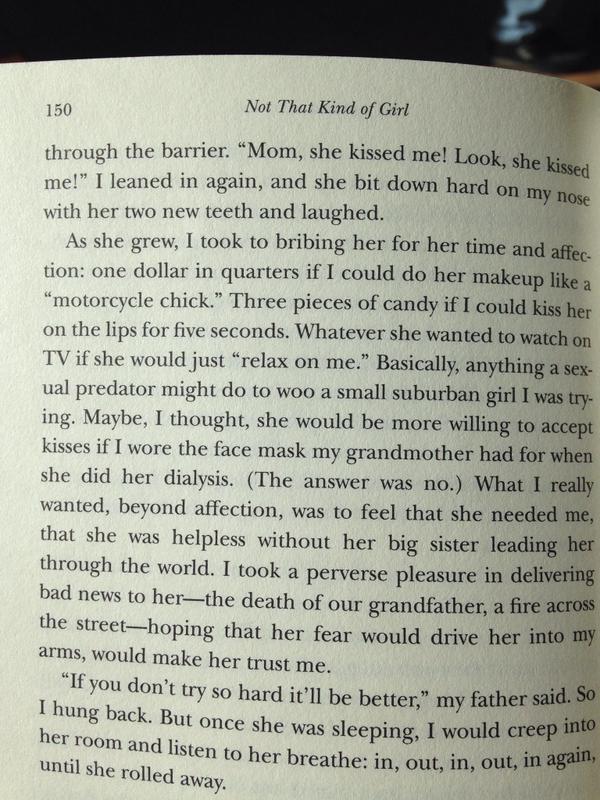
Lena Dunham, creator and star of the inexplicably critically acclaimed HBO series “Girls,” has written a memoir, “Not That Kind of Girl.” Here are ten inquiries regarding its most controversial passages, like the one above,  and the reaction to them:

1. What does one say about a Hollywood figure who puts a passage like this in her memoirs, writing about her relationship with her sister, who was six years younger…

“As she grew, I took to bribing her for her time and affection: one dollar in quarters if I could do her makeup like a “motorcycle chick.” Three pieces of candy if I could kiss her on the lips for five seconds. Whatever she wanted to watch on TV if she would just “relax on me.” Basically, anything a sexual predator might do to woo a small suburban girl I was trying.”

2. Or this…

“I shared a bed with my sister, Grace, until I was seventeen years old. She was afraid to sleep alone and would begin asking me around 5:00 P.M. every day whether she could sleep with me. I put on a big show of saying no, taking pleasure in watching her beg and sulk, but eventually I always relented. Her sticky, muscly little body thrashed beside me every night as I read Anne Sexton, watched reruns of SNL, sometimes even as I slipped my hand into my underwear to figure some stuff out.”

3. Or, most famously, this...

“Do we all have uteruses?” I asked my mother when I was seven.

“Yes,” she told me. “We’re born with them, and with all our eggs, but they start out very small. And they aren’t ready to make babies until we’re older.” I look at my sister, now a slim, tough one-year-old, and at her tiny belly. I imagined her eggs inside her, like the sack of spider eggs in Charlotte’s Web, and her uterus, the size of a thimble.

“Does her vagina look like mine?”

“I guess so,” my mother said. “Just smaller.”

One day, as I sat in our driveway in Long Island playing with blocks and buckets, my curiosity got the best of me. Grace was sitting up, babbling and smiling, and I leaned down between her legs and carefully spread open her vagina. She didn’t resist and when I saw what was inside I shrieked.

My mother came running. “Mama, Mama! Grace has something in there!”

My mother didn’t bother asking why I had opened Grace’s vagina. This was within the spectrum of things I did. She just got on her knees and looked for herself. It quickly became apparent that Grace had stuffed six or seven pebbles in there. My mother removed them patiently while Grace cackled, thrilled that her prank had been a success.

?

I say that that the Hollywood darling apparently used her little sister as a sex toy for at least a decade, was never stopped or admonished for doing so by remarkably negligent parents, and has grown to adulthood without recognizing that there is anything wrong with her conduct.

The first passage not only treads on the borders of incest, but also leaves the uncomfortable question of what else she did to her sister that emulated a sexual predator. The second is profoundly creepy, and the third describes what, if true, is abuse of an infant in terms designed to sound erotic. As blogger Ann Althouse points out, does anyone believe that an infant would stuff pebbles in herself “as a prank,”or that a compos mentis parent wouldn’t immediately assume that the older girl had done it to the younger girl? At best, Dunham is lying, and doesn’r realize that her lie puts her and her family in a terrible light.

4. What can we conclude about the character of a celebrity who proposes such conduct as harmless fun, apparently unaware that it violates standards of fairness, respect and caring, to be emulated and embraced by her readers and anyone whom they have influence over, including their own children, as a legitimate cultural norm? I conclude that her values are seriously and perhaps clinically warped. and that the more critics point this out, the safer everyone is, present and future. Lena Dunham is an ethics corrupter. Continue reading

Ethics Observations On Wendy Davis’s Controversial “Wheelchair Ad” Attacking Greg Abbott

http://www.youtube.com/watch?v=_9hn7GHEhCc

1. The campaign of Texas Democratic gubernatorial candidate Wendy Davis has issued an attack ad directly referencing gubernatorial rival Greg Abbott’s partial paralysis, and includes the image of an empty wheelchair. Davis could claim—and will, if she hasn’t already–that  the implication that his use of a wheelchair argues against his qualifications to be governor is inadvertent or imagined, except that her supporters were caught in a Project Veritas video mocking Abbott for his disability, and Davis has made gaffes relating to his handicap before, as when she said that he hadn’t “walked a day in her shoes.”

2. She is a member of a party with supporters in the media ready to pounce on any Republican who makes a similarly provocative reference to an opposing candidate’s race, religion, ethnicity, gender or “abled status.” The double standard is certainly a campaign boon to Democrats, but they have to take advantage of it a bit more subtly than this.

3. What is primarily wrong with the ad, however, isn’t the wheelchair, or the use of tactics that would called an appeal to bigotry if they were used by Republicans. It is that the arguments the ad seem to be making are stupid, unfair and wrong, and ones that Davis, who is a lawyer, must know are stupid and wrong, or she is stupid and wrong. Continue reading

The Nine-Year-Old and the Uzi: A Case Study In News Media Public Opinion Manipulation

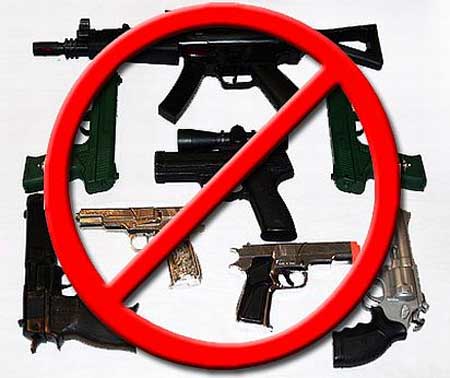
no-guns-banner

In White Hills, Arizona, a nine-year-old girl accidentally shot a firing range instructor when he handed her an Uzi on full automatic setting and she lost control of the weapon. That was a tragedy, but there have been thousands of newsworthy tragedies in the six days since that story first appeared, and yet the media is still bombarding us with stories about it. Why?

The episode itself is not very complicated. A foolish parent allowed his daughter to use a dangerous instrumentality that was beyond her maturity level to handle, and a negligent instructor paid with his life for a moment of hideous judgment and negligence. That’s it. It’s a one day story. Today, in the category of horrible accidents involving children, we should be reading about the little girl—same age–who died on a beach yesterday when a sand hole someone had dug collapsed on her. And the most recent infant left in a car to broil to death. Yet the Sunday morning TV shows all managed to mention the shooting range incident, and today I am still seeing articles like this one. Continue reading

Ethics Quiz: Four Young Children Locked In A Hot Car

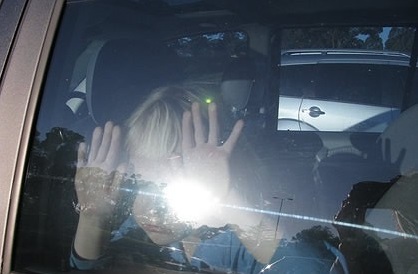
kid-in-hot-car

Mom and mom advocate Lenore Skenazy writes the Free Range Kids blog, which I have to remember to check out regularly. She is the source of today’s Ethics Quiz, which she obviously believes has an easy answer. We shall see.

Charnae Mosley, 27, was arrested by Atlanta police and charged with four counts of reckless conduct after leaving her four children, aged 6, 4, 2, and 1, inside of her SUV with the windows rolled up and the car locked.  It was 90 degrees in Atlanta that day. The children had been baking there for least 16 minutes while their mother did some shopping. A citizen noticed the children alone in the vehicle and reported the children abandoned.

Skenazy believes that the arrest is excessive—that the mother made a mistake, but that compassion is called for, not prosecution:

“[T]he mom needs to be told that cars heat up quickly and on a hot summer day this can, indeed, be dangerous. She does not need to be hauled off to jail and informed that even if she makes bail, she will not be allowed to have contact with her children…No one is suggesting that it is a good idea to keep kids in a hot, locked car with no a.c. and the windows up. But if that is what the mom did, how about showing some compassion for how hard it is to shop with four young kids, rather than making her life infinitely more difficult and despairing?The kids were fine. They look adorable and well cared for. Rather than criminalizing a bad parenting decision (if that’s what this was), how about telling the mom not to do it again?”

Do you agree with her? Here is your Ethics Alarms Ethics Quiz of the day:

Was it cruel, unfair, unsympathetic or unkind for Atlanta police to arrest Mosely for leaving her four young children locked in a hot car?

I am an admirer of Lenore Skenazy, but her pro-mother bias led her seriously astray this time. I think she is applying rationalizations, consequentialism and dubious, indeed dangerous reasoning to let this mother off a hook that she deserves to stay on. In her post, she even suggests that the car’s air conditioning was on, though there is no reason to believe that it was based on the reports. If the A-C was on, that changes the situation: I very much doubt that a mother would be charged with leaving four children in a locked, hot car if the car was not, in fact, hot. (One report states that the SUV windows were open, but that wouldn’t support the charges. If the windows were open, then Mosely left her children alone in public, which is a different form of child endangerment, but still dangerous. For the purpose of the quiz, I am assuming that the windows were shut, and that the air conditioning was not on. So does Skenazy.)

Let’s look at Lenore’s analysis errors:

  • She notes that the children were “fine.” What if they hadn’t been fine? That wouldn’t change what Mosely had done in any way, and what she did was irresponsible, dangerous and potentially deadly. Sixteen minutes, scientists tell us, is more than enough time for temperatures in a closed car to rise sufficiently high to cause heat stroke. Mosely, and obviously her children, were lucky—this is classic moral luck—and that shouldn’t be allowed to diminish the seriousness of what she did. (Aside: I just realized that to find that link, I made the same Google search that Justin Ross Harris made before leaving his infant son to die in his own hot vehicle, which has added to the circumstantial evidence causing him to be charged with murder.)
  •  The rationalizations peeking through Slenazy’s excuses for the mother’s conduct are quite a crowd. Along with #3. Consequentialism, or  “It Worked Out for the Best,” there is #19. The Perfection Diversion: “Nobody’s Perfect!” or “Everybody makes mistakes,” it’s twin, #20, The “Just one mistake!” Fantasy, #22. The Comparative Virtue Excuse: “There are worse things,” #25. The Coercion Myth: “I have no choice,”  #27. The Victim’s Distortion, #30. The Prospective Repeal: “It’s a bad law/stupid rule,” and #33. The Management Shrug: “Don’t sweat the small stuff!” There are probably some more, but that’s plenty.
  • If Skenazy believes that the “it was just a mistake” explanation should protect the mother from prosecution here, presumably she would make the same argument if all four kids (or just one) died. A lot of prosecutors feel the same way. I don’t.
  • If Mosley did this once, she may well have done it before, and is a risk to do it again. The best way to teach her not to do it again is, at very least, to scare her, inconvenience her, publicly embarrass her, and use the legal system to show how serious her wrongful conduct was, and how seriously society regards it. There is no guarantee that a lecture from a cop wouldn’t have just produced just an eye-rolling “Whatever…my kids were just fine, and I know how to take care of them” reaction, a repeat of the conduct, and eventually, a tragedy….followed, of course, by public accusations that the police were negligent and abandoned four children to the care of a dangerously reckless and incompetent mother.
  • I’m sorry, Lenore, but this-“How about showing some compassion for how hard it is to shop with four young kids, rather than making her life infinitely more difficult and despairing?” —makes me want to scream. How about not having more children that you can take care of safely? How about recognizing that your children’s safety comes first, with no exceptions, ever? How about meeting the minimum level of parenting competence, and not remaining ignorant about conduct that has been well publicized as cruel and potentially fatal to dogs, not to mention young children? In this case, compassion is a zero-sum game: compassion for the mother means showing none for her children.

When ethics fails, the law steps in. Too many children die every year from this tragic mistake that arises from distracted parenting, ignorance, and poorly aligned priorities. Prosecuting parents like this one for non-fatal incidents is exactly how the law serves as a societal tool to increase public awareness and encourage better conduct. It is in the best interests of Mosely’s four children as well as the children of every parent who reads about or hears her story to prosecute her to the full extent of the law.

_______________________________

Pointer and Source: Free Range Kids

Facts: Yahoo!, WSB

Laser Pointer Abuse: Why Ethics Gets Complicated

laser pointerThis month, the FBI announced that it was expanding a program rewarding anyone who reports an incident of an individual aiming a laser pointer at an airplane with $10,000. ( This use of the cheap lasers is a federal crime.) The bounty was previously offered in a handful of cities, but because it seems to have reduced the number of laser strikes on planes, it is being expanded nationwide.

Wait…is this really a problem? It’s several problems, in fact. The main problem is that laser pointers can, if the wielder of one gets “lucky,’ bring down an airplane. The related problem is that this country is littered with so many unbelievable assholes that we even have to discuss this….and imagine what other stupid, dangerous, irresponsible things they do when they aren’t trying blind pilots thousands of feet in the air.

Incidents where laser pointers interfered with the operation of commercial airliners have increased a ridiculous 1000% rate since 2005, when federal agencies started compiling statistics. Last year, there were 3,960 laser strikes against aircraft reported, an average of almost 11 incidents per day.

Some ethics-related thoughts:

1. There is no way around it: sociopaths, who are essentially ethics-free, are a constant threat and blight on society. Aside from the children involved, whose conduct can be chalked up to immaturity and flawed reasoning, the people who would aim a laser pointer at an airplane just for the hell of it are kin to those who set fires, vandalize buildings, create computer viruses and generally make life ugly and dangerous for the rest of us because they can. You can’t educate them or give them a sense of right and wrong. All you can do is make laws with harsh punishment for the stupid, destructive conduct these individuals engage in to give themselves a sense of power and importance. Ethics is irrelevant; their ethics alarms can’t be repaired, because they don’t exist. The laser-abusers  illustrate the maxim often quoted here that “When ethics fails, the law steps in.”

2. Anyone who uses a laser pointer this way and who is aware of the potential results is capable of much worse. This is signature significance, don’t you think? It is tempting to use such a crime as a justification for pre-crime: anyone who would do this is too stupid or too inherently anti-social to be trusted in a free society. Pre-crime, however, is a concept too prone to abuse, a slippery slope that the Constitution wisely precludes. I would, however, see no reason not to require a conviction of this crime to be disclosed to every potential employer, for all time. Nobody should trust someone who even once would risk causing an airplane to fall out of the sky because it would be cool, and I don’t care if the reason for the act was the lack of brain cells, IQ points, the sense God gave a mollusk or a missing conscience. I don’t want you in my neighborhood, near my family, or in my workplace. I don’t trust you. and I never will. Does this place a burden on you, if others feel as I do? Good, and too bad for you. Don’t try to shoot 757s out of the sky for laughs, and you won’t have the problem. Continue reading

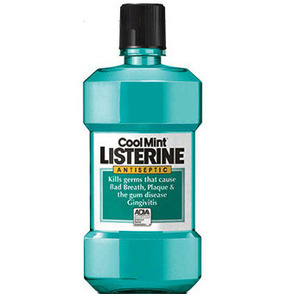
Spreading the Word: “The Amazing Mouthwash Deception: Helping Alcoholics Relapse For Profit”

"Bottoms up!"

“Bottoms up!”

I am moved to re-post the early Ethics Alarms entry from 2010, titled “The Amazing Mouthwash Deception: Helping Alcoholics Relapse For Profit,” for a few reasons.

It raises an important and shamefully under-reported topic, one that despite my exhortations then has yet to be adequately examined in the media. If one googles various combinations of “mouthwash,””Listerine,”‘alcoholism,” and “alcoholic,” the first result is, sadly, my post. Most people who are not afflicted with the disease of alcoholism have no idea that mouthwash is a popular stand-in for liquor, or that is used to deceive family members who think an addict is no longer using or intoxicated. None of the recommended policy changes I suggest in the post have been implemented, either.

Last week I chanced to mention the use of Listerine by alcoholics to a friend who is a doctor who treats alcoholics. He was shocked, and had no knowledge of this at all. “Eww!” he said. “Isn’t that poison? You can drink it? I had no idea.” And he is a professional who keeps up  with the literature. (But obviously doesn’t read his friend’s blog.)

Despite my frustration that what I regard as a true exposé that should have sparked an equivalent article in a more widely read forum has remained relatively unknown, I am encouraged by the effect it has had. Most posts have their greatest traffic around the time they are posted, but since 2010, the page views of this article have increased steadily every month. More importantly, it has drawn comments like this one, from yesterday:

“Am looking after my twin sister who is a chronic alcoholic. She has been three days sober and then she just walked in and I couldn’t work out what the hell happened. She was in a stupor , but there was no alcohol and I am dispensing the Valium for detox period and she smelt like mint!! Found three bottles of it !!! This is my last big push to help her and she pleaded innocent and no idea it had alcohol in it! Hasn’t had a shower for two days but keeps her month fresh and sweet !! Thanks for the information. Much appreciated XXX”

Most of all, I am revolted that what I increasingly have come to believe is an intentional, profit-motivated deception by manufacturers continues, despite their knowledge that their product is killing alcoholics and destroying families. I know proof would be difficult, but there have been successful class action lawsuits with millions in punitive damage settlements for less despicable conduct. Somewhere, there must be an employee or executive who acknowledges that the makers of mouthwash with alcohol know their product is being swallowed rather than swished, and are happy to profit from it.

Few had discovered Ethics Alarms by April of 201o. I hope that by re-publishing the post now, it might find its way to more social media pages and even be sent to some investigative reporters. As I ended the original post, spread the word. Mouthwash is killing your friends and family members, or if not yours, those of someone not far away.

Thus, for the second time and hoping for more impact than the first, here is “The Amazing Mouthwash Deception: Helping Alcoholics Relapse For Profit.” Even if you read it the first time, refresh your memory.

People are killing themselves right under our noses, and we are being thrown of by the minty smell of their breath.

Continue reading

When “Oopsie!” Isn’t Acceptible: It’s “Spring Forward,” You Idiots!

daylight_savings

From Ron Sarro, a friend, former D.C. journalist, once president of the Washington Press Club, and a reliable source:

“The ABC National weather woman just advised viewers “Don’t forget to turn your clocks back” on Sunday, then demonstrated how to use a machine to mix a booze drink. Its ‘Spring forward, Fall back,”  ABC, which made no effort to correct the error.”

Oh, nice. Now people who rely on ABC will be two hours off on Sunday. Imagine what kind of carnage this reporter’s gaffe will cause, and there is absolutely no way ABC can fix the problem. Sure, the correct information is out there in many places, but thousands, perhaps thousands of viewers will suffer because an inept and unprofessional reporter wasn’t thinking or taking appropriate care.

Sure, mistakes will happen…and this one should have been flagged immediately in the studio, and fixed on the spot. Moreover, there are certain kinds of information that cannot be excusably miscommunicated—the addresses of 911 call emergencies, for example.  Explaining to a patient over the phone how much medicine to take. Even conveying recipes in cooking shows. Such information flags itself; anyone should know that when one is telling millions of people to do something that might completely disrupt their lives if done incorrectly, you must be accurate, and you must be certain that you have the correct information and are accurately transmitting it.

We should be able to rely on professionals to understand this. There is very little professional and therefore very little trustworthy either about the broadcast networks any more, however….so we can’t.

A lot of people are going to learn this the hard way on Sunday.

_______________________

Graphics: ABC News

Unethical Quote Of The Month: Oprah Winfrey

 “I always think of the millions of people who heard that as their last word as they were hanging from a tree.”

Oprah Winfrey, in an interview with Parade Magazine, discussing race in America, the use of the word “nigger,” and how young people in the U.S. don’t know “diddly squat” about the civil rights movement.

Yes, Parade Readers, it's true, whites tried to wipe us off the face of the map.

Yes, Parade peaders, it’s true, whites tried to wipe us off the face of the map.

Now, thanks to Oprah, those young people think they know that “millions” of blacks were lynched in the United States.

Oprah Winfrey, one of the most admired, respected and trusted public figures in the nation, decided to join the recent concerted effort to magnify racial hate and fear, this time by grossly misrepresenting U.S.history. Not only that, but she did so in the context of representing herself as knowledgeable about the history of race relations in America, while others know “diddly-squat.” The recklessness, lack of responsibility, and ignorance that Winfrey’s statement represents is staggering. Continue reading