Ethics Hero: Pastor Thomas Keinath

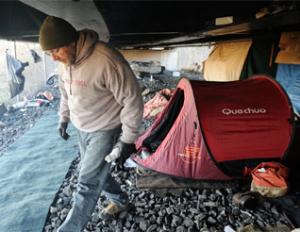
Rev. Keinath on holiday, under the overpass

Thomas Keinath is the pastor at Calvary Temple in Wayne, New Jersey, a so-called mega-church with a 2,000-plus seat sanctuary in an affluent community. It was time for him to take some vacation time, so he did. And what did he do?

Keinath spent his week off living with the homeless in the very un-affluent community of nearby Paterson, New Jersey. During the day, he wandered through the streets along with desperate, sick and destitute. At night, he stayed with them as they built fires to keep warm in freezing cold,  and slept with them, under a bridge, surrounded by discarded hypodermic needles.  He wrote down the life stories of the people he met, so he could learn from their life stories.

“I needed to understand what they were experiencing, and I needed to feel their pain.  How could I bring help or healing to the streets if I did not know what their needs are?” the pastor told reporters. Continue reading

The Flag and Whitney Houston

If Ol' Blue Eyes was worthy, why not Whitney?

New Jersey Governor Chris Christie  ordered New Jersey’s flags flown at half-staff in official mourning for Whitney Houston, and a lot of people are outraged. The critics of the honor fall into two categories: those who believe that the honor should be reserved for military heroes and high government officials, and those who believe that Houston is especially unworthy because of her well-documented substance abuse problems.

For his part, Governor Christie defiantly declares that Houston, as a daughter of New Jersey, deserves the state honor because of her contributions to the culture.

Technically and officially, Christie is out of line. Federal law is very specific about the proper treatment of the flag, including when it can be flown at half-staff. Simply put, celebrities don’t qualify, no matter who they are. A state governor can proclaim that the flag be flown at half-staff in his or her state for fallen soldiers, but not for non-military individuals. But governors ignore the law routinely, and have for decades. Tennessee’s governor lowered the flag when Elvis died. Massachusetts did the same for Red Sox great Ted Williams, though he was also a war hero, so no one was going to object. The law, in terms of custom and enforcement, is a dead letter, and probably should be.

True, some governors have abused the spirit of the law, including Christie, when he lowered the flag for Clarence Clemons, the saxophonist for Bruce Springsteen’s E Street Band—a great musician, but hardly a figure of transcendent national significance. If 4 USC Section 7 isn’t going to be followed or enforced, then we need some new standards, or before we know it they’ll be lowering the flag for Joan Rivers. Continue reading

The Legal Profession’s Muddled Standard For “Fitness To Practice”

OK, he has a temper, but hire him as your lawyer, and you can trust him with your life!

I confess: my profession’s standard for discipline bewilders me, and leads me to believe that nobody really knows what kind of conduct by a lawyer should dictate that he or she should be kicked out of the profession. I was reminded of this when I read a report about a former associate at a large New York law firm whose license was suspended for three years because he physically abused his girlfriend. A hearing panel had recommended a 60 day suspension, but the Appeals Court decided on three years.

Here is the basic rule regarding misconduct by lawyers, from the ABA’s Model Rules:

Maintaining The Integrity Of The Profession

Rule 8.4  Misconduct

It is professional misconduct for a lawyer to:

(a) violate or attempt to violate the Rules of Professional Conduct, knowingly assist or induce another to do so, or do so through the acts of another;

(b) commit a criminal act that reflects adversely on the lawyer’s honesty, trustworthiness or fitness as a lawyer in other respects;

(c) engage in conduct involving dishonesty, fraud, deceit or misrepresentation;

(d) engage in conduct that is prejudicial to the administration of justice;

(e) state or imply an ability to influence improperly a government agency or official or to achieve results by means that violate the Rules of Professional Conduct or other law; or

(f) knowingly assist a judge or judicial officer in conduct that is a violation of applicable rules of judicial conduct or other law.

Tell me: which provision did the brutal lawyer violate? Continue reading

Yuri’s Tweets, Flawed Analogies and the School’s Defenders

[Why is it that when I’m traveling and stuck in airports where the supposedly free WiFi doesn’t work and on airplanes that can’t keep on schedule, some post that I assumed was fairly straightforward turns into the Battle of Antietam? I apologize to the various commenter’s whose work product languished waiting for moderation—I just didn’t have the chance. This odyssey ends tonight; I apologize for slowing things down. On the other hand, it’s good to know that my presence is not required for there to be lively and interesting discussions here…thanks, everyone. Good work.]

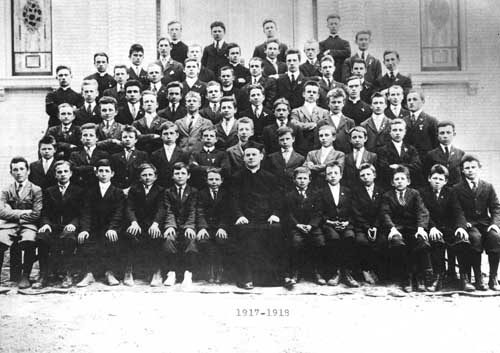
Don Bosco Prep High School, Class of 1917-1918

That is not to say that sending gross, obscene, or abusive tweets is exemplary conduct; obviously it is not. I have concluded, however, that the proper and ethical use of social media is something that people, including minors, have to learn for themselves by trial, error, research, observing the mistakes and experiences of others, making dumb mistakes and suffering because of them.  Parents and schools, as well as the popular media, have roles to play by giving advice and calling attention to cautionary tales, but heavy-handed attempts to manage social media conduct attempted by authority figures who, as a general rule, neither use nor understand what they are attempting to regulate are both irresponsible and doomed to failure. Like it or not, social media is a primary, and growing, means of communication and interaction in American society, and students are wise….that’s right, wise...to learn how to use it. I was just speaking to a room full of lawyers, and asked them how many used Twitter. The answer: none. But their clients use Twitter, and their client’s adversaries use it, and certainly their children. Their bar associations are making rules about what these lawyers and judges should and shouldn’t be able to do on social media, and most of those bar committee members don’t use Twitter either.As a result, the various jurisdictions have inconsistent rules, based on a lack of knowledge, that are already archaic.

It is fine and responsible for any adult to try to warn a young person that comments on social media need to be considered carefully, that they have a reach far beyond any intended audience and are essentially broadcasts, and that messages or photos can reach people who they hurt or upset, or cause to have a poor opinion of the sender. Ultimately, however, the pioneers in this new frontier of personal expression and mass communication are going to have to learn their own lessons, and better that they learn them now than when they are members of Congress. All punishing students for their tweets teaches them is that people with authority abuse it, and that adults just don’t understand. Because, for the most part, they don’t.

Now the analogies and comparisons:

Public schools vs. Private schools: I gather that the theory here is that if a student voluntarily attends a private school, the student has voluntarily submitted to whatever the school regards as proper discipline, whereas public schools, since they are mandatory and creatures of the government, are constrained by the Constitution. I think I may have encouraged this by a careless reference to the ACLU, which was, of course, a mistake (and I have removed it.) This is ethics, not Constitutional law, and the values are autonomy, fairness, respect, privacy and abuse of power and authority, not Freedom of Speech. I have dealt with several private schools and one Catholic school, and none of them suggested in their printed materials or regulations that they reserved the right to punish my child for what he said, wrote, or communicated during non-school hours, or when he wasn’t physically on school grounds. Neither does Don Bosco, which states as its “philosophy”:

“Don Bosco Prep educates young men so that, through a process of self discovery, each student will come to recognize and acknowledge his talents and limitations, while pursuing academic, athletic, artistic and personal excellence.

“Mindful of both our role and responsibility as a Salesian college prep school, we respect each student as a unique individual. Through active presence in his life, we promote a joyful spirit, intellectual curiosity, self-esteem and emotional maturity. We encourage the development of character and personal responsibility, love for one’s fellow human beings, a concern for the environment and an active commitment to social justice, all of which serve as the cornerstone of each student’s spiritual growth.”

I take none of that, including references to being “an active presence” in a student’s life, “promoting” emotional maturity, and “encouraging” development of character to mean “we can punish your child for absolutely anything he does or says that we disapprove of, no matter where or when it occurs.” It, the school, does all of the things relating to its philosophy in the school, based on the student’s activities and interactions in the school. Any other reading is giving a group of strangers whose biases, background and motivations I can only guess at a blank check to manipulate a child’s life, thoughts and personal activities.

When one teacher from a private school called me to tell me that she felt it was cruel of my son to exclude a classmate whom he did not like from his birthday party, I told her that it was none of her business, and filed a complaint with the school.. Private school does not mean “we can meddle in your child’s private–as opposed to school—activities.

Catholic vs. Secular: All schools should teach character; it happens that Catholic schools do it with more fervor, but that gives them neither a greater obligation nor additional authority. Schools teach good conduct and civility by insisting on appropriate conduct and deportment in school. Are people really prepared to argue that a Catholic school can justify punishing its students for not doing household chores, not washing their hands after using the bathroom in their homes, being cruel to a younger sibling or being disrespectful to a parent? Not only is personal social networking use as unrelated to the school  as any of these, it is also far less significant. How much of a blank check do we want school administrators to have? The right answer to that is that they shouldn’t have a blank check at all, and being a Catholic school changes nothing.

High schools vs. Military Academies: This is just a bad analogy. The student at a military academy has no personal life, and has no privacy. The academy is in loco parentis; the student lives there; authority is total. There is an honor code and a code of conduct, and it applies to everything a student does, including communications. That’s the military. That’s not high school.

High Schools vs. College: Several commenters have referenced the incident from last March when Brigham Young University suspended a star basketball player for having pre-marital sex. Brigham Young is famous for its strict and far-reaching conduct code, which bans drinking, pre-marital sex and many other activities that are virtually courses at other schools. If a student agrees to attend B.Y.U., the student has also agreed to certain conditions unique to the university. Should a more typical college be applauded for suspending a student who has sex with his high school girl friend over Christmas break, in his parents’ home? No; this is none of a college’s business, and attempting to extend its authority beyond the campus and even over state lines in such a fashion is intolerable. If Yuri Wright and his parents signed a document promising that Yuri would never send an offensive tweet during his years at the school, I withdraw my condemnation of Don Bosco’s punishment.

High schools vs. the Workplace: It is true that if an employee engages in conduct outside of work that embarrasses or reflects badly on an employer, ot that interferes with the employee’s ability to do his or her job, the employer is behaving ethically if it chooses to terminate the employee. It is not ethical for an employer to terminate an employee for any private conduct it happens to disapprove of, however. It can’t tell me that I can’t drink or smoke or have sex with men in my own home. It  better not tell me that I can’t vote for Ron Paul or root for the Red Sox, either. The Naked Teacher Principle applies, of course: if I’m a Coca-Cola VP and a Facebook picture shows me chugging Pepsi, that image could undermine my effectiveness at work, and Coke can can me; it’s ethical. If I write an ethics columns for a newspaper and I am caught in an adulterous affair with Marianne Gingrich, the newspaper is only being responsible to fire its unethical, untrustworthy ethicist. None of this applies to Yuri’s tweets. They don’t reflect on the school, or shouldn’t, because the school shouldn’t have any control over his personal communications. They  don’t interfere with his studies, or make him a worse football player.

Expression vs. Conduct: Tweets aren’t conduct. Even if I accept the proposition that a school may, in extreme situations, have some legitimate role in attempting to control student conduct outside of school (and I’m not sure I do), allowing a school to punish a student for the content of his words, uttered or written away from school, is a slippery slope with no braking. If sexually and racially objectionable tweets can get a student expelled, why not tweets critical of President Obama, or cheering on Newt Gingrich? Does Don Bosco’s commitment to “social justice” mean that Yuri can’t tweet that Occupy Wall Street is a crock?
Attention Schools: You Do Not Own Your Students

This must stop.

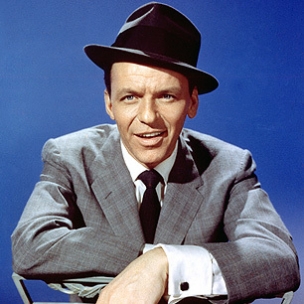
Yuri? Your school just called; they want slightly more understated smile from you in the future. Or else.

Yuri Wright, a top ranked high school football player who is being sought by schools in the Big Ten, Pac-12, ACC, SEC and Big East, was expelled from Don Bosco Prep High School in Ramsey, N.J.for sending sexually graphic and racial Twitter posts to his more than 1,600 followers. The action jeopardizes his chances of getting a big-time football scholarship. Continue reading

Unethical Quote of the Week: Patrick Lott

Patrick Lott, hard working role model

“I have always given my best and tried to be a great role model. No one is perfect. Thanks for the memories.”

—-Patrick Lott, Assistant principal at Bernardsville Middle School in Somerville, New Jersey, in a cryptic Facebook post earlier this month that was explained, sort of, when he was arrested for allegedly using a hidden camera to videotape boys in the Immaculata High School showers for a period of nearly three years.

I say “allegedly” because people get mad at me when I don’t, and because he hasn’t been tried and convicted yet. On the other hand, videos of nude teenagers showering were found in his home. Maybe they flew in the window.

“Nobody’s perfect” is one of the great and infuriating rationalizations used by scoundrels and their apologists,  and goes hand in hand with all the other clichés designed to discourage people from making the kind of ethical judgments that keep societal standards sturdy, ethical, and clear. It is right up there with “It’s not the worst thing” and “Judge not, lest ye not be judged” as bumper sticker dodges that set my teeth on edge, but “Nobody’s perfect” may be the most outrageous of all….at least when employed by someone like Lott.

There is a pretty big chasm between “perfect” and taking secret videos of naked kids when you are a trusted school administrator. This guy couldn’t see “perfect” with the Hubble telescope. And he says he’s always given his best—-this was his best? I shudder to think about what Lott would have done if he wasn’t trying so hard. He tried to be a great role model? For who…Penn State assistant coaches?

Lott’s statement is an outrageous plea for sympathy for all the wrong reasons. His best would have been to seek help of find another line of work when he realized he couldn’t control his desire to watch naked young boys. Trying to be a great role model begins with not breaking the law. And  one who behaves outrageously should not insult the rest of humanity by trying to suggest that we’re really not so different. Oh yes we are.

This is Lott’s disgrace, Lott’s shame, and Lott’s crime. The very least he should be able to do is accept responsibility, and not try to minimize his misconduct or suggest that it’s not all that different from overeating or going 45 in a 35 mph zone.

Bonus Comment of the Day: “Naming Your Kid After Hitler…”

"Be proud of your name, little Adolf! It has a nice ring to it--sounds like someone important! And tell your little friend Joe Mengele that HIS name is fine, too. What's that? Well, sure we can go to Poland for your Spring Break! What a novel idea!"

I couldn’t resist this one, since I needed a hammer to close my mouth after I read it, because my jaw locked. The opinion is ridiculous, of course, but the comment is still enlightening: this is what happens when essentially good and virtuous instincts blind logic and common sense. The number of unethical, or just plain stupid things that occur when this happens is one of the tragedies of life. Or, to take a more charitable view, such a comment is what happens when someone has an essentially ethical position but picks the most inappropriate platform for it imaginable, and in trying to squeeze an important sentiment where it doesn’t belong, ends up discrediting an otherwise valid point. (Don’t do that.)

Here is Allan’s Special Bonus Comment of the Day, on Naming Your Kid After Hitler: 100% Legal, 100% Child Abuse. Hold on to your jaw: Continue reading

Comment of the Day: “Naming Your Kid After Hitler: 100% Legal, 100% Child Abuse”

Moon Unit Zappa: Only in America!

Site quotemaster and resident pedant Tom Fuller comes through with a rare comment of his containing no quotations whatsoever! (Tom is, among other things, a contributor and researcher for The Yale Book of Quotations.) He adds some useful perspective on the issue of naming children, in his Comment of the Day to yesterday’s post, “Naming Your Kid After Hitler: 100% Legal, 100% Child Abuse.”  I must point out that “Choo Choo” was not the 1962 Mets catcher’s real name, any more than Red Sox pitcher Dennis Boyd was really named “Oil Can.”

Here it is Tom’s comment:

“This is a good illustration of how America’s concept of free speech is such an unusual legal and cultural norm. In many countries, including Germany, a child’s name must be legally approved in advance (in Germany, by the Standesamt — office of vital statistics).

“By German law, a child’s name has to meet two conditions: (1) it must reflect the sex of the child, and (2) it must not endanger the ‘well-being of the child.’ No “Moon Unit” Zappa, no “Choo Choo” Coleman, and — especially — no “Adolf” anybody, unless the local office says “OK”.

“According to wire service reports, hundreds of Algerians wanted to name their babies “Scud” during the 1991 Iraq war, but the local officials nixed the idea.

“My point? Only that Americans are often more likely than those in other countries to regulate speech and behavior in ways other than by prior legal restraint — like ethics, which is what this odd corner of the Web is all about. Sadly, as history has shown, when ethics fails, many people turn to the law to fix things. It doesn’t always work.”

Naming Your Kid After Hitler: 100% Legal, 100% Child Abuse

Ironically, HIS parents wanted to call him "Stinkface Frankenstein-Poopiebottom," but thought better of it.

Not surprisingly, a New Jersey Court has found Heath and Deborah Campbell innocent of child abuse charges for naming their children “Adolf Hitler” and “JoyceLynn Aryan Nation.”

I agree. The law can’t limit parents’ rights to determine their offspring’s names, which come squarely come under the category of free speech. Unfortunately, these names say “Hate me,” “Shun me” and “Beat me up.” It may be funny to hear a song about a father who names his boy “Sue” to make him grow up tough, but inflicting these names on helpless children is no laughing matter. It is child abuse, there’s no question about it. It is just child abuse that the state has no way to stop. If parents don’t have the sense, fairness, compassion and decency to avoid burdening children with names that virtually guarantee that they will be outcasts, miserable and severely maladjusted, there is no law that can force them to do it. And since parents who think it’s dandy to name a child after Der Führer by definition don’t have common sense, fairness, or decency, the kids are out of luck. Continue reading

Introducing the Munroe Rule: “If You Teach, Don’t Denegrate Students Online; If you Denigrate People OnLine, Don’t Teach”

Viki Knox fans

I want to thank Viki Knox, the  Union Township (N.J.) high school teacher who decided to proclaim her condemnation of gays on Facebook, for making it possible for me to re-use much of an earlier post. This saves me a lot of thought and time.

That one involved Jerry Buell, a veteran high school teacher who was suspended indefinitely earlier this year by Lake County, Florida’s Mount Dora High School for posting an anti-same-sex marriage rant on his Facebook page.  In his post, prompted by New York’s decision to legalize gay marriage, Buell said that the news made him want to throw up, that gay marriage was “a cesspool,” and that homosexuality was a sin. Knox went Buell one better, going to the heart of the matter by declaring that homosexuality is a sin that “breeds like cancer” and describing it as “perverted.” She also wrote:

“Why parade your unnatural immoral behaviors before the rest of us? I/we do not have to accept anything, anyone, any behavior or any choices! I do not have to tolerate anything others wish to do.” Continue reading