Is This The Most Unethical Book Review Ever?

It has to be close, because I don’t know how a book review can be more unethical.

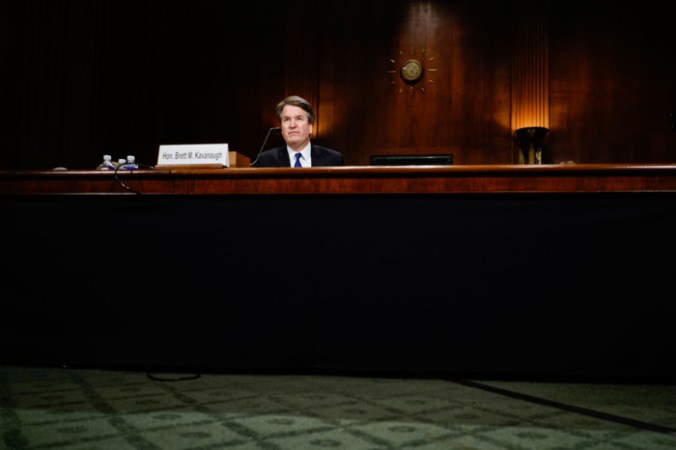
The book in question is Ruth Marcus’s unconscionable hit piece on Justice Brett Kavanaugh, “Supreme Ambition.” The forum is the book review section of the New York Times, which has been trying to smear Kavanaugh since he was nominated for the Supreme Court, and even since the contrived attempt to defeat him by ancient and uncorroborated accusations of misconduct when he was a teenagerwhen he was a teenagerwhen he was a teenager (no three times is not enough repitition to emphasize how despicable this was) failed, as it should have. The objective, trustworthy reviewer the Times chose to assess the book was Adam Cohen. He writes speeches for and advises New York’s socialist mayor Bill de Blasio, and authored “Supreme Inequality: The Supreme Court’s Fifty-Year Battle for a More Unjust America,” coming out next month.

Yup, the perfect guy to provide an objective review of an anti-Kavanaugh book.

It is clear by now that progressives and the mainstream media have added the Brett Kavanugh confirmation hearing to the shooting of Mike Brown, the death of Trayvon Martin, and the fake Russian Collusion theory as narratives they will falsely characterize until the stars turn cold. Incredibly,  Cohen writes at the end of his review,

“As important as the Kavanaugh battle was for the court, however, there was something even more profound at stake: whether, on the most important questions, our nation is capable of putting the public interest ahead of partisanship, and whether the truth matters. The forces aligned for partisanship and against truth are stronger than ever.”

Cohen’s review is a prime example of the condition he claims to be condemning. What “truth”? Not a single fact was produced during the hearing that had any relevance to Brett Kavanaugh’s fitness to be a Supreme Court Justice. His record as a judge was impeccable and beyond reproach. Ah, BUT…Marcus and Cohen point to this: Continue reading

A Fake News Story About Fake News!

The New York Times end-of-year whine about how mean President Trump has been to the news media was headlined (in the print edition), “Trump Attacked News Media Even More in 2019.” That’s an assertion of fact. What does it mean? Well, the first sentence of the story reads, “On Twitter, President Trump deployed the phrase “fake news” 273 times this year — 50 percent more often than he did in 2018.” Is calling a story published by the news media “fake news” an “attack”? What if the story is objectively false or misleading as most—not all, but most—of those in question were?

For example, last week MSNBC aired an Iranian state media claim that the second round of rocket attacks on U.S. military installments in Iraq killed 30 U.S. soldiers, and that “we have just stepped over the precipice.” That’s irresponsible and lousy journalism. MSNBC hadn’t checked the claim, it just rushed it on the air. I don’t want to hear the Clintonian rationalizations that this wasn’t technically fake news, because the report was that the Iranians were saying that the 30 soldiers had been killed. It was a false report; it was misleading; it would upset the families of servicemen in the area (one journalist criticized it as “journo-terrorism”), and there was no excuse for it. If this kind of unprofessional hackery is criticized, by me, for example, is that an attack?

Such a characterization is more fake news. The news media is constantly pushing the dishonest and self serving position that to criticize journalists for their proven ethical breaches and betrayal of their duty to keep the public informed is to attack them, ergo this is an attack on journalism itself, hence it is an attack on Freedom of the Press, therefore it is an attack on democracy itself. Calling the news media on its now near complete transformation into a left-wing propaganda machine is, they surmise, is tarred by this false characterization built on successive unwarranted leaps of logic.

Journalists appear to really believe their own fake news in this case. I hear and read it over and over again: the decline in the public’s trust in news reporting, as reflected in many surveys and polls, is President Trump’s doing, as part of his grand plan to become a dictator. (See Big Lie #3). Their narcissistic delusion that they and their profession are beyond reproach is self-evidently in direct opposition to reality: the reason for the decline of American journalism’s credibility is its own, reckless , escalating dishonest, incompetence, bias and untrustworthiness.

The article is a good example of this itself. The second sentence in the piece says that the President “demanded ‘retribution’ over a ‘Saturday Night Live’ sketch.” Yes, that was self-evidently stupid, but what does a late night comedy show have to do with the news media? Nothing.

The article then moves on to another Big Lie it has repeatedly advocated,  #6: “Trump’s Defiance Of Norms Is A Threat To Democracy.”

The “norm” in this case is, I guess, a President remaining passive and prostrate while most of the journalistic establishment openly allies itself with your adversaries—even foreign adversaries, like Iran— and dedicates its reporting to destroying your ability to govern. The Times writes, “Mr. Trump’s vilification of the news media is a hallmark of his tenure and a jagged break from the norms of his predecessors: Once a global champion of the free press, the presidency has become an inspiration to autocrats and dictators who ape Mr. Trump’s cry of ‘fake news.’”

Calling this a “jagged break from the norms of his predecessors” is another variety of fake news: fake history, in which the news media deliberately or incompetently makes the largely historically ignorant public more ignorant by falsely describing the past. My “favorite” example of this kind of fake news was when Presidential historian Doug Brinkley was put on the air by CNN on election night to salve the despair of Hillary supporters by explaining that America seldom elects the same party to the Presidency three terms in a row. What he said was completely wrong on the facts, not wrong as an opinion, just false. Nobody challenged him; there was no correction. Continue reading

Ethics Warm-Up, 1/6/2020: On The Eve Of Destruction Edition!

ARRGH! WE’RE DOOMED! DOOMED!

Just kidding.  I’m sure I’ve mentioned Barry McGwire’s hilariously overwrought rendition of P.F. Sloan’s silly lyrics before. Everyone should listen to this song every few months or so to remind them that we were pronounced doomed 55 years ago, yet here we are. The lack of historical perspective and general knowledge about the real world of geopolitics is driving so much of the over-heated laments we are hearing and reading—I think laughing is a better response that rolling one’s eyes, but I’m open to being convinced otherwise. Yes, sometimes leaders and countries have to draw red lines, and it is always best if the world believes them when they do. It never believed Barack Obama.

1. Fake news, headline-style...Yesterday, the New York Times headline, in bold,  “this is really important!!!” point type, told us that Trump’s military advisers were “stunned” at his decision to kill Iran’s head terrorist. Oh, no! His decision was surprise? Tt came out of the blue? They had recommended against it? Well, no. The story under that intentionally misleading headline says that the President was presented with several options, and the pros and cons of all were discussed. They expected him to choose one of the other options, that’s all. “Stunned” carried negative implications that the facts didn’t warrant, so naturally that’s what the Times editors chose. All the better to undermine trust in the President.

2. Not all celebrities are America-hating dolts:

Continue reading

“Authentic Frontier Gibberish” Ethics

On Ethics Alarms, the term “Authentic Frontier Gibberish” is used to describe “intentionally (or sometimes just incompetently) incoherent double-talk used by politicians, advocates, lawyers, doctors, celebrities, scientists, academics ,con artists and wrong-doers to deceive, obfuscate, confuse, bore, or otherwise avoid transparency, admitting fault, accepting accountability or admitting uncomfortable truths. The term comes from “Blazing Saddles,” in this memorable scene.

It sometimes arises from incompetent communication skills, which are unethical for anyone in the public eye to employ. Sometimes it is more sinister than that, and occurs when someone chooses to create a vague word cloud that obscures the speaker’s or writer’s real purpose…and sometimes the fact that they are frauds. Sometimes AFG is designed to convey a feeling while avoiding sufficient substance to really explain what he or she means.

Sometimes, it feels like gaslighting.

A New York Times article was ostensibly about “Dealing with Bias in Artificial Intelligence.” This was, obviously, click-bait for me, as the topic is a developing field of ethics. The introduction stated in part, “[S]ocial bias can be reflected and amplified by artificial intelligence in dangerous ways, whether it be in deciding who gets a bank loan or who gets surveilled. The New York Times spoke with three prominent women in A.I. to hear how they approach bias in this powerful technology.” The statements of the first two women—I see no reason why only female experts on the topic were deemed qualified to comment—were useful and provocative.

Last, however, was Timnit Gebru “a research scientist at Google on the ethical A.I. team and a co-founder of Black in AI, which promotes people of color in the field, [who] talked about the foundational origins of bias and the larger challenge of changing the scientific culture.”

Here’s what she said (Imagine, the Times said this was “edited and condensed”! ). The bolding is mine.. Continue reading

The Other Branch’s Persistant And Hypocritical Corruption

I subscribe to the Times, but I stopped routinely reading all of the editorials, op-eds and letters to the editor once I realized the stultifying and depressing sameness of it all: narrow viewpoints, deranged columnists, and ugly bias, day after day. This Christmas Eve-day dawned with my wife in a panic, the tree decorations still incomplete, and a recognition that I was going to have to get Ethics Alarms posts done in the midst of other tasks so the 30 or so readers likely to tune in here today wouldn’t be disappointed. I grabbed the wrong section of yesterday’s Times during a tree-breather, and had to consume the editorial section.

For once, the main editorial was not an anti-Trump screed.

Appropo of the Democratic candidates’ mantra of corruption (though the editors somehow never saw the connection), it was about the persistent insider trading and conflicts of interest that have made Senators and Representatives unethically rich for ages, and that surpass in genuine corruption anything President Trump has been accused of.  (Ethics Alarms covered the issue here, and here.) The Times editors began with the saga of former Rep. Chris Collins, who had to resign his office and also went to jail for breaking the insider trading laws. His crime was tipping off his son about a stock likely to go bad based on his early notice of pending legislation, The Times found it convenient to use Collins, a Republican, as the stand-in for all of Congress, but everything he did before crossing the line of the law is, if not routine, disturbingly common among Democrats and Republicans alike:

[H]e served on various congressional committees that played a role in directing federal health care policy. Mr. Collins was the company’s largest shareholder. He served on the company’s board. He solicited investments in the company, including from other members of Congress. (Tom Price, who served as a Republican representative from Georgia and then as secretary of health and human services in the Trump administration, was among the buyers.) Mr. Collins wrote legislative language to expedite drug trials, potentially benefiting Innate, and he pressed a staff member at the National Institutes of Health to meet with the company about its clinical trial.He also invested in other health care firms, some of which held federal contracts.

Continue reading

Sunday Ethics Warm-Up, 12/08/2019: Bulletin! The New York Times Reports Pro-Trump News Straight!

You wouldn’t believe what I am dealing with right now, so I’m not even going to tell you.

Let’s just say that in this case, writing ethics stories is a welcome respite..

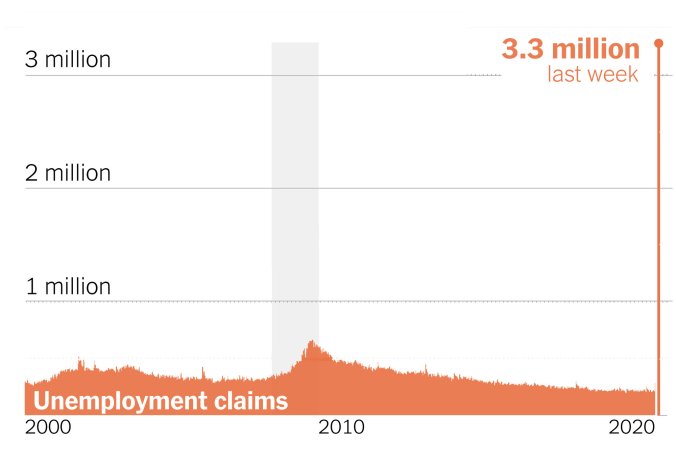
1. Let’s give credit to the New York Times. On its front page Saturday, the Times highlighted three large graphs, one showing that “monthly job gains under President Trump have shown strong, consistent increases “even after a decade of economic expansion”; one showing that wage growth has “picked up momentum,” and the other showing that unemployment has dipped below “full employment.”

All of this, plus a record high stock market, are just as candidate Trump promised and predicted.

The Times then says,

“With 11 months to go before the 2020 election, a polarized electorate is dividing itself by which story line it views as more pertinent — the president’s potential abuse of power, or the comfort of a steady paycheck credited to his leadership.”

Gee, let’s see…. “potential abuse of power” that was not an abuse of power at all, or jobs, higher wages, and rock bottom low unemployment. Tough choice. What a dilemma.

Give the Times credit for making it ridiculously clear what a big lie Big Lie #5 (“Everything is Terrible!”) is.

2. But let’s not get carried away! Here’s another Times headline from the same edition: Continue reading

Cultural And Societal Poison, Pumped Into Our National Bloodstream [Corrected]

When I worked for the U.S. Chamber of Commerce in the 1970s, I was once dispatched to an Amway convention at the Atlanta Omni  to speak to the packed arena about carious Chamber citizen activism projects. Right before I was scheduled, the Amway “Diamond” hosting the thing (it was so strange and cult-like that “thing” is the best I can come up with this early in the morning) rallied the glassy-eyed crowd with a speech the likes of which I had never heard before. Among the crazy assertions he made to cheers and  cries of “Amen!” was that Jimmy Carter, then President, was card-carrying Communist and an agent of the Soviet Union, preparing as he spoke to turn over America to the Russians He also said, Joe McCarthy-like, that he had authentic documents to prove this.

As I sat in the wings, my mind raced to determine what I should do. I did not want to endorse or support what I had just heard in any way, but I also was on an assignment from my boss, who, I was and am quite sure, would have been just as horrified by what I had just heard as I was. Amway’s founders, Jay Van Andel and Rich De Vos were Chamber board members and big contributors to the Chamber’s PAC. Nothing I was promoting there was sinister. Still, I seriously considered leaving immediately, or even using my huge radio mic to denounce what I had just heard as outrageous lies, at least until I was brought down in a hail of bullets, or torn limb from limb by the infuriated mob.

In the end, I gave a shortened version on my planned speech—the crowd was very receptive—and got the hell out of there. When I returned to D.C., I announced that I would not appear at any more Amway conventions, or, for that matter, any John Birch Society meetings or KKK rallies, and my wishes were respected. I remained disturbed by the incident, and especially by the extremist bile that was apparently circulating quietly among the public that was barely hinted at in what was then naively called the “respectable media.”

Sunday, I read a column by Thomas Friedman, a three-time Pulitzer Prize winner and best-selling author who writes for the New York Times. In a column called Iran Is Crushing Freedom One Country at a Time,”  this supposedly mainstream and eminently respectable pundit wrote, Continue reading

Flashback: For Your Use When “Resistance” Relatives Attack At Thanksgiving Dinner

It all began here. How quickly we forget—or how quickly they hope we’ll  forget.

In two December 20, 2016 posts, “The Electoral College’s Day Of  Reckoning I and II,” Ethics Alarms covered the first attack on American democracy in what came to called here the “2016 post-election Ethics Train Wreck.” This has culminated in the current House Democrats’ impeachment fiasco. Make no mistake: it is a single plot, one that I never suspected would have continued this long, and caused as much damage to the nation as it has.

When your relatives start spouting talking points that they have  neither researched, thought critically about nor understand, consider reminding them where it all started, and who has really been responsible for bringing the United States of America to this sorry and thoroughly avoidable place. Most of the villains of the coup attempts to come outed themselves here: Democrats, the news media, academics, Hollywood, professionals, especially lawyers. Most had outed themselves earlier, of course, but still had plausible deniability. Not after this.

As you can see, they had decided, way back in 2016, right after the election after thaye had wept, and cursed, and rended their garments, that because they didn’t want Donald Trump to be President, they had a right to prevent him from taking office, and if that failed, then to interfere with his right to fulfill the duties of the office until they could come up with some way remove him. This is where it began, and this is what has been going on ever since.

Your resistance family members and friends have been been responsible because they enabled this. Don’t let them get away with it.

The Electoral College’s Day Of Reckoning, Part I: Revelations

After all the protests, the petitioning, the grandstanding, the misinformation and bad law and false history, after all the harassment and intimidation aimed at getting state electors to violate their pledges, duty and the trust of theirs state voters, all designed to keep Donald Trump from attaining 270 electoral votes and thus forcing the Presidential election into the House of Representatives for the first time since 1876, the results were just another humiliation for the Democrats and Hillary Clinton. Donald Trump was officially elected President of the United States, and it wasn’t close.

Four Democratic electors in Washington, a state Clinton won, voted for someone else, giving her just eight of the state’s 12 electoral votes. They will be prosecuted, apparently, for breaking a Washington statute. Colin Powell, a Republican, received three of the faithless elector votes and Native American tribal leader Faith Spotted Eagle received one, apparently because one elector decided that rather than vote for Senator Elizabeth Warren, a real Native American was preferable. Single  electors in both Maine and Minnesota attempted to cast ballots for Bernie Sanders, but state laws requiring electors to follow the statewide vote invalidated both rebellious ballots. One Hawaii elector did vote for Sanders, an especially outrageous betrayal of the vote since Hawaii went to Clinton even more decisively than California.  Never mind: this unknown, unvetted, undistinguished citizen decided that no, he or she knew better. That’s the model Democrats were promoting.

The one Republican elector, Texas’s Christopher Suprun, of Texas, who had trumpeted his  intention  not to vote for Trump despite his state heavily favoring the President Elect voted for Ohio Governor John Kasich as promised, and another Texas elector defected to vote for Ron Paul. Thus the almost six week Democratic push to use the Electoral College to pull victory from the jaws of defeat had the net effect of increasing Trump’s Electoral vote advantage over Clinton by three, with Hillary Clinton becoming the candidate with most defecting electors in over 200 years.

George Will’s favorite phrase “condign justice” leaps to mind. First the Wisconsin recount increases Trump’s vote total, and now this.

Three Ethics Observations on one of the most embarrassing spectacles in U.S. election history:

1. Ironically, the Electoral College functioned exactly the way the Founders intended it to, and rescued the nation from a regional candidate. Trump won the nation, and Hillary was elected Queen of California. The country wanted radical change, while the huddled socialists, crypto-Marxists, radical college students, illegal immigration fans and nanny state addicts were happy with things as they are.

California is a complete outlier, virtually a one-party state. As an analysis by Investor’s Business Daily points out, between 2008 and 2016, the number of Californians who registered as Democrats increased  by 1.1 million, while the number of registered Republicans dropped by almost 400,000. Republicans in the state stayed away from the polling places because they had nobody to vote for in many places. Two Democrats, and no Republican, were on the ballot to replace Senator Barbara Boxer. Nor were there Republicans on the ballots for House seats in nine of California’s congressional districts. At the state level, six districts had no Republicans running for the state senate, and 16 districts had no Republicans running for state assembly seats:

Such Republicans as there were knew Clinton was going to win the state  and its 55 electoral votes,  so there was little motivation to cast a ballot.Clinton was getting all 55 votes, no matter what. Thus Trump received 11% fewer California votes than John McCain did in 2008, as  the number of registered Democrats in the state climbed by 13% since then. If California had voted like every other Democratic state — where Clinton averaged 53.5% wins — Clinton and Trump would have ended up in a virtual popular vote tie. Laws requiring electors to follow the statewide vote invalidated both efforts.

If you take California out of the popular vote equation, then Trump won the rest of the country by 1.4 million votes.  The Founders installed a system that favors a candidate with broad-based appeal over all the diverse regions and cultures of a large nation, and that isn’t going to be easily dominated by a large voting bloc that is atypical of the rest of the population—like California in 2016.

2. Writer Daniel Brezenoff, the originator of the Change.Org  Electoral College Petition , appeared on Tucker Carlson’s show on Fox News to collect his Andy Warhol Fifteen Minutes of Fame chip. He repeated his undemocratic logic for overturning the election. Carlson accused Brezenoff of “resorting to less democratic means, putting the decision in the hands of even fewer people,” to which Brezenoff, who initially filed his petition using a fake name, responded, “That’s right, to protect the Constitution from an unfit President!”

The answer is smoking gun evidence of what was really afoot here.  Brezenoff thought Trump was unfit,just as I thought Trump was unfit, but the election showed that millions of citizens felt differently. We can’t ethically, logically, fairly, reasonably and Constitutionally come back after the election and say that a handful of not-especially-qualified electors are going to reverse the election result because our view is the right one.

We lost. The fact that we don’t like the result and are positive the winners just don’t understand is not sufficient to justify what the Democrats and progressives like Brezenoff were advocating.

3. It is disturbing and shocking—maybe I shouldn’t be shocked, but I am— that no prominent Democratic leader publicly condemned the organized efforts to turn electors faithless. This, as much as anything else, validates my late decision  that the Democrats were too corrupt and untrustworthy to get my vote. Silence, as the legal maxim goes, implies consent, and the petitioners, historical frauds, harassers and intimidators all did their worst on behalf of the Democratic Party. Nothing but harm could come to the party and its member progressives from such an arrogant, defiant and  futile scheme, and nothing but further division could have come from a success, which basic civic literacy should have informed party leaders was impossible. Nonetheless, they said nothing–Obama, Michelle, Pelosi, Reid, Shumer, the Clintons, Jimmy Carter, Bernie, Elizabeth Warren, the President. Nothing.

Was it cowardice, and the fear of tempting the rabid, angry Left from coming after them, mouths foaming? Or was it that they were willing to benefit from a Hail Mary pass, even one that destabilized the government and society? Bernie Sanders was especially cynical, telling interviewers before yesterday that he thought the Electoral College was beneficial, then calling for its elimination after the voting was over.

The worst, of course, was Hillary Clinton. Had integrity meant anything to her (we know it never has) she would have known that her unequivocal condemnation of Donald Trump for suggesting that he might not “accept the results” if he lost the election mandated a “Stop this nonsense now” message to her traumatized and infantile supporters (see photo above). She couldn’t mount the guts and principle to do it. A miniscule-to-the-vanishing-point chance that somehow, through some combination of luck and cosmic intervention, an elector uprising would give her the power she craves was sufficient to inspire Hillary to even surpass the hypocrisy she had displayed by joining in Jill Stein’s ridiculous recount efforts.

It was said of Hubert Humphrey that in his passion to attain the Presidency, he proved himself unworthy of it. Hillary Clinton has made Hubert Humphrey look wonderful in retrospect.

To be fair, so has Donald Trump.

The Electoral College’s Day Of Reckoning, Part II: Dunces, Heroes, Villains, And Fools

The failure of the ugly Electoral College revolt scheme that ended yesterday—let’s ignore the coming storm of frivolous lawsuits for now, all right?—with the official, irreversible, like it or lump it victory of Donald Trump over Hillary Clinton also settled some distinctions, some desirable, some not. Continue reading

As If Another Was Necessary, Here’s Smoking Gun Evidence Of Politically-Motivated News Media Distortion

I am not certain any more which is more infuriating: the increasingly brazen abdication of American journalism’s duty  to inform the public fairly, objectively and without distortion and manipulation, or the refusal of members of the public whose personal political objectives are served by the abdication to acknowledge that it is occurring.

Yesterday, the New York Times carried a front page story headlined Kentucky Vote Drew Out Trolls In 2020 Omen. It contained numerous ethics alarm-ringers, such as…

A few hours after polls closed in Kentucky last Tuesday, a Twitter user writing under the handle @Overlordkraken1 posted a message to his 19 followers saying he had “just shredded a box of Republican mail-in ballots”…..just in case anyone missed the significance of the destroyed-ballots claim, @Overlordkraken1 added a final touch to his tweet: “Bye-Bye Bevin,” he wrote…Within hours of @Overlordkraken1’s tweet, as it became apparent that Mr. Bevin was trailing in the vote tally, hyperpartisan conservatives and trolls were pushing out a screenshot of the message, boosted by what appeared to be a network of bots, and providing early grist for allegations of electoral theft in Kentucky. High-profile right-wing figures were soon tweeting out their own conspiracy theories about the election being stolen — messages that were in turn pushed by even more trolls and bots — and the Bevin campaign began talking about “irregularities” in the vote without offering any specifics or evidence.

Yes, there we have an excellent example of how social media and the speed and reach of the internet can start rumors and facilitate disinformation, as well as serve the sinister objectives of those seeking to benefit from seeding untruths and distrust. Except..1. The Times has no idea whether or not the tweet was “trolling” and 2., The Times and other supposedly accurate news sources have been responsible for disinformation of their own that also started rumors and spread disinformation.

The Times also noted with approval that Twitter suspended the account, though there is no way Twitter could have determined that an anonymous poster had not shredded ballots. Never mind: the news media and social media are self-appointed guardians of the truth, at least the truth as they want it perceived.

Then we got this: “Kentucky is shaping up to be a case study in the real-world impact of disinformation — and a preview of what election-security officials and experts fear could unfold a year from now if the 2020 presidential election comes down to the wire.”

The message is insidious, implied but clear—Republican disinformation. We are told that…

“…allegations of irregularities echo the Trump playbook. Mr. Trump has sown doubts about a “rigged election” system since before his own election, including openly questioning the mail-in ballot process in Colorado. He then contended that fraud had lost him the popular vote (which Hillary Clinton won by 2.9 million votes). And he has amplified similar theories while in office, tweeting at least 40 times about unfounded voter fraud allegations, according to an analysis by The New York Times, including a claim after the midterm elections last year that “many ballots are missing or forged” in Florida.”

Then we get the pious lecture:

“Such divisive rhetoric after close elections has always risked shaking public faith in essential democratic institutions. But in a profoundly polarized country where narrow margins are hardly uncommon, sophisticated networks of social media users — human and bot — can quickly turn partisan rancor into grave threats, rapidly amplifying disinformation and creating an initial veneer of vast discord that can eventually become self-fulfilling….While the Kentucky election, held in an off-year, remains a sideshow to most people outside the state, election security experts see in it a worrying sign of what Americans may be forced to contend with next November.”

Damn Republicans. Continue reading

David Brooks’ Stockholm Syndrome

We don’t blame you, David Brooks; it can happen to anyone.

David Brooks’ may be the smartest of the New York Times stable of columnists, and let that be a lesson to all of us. Intelligence, wisdom and erudition are not a sufficient bulwark against the often adverse influence of one’s culture, accurately described as similar to the relationship of water to a fish.  In this case, Brooks’ culture, his water, is defined by his almost unanimous Democrat, progressive, Trump-loathing colleagues, the corrupt and biased paper he works for, and its admitted partisan anti-President editor-in-chief, Dean Baquet.

Usually Brooks is careful about pandering to that culture or revealing how much his surroundings have marinated his brain and values; after all, his alleged role at the Times is House Conservative, a position that slowly but surely has devolved into “House Fake Conservative Who Enables The Times’ Progressive Agenda With An Occasional Sojourn Into Brooksian Pop Philosophy.  His column in today’s Times, however, pretty much blows that pretense away.

It is titled Impeach Trump. Then Move On: Stop distracting from the core issue, elite negligence and national decline.” (Only David Brooks would use a phrase like “elite negligence” that has no obvious meaning.) The piece outs Brooks as thoroughly under the power of his captors in its first three paragraphs:

Is it possible that more than 20 Republican senators will vote to convict Donald Trump of articles of impeachment? When you hang around Washington you get the sense that it could happen.

The evidence against Trump is overwhelming. This Ukraine quid pro quo wasn’t just a single reckless phone call. It was a multiprong several-month campaign to use the levers of American power to destroy a political rival.

Republican legislators are being bludgeoned with this truth in testimony after testimony. They know in their hearts that Trump is guilty of impeachable offenses. It’s evident in the way they stare glumly at their desks during hearings; the way they flee reporters seeking comment; the way they slag the White House off the record. It’ll be hard for them to vote to acquit if they can’t even come up with a non-ludicrous rationale.

Such an opening is not designed to make open-minded readers read on. If this junk were not under Brooks’ byline, I’d probably stop reading, as I often do with similar screeds by his deranged and dishonest colleagues like Charles M. Blow, Thomas Friedman, Michelle Goldberg, David Leonhardt, and others, who have spent three years stoking the hate of the Times’ overwhelmingly Democratic readership.

Let’s examine some of Brooks shared delusions: Continue reading