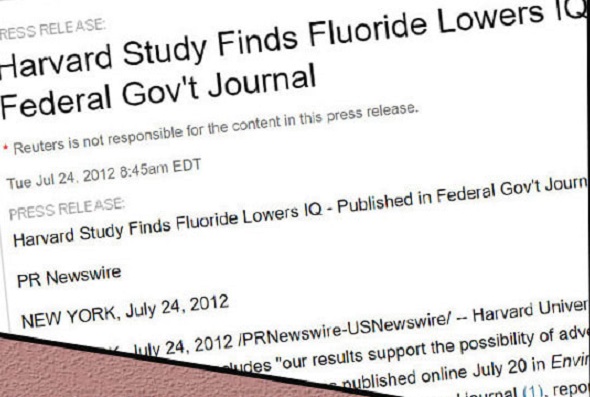
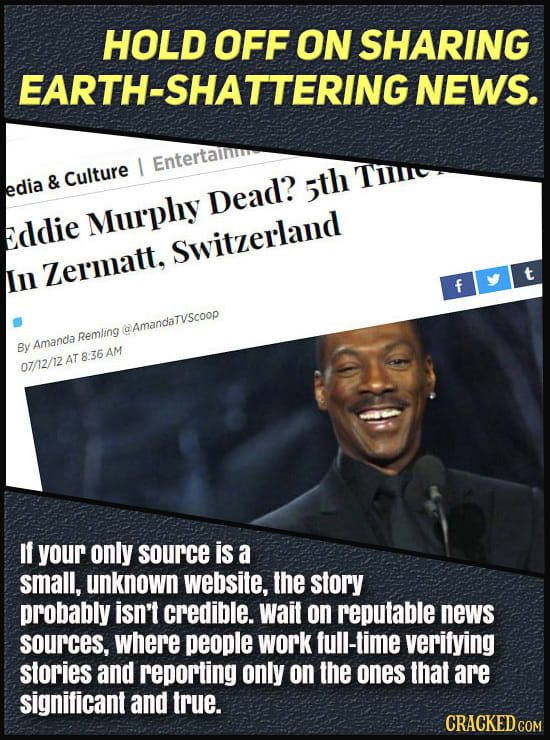
The pop-culture-trivia-snark-list website Cracked (and how sad is it that the site based on the inferior magazine knock-off of Mad Magazine is still going and Mad has bitten the metaphorical dust?) has a post listing twenty ways not to be fooled by fake news. It starts out,
Thanks to the Twitters and the Facebooks of the world, these days we pretty much just get our “news” from the clickbait headlines we see while scrolling through poorly-made but still hilarious memes. Which sucks, because it’s pretty much ruining society. So here’s how to avoid becoming an uninformed angry internet denizen in the future.
Among the article’s observations:
Don’t trust The Daily Mail. I knew it was basically a rag, but I didn’t know the Daily Mail has overtaken the New York Times as the most visited news website.
I’ve never used the Daily Mail for a story without checking other sources, but he’s right; it’s lazy. I won’t use it from now on.
The use of the term “after ” in a headline implies causation that is often not there.
This is a New York Times specialty, particularly on Trump-bashing stories by reporter Maggie Halberman.
The post warns of headlines that are composed to nab clicks but that do not accurately reflect the content of the story beneath..
Another New York Times specialty.
This one was unintentionally funny, especially in the midst of the rest:
What reputable news sources? As the list amply demonstrates, there aren’t any! Continue reading →
The New York Times just published an interview with its editor, Dean Baquet. You, everyone needs to read it. I’m want to minimize commentary, because I think–I think–that the interview speaks eloquently for itself. What it says, amazingly, is that the New York Times is exactly as biased and partisan as its critics have said it is, and yet is somehow both in denial and incapable of making coherent statements adequate to the task of fooling anyone who isn’t already on the “team” and committed to its mission. That the paper would subject its own editor to an interview—the interviewer is ex-BuzzFeed editor Ben Smith–that exposes the Times’ unethical manipulation of news and reveals the Times’ own editor as a babbling, rationalizing, spinning and obfuscating fool is incomprehensible.
And the Times published it! How can that be explained? Did the paper want to confess? That can’t be it. Is the Times so completely delusional that they don’t see how awful and incriminating Baquet’s answers are, that they are signature significance for an editor of exactly the kind of newspaper those who resent American journalism turning into partisan propaganda have been saying it is?
Is Baquet, who had to approve this, that certain that his readers have been so corrupted, or are so gullible, that they wouldn’t derive the obvious conclusion from his double-talk? Really?
One exchange is sufficient to make the point. Here Smith asks about the fiasco Ethics Alarms covered here, when the Times wrote, of its investigation of Tara Reade’s allegations, “The Times found no pattern of sexual misconduct by Mr. Biden, beyond the hugs, kisses and touching that women previously said made them uncomfortable.”
Smith: I want to ask about some edits that were made after publication, the deletion of the second half of the sentence: “The Times found no pattern of sexual misconduct by Mr. Biden, beyond the hugs, kisses and touching that women previously said made them uncomfortable.” Why did you do that?
Baquet: Even though a lot of us, including me, had looked at it before the story went into the paper, I think that the campaign thought that the phrasing was awkward and made it look like there were other instances in which he had been accused of sexual misconduct. And that’s not what the sentence was intended to say.
“The campaign thought that the phrasing was awkward and made it look like there were other instances in which he had been accused of sexual misconduct.” This was left in the interview! The statement means the New York Times was coordinating its reporting of a serious charge against against the presumptive challenger to President Trump with that challenger’s campaign, and now sees that kind of—shall we say collusion?—as so routine that the editor doesn’t even think it’s damning. Continue reading →
“We found no pattern of sexual misconduct by Biden, beyond hugs, kisses, and touching that women previously said made them uncomfortable.”
—-The New York Times, in the course of its long -awaited reporting on Tara Reade’s accusation of sexual assault against Joe Biden. No, really, they really tweeted this. They really did. I wouldn’t make that up…they DID! I’m not kidding! See…?
The right hand side is what you got after the Times figured out that their outrageous pro-Democratic Party bias was not just showing, as it always does, but blinking on and off in blinding neon lights, accompanied by sirens.
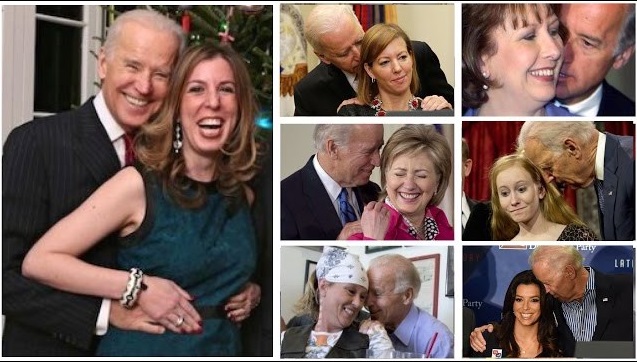
No other allegations? Since launching his Presidential bid, , eight women have alleged that Biden either touched them inappropriately or violated their personal space, You know, like this…
In response, Biden issued a classic “non-apology apology,” then later said that he was “not sorry for anything I’ve ever done.” He has also been criticized for commenting on the sexual appearance of young girls and women while campaigning.
In a 2019 article, the Times wrote that “Biden’s Tactile Politics Threaten his Return in the #MeToo era,” but that was when the paper was pushing Kamala Harris and Elizabeth Warren. Now they are stuck with Biden, just like their party.
I suppose it is obligatory to note the Times emphasized the importance of believing women who accuse powerful men of sexual abuse when the one so accused was a conservative federal judge who did not have a voluminous photographic record of him sniffing, touching, hugging, kissing and groping women in the recent past.
You know, I’m rapidly reaching the point where I’m not going to be patient, civil or understanding—they are hopelessly biased, after all, ergo stupid—when progressives deny mainstream media bias in the face of this kind of despicable journalism. It’s reaching the Orwellian point of “War is Peace.” It’s also “jumboing’—in fact, I am hereby creating the verb jumbo, meaning to lie to someone’s face, asserting something to be true when the evidence that it is not true is obvious and undeniable. It’s also evidence of ethics rot,
This translated (by Mort Shuman) Jacques Brel song made my mother depressed and crazy, yet she insisted on playing it. She was like that. You know…Greek. I’m really glad that she didn’t live to see this particular ordeal through, because I would have made my folks live with us for the duration, and I would definitely be crazy by now.
I did not know John Denver recorded this; as with everything else he sung, he does a masterful job. He fought depression his whole life, which astounded me, given his public demeanor, when I first learned that. That was before I learned how common and pervasive this terrible illness is. They are not being hyperbolic when they say that a protected lockdown will eventually cause a lot of suicides.
1. One more from “Social Q’s. In the same column that triggered me regarding this issue, there was another interesting query :
Like millions, I am working from home and spending lots of time videoconferencing with co-workers and clients. My boss conferences in from his home office, where, behind his smiling face, hangs a painting of a cyclone tearing through a city. He may be so used to it that he’s oblivious to the bad message it sends. He’s not a friend, but we have a cordial relationship. Should I point out that the painting may upset people?
I am less interested in this question for its ethical issue, which is not worth discussing–“No, you idiot, you do NOT have any business telling someone forced to participate in a video conference that he has an obligation to decorate his home to please other participants and to avoid “upsetting” the hypersensitive!”—than I am curious about how anyone would get the idea that such an obligation exists. It’s not as if he has a swastika or a Confederate flag hanging behind him, or erotic art, or a historical photograph that could fairly be called unduly provocative.
I find this to be a nascent totalitarian mindset, requiring conformity in all things, and it scares me to death, frankly.
2. The indoctrination problem. I just got the latest copy of the Georgetown University Law Center alumni magazine, and was impressed by how large, slick and professional it has become in the decades since I put together the first issue when I was the GULC Director of Development under Dean David McCarthy. Oh, they changed the name a few years ago: the Dean and I had called it “Res Ipsa Loquitur,” which should come as no surprise to any regular readers here. The real revelation, however, is what a pure progressive and partisan indoctrination factory the school has become. Justice Ginsburg welcomed the incoming class. Nancy Pelosi and Henry Louis Gates ( of Beer Summit fame) addressed the graduating third year students. New York Solicitor General Barbara Underwood successfully sued the Trump Foundation, so she was worthy of an honorary degree.
The featured interview in the issue: Justice Elena Kagan. A new Workers Rights Institute has been launched. Invited to serve on a panel about “Challenges to the Rule of Law,” was George Conway. The school just dedicated its “green spaces” to Democratic D.C. Delegate Eleanor Holmes Norton. There is a major article about our obligation to guarantee the health of “migrants,” the current cover-word of choice meaning “Illegal immigrants.” Of course, there’s a climate change activist piece, an anti-nationalism piece, and a pro-diversity piece. Continue reading →
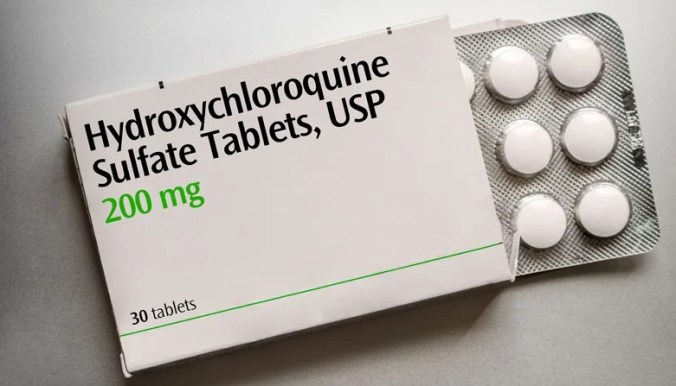
Ever since those two idiots (or maybe one dead idiot and a diabolical spouse) used fish tank cleaner to try to protect themselves from the Wuhan virus and the news media tried to claim the President killed the dead one by recommending the drug (though not the fish tank cleaner), this has been one of those situations where it is impossible to separate legitimate information from the news media vendetta against Trump and what the actual situation is. Journalists really can’t help themselves; here are Peter Baker, Katie Rogers, David Enrich and Maggie Haberman, the Times’ regular Trump character assassins, in what is supposed to be a news story:
“Day after day, the salesman turned president hasencouraged coronavirus patientsto try hydroxychloroquine with all of the enthusiasm of a real estate developer.”
Nah, there’s no mainstream media bias! Did the Times ever, even once, call Obama the “community organizer-turned President”? How about “the former enthusiastic pot smoker” turned President?
As I’ve mentioned here before, the official talking point buzzword is that the President “touted” the drug, which is only available by prescription. Some experts, not infected with the Trump Hate virus, have had a reasonable reaction to his optimism. for example,Dr. Joshua Rosenberg, a critical care doctor at Brooklyn Hospital Center, told reporters,
“I certainly understand why the president is pushing it. He’s the president of the United States. He has to project hope. And when you are in a situation without hope, things go very badly. So I’m not faulting him for pushing it even if there isn’t a lot of science behind it, because it is, at this point, the best, most available option for use.”
Meanwhile, the Food and Drug Administration issued an emergency order late last month allowing doctors to administer it to coronavirus patients if they saw fit. Many have seen fit. David Lat, the founder of the legal gossip site Above the Law, itself a virtual card-carrying member of the resistance, declared that the drug had saved his life during his hospitalization for the Wuhan virus. Continue reading →
#1 is that I criticize New York Times reporters and writers so often for bias and incompetence that it is only fair that I give credit when one of them does something not only right, but exactly as I would have done it.
#2 is that the “something” is a list of the best baseball movies to watch while trying to endure both the anxieties of the Wuhan virus disruption and the delay of the baseball season.
#3 is that I am trying to scale down Part 2 of the Ethics Alarms inspirational films list (Part I is here), and this helps: I can remove the baseball movies now.
Times film critic Bruce Fretts picked what he called the ten best baseball films of the last 50 years. I would call them the best baseball films of all time. The one borderline pick he left out would be “The Lou Gehrig Story,” which is more a biography than a true baseball movie, and it’s also sad. Only two films on Fretts’ list are sad. Baseball movies shouldn’t be sad, though I agree with him on the exceptions.
I would add two more baseball movies if it was a Top 12: “The Sandlot” (1993), which brings back memories of my own pick-up baseball gang (and my late English Mastiff, Patience) and “Fever Pitch” (2005), which perhaps is more of a Red Sox movie than a baseball movie. (It had me from the moment Jimmy Fallon kissed his hand and deposited the love on a picture of Tony Conigliaro.) These, however really are the ten best. Fretts listed them alphabetically, and I wouldn’t try to rank them. Continue reading →
Yes, it’s the New York Times again. I use that paper for the majority of the Ethics Alarm unethical journalism posts for a few reasons. One is that the paper comes to my door every day, so I read a lot of articles that I might miss on the web. Another is that the Times is the most successful and influential newspaper in the country, and its work is more closely followed and more criticized than any other paper, and most news sources generally. The Times also advertises itself as the nation’s “paper of record,” placing itself on a pedestal with standards of integrity and reliability that it is obligated to meet….and does not. Finally, the paper is unacceptably biased in its political coverage and editorial product.
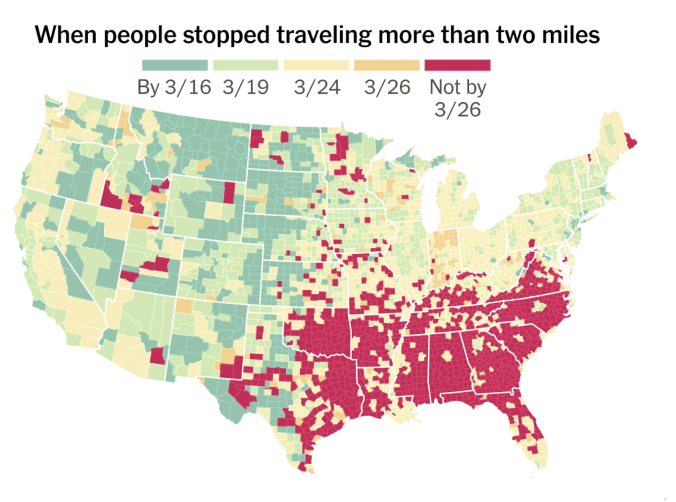
Today’s “Where America Didn’t Stay Home Even as the Virus Spread” is far from then times at its worst. It is, however, unacceptable and unethical. I’m not even in disagreement with the piece’s main thesis, which is that the regions that have not imposed shelter at home restrictions on the public are at more risk of exploding Wuhan virus cases. That makes sense; that’s even obvious. However, the Times’s main tool in making a case was the map below, which it explained this way:
“Stay-at-home orders have nearly halted travel for most Americans, but people in Florida, the Southeast and other places that waited to enact such orders have continued to travel widely, potentially exposing more people as the coronavirus outbreak accelerates, according to an analysis of cellphone location data by The New York Times. The divide in travel patterns, based on anonymous cellphone data from 15 million people, suggests that Americans in wide swaths of the West, Northeast and Midwest have complied with orders from state and local officials to stay home.”
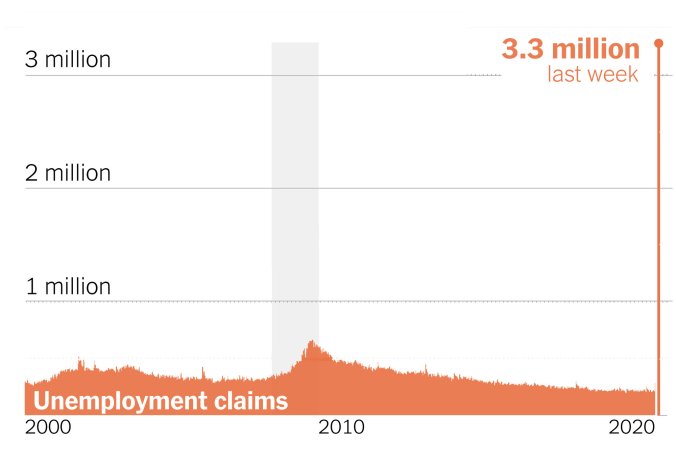
That graph above dominates the New York Times front page this morning, but not in a normal way. The graph is at the bottom of the page and covers its entire width. The long bar representing current unemployment page runs up the entire right margin; it’s a full 18 inches. This wasn’t necessary to convey the information. It was necessary to alarm readers as much as possible. The Times publisher and editors are assholes.
I have been criticized for using that vulgar word here. I think the first time I used it, ironically enough, was to describe Donald Trump when he first said he was running for President in 2012. I used the word to describe the Christian minister who announced that he was going to burn the Koran at a time when Muslim crazies were murdering Christians in retribution for every perceived insult to their religion. I don’t use the word lightly. I use it when more socially acceptable descriptors like “jerk” are obviously inadequate.
An asshole is a person who willfully and often gleefully defies positive social norms for personal gain or just because he or she can, indulging the basest human motivations and non-ethical considerations to the detriment of society. Jerks can reform; usually assholes cannot. When someone acts like an asshole but is not one, often the simple device of calling them what they are acting like will shock them back into more responsible behavior. This is why the word must remain among our ethics enforcement tools, like a gun, usually holstered, but still available when needed.
It is needed a lot right now.
As I keep reminding readers, in 2015 I wrote a post declaring that if Donald Trump were elected President, he would turn America into a nation of assholes. I was right about that, but completely mistaken about the process. I thought that Trump’s reflexive lack of ethics and civility would poison the young, who typically adopt the values and manners of prominent role models in the culture, and historically no individual exercises more powerful influence over our culture than the President. However, what we have witnessed over the past three years is an epidemic of asshole conduct by those who oppose President Trump, who actually despise him. I didn’t see that coming. The Wuhan virus emergency has especially brought their assholism (“assholery?” “assholicity?” ) into focus.
Ann Althouse said it nicely (without using the word) reacting to Joe Biden’s current strategy of tossing off incoherent insults and second-guessing regarding the President’s handling of the epidemic. She wrote in part…Continue reading →
1. The Sisyphus Report. Ethics Alarms is currently at its all time high water mark for followers, a number it has reached three times previously, only to fall back, sometime precipitously.
When you are trapped in your home, you tend to obsess about such things.
2. You know why, but still…the mainstream media isn’t fact-checking or pointing out the blatant, insulting lie from Nancy Pelosi yesterday regarding the House Democrats’ alternative “stimulus” bill that “Everything we’re suggesting just relates to COVID-19. It’s not changing policy except as it applies here.” That bill included [Pointer: The Blaze]:
A bailout for the U.S. Postal Service
Student loan debt forgiveness
Required same-day voter registration
Airline emissions standards regulations
Study on climate change migration
Collective bargaining provisions
Increased federal minimum wage for companies that accept government loans
Publication of race and pay statistics for corporate boards
I’m not even mentioning things like the millions designated for the Kennedy Center, because that was technically related to addressing harm caused by the pandemic.
As I and many others noted, the Democrats’ grandstanding effort to stuff the rescue bill with progressive agenda items related to climate change, the Green New Deal and other social justice wish list items was political posturing for the base, which was forgivable as long as they didn’t try to hold the nation hostage, which they didn’t, at least for very long. But Pelosi’s denial that her party did what it did in plain sight (for anyone who bothered to read the bill about it) is the stuff of Jumbos, and the news media was obligated to let the public know.
They haven’t, and presumably won’t. Instead, journalists will continue to factcheck and scream about every lazy, non-substantive misstatement of facts by the President, and back the Democratic cant that President Trump always lies.
A party whose leadership issues pure disinformation like Pelosi’s should be estopped from using the “Trump lies”refrain. Continue reading →
Maybe they decided they had arrived at a moment when unified resolve was essential and the national interest was at stake, and the paper had no choice but to stop spinning for the Democrats.
Senate Democrats on Sunday blocked action on an emerging deal to prop up an economy devastated by the coronavirus pandemic, paralyzing the progress of a nearly $2 trillion government rescue package they said failed to adequately protect workers or impose strict enough restrictions on bailed-out businesses.
The party-line vote was a stunning setback after three days of fast-paced negotiations between senators and administration officials to reach a bipartisan compromise on legislation that is expected to be the largest economic stimulus package in American history — now expected to cost $1.8 trillion or more. In a 47-to-47 vote, the Senate fell short of the 60 votes that would have been needed to advance the measure, even as talks continued between behind the scenes between Democrats and the White House to salvage a compromise.
The failure to move forward shook financial markets and threatened an ambitious timeline set by the Trump administration and leading Republicans to move the rescue package through the Senate on Monday and enact it within days.
In voting to block action, Democrats risked a political backlash if they are seen as obstructing progress on a measure that is widely regarded as crucial to aid desperate Americans and prop up a flagging economy.




 Ethics Alarms