Al Sharpton Provides A Niggardly Principle Classic (And By The Way, Stop Making Me Defend Donald Trump!)

This could easily be a Babylon Bee satire, but unfortunately it isn’t.

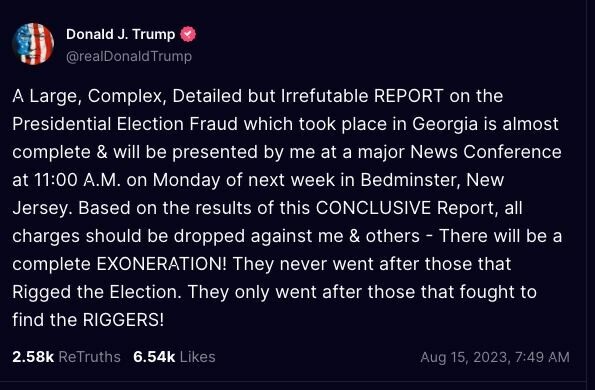
Professional race-baiter and ethics villain Al Sharpton responded to the routinely bombastic and semi-grammatical Truth Social post by Donald Trump by going on MSNBC and saying, “Donald Trump, himself…using the word “riggers” – Is this the kind of party the Republicans want to show the country that they are?”

Continue reading

As Disney Supporters Complain About Censorship, Disney Engages In Artistic Censorship And WrongThink Control

Doyle: You dumb guinea.
Cloudy: How the hell did I know he had a knife?
Doyle: Never trust a nigger.
Cloudy: He coulda been white!
Doyle: Never trust anyone.

That exchange has been excised from the versions of the film used on Turner Classic Movies, iTunes and Criterion. The film’s distributor, 20th Century Fox, was acquired by Disney before the scene disappeared. It is artistic censorship, straight up; no more acceptable than painting over the breasts Reubens paintings, or bleeping out “damn” is Rhett Butler’s famous kiss-off to Scarlet (as was done regularly when the movie began being shown on network television.)

Again, we are faced with deciding whether the motives here were stupid or sinister. I probably vote for both. The accelerating effort to declare the word “nigger” as taboo regardless of intent, use or context is pure attempted mind-control and Orwellian WrongThink totalitarianism—now embraced, as in other totalitarian tactics, by most of the Left and the Democratic Party. It is also unprincipled pandering to Critical Race Theory extremism. The rational mind boggles at what canonical works of art and literature face permanent scarring if the practice is allowed to take hold. Just off the top of my recently repaired head, I can think of several superb films that include “nigger” in the dialogue, like “The Shining,” “In the Heat of the Night,” “To Kill a Mockingbird,” “Mississippi Burning,” “Pulp Fiction,” and of course, “Blazing Saddles.”

Continue reading

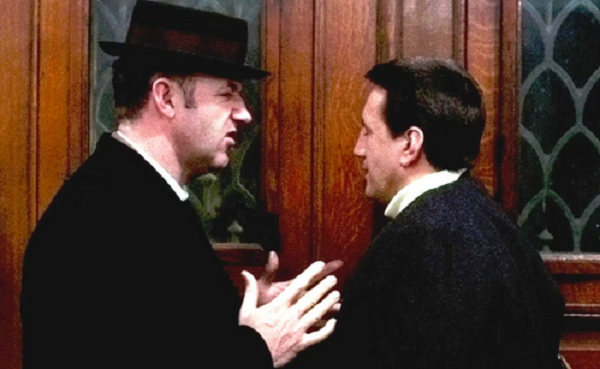
Early in William Friedkin’s classic film “The French Connection,” Jimmy “Popeye” Doyle (Gene Hackman) argues with his partner, Buddy “Cloudy” Russo (Roy Scheider) regarding Russo recently sustaining a knife wound in a confrontation with a black drug-dealer:

Doyle: You dumb guinea.
Cloudy: How the hell did I know he had a knife?
Doyle: Never trust a nigger.
Cloudy: He coulda been white!
Doyle: Never trust anyone.

That exchange has been excised from the versions of the film used on Turner Classic Movies, iTunes and Criterion. The film’s distributor, 20th Century Fox, was acquired by Disney before the scene disappeared. It is artistic censorship, straight up; no more acceptable than painting over the breasts Reubens paintings, or bleeping out “damn” is Rhett Butler’s famous kiss-off to Scarlet (as was done regularly when the movie began being shown on network television.)

Again, we are faced with deciding whether the motives here were stupid or sinister. I probably vote for both. The accelerating effort to declare the word “nigger” as taboo regardless of intent, use or context is pure attempted mind-control and Orwellian WrongThink totalitarianism—now embraced, as in other totalitarian tactics, by most of the Left and the Democratic Party. It is also unprincipled pandering to Critical Race Theory extremism. The rational mind boggles at what canonical works of art and literature face permanent scarring if the practice is allowed to take hold. Just off the top of my recently repaired head, I can think of several superb films that include “nigger” in the dialogue, like “The Shining,” “In the Heat of the Night,” “To Kill a Mockingbird,” “Mississippi Burning,” “Pulp Fiction,” and of course, “Blazing Saddles.”

Continue reading

Ethics Hero: Florida Catholic School Principal Tonya Peters, No Weenie She

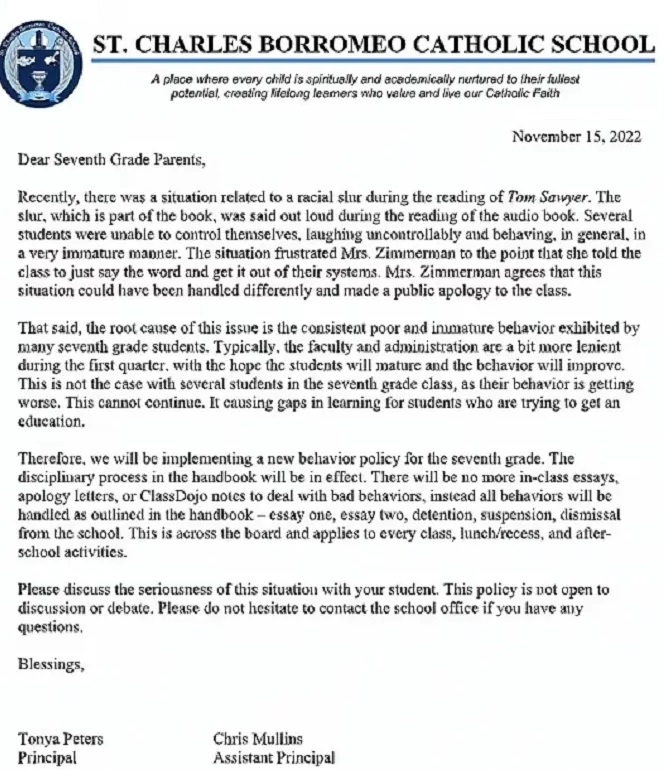
In a seventh grade English class at St. Charles Borromeo Catholic School in Port Charlotte, Florida, the teacher was presenting Mark Twain’s “Tom Sawyer,” using an uncensored version, which is to say, “Tom Sawyer.” The classic novel, like its larger, more ambitious cousin “Huckleberry Finn,” uses the now taboo “n-word” in a society today that should be too sophisticated and wise by now not to know that declaring words taboo is ethically and intellectually indefensible. One African-American community website’s news report on the incident states, “Anyone who has read an unedited version of those books know how racially insensitive they were.” Well:

  • Any one who has only read an “unedited”, meaning bowldlerized, version of “Tom Sawyer” hasn’t read “Tom Sawyer,” and
  • Great literature isn’t supposed to be “racially sensitive”; it’s supposed to be enlightening.
  • The issue of watering down language that some may find offensive in literature is well-considered in this essay.

As described in the letter above, when members of the class read the book out loud and the word “nigger” was uttered, the students began “acting up,” laughing, making comments, and generally acting like undisciplined 7th graders, which they were. When the teacher could not calm them down, she improvised a creative but risky solution: having the children repeat the word over and over again. The idea, obviously (though not sufficiently obvious for any of the media reports to figure out) was to rob the “taboo” word of power by repetition. It’s an old linguistic trick that kids should be familiar with (i know I was): when any word is repeated enough, it becomes just a sound, which is all any word is. (This device becomes the climax of the excellent horror film “Pontypool,” in which something causes the English language to become deadly, destroying everyone’s brains.) Continue reading

‘HA! You Fell For The Trap, White Boy!’

I almost made this an Ethics Quiz, but then decided that there is only one ethical answer.

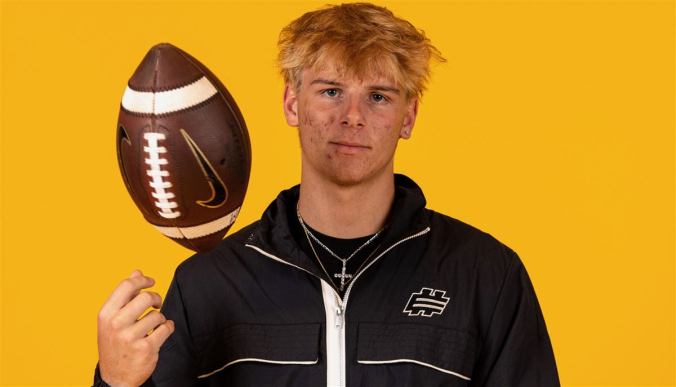
Star high school quarterback Marcus Stokes posted a video of himself in a car singing a rap song that used the term “niggas.” Or maybe it was “niggers.” We can’t find out, you see, because our infantile, unethical news media will only write  that he said the “N-word,” and the video has been deleted. Journalism!

Stokes’ video caused the University of Florida to rescind its scholarship offer. Stokes is white; there is little question that if he were the right color, singing the song and posting it would not have raised any issues at all. But as Yahoo!’s observes, “Saying the N-word as a white person goes into another territory,” at least in the hypocritical, race-obsessed worlds of sports and academia. Continue reading

Ethics Quiz: When Ethics Alarms Don’t Ring And You’re A Drunk College Senior

Sophia Rosing, 22, a University of Kentucky student, was drunk. Really drunk; drunl as a skunk, as the saying goes. As she tumbled into a campus dorm lobby, the student at the front desk, Kylah Spring, tried to stop her, because Rosing had not presented her ID. The besotted senior launched into tirade against Spring, physically attacking the young black woman while calling her a “bitch” and a “nigger,” the latter over 200 times.

When campus security arrived, Rosing kicked and bit the officers as they tried to place her under arrest. University Police were finally able to take Rosing into custody just before 4am. She was charged with public intoxication, assault and disorderly conduct.

The incident was, of course, videoed and posted on social media. Rosing is out on bail, but she will certainly face criminal penalties.

Your Ethics Alarms Ethics Quiz of the Day is….

Beyond the criminal penalties, what are fair, just and ethical consequences for Sophia Rosing now?

Continue reading

Paging The ACLU! But Will They Answer?

Another integrity test for the biased and rotting American Civil Liberties Union. According to their long-standing mission, coming to the defense of two students being prosecuted for saying bad word would be automatic. So far, though, not a peep. Will the ACLU stand up for the Bill of Rights when the breach is so clear?

I’m not holding my breath.

In Houma, Louisiana, Two high school students have been arrested and accused of hate crimes after video circulated on social media of them using the term “nigger” on the high school grounds. Their words were not directed at any individual, yet they face charges of inciting a riot, hate crimes, and cyberbullying.

You can’t do this, you know. The government can’t punish anyone criminally for mere words, and it doesn’t matter what they are. OK, you have my obligatory agreement that “nigger” is a haeful epithet (when used as an epithet) and it’s use cannot be condoned and shouldn’t be encouraged or ignored, yadayada, but if that’s the reason almost nobody is pointing out the more essential truth that the Constitution protects us from sanctions by the government for ugly, mean, hateful or controversial speech, a lttle emedial instruction on core civil liberties is greatly neededd.

Yoooo Hooo! ACLU-hooo! Where the hell are you-hoo?

Continue reading

Comment Of The Day: “For Some Strange Reason, The Playwright Didn’t Think ‘N-Word’ Carried The Same Dramatic Punch…”

Confession: before I wrote the post that Curmie fashioned into his Comment of the Day, I emailed him the underlying story in advance, given his unofficial position as the Ethics Alarms dramaturg. I almost asked him to write a guest post on the head-exploding tale of a university banning a black playwright’s work about the civil rights movement because it has white characters using the word “nigger,” but I guessed, fortunately correctly, that he would provide a Comment of the Day on the topic whatever I wrote.

And do he did, very well indeed.

Here is Curmie’s Comment of the Day on “For Some Strange Reason, The Playwright Didn’t Think ‘N-Word’ Carried The Same Dramatic Punch…

***

The first comment on this post, by JutGory, is especially apt. [ JutGory wrote: “The Woke Paradox: We must teach ‘real history’ even if it might hurt the feelings of white kids/We can’t teach ‘real history’ if it will hurt the feelings of black kids.”]

But, as someone who taught college-level theatre courses for over forty years and continues to do some scholarly writing in the field, I’d like to take the analysis a little further.

In the interest of full disclosure, I should mention that I have directed two plays which contain the word “nigger.” Both, Tennessee Williams’s Cat on a Hot Tin Roof and Athol Fugard’s ”Master Harold”… and the boys, are widely anthologized and both are regarded as among the greatest works of 20th-century drama. The latter, which includes a particularly crude racist joke, is also unquestionably an anti-racist play, as Down in Mississippi appears to be (I confess I haven’t read it or seen it).

I was also asked by a recently-graduated black student a decade or so ago to play the role of a slave-owning plantation owner in a short film he had written and was directing. The character probably used the dreaded epithet at least a half dozen times in a four- or five-minute scene. I agreed to play the role, but for whatever reason the film shoot never happened.

My first question, unanswered by the linked article, is precisely who made the decision to cancel the performance. It certainly wasn’t the (black) playwright, who said that “maybe you should be less fragile. And try to listen to what your former generations are trying to teach you for the well good being of all of us,” and it’s unlikely to have been the theatre department, given that they were the ones who decided to produce the play to begin with.

Administrators above the level of department chair are almost never involved in the process of selecting a production season. But they will stick their noses into the process if there’s a potential controversy, even a fallacious one. We can reasonably surmise that it’s a dean, a vice president, or a president who is the Designated Weenie in this case. It certainly wasn’t the chairman of the Board of Trustees, Glenn O. Lewis, himself a black man, who points out that censorship is not a solution, and that “you don’t learn anything new until you get out of your comfort zone, and I think that is what Mr. Brown intended for this play to do.”

Continue reading

For Some Strange Reason, The Playwright Didn’t Think “N-Word” Carried The Same Dramatic Punch..

Yes, this is another Strange Tale of the Great Stupid.

A depressing one.

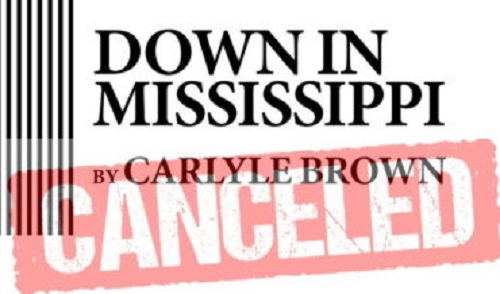
In the opening scene of Down in Mississippi by African American playwright Carlyle Brown, a white man calls a black character “nigger” multiple times and threatens him after learning that he’s in the area to help register black citizens to vote. Texas Wesleyan’s Black Student Association shared an Instagram post about how many students were “deeply disturbed” that such scenes would be shown on campus, because it might “hurt Black students and possibly students from other marginalized communities.”

So the university decided not to mount the production. Brown, the playwright, argued that the word’s use in the play was necessary to maintain historical accuracy and to provoke strong responses. Yes, and he might have also pointed out that this is live drama, and the objective of live drama is to arouse the audience’s emotions. Glenn O. Lewis, the first black board chairman the university has had, diplomatically said that he understood how the language could make some students uncomfortable, “But when have we ever … learned anything in our comfort zone?” Lewis asked. “You don’t learn anything new until you get out of your comfort zone, and I think that is what Mr. Brown intended for this play to do.” Lewis added that censorship of Brown’s work is not a real solution.

Continue reading

Saturday Afternoon Ethics Picnic, 6/5/2020

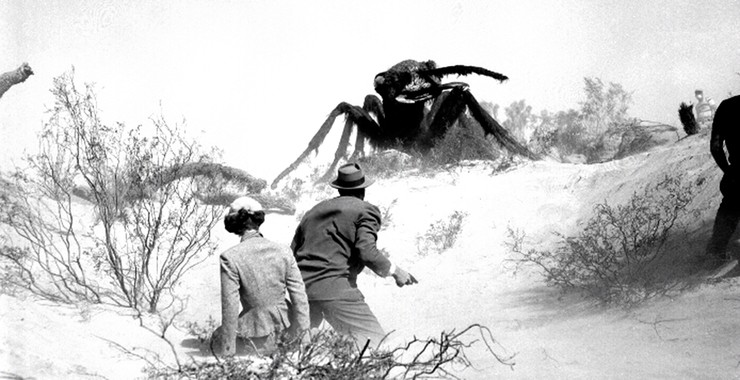
Giant ants

And what’s a picnic without ants?

June 5, the day before D-Day, is another date chock full of ethics history. It doesn’t count, but Ronald Reagan died on this date in 2004: I was just thinking that the Great Stupid would have killed him. In Presidential history, this was the day, in 1888, President Grover Cleveland vetoed a bill that would have given a pension to war widow Johanna Loewinger, whose Civil War vet husband died 14 years after being discharged from the army. He was discharged a little less than a year after enlisting for what the army surgeon’s certificate called chronic diarrhea. Loewinger received his pension until he cut his throat in 1876. When Johanna applied for a widow’s pension it was denied; his suicide was not considered to be caused by his military service. Johanna argued that the death was part of the insanity triggered by his war service, and appealed to a member of Congress to petition Cleveland with a bill. But the President declared all previous inquests into the former soldier’s unfortunate death to be satisfactory. Mrs. Loewinger got no pension.

I always thought this was gutsy of Cleveland (or something), since he had paid someone to serve in the Union army for him after he was drafted. But there were bigger ethics landmarks on June 5:

Continue reading

How Do We Stop This? Once Again, It’s Word-Banning Time At An Institution That Should Know Better

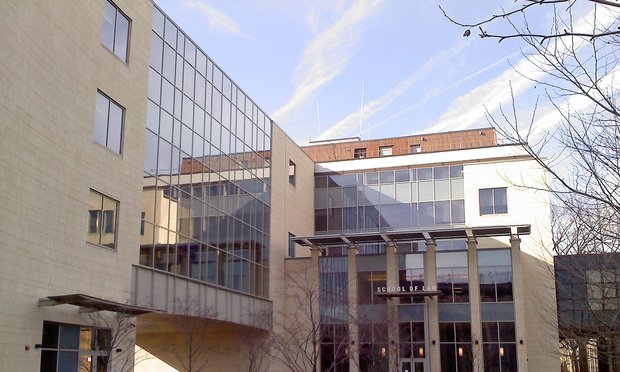
Rutgers-Law-School-Article-202101111459

Not only is Ethics Alarms adamantly opposed to the current effort by the rising totalitarian Left to ban words on the grounds that they might be “hurtful,” I have taken a vow on the issue. I artculated it here, concluding,

“My pledge: I will regard all words in the English language as among the tools I have to speak with, write with, argue with, joke with, and most importantly, think with. I will gladly be accountable when I use any words irresponsibly, but I will not submit to efforts to drag me and my society into the world of Big Brother, by accepting efforts to literally eliminate any of my tools, or attempts to decree that some Americans can use certain words, and others cannot. Fuck that.

That was in November of 2019. The post covered several unethical examples of employees, writers and teachers being punished, even dismissed, for quoting the word “nigger” in circumstances where no one could possibly conclude that the word was being used by the speaker to denigrate anyone. This incidents seemed so self-evidently ridiculous and such obvious incursions on the principle of free speech and expression that I, naive Pollyanna that I am, assumed that they were outliers and aberrations. Instead, such episodes have become more common in the year and a half since, and are given increasing validity as the shadow of The Great Stupid covers the fruited plain.

One can track many of the recent examples using the Ethics Alarms tag, “nigger.” And if you think you are “harmed” by a blog tag, I have some psychiatric facilities I can refer you to.

The latest of these has occurred at Rutgers, already a long-standing nest of woke insanity. A white first-year law student student at Rutgers Law School quoted a line from a 1993 U.S.Supreme Court decision, State v. Bridges, 133 N.J. 447. when discussing a case during a professor’s virtual office hours. The student was recorded, while discussing the circumstances under which a criminal defendant could be held liable for crimes committed by his co-conspirators, reading a quote from a defendant that first appeared in an opinion written by a former State Supreme Court judge, Alan B. Handler. “He said, um — and I’ll use a racial word, but it’s a quote,” the student said, “He says, ‘I’m going to go to Trenton and come back with my niggers.’”

In early April, in response to the incident, a group of Black first-year students at Rutgers Law began circulating a petition calling for the creation of a policy on racial slurs and formal, public apologies from the student and the professor, Vera Bergelson. “At the height of a ‘racial reckoning,’ a responsible adult should know not to use a racial slur regardless of its use in a 1993 opinion,” states the petition, which has been signed by law school students and campus organizations across the country. “We vehemently condemn the use of the N-word by the student and the acquiescence of its usage,” the petition says.

Continue reading