Unethical Quote of the Week: Ampersand on “Alas! A Blog”

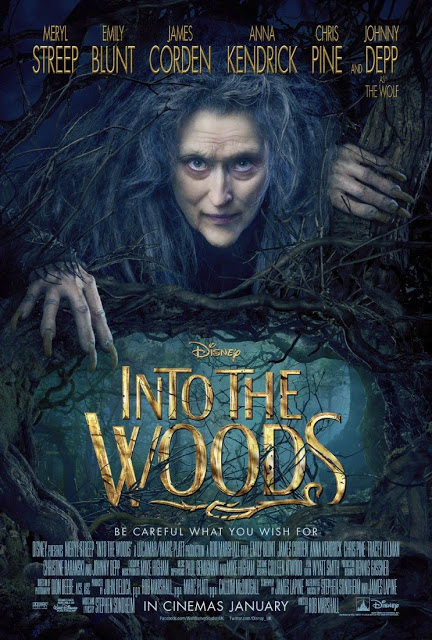
Into the Woods

There is no reason in the world, other than Hollywood’s endless racism and lack of imagination, for this movie (or the original play, alas) to have an all-white cast. Why do movies feel like they’d rather die than show us a diverse cast? (And please don’t say “they cast the best people for the roles.” I thought the whole cast was good, but Streep was the only one who turned in a performance so unique that you couldn’t imagine anyone else doing the role.)

—–Ampersand, a.k.a. Barry Deutsch, opining on the assets and deficits of Rob Marshall’s film adaptation of “Into the Woods” on his blog

I hate to pick on Barry—OK, that’s not true, I enjoy it immensely—but this statement could stand as the distillation of knee-jerk liberal thinking on race, and it is wrong in so many ways that I hesitate to start counting. The sentiment, however, poses a nice counterpoint to the discussion here about the black James Bond controversy, so I can’t resist taking aim at it.

1. So casting a mega-million dollar film—-in a dicey genre (Have you heard? Big budget Hollywood musicals died in the Sixties…) and a limited audience—with actors who comport with that audience’s expectations of the musical the film is based on is racist, eh? More unfair words and inexcusable race-baiting were seldom uttered in word or written in ink. If a director had a vision that supported casting African American actors in traditional Grimms’ fairy tale roles and could make it work, I would salute him, but Rob Marshall had other priorities. He knew that every cut would be scrutinized and attacked by the Sondheim fanatics (which, by the way, are as white as a dove convention in a blizzard); he knew that the show itself was seriously flawed; he knew that every single adaptation of a Sondheim musical (“West Side Story” doesn’t count) has been a critical and box office bomb. He had every reason to keep his casting choices as close to the traditional images of the characters and the way they were portrayed on Broadway, and none of those reasons were racism.

2. It’s impressive how casually a race-obsessed progressive will accuse a professional of racism as a first response. Irresponsible, unfair, disrespectful, and in this case, ignorant of both commerce and art. Continue reading

Black James Bond Ethics

Fleming's Bond (l) and Bond-in-Waiting Idris Elba

Fleming’s Bond (l) and Bond-in-Waiting Idris Elba

There’s really no denying it: some conservatives have persistent hang-ups about race, and it undermines their more rational, perceptive views on other matters. A relatively trivial but revealing example occurred in the aftermath of the Sony computer hack by North Korea (or Hacker X). One of the revelations was that Sony, which owns the James Bond franchise, was seriously considering re-booting the character, currently played by the estimable, but aging, Daniel Craig, with a black  British actor (be sure to mock anyone who calls him an “African-American), Idris Elba.

If you are unfamiliar with Elba, you should watch the British series “Luther” on Netflix. He’s terrific: athletic, sexy, charismatic and passionate, not to mention his  aura of cold-bloodedness and danger—in short, perfect for James Bond. But Rush Limbaugh, apparently seeking to retroactively validate the title of Al Franken’s book, “Rush Limbaugh Is A Big Fat Idiot,” decided to use the threat of non-traditional casting to make liberal heads explode, his mission in life:

“That’s NOT who James Bond is, and I know it’s racist to probably even point this out: We had 50 years of white Bonds because Bond is white. Bond was never black. Ian Fleming never created a black Brit to play James Bond. The character was always white. He was always Scottish.”

It is hard to pack so much idiocy into five sentences, but Rush is up to the task. James Bond is a British secret agent: race doesn’t factor into the stories at all. We’ve had 50 years of white Bonds because that’s the conventional way of portraying the character, that’s all. Rush’s argument here is just “Everybody does it.” So what? James Bond movies are entertainment, and if an entertaining James Bond film can be made with Elba as Bond, and there is no reason in the world why not, then James Bond can be black. Continue reading

Woody Allen, James Shigata, And Diversity Casting Ethics

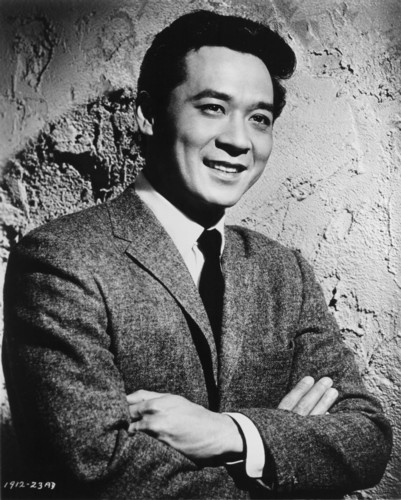
You have no idea who this is, do you? Well, it shouldn't have turned out  that way...

You have no idea who this is, do you? Well, it shouldn’t have turned out that way…

I’m sure you heard about James Garner’s recent death, but were you aware of James Shigata’s passing? Shigata, who died July 28 at the age of 85, was a contemporary of Garner’s, a superb actor, and like Garner, a leading man with leading man looks. James Shigata, however, was of Asian descent, though American through and through, and never escaped the perceived limitations of the shape of his eyes. Though he had a starring role in the hit film adaption of  the Rodgers and Hammerstein musical “Flower Drum Song” and routinely received critical acclaim for all of his film work, but though he got roles on television through the ’80s, he never was able to break through the typecasting straightjacket that deemed him only suitable for “Asian” roles. If you remember him as all, it is probably as the brave Japanese executive shot by Allan Rickman in “Die Hard.”

I thought about Shigata when I read a piece in Salon, noting that director Woody Allen didn’t cast African-Americans in his movies, and that his explanation why didn’t justify the neglect. Prachi Gupta writes, Continue reading

What Is An Ethical Tiger Lily?

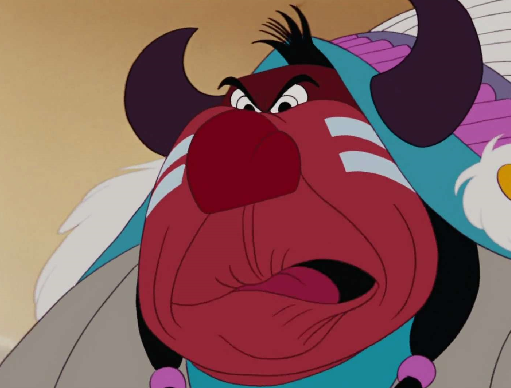
Believe it or not, this is Disney's version of an Indian chief.

Disney’s version of an Indian chief.

I recently watched the Disney “Peter Pan,” long my favorite of the classic animated films, which I had not seen from beginning to end in decades. I was genuinely shocked at the portrayal of the Indians, which would make the average movie Western seem politically correct and the Washington Redskins seem like a compliment. I know the story is a fantasy; I know that these are not supposed to represent real Native Americans, but a Victorian child’s visualization of the villains of their games. Nevertheless, it is hard to imagine the effect of such a film on a Native American child as being anything but devastating. The Neverland Indians, and their heroine, Tiger Lily, have been a human relations problem since at least the civil rights era, and the provocation is legitimate: did you recall (I had forgotten) that Tiger Lily belonged to the “Piccaninny tribe”? That James Barrie was a funny guy. Continue reading

Being Fair To College Student Ideological Idiocy

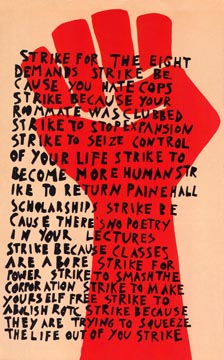
Luckily for him, the bank president who wrote this foolishness in 1969 didn't sign his name to it...

Luckily for him, the bank president who wrote this foolishness in 1969 didn’t sign his name to it…Ah, my old college days!

My attention has been drawn recently to two essays by college students, both presumably sent to me on the theory (or hope) that reading them would kill me. The first, published in the Drexel Triangle (the student paper), argues that stage directors should be prevented from casting actors who look the way the playwright envisioned them. The second, published in the Harvard Crimson, makes an even more disturbing assertion: its author asserts that Harvard should stop guaranteeing professors and students the right to advocate controversial views or pursue research that challenges liberal views and assumptions.

I don’t want to devote the bulk of this post to rebutting these two essays, which are, I think self-rebutting. In the theatrical essay, student actress Alyssa Stover argues that a stage director shouldn’t have the right to decide that, say, casting an Asian dwarf as black boxer Jack Johnson in “The Great White Hope” would lead to a less effective production (that is my example, not hers—she objects to a director of “Cabaret” refusing to cast African-Americans as a matter of historical accuracy):

“These arguments are fundamentally flawed. What the audience wants is almost impossible to measure because the “audience” is composed of anyone who can get a ticket. A director or producer’s right to deny someone a role due to their appearance is debatable because this is a judgment based on one person’s preferences and may not actually create something that is stage worthy. The current status quo allows people to be barred from the stage due to physical “flaws,” as determined by the direction. These judgments are not harmless, and when the issue of race is involved, the problem only gets bigger.” Continue reading

Santa Claus Ethics, Stupid Division

I don't care WHAT color this guy is, I'm getting my kid OUT of there!

I don’t care WHAT color this guy is, I’m getting my kid OUT of there!

The fact that there is a serious debate going on in the blogosphere and news media whether 1) Santa Claus is white; 2) whether it is racist to maintain he is white and 3) whether he should be some other race or species is more evidence that the United States of America is having a nervous breakdown. It also demonstrates that race-baiters and the insanely politically correct have no sense of proportion, moderation or shame, and that too many of those who are confronted by these annoying people don’t have the sense to know when to just nod, pat them on the heads and say, “Sure, sure…if it makes you happy.” Here are some loosely connected observations on a controversy too dumb to justify organization: Continue reading

Ethics Quiz: Critic Ethics

How I love critics...

How I love critics…

This is a delicate one for me; the names have been omitted and details disguised to protect…well, for a lot of reasons.

Last week I posted about the mixed-gender version of “I Do! I Do!” I directed for The American Century Theater, which I co-founded and where I am the artistic director. The show met all my objectives and expectations, even surpassed them, and until today, all of the reviews have been raves.

Today, though, a non-rave came out on a local theater website. It is the kind of review I detest, where the standard of the critic is “why didn’t you do it this way? That’s what I would have done.” The answer to that is, bluntly, “Direct your own damn show, then.” Snap judgments from one-time viewers, even extremely sophisticated ones, about what they would do if they were the author, actor, director, or designer of a stage production—when if truth they never have been or could be—are inherently unfair, incompetent and also obnoxious. After considering and experimenting and testing various artistic approaches to any problem over months of preparation, meetings and  intense rehearsal with a large production and artistic team, any production deserves the respect of being assumed to have considered and rejected for cause other solutions, which for various reasons didn’t work.

This is not, of course, a professional reviewer, though a reader could only know that from the quality of the review. Among other tells, the critic misidentifies which performers sing what, and the whole concept of non-realistic sets seems to be alien to him: yes, dear, we could have afforded a four-poster bed; the director felt the show would be better without one, and in fact, it is. Okay, the reviewer is a boob: that’s fine; most theater reviewers are.  I would not make an issue about one sloppy and badly reasoned amateur review, because if I did, I’d be in a padded room.

However, after the review was published, I learned that our company had a prior experience with this reviewer: he had been on the crew of a show last year, and we had to fire him. In 17 years and over 80 productions, he is the only person to be fired from that particular job.

Your Ethics Alarms Ethics Quiz with a theatrical bent:

Does a critic who has a past relationship with a theater company whose production he or she is reviewing have an ethical obligation to disclose it as part of the published review? Continue reading

An Inclusive “I Do! I Do!” for A Post-DOMA U.S.

Cup

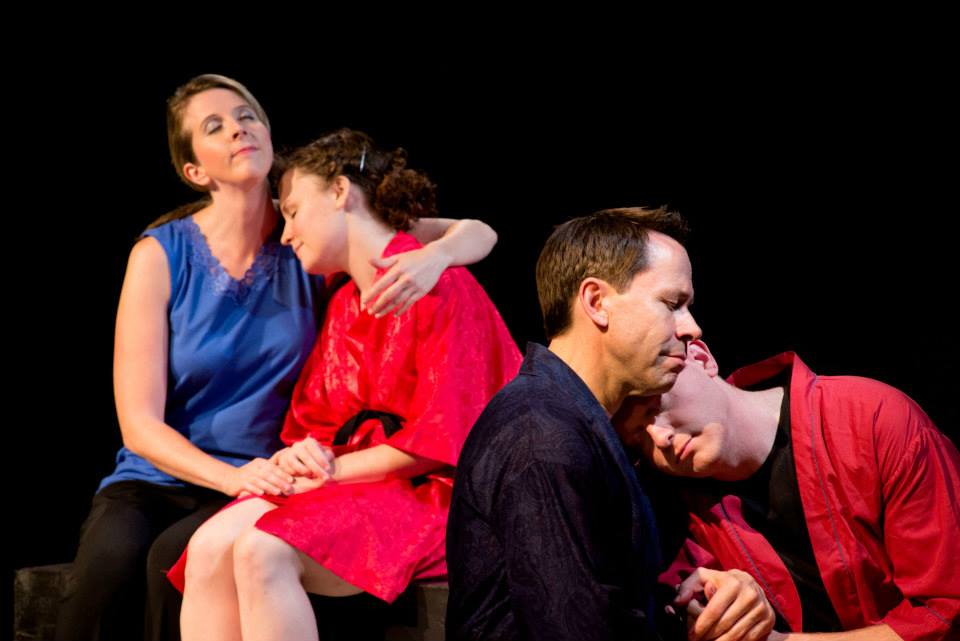
I wasn’t going to mention my current theater (at Arlington, Virginia’s American Century Theater) project here, until I dropped Ethics Alarms’ conservative warrior Steven Mark Pilling a note on Facebook that I had just posted on the topic he is most passionate about, preventing the abuse of child actors in Hollywood. Steven is not, to say the least, a fan of gay marriage (this might be the topic he is next most passionate about) , and I realized that my Facebook thumbnail, showing two same-sex couples in an intimate moment from my show, might put him off.

The show I just finished directing ( with the assistance of Quinn Anderson and my musical director Tom Fuller)  the old Harvey Schmidt-Tom Jones chestnut, “I Do! I Do!”, ( Remember “My Cup Runneth Over, Ed Ames fans? Hello? ) the tw0-actor Broadway musical based on the 1950 play “The Fourposter.” Back in 1966, when Robert Preston and Mary Martin starred in the musical, it was considered an affectionate and  perceptive look at the institution of marriage, and the show has attracted nostalgic, usually elderly married couples to regional and dinner theaters ever since. Productions of  “I Do! I Do!” are becoming rarer, however, because the societal developments have rendered the tale of the epic marriage of Agnes and Michael Snow increasingly alien to the current American scene. In particular, what was once a musical intended to speak to all married couples and candidates for future nuptials now appears to exclude the very group that comprises musical theater’s hardiest supporters: gays.

In marked abandonment of my theater’s usual principles (we don’t update shows, believing that it is more interesting and fair to the authors to let audiences reflect on what has changed since an original production, and what has not), I decided that for the benefit of audiences, the culture and the show itself, it was time to re-conceive “I Do! I Do!” so it would gain renewed relevance and vitality in a post DOMA age. My approach, courageously and generously approved by the authors, was to show the marriage of the show’s couple through a constantly rotating prism that alternately revealed them as a same-sex female couple, a same-sex male couple, and the traditional heterosexual couple of the 1966 version. This required four very versatile and gutsy actors who could pull off the illusion of showing one marriage three different ways without giving the audience whiplash or confusing them hopelessly. In Steve Lebens, Esther Covington, Chad Fournwalt and Mary Beth Luckenbaugh, I found the dream cast. Continue reading

My Theatrical Ethics Dilemma: Integrity or Fairness?

It doesn’t come up here often, but I am the artistic director for a professional regional theater company. It is dedicated to producing 20th Century stage works of artistic and historical value that other, more commercial (sensible?) companies wouldn’t touch with a ten-foot pole. Every now and again I find a play that is especially risky, challenging, and rich in theatrical possibilities, and those are the ones I direct myself.

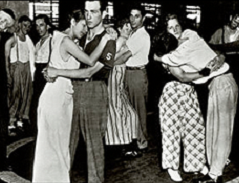
This summer, I will be directing such a production, a harrowing recreation of Depression era dance marathons called “Marathon 33.” It was written by the fascinating June Havoc, Gypsy Rose Lee’s sister who became a Hollywood star and who is perhaps best known as the irritating “Baby June,” the  blonde and perpetually juvenile vaudeville headliner in the musical “Gypsy.” Havoc survived the Depression by competing in dance marathons during the Thirties, and wrote two autobiographies about these terrible spectacles, in which desperate couples would stay on their feet for thousands of hours for food and the promise of a cash prize, as more fortunate Americans paid to see who would drop first.

The show, at least as I and my artistic collaborators envision it, involves recreating dance marathons as accurately as possible, down to the smallest detail. The audience for the show will be immersed in the action as if it were the heartless mob that cheered the real dancers on, and we will avoid anachronisms of any kind. And yet, as I prepare to cast the show after a wonderfully productive round of auditions, I face an ethical conflict. Several of the strongest candidates for dance contestants are African-American, and there were no black competitors in the real contests. Even if there had been, mixed-race couples would not have been tolerated, especially in Virginia, where we are setting the show. Yet if I cast the best actors available without reference to race, I will have both. Continue reading