Ethically Excusable Self-Promotion

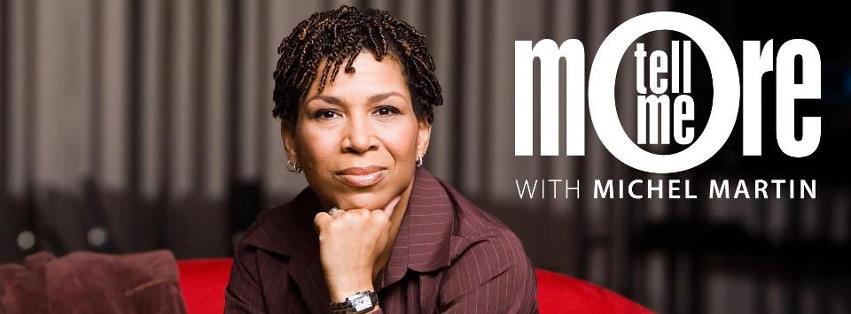
I’m going to be a guest on NPR’s “Tell Me More” with Michel Martin this morning, participating in a discussion of the Chick-fil-A controversy on which I have commented here and here. “Check local listings,” as they say.

Regardless of whether I say anything significant (you never know; miracle happen), Michel is superb, and her voice is Debussy and Grieg to your ears.

Mike Daisey Follow-up: Behold! The Classic Response of the Self-Righteous and Unethical!

Mike Daisey in China. Or, standing in front of a big poster. What difference does it make which, really?

Soon after I posted my article about Mike Daisey’s representation of fabricated events and facts as truth in his January feature on NPR, the actor/activist posted this dismissive explanation on his own blog.  It is Dan Rather’s Memogate excuse taken to the next level, the epitome of self-justification of the unapologetic zealot who believes that all is fair in the battle against (what he regards as) evil, employing a full battery of rationalizations for unethical conduct:

1) Daisey’s lies don’t matter, because they were used to expose a real problem (a.k.a “the ends justify the means”); Continue reading

Unethical Quote of the Month: Mike Daisey

“Well, I don’t know that I would say in a theatrical context that it isn’t true. I believe that when I perform it in a theatrical context in the theater that when people hear the story in those terms that we have different languages for what the truth means.”

Actor, writer, activist Mike Daisey, in an interview with NPR’s Ira Glass, exploring how Daisey was able to justify fabricating facts and accounts for the earlier aired—and just retracted—“American Life” installment called “Mr. Daisy  Goes To The Apple Factory.” NPR checked the particulars of Daisey’s first hand account of the human rights and labor violations he claimed to witness at Apple’s factory in China, and found that the writer had embellished, exaggerated,  and misrepresented much of what he reported. What NPR had broadcast as journalistic reporting was an excerpt from Daisey’s acclaimed touring one-man stage show, The Agony and Ecstasy of Steve Jobs.”

Mike Daisey, lying to us for our own enlightenment

Daisey’s quote, which is both illuminating and chilling, argues that using made-up stories and personal accounts in a theatrical context qualifies as truth, even if the same misrepresentations in a journalistic context are inappropriately false. The problem with his argument, and the flawed ethical theory behind it, is that both the NPR audience and his theater audience believe that Daisey is telling the truth. Daisey’s solution to the problem is simple: his one-man show does tell the truth…it just uses lies to do it. Continue reading

Is Cosmetic Surgery For Dogs Eth…Oh, For Heaven’s Sake! I Can’t Believe I Have To Ask!

NPR’s gag current events quiz show “Wait, Wait, Don’t Tell Me!” got gasps from its panelists, its audience and me this week when it discussed the supposedly growing trend of “canine plastic surgery”, including “face lifts for dogs.” WWDTM was, as is often the case, being a bit misleading in the interests of time and humor: the case that prompted the discussion was the story of a British couple who had spent thousands of dollars on wrinkle-reduction for their bloodhound, but it was not, as she show led us to believe, an effort to create a canine Joan Rivers. The dog had a rare medical condition in which it developed excessive skin folds that covered its eyes. Truth may be stranger than fiction, but sometimes it’s not as funny.

While researching the bloodhound story, however, I learned about “Neuticles”

—fake testicles implanted in neutered dogs in order to…well, what, really? Continue reading

The Third Annual Ethics Alarms Awards: The Worst of Ethics 2011 (Part 2)

The 2011 Ethics Alarms Awards for the worst in ethics continues (you can catch up with Part I here) with the large and depressing…

 Shameless Bad Character Division

Jerk (defined as an individual who habitually places his personal benefit and ego gratification above the welfare of everyone and everything else) of the Year: Donald Trump

The Dennis Rodman Award, (Awarded to a professional athlete for a career and lifetime of  behaving like a jerk): Jose Canseco. Jose’s done it all, from being baseball’s Typhoid Mary of steroids, to getting arrested for various assaults, to writing a series of tell-all books designed to rat out the very players he corrupted, not as a service to his sport, but as revenge for it rejecting him. In 2011, he hit a new low, accepting money to appear in a celebrity boxing match (the 21st Century version of becoming a circus geek to pay the bills) and sending his less-talented, equally dim-witted, identical twin brother Ozzie to perform instead, hoping to fool the fools who hired him. This, of course, was fraud. It takes quite a jerk to take this award from Manny Ramirez, who became eligible in 2011, but Jose was up to the task.

Asshole (defined as an individual who intentionally and maliciously causes pain and harm to others because he can) of the Year: Rev. Terry Jones, the publicity-seeking leader of a tiny rural church, who caused riots and deaths abroad and ramped up political tensions between America and Muslim nations by threatening to burn, and finally burning, the Koran as a demonstration of contempt for Muslims and the Islamic faith. Continue reading

Ethics Hero: Julio Diaz

[This story, from National Public Radio’s Storycorps, is three years old. But an Ethics Hero is an Ethics Hero whether Ethics Alarms recognizes him or not, and this is a Dickensian tale if there ever was one, about a man whose ethical instinct are so impeccable that they make me feel terribly inadequate. Ethics Alarms reader and commenter Tim LeVier brought it to my attention….thanks, Tim, once again.]

In February of 2008, 31-year-old social worker Julio Diaz, as he often does,  ended his hour-long subway commute to the Bronx one stop early so he could have dinner  at his favorite diner. Diaz was walking toward the subway stairs when a teenage boy with a knife stopped him and demanded his wallet.

“Here you go,” said Diaz.  As the teen walked away, Diaz added, on an impulse, “Hey, wait a minute. You forgot something. If you’re going to be robbing people for the rest of the night, you might as well take my coat to keep you warm.” The mugger was stunned. “He asked me, ‘Why are you doing this?'” Diaz’s reply: “Listen, if you’re willing to risk your freedom for a few dollars,  you must really need the money. I was going to get dinner and if you want to join me,  you’re more than welcome.” Continue reading

For Those Who Want To Discover First-Hand Whether My Oral Opinions Are Even More Infuriating Than My Written Ones…

…I will be a guest on NPR’s “Tell Me More” with Michel Martin this Friday morning to talk about ethical issues raised by the Penn State.

Of course, by that time, Jerry Sandusky may have given another creepy interview confessing that he always wanted to be a Catholic priest,  it will be discovered that Joe Paterno not only gave ownership of his house to his wife to avoid paying liability damages, but also has left the country to rule a colony of fanatic Penn State boosters in Guyana, amd Mike McQueary may have sent out an e-mails revealing  that he is really Marie of Rumania.

You never know.

The show will be broadcast live at 11 AM, East Coast time, and my segment will begin around 11:20.

One More Reason To Defund NPR, or “Boy, Did I Ever Go Into The Wrong Profession!”

The primary reason to end funding for NPR and PBS is that the government shouldn’t be funding competitors of private broadcasting organizations.

The second reason is that anything public broadcasting does that is sufficiently popular and valuable  (“Sesame Street,” “The Prairie Home Companion,” “Car Talk,’ et al.) will be picked up by commercial stations, and those programs that are not should not be underwritten by taxpayer dollars.

The third: NPR’s audience is narrow and affluent, and doesn’t require a public subsidy, particularly when cutting down the budget deficit is a national priority.

Finally, NPR can’t be trusted with public funds. It claims to be objective, but isn’t; it is mismanaged, and isn’t appropriately frugal with taxpayer funds.

This comes under the final category. The salaries of the top NPR talent do not reflect restraint in expending precious resources.  Continue reading

Ethics Quiz: Find The Tell-Tale Mistake!

Unfortunately, James O'Keefe is no Nellie Bly

Kansas City Star reporter Mary Sanchez has posted an excellent column entitled “James O’Keefe and the Ethical Bankruptcy of ‘Gotcha’ Journalism.” Outside of an unfortunate final “Let’s see some genuine evidence that NPR’s coverage is biased” conclusion (you mean, other than its choice of stories, its lack of ideological balance, Nina Totenberg, its treatment of Juan Williams, and its institutionalized positions on issues like Palestine, gun control, abortion,  and illegal immigration?), she makes a strong case. But her piece is marred by a tell-tale gaffe that makes me doubt her own ethical orientation.

Your challenge in today’s Ethics Quiz: Find it! It occurs in this section: Continue reading

Comment of the Day: “Why NPR’s Wrongs Don’t Make James O’Keefe Right”

Rick comments on my ethics verdict regarding the most recent James O’Keefe “sting,” this one exposing a biased NPR exec and an ethically-weak NPR fundraiser: Continue reading