I wrestled with posting this; mocking the People For The Ethical Treatment of Animals is too easy, and it’s getting easier. On the other hand, it’s too easy, and easy can be fun. Plus there is a lesson worth emphasizing; even if your organization is fanatic, full of wackos, and without any sense of proportion or common sense, it it accepts contributions, you have an ethical obligation a) not to be flagrantly incompetent, and b) not to make donor feel like they need to wear bags over their heads, or wish they had just chucked their money into a swamp.
And I am always looking for opportunities to honor my favorite line from “Animal House.”
Here is PETA’s latest auto-fiasco: It tweeted out…
“Words matter, and as our understanding of social justice evolves, our language evolves along with it. Here’s how to remove speciesism from your daily conversations…”
Yes, the theory is that using animal imagery, references and metaphors is somehow unethical. There’s no explaining this logically; it makes no sense. Acknowledging the actual characteristics of animals in discourse or referring to them in metaphors advances the critical task of human communication, and does no conceivable harm to the animals involved whatsoever. Nor does it pollute human respect for goats to say, “That got my goat.” Anyway, here is PETA’s best effort—they got all their most creative, clever minds together—at retooling some common phrases for vegan sensibilities, I presume, because it would be irresponsible for a group that seeks to persuade to put forth a product created by its worst and dimmest rather than it’s best and brightest:
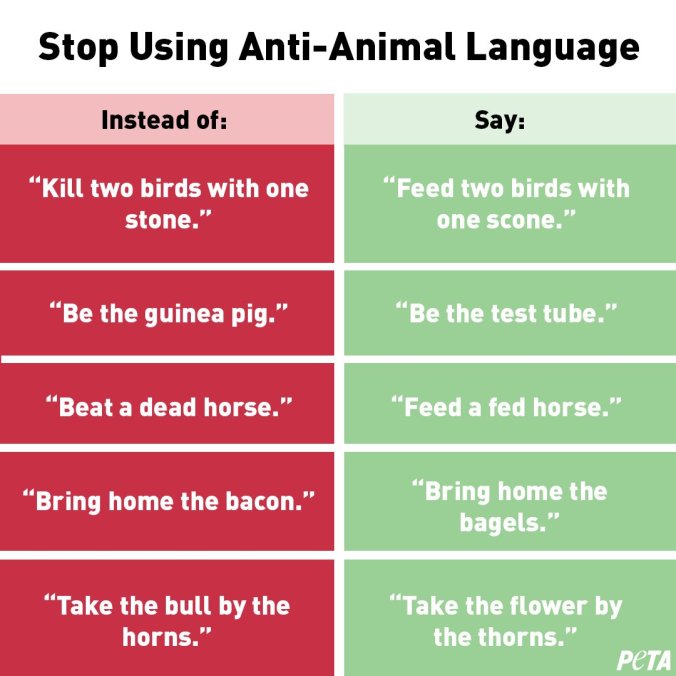
Yeah, I’m sure these will catch on.Was it “Visit mommy or daddy’s office day” and PETA let the kids handle the job? Continue reading

 Ethics Alarms