Observations On The News That Pete Rose Bet On Baseball As A Player After All

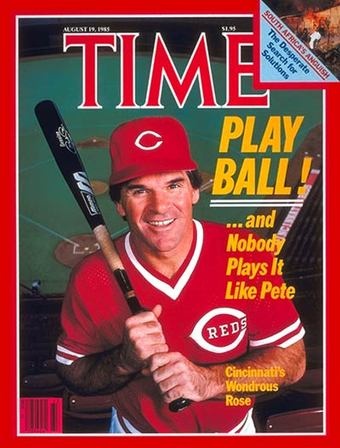
Rose Time cover

The story is here.

To summarize for those new to this story and its various issues:

Because the 1919 World Series fixing scandal nearly toppled the sport, any player, manager or coach who bets on baseball games will be automatically banned from the game for life and from the Major League Baseball Hall of Fame for perpetuity. Pete Rose, the all-time hits leader as a player and a certain Hall of Fame admittee under normal circumstances, was shown to have bet on baseball while a manager, after his playing career. For many years he lied, denying that this was true, then came clean in time to hawk his autobiography.

Rose has always had a lot of sympathy from fans and players, in part because he was such an exciting player, in part because he played with the innocent enthusiasm of a child and  he is a child, at least emotionally, and mostly because it was believed, since Rose insisted that it was true—yes, I know that sounds strange, given Rose’s record of serial dishonesty—that he never gambled on baseball while he was a player.

This season, public sentiment had been building to finally pronounce Rose forgiven. He had even progressed to the stage that some advertisers were using him in TV commercials. Baseball has a new Commissioner, and he had signaled that he would give Rose’s long-standing and ignored petition for reinstatement due consideration.

All of that is gone now, presumably forever.

Some last thoughts on Rose, as with any luck this is the last occasion I will have to write about him: Continue reading

No, Craig, Barry Bonds Wasn’t A “Great” Baseball Player. Bernie Madoff Wasn’t A “Great” Investment Manager, Either

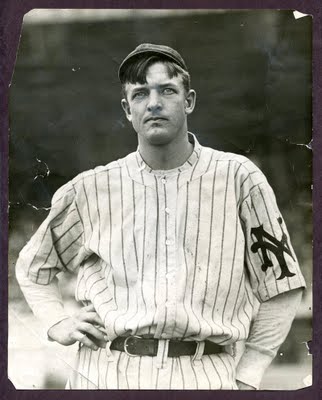
Christy Mathewson, a genuine hero. Barry Bonds would have made him want to throw up.

Christy Mathewson, a genuine hero. Barry Bonds would have made him want to throw up.

I like and admire Craig Calcaterra, who blogs entertainingly and perceptively about baseball on the NBC Sports website. I suppose I’m a bit jealous of him too: he’s a lawyer who now earns his living blogging about something he loves.

But Craig has always been a bit confused about how to regard baseball’s steroid cheats (they are cheats, which should answer any questions, but somehow doesn’t for a lot of people), and predictably, I suppose, he couldn’t resist reacting to the early results of Major League Baseball’s “Franchise Four” promotion, in which fans vote (until mid-May) for “the most impactful players who best represent each Major League franchise” as well as some other categories, including “Four Greatest Living Players.” The early results have Hank Aaron, Willie Mays, Sandy Koufax and Tom Seaver leading in the “Greatest Living Players” category, so Craig snarked that this is sad, because “it must mean Barry Bonds has died in a tragic cycling and/or Google Glass accident and no one thought to tell me.”

No, Craig, this is what someone failed to tell you: cheaters in any profession are not “great” by definition. Great baseball players, like great lawyers, writers, doctors, scientists and Presidents, bring honor on their profession, don’t corrupt everyone around them, don’t force people who admire them to embrace unethical conduct and turn them into aiders and abetters, and accomplish their great achievements while obeying the law, following the rules, and serving as role models for everyone who follows them. Barry Bonds was not a great baseball player. He had the ability to be one, but not the character.

Hank Aaron, Willie Mays, Sandy Koufax and Tom Seaver never once disgraced their game while they wore a uniform, and indeed made baseball stronger and better while they played. Good choices all.

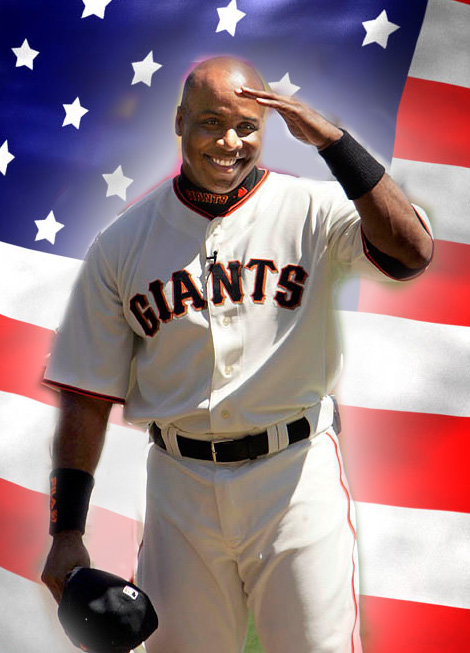
The disgrace is that San Francisco fans voted Bonds as one of that team’s “Franchise Four,”  dishonoring great Giants of the past like Juan Marichal, as well as New York Giants greats like Christy Mathewson, Bill Terry, Carl Hubbell, and Mel Ott, Hall of Famers  and lifetime Giants who played with honesty and sportsmanship. But Giants fans warped values are among the casualties of Bonds’ career…and one more reason he can’t be rated anything but a great villain.

Tales of “The King’s Pass”: Pete Rose and Jeremy Clarkson

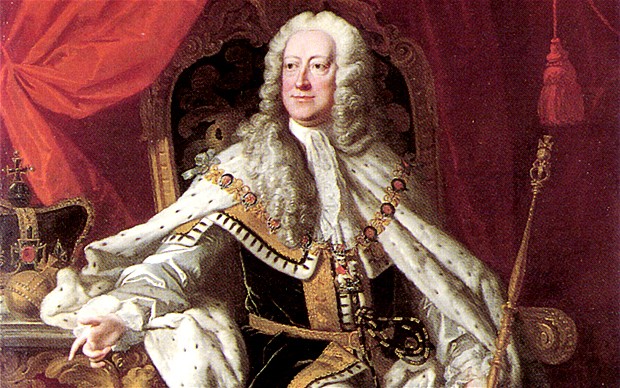
King

The King’s Pass has been much in the ethics news of late—Brian Williams, Bill O’Reilly, David Petraeus, Hillary. Let’s review, shall we?

11. The King’s Pass, The Star Syndrome, or “What Will We Do Without Him?”

One will often hear unethical behavior excused because the person involved is so important, so accomplished, and has done such great things for so many people that we should look the other way, just this once. This is a terribly dangerous mindset, because celebrities and powerful public figures come to depend on it. Their achievements, in their own minds and those of their supporters and fans, have earned them a more lenient ethical standard. This pass for bad behavior is as insidious as it is pervasive, and should be recognized and rejected whenever it raises its slimy head.  In fact, the more respectable and accomplished an individual is, the more damage he or she can do through unethical conduct, because such individuals engender great trust. Thus the corrupting influence on the individual of The King’s Pass leads to the corruption of others…

1. The BBC just demonstrated how the King’s Pass should be rejected—with courage and gusto.

Jeremy Clarkson, the main host of the popular BBC auto show “Top Gear,” spent March misbehaving. He got in a shoving match with a producer, verbally abused staff and was recorded trashing the network. When Clarkson topped it off with a physical altercation with a show staffer, the BBC decided not to renew his contract. BBC head Tony Hall said in a statement:

It is with great regret that I have told Jeremy Clarkson today that the BBC will not be renewing his contract. It is not a decision I have taken lightly. I have done so only after a very careful consideration of the facts…I take no pleasure in doing so. I am only making [the facts] public so people can better understand the background. I know how popular the programme is and I know that this decision will divide opinion. The main facts are not disputed by those involved.

The BBC is a broad church…We need distinctive and different voices but they cannot come at any price. Common to all at the BBC have to be standards of decency and respect. I cannot condone what has happened on this occasion. A member of staff – who is a completely innocent party – took himself to Accident and Emergency after a physical altercation accompanied by sustained and prolonged verbal abuse of an extreme nature. For me a line has been crossed. There cannot be one rule for one and one rule for another dictated by either rank, or public relations and commercial considerations… Obviously none of us wanted to find ourselves in this position. This decision should in no way detract from the extraordinary contribution that Jeremy Clarkson has made to the BBC. I have always personally been a great fan of his work and “Top Gear”…The BBC must now look to renew Top Gear for 2016. This will be a big challenge and there is no point in pretending otherwise. I have asked Kim Shillinglaw [Controller of BBC Two] to look at how best we might take this forward over the coming months. I have also asked her to look at how we put out the last programmes in the current series.

The show, without Clarkson, is toast, and Hall knows it. Nonetheless, he had the guts to do the necessary and ethical act: not allowing its indispensable star to abuse his power and popularity . Once Clarkson did that, “Top Gear” was doomed anyway; firing him now just minimizes the carnage. Although Hall has no responsibility to other networks and organizations, his decisive handling of the episode has saved other programs even as it destroys his own. It is a precedent and a role model for employers refusing to allow themselves to be turned into enablers  by stars assuming the King’s Pass works. When they say, “You can’t fire me, I’m irreplaceable! There’s no show without me!”, the response now can be, per the BBC: “If there’s no show without a jerk like you, then there’s no show. Bye!”

2. Once again, Pete Rose is sucking the ethics right out of people’s brains.

Ah, Pete Rose. He was the topic of the first ethics post I ever wrote, way back in 2004. Then, in 2007, he became my first and only Ethics Dunce Emeritus.

The Pete Rose case is simple. Baseball has an absolute, no exceptions rule that demands a lifetime ban of any player, coach or manager who gambles on major league baseball games. Such banned players can’t be hired by major league teams for any purpose, and cannot be considered for Hall of Fame membership., ever, even after they are dead. Everyone in baseball knows why this rule exists—baseball was nearly destroyed in 1919 when gamblers bribed the Chicago White Sox to throw the World Series—and the rule is posted in every clubhouse. Rose bet on baseball while a major league manager, and also bet on his own team. Thus he is banned.

The significance of the fact that he is, as a player, the all-time hits leader and was the face of the game is that it led Rose to believe that the game would never ban him, and that if caught, he would be treated with special leniency. His excellence on the playing field doesn’t mitigate his conduct, or justify minimizing the ban it earned, at all.

The New York Times published a story about Rose’s efforts to get baseball to lift the ban, now that a new Commissioner, Rob Manfred, is in office. You can read the article here, which is remarkable for the many jaw-droppingly unethical arguments put forth by the baseball people the article quotes, contrasted with the occasional quote that shows that a speaker comprehends the concepts of consequences, accountability, and why letting stars break the rules is suicidal to any culture. It would be an excellent ethics exam.

Here are the quotes; my comments follow in bold. Continue reading

Ethics Heroes: The Baseball Writers Association of America

Nope.

Nope.

In the Baseball Hall of Fame balloting announced today, those who elect baseball’s greats to its shrine of heroes failed to give anyone the requisite 75% ballots required for election. That’s too bad: Craig Biggio, Jeff Bagwell, Tim Raines and Mike Piazza are deserving candidates.

The writers also did not elect unrepentant cheater, record thief and game-corrupter Barry Bonds, however, who was on only 36.2% of the ballots, slightly less than suspected steroid cheat Roger Clemens (37.6).

Good.