Ethical Apology Of The Month: Ryan Braun—Finally

Better late than never, Ryan...I'd almost given up on you.

Better late than never, Ryan…I’d almost given up on you.

Ryan Braun, the 2011 National League MVP who was suspended for the rest of this season for his use of illicit performance enhancing drugs and accepted that suspension without protest or appeal, has released a statement admitting steroid use and apologizing to all, including the testing sample collector whom he had earlier implicitly accused of trying to frame him with a false positive.

I think this ranks as a #1 on the Ethics Alarms Apology Scale, and we don’t see those very often from public figures. That apology is defined as…

An apology motivated by the realization that one’s past conduct was unjust, unfair, and wrong, constituting an unequivocal admission of wrongdoing as well as regret, remorse and contrition, as part of a sincere effort to make amends and seek forgiveness.

Already, critics are taking pot-shots at Braun’s statement. This is, I believe, one reason people so seldom give full apologies: they are never accepted by so many angry pundits, who pick them to pieces. Baseball fans and others in the game have a lot of reasons to be furious with Braun, it is true. His genuine apology comes late, after a terrible one, and there is probably some truth to the theory that he or his PR advisors saw an opportunity to contrast his conduct with that of Alex Rodriquez, who is continuing to deny his PED use and is forcing steroid-hating fans and players to watch him play anyway, while he appeals and collects 5 figures in compensation per at bat. Braun is no Ethics Hero, for his options were limited. Nonetheless, I see nothing to criticize in his apology, and we want to see more apologies that rank at the top of the scale, we need to applaud them when they appear.

Here is Braun’s statement: Continue reading

Ethics Dunce: ARod-Plunking Red Sox Pitcher Ryan Dempster

I’ll admit it: I came thiiiiis close to designating Red Sox pitcher Ryan Dempster an Ethics Hero. Right after he intentionally threw a fastball  into Alex Rodriguez’s ribs on what would have been ball four, I was ready to write the post. Good for Dempster, I thought, making a statement for all the players who deplore steroids and the cheats who use them and for all the fans who feel that sociopathic, lying, greedy players who have debased the greatest game on earth with their use of PEDs. I continued to think that even after the Red Sox lost last night’s game against the Yankees, in no small part because Dempster put the Yankee third baseman, who continues to play while he appeals Major League Baseball’s suspension of him for this season and next, on base.

I was not, however, thinking clearly or ethically at the time.

Now, I am. Continue reading

The Ethics of Cheering Alex Rodriguez

Poor Alex Rodriguez and his wife...

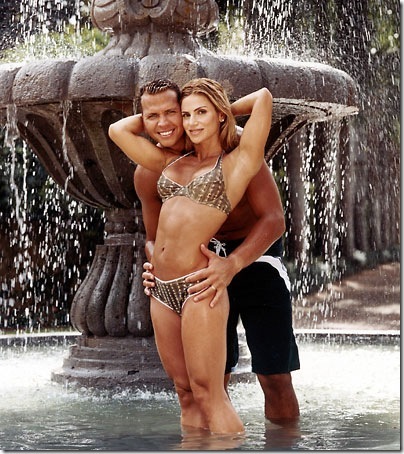
Poor, downtrodden, Alex Rodriguez and his wife…

Baseball’s most embarrassing super-star, the steroid cheat Alex Rodriguez, in playing for the New York Yankees while appealing his long suspension by Major League baseball. As he is unquestionably a repeat liar and a serial violator of the game’s rules against PED’s (performance enhancing drugs), as he signed a contract, in part generated by the results of his cheating, that will both enrich him by millions and handicap his team competitively while conferring few, if any benefits, as he would qualify, by most objective standards, as the antithesis of a sports hero, the fact that Arod, as he is called, still was cheered by a vocal minority in Yankee Stadium when he made his season debut this week is intriguing. What does this mean? Can it be ethical to cheer Rodriquez now?

These are deceptively complex and difficult questions. The threshold  issue is whether cheering or jeering any sports figure, or any public figure at all, is an act with ethical content rather than just a communication of an opinion. Is it conduct, or just “words”? I think, in the context of the Rodriquez situation, a sound argument can be made that it is conduct. Registering group approval or disapproval of prominent conduct by someone of status and influence is a crucial societal function in setting standards, registering disapproval, and prompting shame, regret, apology and reform—none of which, so far at least, seem to register with Arod.

That is pretty clearly what the boos convey, but what about the cheers? If the boos are ethical—they are if the disapproval is proportionate, rational, fair, and just—then are the cheers automatically unethical? Not necessarily. Here are some of the things those cheers could be expressing: Continue reading

Ethics Corrupter: Yankee Third Baseman Alex Rodriquez; Ethics Dunce: Yankee Manager Joe Girardi; Disgraced: The New York Yankees

Corrupted!

Corrupted!

Today, Major League Baseball announced that it was suspending Alex Rodriquez, the New York Yankees aging superstar, for the remainder of the 2013 season and the 2014 season for  using banned performance enhancing drugs, and impeding baseball’s investigation of his cheating. This was the climax (but not the end) of a long, drawn out, messy process and investigation involving a sleazy Miami drug lab, called Biogenesis, now closed down, which had records indicating that many professional baseball players had obtained banned substances.

Former National League MVP Ryan Braun (who I keep calling “Steve”) has already been banned for the rest of the year by the evidence obtained from Biogenesis records. The process has been marred by serial leaks from MLB  (unfair to the players involved, including Rodriquez) and ugly maneuvering between Rodriguez, who has been recovering from a serious hip issue, and the Yankees, who owe him approximately a gazillion dollars (thanks to an idiotic career contract signed in 2007 after he had already admitted to using steroids once), would like nothing more than for him to vanish in a puff of smoke and sulfur.

To explain the baroque ins and outs of baseball’s steroid wars, its player union relations, and the various intersecting agreements, special clauses and other things that have an impact on Rodriquez’s suspension would take too long here and would even bore the baseball fans. What you need to know now is this: Continue reading

When The Incompetent Meet The Corrupt: The U.S. Postal Service vs Lance Armstrong

Left to right: Lance Armstrong's lawyers, the U.S. Postal Service, Lance.

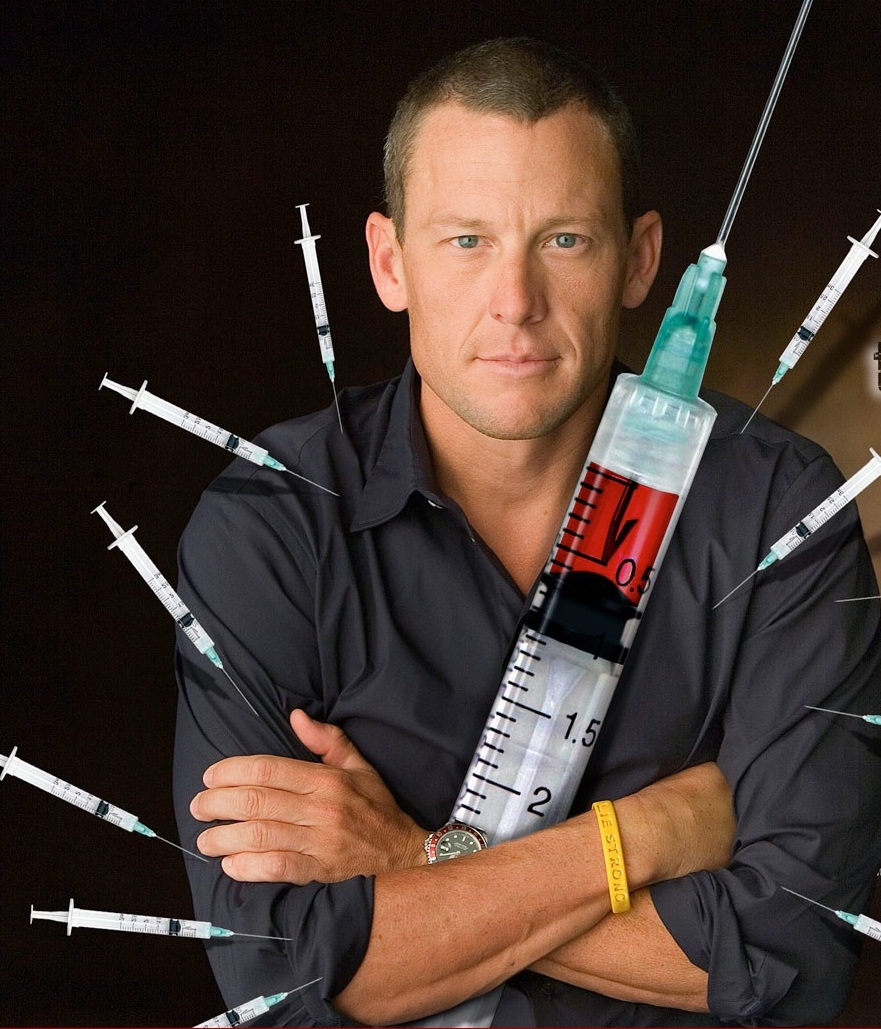
Left to right: Lance Armstrong’s lawyers, the U.S. Postal Service, Lance.

The U.S. Postal Service, virtually insolvent and incapable of doing anything about it, wasted $31 million in 2000 on a four-year contract sponsoring Lance Armstrong and his cycling team. Why? Search me. Still, it was , the Service says, paying to endorse champions, not cheaters, which is what Armstrong and his team were. Now Postal Service is joining a false claims lawsuit, claiming that Armstrong and the team defrauded the government and violated their sponsorship contract by using performance-enhancing drugs. The Postal Service filed the suit shortly after Armstrong finally admitted that what had been alleged for over a decade, what he had denied and sued over and attacked and protested and postured indignantly in pained and defiant terms was, in fact true. He had used illegal and banned substances and methods on the way to his epic success, hero status and world fame.

Armstrong is also a crook, taking millions from the Post Office and other sponsors who believed he was a real champion rather than a phony one. It would be nice, inspiring even, if just one lying, cheating miscreant voluntarily returned the millions he acquired through dishonest means, rather than using those millions to hire super-lawyers to allow him to keep the ill-gotten gains. Lance, however, bottom of the ethics barrel-scum feeder that he is, would not be my most likely candidate for such a noble display. Indeed, he is living up to my low expectations. Continue reading

Ryan Braun’s Unethical Apology

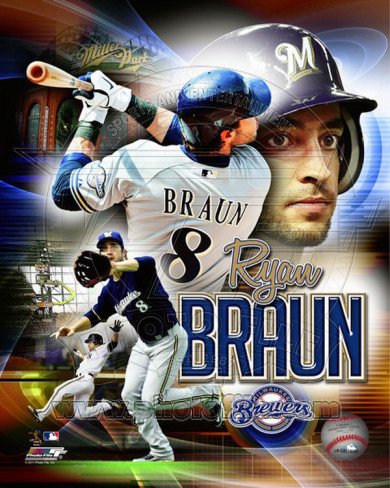
ryan-braun-2011Ryan Braun, the Milwaukee Brewers star who has just accepted MLB’s decision to suspend him without pay for the remainder of the 2013 season for violating baseball’s anti-drug policies, issued the kind of public statement that helps us understand why the athlete thought using banned substances to improve his performance was acceptable. It is the statement of someone’s whose ethical instincts are not merely underdeveloped, but malfunctioning on an epic scale.

Braun released this mea culpa in the wake of the announcement of his disgrace, which also pretty much ends the already faint chances of his team for a successful season:

“As I have acknowledged in the past, I am not perfect. I realize now that I have made some mistakes. I am willing to accept the consequences of those actions. “This situation has taken a toll on me and my entire family, and it is has been a distraction to my teammates and the Brewers organization. I am very grateful for the support I have received from players, ownership and the fans in Milwaukee and around the country. Finally, I wish to apologize to anyone I may have disappointed – all of the baseball fans especially those in Milwaukee, the great Brewers organization, and my teammates. I am glad to have this matter behind me once and for all, and I cannot wait to get back to the game I love.”

This is about what one would expect from a guy who avoided being busted for steroids by the skin of his teeth two years ago on a technicality, and reacted by not only playing the martyr, but also by impugning the character of the man who handled his incriminating urine sample. Let’s look at this non-apology apology’s various and nauseating features. As usual, my comments are in bold : Continue reading

Ethics Dunce: Suspended Milwaukee Brewers Outfielder Ryan Braun

If John Edwards could hit...

If John Edwards could hit…

When National League 2011 MVP Ryan Braun escaped suspension when an arbitrator ruled that his positive urine sample was invalid due to an interruption in the chain of custody, I concluded my commentary with this:

“If he was guilty of cheating, the vote didn’t make him innocent, and if he was innocent, he wouldn’t have become guilty if the arbitrator had voted the other way. Thus Braun’s successful appeal alters forever the consequences Braun will suffer, but it doesn’t dictate how reasonable fans should feel about him. In 2012, there are great baseball players who have been excluded from baseball’s Hall of Fame, or will be, because baseball writers suspect them of being steroid users, even though they never tested positive in any test, tainted or otherwise. Jeff Bagwell, Sammy Sosa and Roger Clemens head the list. If Ryan Braun goes on to  be one of baseball’s all-time greats, will he join the suspected and snubbed, barring a complete turnaround in the sport’s attitude toward performance-enhancing drugs?

I think he will. And in his case (unlike that of Jeff Bagwell), I don’t think it will be unfair. Though Braun’s tests were correctly thrown out, it seems far less likely to me that Laurenzi inexplicably decided to frame Ryan Braun than it does that Braun was the undeserving beneficiary of moral luck. But if we have to choose between competing unfairness, isn’t it better to risk allowing a cheater to have an undeserved second chance at a clean reputation, than to take the alternative risk, less probable but more unjust, of forcing an innocent athlete to have his career and reputation forever blighted by something he didn’t do?

“I’m not sure, and the added problem is this: even if I agree with that last sentence, I can’t help how I think.  I think, based on what I know, that Braun cheated and lucked out.

“And if he’s innocent, that’s terribly unfair.”

Now we know he was not innocent, and that Braun, to put it in the colorful lexicon of NBC Sports baseball blogger Matthew Pouliot, ” is baseball’s biggest dipwad.” It is impossible to dispute that diagnosis. The Milwaukee outfielder has agreed to sit out the rest of the 2013 season without salary in the wake of convincing evidence that Braun is a steroid cheat, making him the first casualty of the unfolding performance enhancing drug scandal involving the lab Biogenesis that is expected to eventually implicate many Major League stars.  Pouliot collects some of Braun’s quotes after he dodged the suspension bullet in 2011, and for some one who was guilty and knew it, they set a high bar for dishonesty and gall:  Continue reading

And This, Craig, is Why Barry Bonds Should Only Get In The Hall Of Fame With A Ticket

Blame Barry, Chris.

Blame Barry, Chris.

In Baltimore, a young, slugging first baseman is leading the charge to get the Baltimore Orioles into the American League play-offs. He is on a home run pace that could net him 60  or more, and fans voted him the starting first baseman on his league’s All-Star team. Because his production this year far exceeds anything he had accomplished before, however, Chris Davis’s emergence isn’t being celebrated as much as it is being suspected. Another steroid scandal looms over major league baseball, one which threatens to engulf two former MVPs, as well as other players. Fans and sportswriters don’t trust players any more, or their power totals, not since Mark McGwire and especially Barry Bonds juiced and injected their way to shattering the game’s home run records.

This bothers lawyer/baseball blogger Craig Calcaterra, and it should., as someone concerned with justice. Of the smearing of Davis, he calls it…

“…utterly baseless speculation; Davis has always had tremendous power but is now, in the past year, matched it up with better plate discipline — is the product of a media landscape which has decided that every power hitter is a ‘roider. Jose Bautista got this treatment a couple of years ago. Davis is getting it now. Everyone who engages in this business does so because they’ve been convinced by the baseball media that such speculation is not just justified but necessary. It’s neither of those things. The drug testing system put in place had avoiding these parlor games as one of its primary justifications. But that’s not good enough for some, apparently.” Continue reading

Of Course Barry Bonds Doesn’t Belong In The Hall Of Fame

Buy a ticket, Barry.

Buy a ticket, Barry.

A full complement of baseball’s steroid class is among the 37 players on the 2013 Hall of Fame ballot, so it was predictable that a new round of arguments would surface claiming that it is unfair, illogical, inconsistent or otherwise unseemly to exclude Barry Bonds and others from enshrinement. Predictable but frustrating: the arguments in favor of Bonds are arguments against maintaining ethical values, in baseball, sports, and American society.  It is also an annoying debate to engage in, and I have been engaging in it in various forms for many years, because Bonds’ defenders typically represent themselves as modern, reasonable, and realistic, while anyone making the quaint argument that cheating on a grand scale should earn shame rather than honors is mocked as judgmental, sanctimonious and naïve.  As ever, I am a glutton for punishment, and since otherwise wise and perceptive commentators like NBC Sports’ Craig Calcaterra choose to ally themselves with Bonds, I really am obligated to point out what a corrupt, illogical and unethical position it is.  If I and people like me don’t persist in this, we’ll have cheating approved as a cultural norm before we know what hit us.

Calcaterra has been supporting Bonds as a Hall of Fame candidate for a while now, but the title of his latest essay, “It’s Lunacy To Keep Barry Bonds and Roger Clemens Out of the Hall of Fame” is a gauntlet that begs to be picked up.  “Bonds and Clemens,” Craig writes, “ are two players who, in a just world, would be unanimous selections for induction…”  I find this an indefensible, even shocking, statement, both before and after the writer attempts to defend it. In a just world, a member of a profession who achieved his prominence in part by breaking the law and the rules, as well as lying about it, should be accorded the highest honor that profession has!  What an astounding point of view.

For simplicity’s sake, I’m going to leave Clemens out of this, in part because I can see a Hall of Fame voter credibly deciding that there isn’t enough evidence to conclude that The Rocket really did use performance enhancing drugs on the way to forging one of the top five pitching careers of all time, and in part because I suspect Craig of pairing Bonds and Clemens to make his various rationalizations more pallatable than they would be in defense of Bonds alone.  Belief in Roger’s steroid cheating rests entirely on the testimony of a proven liar and slime-ball, his former trainer. MLB’s Mitchell Report sided with the trainer, and I’m inclined to as well, but Clemens’ unfitness for the Hall of Fame, unlike Bonds (and Mark McGwire, Rafael Palmeiro, and some others), is not an open-and-shut case.

I give credit to Craig for not raising my least favorite of the Bonds defenses, that he has to be regarded as innocent because he has not been “proven guilty.” Calcaterra is a lawyer, and he understands the over-use and misuse of that cliché, as well as how it only applies when “guilty” means “you’re going to jail.” Indeed, he begins by conceding the obvious, that the evidence that Barry Bonds used steroids is overwhelming, which it is.

His first argument, however, is terrible. Under the ironic heading “Baseball Bonafides,” Calcaterra begins by reciting Bonds’ (and Clemens’) impressive list of achievements, which taken at face value show Barry Bonds to be one the best of the best, not just a qualified Hall of Fame baseball player, but an epitome of a Hall of Fame player along with such legends as Babe Ruth, Walter Johnson , Ted Williams and Willie Mays. “Put simply,” Craig says in conclusion, Bonds is an “immortal.” But he’s not-–not if he cheated, not if he achieved his historic status by corrupting his sport and lying to team mates and fans. And, as Calcaterra admits at the outset, this he did. As a result, the fact that Bonds won a record seven Most Valuable Player Awards is irrelevant. He cheated to win some of those awards. He gets no credit for them.  In Bonds’s case, “baseball bonafides” are not bona fide at all. Continue reading

Lance Armstrong As The Status Quo: An Unethical Essay From An Ethics Expert

Don’t worry, Lance. Braden Allenby understands you. You were just ahead of your time, that’s all.

There are many things to learn from Prof. Braden Allenby’s Washington Post essay, “Lance Armstrong’s fall: A case for allowing performance enhancement,” none of which have anything to do with Lance Armstrong. Among the lessons:

  • “Everybody does it “really is the most seductive and sinister rationalization for unethical conduct.
  • Someone really shouldn’t write about sports ethics when they know nothing about sports.
  • If you only understand an author’s bias after reading the short biographical sketch at the end of the article, then he wasn’t responsibly correcting for his bias in his article.
  • When someone uses the worst of all rationalizations, the deplorable, “It’s not the worst thing,” neither their judgment nor their argument can be trusted.
  • Some ethics experts have appalling judgment in regarding ethics.

Allenby’s essay takes the position that all sports should allow athletes to take whatever performance enhancing drugs that become available, beginning with the tragedy of Lance Armstrong’s final disgrace as a cheater and corrupter of his sport. Seldom do you see an argument clothesline itself so quickly: here is Allenby’s opening sally:

“In the past month, cyclist Lance Armstrong has been stripped of his seven Tour de France titles. His commercial sponsors, including Nike, have fled. He has resigned as chairman of Livestrong, the anti-cancer charity he founded. Why? Because the U.S. Anti-Doping Agency and the International Cycling Union say he artificially enhanced his performance in ways not approved by his sport and helped others on his team do the same. This may seem like justice, but that’s an illusion. Whether Armstrong cheated is not the core consideration. Rather, his case shows that enhancement is here to stay. If everyone’s enhancing, it’s a reality that we should embrace.” Continue reading