
Ethics Hero: Dylan Farrow (and Observations On Her Open Letter To Woody Allen’s Fans)

dylan-farrow

Dylan Farrow was 7 years old when, she alleges, her adoptive father Woody Allen began sexually molesting her. Although this became the focus of the legal and public relations battle between her mother, actress Mia Farrow and Allen as their once romantic and domestic relationship—-already destroyed by Allen’s courtship, seduction and marriage of Dylan’s older, also-adopted sister Soon Yi—exploded onto the scandal sheets more than 20 years ago, the now-married Dylan has never spoken out about it herself, though her mother and other siblings have. Allen avoided any criminal charges despite an investigation that found probable cause, and his popularity among film-goers and his stature in Hollywood seemed to be undamaged. Last month, however, a lifetime achievement award at the Golden Globes (accepted by a fawning Diane Keaton) re-opened the unhealed wounds for the Farrows, and Allen’s Oscar nomination last week for his original screenplay for “Blue Jasmine” was apparently too much.

Now Dylan Farrow has decided to tell her own story, and has done so in open letter form, published on the blog of New York Times columnist Nicholas Kristof.

I ask that you read it now, here, before you read anything else. Her courage in writing this powerful statement earns the right to have it received on its own terms.

Observations: Continue reading
Pete Seeger Was No Hero, But That’s OK

“Was Pete political? Of course,” wrote singer Tom Paxton in a featured Washington Post salute to folk legend Pete Seeger, who died this week at the age of 94.“He was political as Walt Whitman was political, as Clarence Darrow and Woody Guthrie were political; as, for that matter, all of us should be political. He felt that ordinary people deserved protection from bullies of all stripes and his was the gift of being able to express this belief in music and in the way he lived his life.”

Reading Paxton’s dewy-eyed remembrance and the formal obituaries and tributes from most of the news media, one would never suspect that Pete’s belief in protection against all bullies didn’t stop him from being a fervent supporter of and an apologist for one of the worst bullies in human history, Josef Stalin, and not just momentarily, but for most of Seeger’s life. The fact that supposed news organizations nearly unanimously decided to gloss over that element of Seeger’s legacy tells us a lot about the Left, our journalists, bias….but not a lot about Pete Seeger.

If I followed my heart and my tapping foot but not my brain (and if all I knew about Pete was what I read in the newspapers and read from my theater colleagues on Facebook—And only in our Orwellian reality would someone of such incomparable achievement, one who displayed such overwhelming humanity, have been held in contempt of congress. An inspiring life,” wrote one, who should know better), I would have made Seeger an Ethics Hero Emeritus. He had some notable heroic moments, as when he stood up to the House Un-American Activities Committee, refusing to take the Fifth Amendment while defying the Committee in defense of the First, and getting himself cited for contempt of Congress and blacklisted as a result. I was thrilled and proud of him in 1968, when fresh off the blacklist he appeared on the Smothers Brothers show and sang his “Big Muddy” song (which you can watch above) with anger and passion, condemning the Vietnam war in metaphor and calling LBJ a fool on national television at a time when such a direct insult against the President was taboo. I didn’t even completely agree with Seeger at the time, but this was brave protest art at its finest and most effective.

If only the hypocrisy of continuing to support a system of government and a regime that tolerated no freedom of speech and that would have squashed a protester like Seeger as if he were a maggot had occurred to the folk singer while he was doing these things. But it did not. Folk singers tend to be like that, and Pete Seeger, one of the greatest folk singers, was more like that than any of them. Continue reading

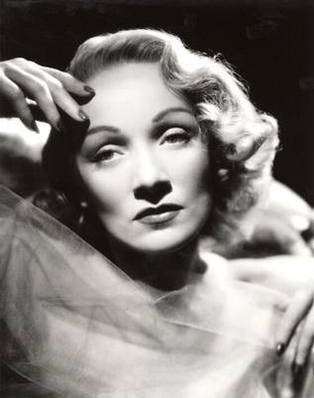
Ethics Hero Emeritus: Marlene Dietrich (1901-1992)

The great Marlene Dietrich, Ethics Hero

It was on this date in 1992 that the magnificent Marlene Dietrich died, in her sleep, in her Paris apartment at age of 91. She had hidden her face from the world since she had stopped performing over a decade before, saying that the public should remember her as she had been. Sadly, Dietrich is one of those former icons of Hollywood whom the public is slowly failing to remember anything about at all; most are more familiar with Madeleine Kahn’s send-up of her in the Western spoof “Blazing Saddles” than they are with Marlene herself. That is wrong, for she deserves better. Not only was Marlene Dietrich a unique performer and important cultural figure, she was also an Ethics Hero.

She was a rising German stage and screen actress when director Josef von Sternberg cast her as Lola-Lola, the beautiful, cynical leading character in “Der blaue Engel,” (The Blue Angel), Germany’s first talking film. The movie made Dietrich a star. Von Sternberg took her with him when Hollywood beckoned and signed her with Paramount Pictures. There Dietrich built her image and legend by perfecting her femme fatale film persona in a series of classic films directed by her mentor: “Morocco” (1930), “Dishonored” (1931), “Shanghai Express” (1932), “Blonde Venus” (1932), “The Scarlet Empress” (1934), and “The Devil Is a Woman” (1935).

Meanwhile, she had already begun fighting Hitler’s regime. Continue reading