The Unlikely Ethics Dunce, And Why Nobody Pays Attention To Ethicists And I Don’t Blame Them

Wait, how can the nation's most famous ethicist be an Ethics Dunce? It's not easy...

Wait, how can the nation’s most famous ethicist be an Ethics Dunce? It’s not easy…

Ethicists have managed to make ethics nearly invisible in our cultural debates, and nearly useless as a decision-making tool, when it ought to be the most useful tool of all. They accomplished this over centuries of work, making the discipline of ethics abstruse, elitist, abstract, and worse of all, boring. Nobody should be bored with ethics, hence my statement, “Ethics isn’t boring, ethicists are.” Once ethics was pigeon-holed in the realm of philosophy, however (it belongs with “crucial life skills” and “critical thinking”) and philosophy became associated with scholarship, advanced degrees and academia, the jig was up.

The problem is that academic ethicists teach and write about abstract ethics, and life is not abstract. Their quest is for one formula to determine right from wrong, and life and human beings are more complicated than any one formula can encompass. When I started this blog, I got a lot of grad students writing me who demanded to know whether I was a Utilitarian,  Kantian Deontologist, a follower of Natural Law Ethics,  a Virtue Ethicist or a devotee of Stakeholder theory. My answer was “all of the above and none of them.” All of these and more are useful tools of analysis, but none work all the time, and the amount of words loaded into jargon to explain and debate the nuances of any of them render them all useless except for  writing scholarly papers.

The ethics that the public learns, as a result, are what pop culture and society teach them, and most of that isn’t ethics at all. For example, in the cable series “The Affair,” a well-educated older man was advising a young woman, the mistress in the affair, about how to think about the illicit relationship that broke up he lover’s marriage. Wise and thoughtful, he described his own adulterous affair, and then said, “What you did wasn’t wrong. You didn’t kill anybody. You didn’t break any laws.  Don’t be so hard on yourself.”  There is no ethics in that statement. Itis just employs two popular and facile rationalizations (#4. Marion Barry’s Misdirection, or “If it isn’t illegal, it’s ethical,” and #22, the worst of all, #22. The Comparative Virtue Excuse: “There are worse things.”) with another lurking but unspoken one, the Cheater’s Special, #23. Woody’s Excuse: “The heart wants what the heart wants,’ underlying the whole scene.

That’s ethics, I would guess, to about 90% of the population. Scary. This is, however, where ethicists have taken us. They could be so important to the culture, if they would get their heads out of their asinine models and explain ethical principles that are relevant to real lives in a manner that doesn’t make normal people become hostile to the subject.

This brings us to Peter Singer, Princeton’s acclaimed professor of bioethics who has been called the most influential ethicist alive. It is admittedly faint praise, but probably correct. Continue reading
Comment of the Day: “Ethics Dunces: Ten Prominent Doctors, Surgeons and Med School Professors Who Want Columbia To Kick Dr. Oz Off Its Faculty”

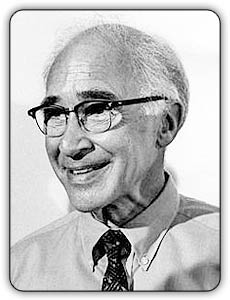
The late Prof. George Wald, the best teacher I ever had. In biology, not political science. George did not acknowledge the distinction.

The late Prof. George Wald, the best teacher I ever had. In biology, not political science. George did not acknowledge the distinction.

Commenter Alexander Cheezem, who has quite a bit of expertise (also passion) on such matters, weighed in on the current controversy over the “quackery” of daytime TV star “Dr. Oz.” This time I’ll hold my comments until the end; here is Alex’s excellent Comment of the Day on the post, Ethics Dunces: Ten Prominent Doctors, Surgeons and Med School Professors Who Want Columbia To Kick “Dr. Oz” Off Its Faculty:

I’m going to have to both agree and disagree with you here. First off, I applaud Columbia University’s response and agree that the principle of academic freedom is applicable here… to a point.

Secondly, however, I’m going to have to disagree with you regarding the parallels. Linus Pauling was an embarrassment to medicine, not chemistry. Wald was overly passionate about politics, not biology. Nagel’s views on biology are an embarrassment, not his views on what he’s supposed to be actually teaching. Chomsky’s forays into political science may be an embarrassment (personally, I regard them as something of a mixed bag), but that’s not what he was the professor of, is it?

Kass, McKinnon, Harper, and Singer are closer parallels, of course, but there’s still one rather huge difference: Dr. Oz is a doctor… and runs his show as one. It is, as the comedian John Oliver put it, the Dr. Oz Show, not “Check This Shit Out With Some Guy Named Mehmet”. This is quite relevant for a number of reasons, not the least of which is that offering medical advice is within the scope of what doctors do. Offering that advice while invoking his medical license as a relevant qualification, simply put, can be considered part of the actual practice of medicine. Continue reading

Ethics Dunces: Ten Prominent Doctors, Surgeons and Med School Professors Who Want Columbia To Kick “Dr. Oz” Off Its Faculty

Dr Oz

Perhaps they tried this because Columbia has been having a bad ethics year so far… that could be it, I guess.

For the record, here are are the ten prominent individuals in the field of medicine who called on Columbia University to kick Dr. Mehmet Oz, better known to Oprah fans and junk TV addicts as “Dr.Oz,” off its medical school’s faculty:

Henry I. Miller, M.D.
Robert Wesson Fellow in Scientific Philosophy
& Public Policy
Hoover Institution
Stanford University
Stanford, CA

Scott W. Atlas, M.D.
David and Joan Traitel Senior Fellow
Hoover Institution
Stanford University
Stanford, CA

Jack Fisher, M.D.
Professor of Surgery (emeritus)
University of California, San Diego
La Jolla, CA

Shelley Fleet, M.D.
Anesthesiologist
Longwood, FL

Gordon N. Gill, M.D.
Dean (emeritus) of Translational Medicine
University of California, San Diego
La Jolla, CA

Michael H. Mellon, M.D.
Pediatric Allergist
San Diego, CA

Gilbert Ross, M.D.
President (Acting) and Executive Director
American Council on Science and Health
New York, NY

Samuel Schneider, M.D.
Psychiatrist
Princeton, NJ

Glenn Swogger Jr. M.D.
Director of the Will Menninger Center for Applied Behavioral Sciences (retired)The Menninger Foundation
Topeka, KS

Joel E. Tepper, M.D.
Hector MacLean Distinguished Professor of Cancer Research
Dept of Radiation Oncology
University of North Carolina School of Medicine
Chapel Hill, NC

And here is their letter. They are troubled because “Dr. Oz” has embraced dubious products and health promotion techniques on his TV show. Indeed he has. On TV, Dr. Oz is a quack. He uses his medical credentials to, as the letter says, show “disdain for science and for evidence-based medicine” and to display  “baseless and relentless opposition to the genetic engineering of food crops.”  And no one can deny that  “he has manifested an egregious lack of integrity by promoting quack treatments and cures in the interest of personal financial gain.”

None of which is justification for taking him off the faculty, where his teaching duties are unrelated to his lucrative TV persona, and are the direct result of his recognized expertise in cardiothoracic surgery.

Could it be that all of these doctors—including Professors Tepper and Fisher, and Dean Gill— have never encountered the sacred educational principle of  academic freedom? Continue reading

An Ethics Question From Ethicist Peter Singer

Princeton University philosophy professor Peter Singer is that rarest of species, the ethicist whose name many people actually recognize. This is because of his knack for raising important ethical issues in provocative ways, making enough people upset to create productive and sometimes transformation debate.

In a recent interview with the Carnegie Council’s Julia Taylor Kennedy, Singer touched on many of his most publicized themes, including global poverty. Here he poses a thought exercise designed to raise a question of conscience:

“I ask you to imagine that you are walking across some park that you know quite well, and in this park there is a shallow ornamental pond. Let’s assume that you know that it’s shallow, because on summer days you see teenagers playing in it, and it’s only waist-deep. Continue reading

Comment of the Day: “The Barefoot Contessa and the Compassion Bullies…”

Today’s Comment of the Day needs some background. The first comment regarding yesterday’s controversial post “The Barefoot Contessa and the Compassion Bullies…”, asserting the right of a celebrity to decline a sick child’s request, was by reader Nancy Simpson, who wrote…

“Obviously we have different beliefs about what constitutes “ethics”. The first duty of all persons in a civilized society is to care for the children. My ethics say that for the optimum function of society, we care for children unless what they ask for will cause physical or emotional harm to them.

“Short of confinement in a leprosy ward, this woman has no excuse for her unkindness to a child. If the “too busy” excuse is true, then she is just greedy. No law against being greedy, is there? She has no duty to be concerned with anything other than her money.

“The other place we have ethical differences is that it against my ethics to criticize control and blame a sick child’s mother. Talk about hit below the belt. Shame on you.

“Celebrities are not mandated to give back–they may bite the hand that feeds them any time they like. And I decide who gets my hard earned money, and it will not be her or Food Network.

“I don’t pay people who hurt children.’

I was, I admit, rather severe with Nancy, writing in response…

“No, Nancy, you are completely wrong. Obviously we do have a different understanding or ethics, because you have very little and you also didn’t really read or think about the post. If a stranger walks in your home and demands that you care for her child, are you ethically required to do it? What gives “Make A Wish” or Enzo, his mother or anyone the right to finger this one woman because he happens to watch her show and put her in the position of either having to make a major effort to please him—not cure him, not actually make him well, but just give him a good time—at the threat of being condemned by self-righteous uninvolved bystanders like you? Ridiculous.

“Maybe she had a brother with the same disease and spent years in therapy trying to conquer the depression his death caused…and the prospect of getting close with Enzo risks her long term mental health. Does her refusal pass your approval process then, or is she obligated to harm herself because a stranger’s child has a “wish”? How can you judge her actions when you have no idea what motivates her? Granting these things is usually a PR bonanza….I doubt her motivations are crass at all.

“Maybe she is especially emotional around sick children. You have no basis to criticize her. She is not Enzo’s slave, she is not his doctor, she is not his plaything. She has a right to say “no.” There is a difference between exemplary ethics, and ethics. It would be great if she decided to grant his request, but it is not unethical not to. I know—you don’t understand. Well, you can revel in your ignorance without telling me that I don’t understand.

“I DO have basis to criticize Enzo’s mother, and I hereby throw your silly “shame!” through your window.

“She set out to harm a woman who owed her nothing. She sicced the internet on someone for pure revenge. I sympathize with her, but her actions were unarguably wrong. If you think certain classes of people like “mothers of sick children” get special passes to act badly and harm others, go start a Cindy Sheehan fan club—you don’t have a clue what ethics are.

‘You know what rationalizations and excuses are, however.”

Now, today, new reader Yao added a very provocative Comment of the Day: Continue reading