From “The Pazuzu Excuse” Files: The Justly-Fired TV Reporter’s Lament

http://www.youtube.com/watch?v=npWFv6rYmjU

Colleen Campbell, a local  Philadelphia television reporter, got herself fired for an obscenity-packed rant berating a cop  outside a Philadelphia comedy club. What she didn’t know was that the whole, ugly thing was filmed. You know that rule that says “ethics is what you do when nobody’s looking except your embarrassed companion and a policeman who you have no respect for anyway because he’s just a cop? That’s the one Colleen whiffed on.

Campbell ae was kicked out of the club for “loud whispering” throughout the show. Once outside, she denied being disruptive to an officer who removed her. The officer replied that Campbell and her male friend needed to just leave the scene. The reporter replied, charmingly,

Or what? Or what, motherfucker? Lick my asshole. How about that? Fucking piece of shit. That’s why nobody likes fucking police … idiots in this fucking town.”

Campbell, 28, didn’t know her act was caught on camera and posted to Facebook until after she received word from the station that she had been fired. Now she says…

“That’s not me or how I talk or act or anything at all…I don’t know what to do. I feel ruined and embarrassed for me and my family….I feel awful…That’s not me or how I speak or how I talk or how I was raised. I had to delete all my social media, because I’m getting threats….I wanna apologize to the officer. I don’t remember the whole altercation at all. I remember feeling attacked. I would never talk like that. It was like watching a whole different me.”

The Kathy Griffin episode sparked several of those currently popular blog posts and web essays about how social media destroys people who make “one mistake” and if it could happen to them, it can happen to you. Ethics Alarms has had several of these posts in the past, always about regular citizens who had an ugly e-mail distributed to the universe by an angry girl friend, or a tasteless or misunderstood tweet to a friend gone viral. No question: these web lynchings are out of proportion to the offense. Continue reading

Fair vs Fair: Ethics and the “No-Tip” Restaurant

You know, this looks like a place that would believe that dishwashers deserve as much pay as waiters...or as bankers, for that matter.

You know, this looks like a place that would believe that dishwashers deserve as much pay as waiters…or as bankers, for that matter.

William Street Common is a new restaurant in Philadelphia, and is getting publicity for, we are told, experimenting with a different and (maybe?) fairer compensation model. Owner Avram Hornik  pays all of its employees, from the servers to the dishwashers, at least $15 an hour plus paid sick leave and health insurance benefits. There is a 20 percent service charge for drinks, and that goes into a common fund that makes that  $15 an hour wage affordable. Money left over at the end of a pay period is divided up among employees based on a point system related to various factors.

Hornik came up with this structure, he says, to deal with the well-debated problems of tipping. “Some people just tip the same amount, but some people base it on how quickly the food was there, whether we were out of something, whether the server was there when they wanted them to be,” he says. “So much of that is out of the control of the individual server… So why would it be fair for the service employee to be responsible for the poor decisions of management?”

Hornik argues that his model “essentially creates a guaranteed floor. But we’re also capping the ceiling,” he points out, because the tipping gets shared equally with all employees. “We didn’t think it was fair [that] in some places you have dishwashers earning 10 dollars an hour and the bartender earning 30 dollars an hour.” He also is convinced that the customers will benefit.  “That atmosphere among the employees, a sense of community and empowerment and happiness with the job, is going to translate into a better environment for customers,” he said. “By having happy staff customers are going to be happier too.”

Is this system really fairer than the current one? Progressives are cheering it, because it represents a “living wage,” or at least something close to it. OK, but it would be nice not to feel hyped: ThinkProgress, for example, had headlines that the William Street Common “got rid of tipping” and writes “tips aren’t mandatory.”

Inept reporting or lies, take your pick. A 20% “service charge” is a mandatory tip, so tips ARE mandatory. The reports don’t explain how voluntary tipping has been eliminated, or whether a server would be prohibited from keeping a ten-dollar bill that a diner hands him, saying, “You know, the food was lousy, but you were so gracious and accommodating that you single-handedly made the evening bearable. Thank you. If I ever come back, it will be because of you.” If so, is that fair?  I don’t think so. In fact, it’s exactly as unfair as a diner not rewarding excellent service, and tipping a dime. Continue reading

Ethics Dunce (Tip-Shaming Division): PYT Burger Restaurant and Bar

tip shaming

Tip-shaming over social media is despicable. This example is unusual, as for once it is the owner, not a waiter, doing the deed.

It’s still wrong.

PYT is a hamburger restaurant in Philadelphia. The owner apparently decided to take a stand for a poorly tipped server, because the customer was Philadelphia Eagles running back LeSean McCoy. According to the receipt,  McCoy left a twenty cents gratuity on a bill of $61.56.

Usually the public will side with the tip-shamer even when they shouldn’t, but McCoy is a local sports hero, so the restaurant is getting its buns flame-broiled on the net. (Though actor Charlie Sheen, who apparently has nothing better to do and wouldn’t know an ethic if it took up lodging in his nose, “pledged” $1000 to the supposedly abused waiter. File this one under “PR Grandstanding” …this like John D. Rockefeller handing out dimes to street urchins.) Thus the joint’s owner, Tommy Up, took to Facebook to explain why he set out to embarrass McCoy, writing in part… Continue reading

50 Years After Kitty Genovese, Inhumans On A Bus

The title describes the public transit riders who watched this disturbing scene unfold on a Philadelphia bus, and did nothing:

2014 is the 50th anniversary of the infamous Kitty Genovese case, and dueling books on the incident either recount the accepted version that 38 people in an apartment building heard the 28 year-old woman’s screams as she was being stabbed to death but “didn’t want to be involved” and let her die, or adopt the revisionist theory that the apathy of bystanders was unfairly and inaccurately hyped by the news media. The incident on the Philadelphia bus tells me that the revisionists have a burden of proof that will be hard to meet. There was plenty of evidence already, like here, or here, or here, or here, or more recently here, that Kitty Genovese might not fare any better today. Continue reading

Can A Prostitute Be Raped?

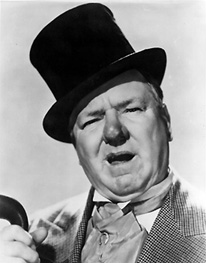
On Nov. 5, we'll find out if W.C. Fields' low opinion of Philadelphia was justified...

On Nov. 5, we’ll find out if W.C. Fields’ low opinion of Philadelphia was justified…

An unethical and incompetent judge in Philadelphia doesn’t think so, thus making a powerful argument against electing judges, being a prostitute, and living in Philadelphia.

Philadelphia Municipal Court judge Teresa Carr Deni ruled that the 2007 rape of a prostitute at gunpoint was merely “theft of services.”The  woman had agreed to meet a man have sex with him for the bargain fee of $150. He asked her if his friend could join in the fun for an additional $100, and she agreed. When these two sterling citizens arrived for the appointment, however, they held her at gunpoint and forced her to have sex with them free of charge.

If this isn’t rape when a prostitute is involved—forced, unconsented intercourse, through the threat of deadly force—then any prostitute can be raped at will, with the worst charge being “theft.” Selling sex doesn’t convert sexual battery into nothing, a non-crime, once consent for that sale is withdrawn. If you know someone is preparing to sell blood to a blood bank, and you attack him, subdue him, and drain his blood to sell yourself, is this merely theft, or a crime of violence? If he was going to be an organ donor, and you rip out his kidney, is that just theft? There is no route through law or reason that allows us to ignore the fact that a woman was forced to have sex with two men without her consent. Judge Deni clearly has a monstrous bias against prostitutes, and thus believes that they shouldn’t receive equal protection under the law. When criticized, her rationalization was that prosecuting the men for rape “minimizes true rape cases and demeans women who are really raped.” Continue reading

“Being White In Philly” And Mayor Nutter’s Unethical Attack

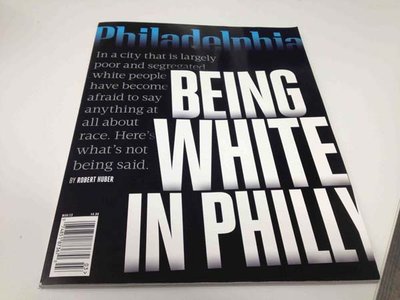
phillymagcoverPhiladelphia Magazine published an article this month titled “Being White in Philly.” Written by Robert Huber, who includes his personal reflections as well as interviews with white Philadelphians, the piece raises troubling and real problems in current U.S. race relations in an open and fearless way that does not usually characterize the media’s handling of the topic. The letters from readers, which you can also read at the link provided above, demonstrate that the article drilled directly into a nerve, and exposed feelings by white citizens, not just in Philadelphia but elsewhere in America, that need to be considered, analyzed, and dealt with whether or not one believes that they are justified or fair. Huber uncovered some of the most stubborn obstacles to a post-racial U.S., and they persist because we remain reluctant to discuss them

It’s an excellent piece of journalism that reminded me of my late roommate in law school, a young, Irish Catholic ex-Marine from the “rough” parts of Philly, who opened my eyes about racial attitudes like no one else I have ever known. He was intelligent, observant, and beyond any question, a racist, and openly admitted it. He also vividly describe the Philadelphia experiences that he felt justified his racism. I could see his handsome smile as I read Huber’s piece. The article itself, however, is not racist in any way.

Mayor Michael Nutter, however, either out of careless reading, racial identification, foolishness or willful blindness, decided to attack the article and the magazine for running it.  He wrote a furious letter of protest to Philadelphia Magazine, a letter which, as I will shortly demonstrate, crossed bright lines of ethical reasoning and appropriate conduct by a government official. Philadelphia Magazine’s editor, Tom McGrath responded perfectly:

“I applaud the mayor for asking for an inquiry into the state of racial issues in Philadelphia. The need to have a deeper discussion about race in Philadelphia is exactly why we ran our story in the first place. Like any reader, the mayor is entitled to think and say what he wants about the story. That said, his sophomoric statements about the magazine and mischaracterization of the piece make me wonder if he’s more interested in scoring political points than having a serious conversation about the issues. Furthermore, his call for a “rebuke” of the magazine by the PHRC is rich with irony. This is the same mayor who just yesterday was shouted down by an unruly mob in City Council; now he himself wants shut down conversation about an important issue in our city. In short, the mayor loves the First Amendment–as long as he and the government can control what gets said.”

Now let’s consider, piece by piece, Nutter’s letter to the magazine, and why it deserved McGrath’s criticism, and more. My comments will be in bold. Continue reading

Musings On A Judge’s “One Time Accidental Mistake”

"All right now, boys---smile!"

“All right now, boys—smile!”

From the ABA Journal:

“A Philadelphia traffic court judge has been removed from the bench for showing a female court clerk photos of his privates. In a one-sentence ruling on Thursday, the Court of Judicial Discipline took action for what it called judicial misconduct. However, a lawyer for former judge Willie Singletary called the incident a ‘one-time accidental mistake’ and said the judge had resigned from office in February…According to attorney John Summers, the judge accidentally displayed photos of his genitals for a period of seconds and he and the court clerk were sharing innocuous cellphone content with each other. A legal ethics complaint contended the judge also asked her ‘Do you like it?’ at the time.”

Some thoughts: Continue reading

Ethics Quiz: The Case of the Unauthorized Clean-Up

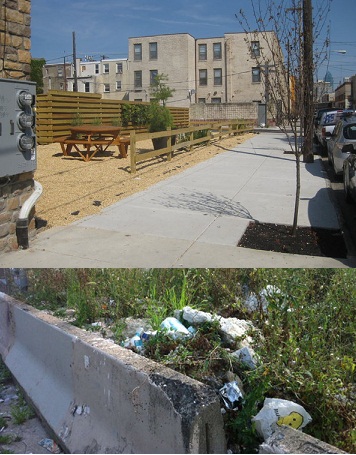
The photo on top is how the lot looks today, thanks to a generous citizen. Philadelphia wants it put back to the way it looked in the lower photo. Wait…WHAT?

Can an act that benefits everybody still be unethical? That’s the underlying conundrum in this week’s Monday Warm-Up Ethics Quiz.

In the Point Breeze neighborhood of Philadelphia, a city-owned lot was in nightmarish condition, filled with trash, weeds and rats. Ori Feibush owned a coffee shop that backed onto the lot, and had repeatedly petitioned the city to do something about it, like clean it up. Feibush, who also is a real estate developer, says he submitted seven written requests to buy or lease the land, calling the Philadelphia Redevelopment Authority about it 24 times. There was no response to any of this, and the city claims that it has no record of any inquiries.

Finally, Feibush couldn’t stand the mess any more. He spent more than $20,000 of his own money to clean up the lot, removing more than 40 tons of junk, garbage, and trash. Point Breeze residents are thrilled.

The city, however, is threatening to take legal action against Feibush for trespassing, explaining through a spokesman that “Like any property owner, [the Philadelphia Redevelopment Authority] does not permit unauthorized access to or alteration of its property. This is both on principle (no property owner knowingly allows trespassing) and to limit taxpayer liability.” It is demanding that Feibush return the land to its original condition—that is, fill it up with garbage so it is an eyesore, dangerous, and useless again.

Your Ethics Quiz:
Who is in the wrong, the city, or Ori Feibush? Continue reading

Comment of the Day: “Ethics Quiz: The Case of the Abandoned Prom Date”

Well, I always wanted to be like Clint; not in this way, perhaps, but I'll take what I can get...

Jordan Gray posted the best of the counter-arguments to my resolution of an iron-fisted couples-only policy imposed on a high school junior whose feckless date left her with two tickets, an unworn dress, and a broken heart.

You almost have me convinced, guys. Maybe tgt is right, and I’m just telling the kids to get off my lawn…

Here is Jordan’s Comment of the Day on the post,  “Ethics Quiz: The Case of the Abandoned Prom Date”;

  “What makes proms special is that they are couples affairs, not just another dance.”

First, there are plenty of ways to enjoy the prom without being part of a “couple”. I’ve heard of singles going as groups, for example, or even being picked up by an existing couple who are more concerned with having fun than manufactured romance. Continue reading

Ethics Quiz: The Case of the Abandoned Prom Date

Today’s Ethics Quiz takes on the ethics of high school proms.

Oh, suck it up, girl!

Amanda Dougherty, a high school junior, had a prom date, tickets, an expensive dress and dreams of romance, glamor and life-long memories when her date, for reasons unrevealed to us, had to bale out of the big event too late for Amanda to find a replacement beau. She planned on attending stag, and was shocked when officials at Archbishop John Carroll High School told her she was not allowed to go without a date according to Archdiocese of Philadelphia policy. The office of Catholic Education explained that the school has “numerous dances and events throughout the year where dates are not required, but we view the prom as a special social event where a date is required to attend.”

“She’s been excited (about prom) for a couple of years,”  Jack Dougherty, Amanda’s father, told the CBS affiliate in Philly. “She went out around Christmas looking for her dress.” Amanda took a feminist line of attack. “For them to say we’re not good enough to go without a guy next to us, that’s kind of sickening,” she said.

Your Prom Season Ethics Quiz is this: Is the school heartless and overly rigid, or is its decision the right one? Continue reading