Editor, Plagiarist and Ethics Dunce Extraordinaire Robert Ripley Meets His Worst Nightmare…

….and that nightmare is Duane Lester, a hard-working, honest, courageous, organized and determined blogger who wasn’t going to let a newspaper rip him off and get away with it. Lester researched and posted an original local news story, a true scoop, and days letter was shocked to find that a local paper, the Oregon Times Observer, had lifted his entire post and put it on the paper’s front page, without credit, permission, or attribution. Shocked and unprepared for such flagrant and shameless appropriation of his labors, he researched the issue, wrote a letter, and then visited the paper to demand payment. Brilliantly, he also brought along a friend with a video camera.

The whole story, as well as the enlightening and satisfying confrontation between the Blogger and the Word Thief, is on the resulting video. There is a lot to see here.

Continue reading →

Credit Ethics: New Ethics Alarms Policy

The sound of my palm belatedly smacking my expansive forehead

What will heretofore be referred to as “The Mary Frances Prevost Affair” has its silver lining. Watching another blogger incorporate the main body of my blog post into her own by-lined essay without credit or attribution has caused me to do a lot of thinking about the inadequacy of credit and attribution in the blogosphere  generally, with a relatively  few exceptions. Most of these are blogs written by academics who hold to the standards of their profession rather than the much looser practices of the internet. It also caused me to wake up to the inadequacy of my own attribution practices on Ethics Alarms. I have never taken an entire post from another source and represented it as my own, but I have frequently taken a factual account of a story from another website that itself was essentially  republishing, for example, an AP story, put the facts in my own words, sometimes with a stray phrase remaining, and not credited either source. I have often derived information in a post from multiple news sources but only linked to the one that I felt related the event the most thoroughly and clearly. Another writer’s work has sometimes sparked an idea for a post that was substantially different, and I have not credited the source of that spark.

All of this is common practice in blogging, but it is still wrong, and sloppiness is always a slippery slope. In the wake of “The Mary Frances Prevost Affair,” a colleague alerted me that I had included one complete sentence and part of another in an Ethics Alarms post that were identical to the post of another writer on the same subject. I didn’t even recall using the source, but upon going over my notes, I found that the earlier post had supplied me with the bulk of the facts I relied upon, though not the analysis of them. . I immediately contacted the author to apologize, and he was gracious and understanding. Nonetheless, this should never happen, especially on an ethics blog.

Therefore, as of today, Ethics Alarms will maintain a strict policy of crediting all sources that go into the inspiration, research and writing of the posts here. Links in the body of the text will be either be for informational purposes only, such as when I make a gratuitous cultural reference that nobody under the age of 50 is likely to recognize, or to back up direct quotes. At the end of each post, there will be credits and/or links listed, when appropriate, in some or all of the following categories: Continue reading →
The Plagiarist Strikes Back!

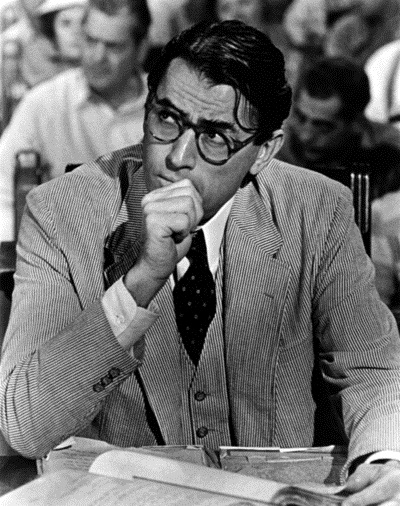
Move along, Atticus. Nothing to see here, and I wouldn't want you to barf.

Well, some of you called it. I was a sap. I expected better.

Mary Frances Prevost, the California criminal law attorney who substantially expropriated an Ethics Alarms post and placed her name on it, responded to my request for an explanation, and failing that, an apology, a retraction, and proper credit, with this (on her Facebook page), in which she said, in part:

“I received a histrionic run-on-sentence email from someone named “Jack Marshall” today accusing me of committing crimes, threatening to report me to my bar association(s), the Inns of Court, and essentially spend your days and nights harassing me.” I have also viewed a a highly unethical rant published purportedly by you on a blog suggesting strongly that I have engaged in unethical conduct throughout the entire course of my career. I have counseled with one of the country’s premiere ethics attorneys. Here’s the result: 1) accusing me of a crime is defamation per se and unethical; 2) suggesting that my entire law practice has been based on unethical conduct is defamatory and unethical. I maintained copies both of your email and blog. It is clear that you are hell bent on engaging in systematic harassment and unethical conduct, the likes of which can, and most likely will, develop into a lawsuit unless rescinded forthwith. It is clear you have little to do in your life besides sent me emails accusing me of crimes, and writing poorly written blog posts accusing me of immoral behavior. Interesting how one making such claims, engages in most egregious conduct himself….But the sheer amount of energy really suggests something more: a lack of work; too much time; off your meds. I suggest you take a look inward and remove your defamatory and unethical blog post regarding me. Indeed, you should come clean on your blog. You’ve practiced law only two weeks before giving up. Yet, your resume suggests far more experience. I think you should rethink what you’ve done.”

Now how do you like that? Continue reading →

Is a Plagiarist a Trustworthy Attorney? Let’s Ask Mary Frances Prevost!

This is me, apparently.

San Diego criminal defense attorney Mary Frances Prevost has an interesting post on her blog about the ethics of George Zimmerman’s first set of attorneys.

MINE.

You wouldn’t know it was mine, of course, because blogger/attorney/ former Washington Post journalist Prevost has slapped her own name on it. There it is, right at the beginning: “by Mary Francis Prevost.” I think that’s interesting.

Her post, entitled “The Trayvon Martin Case Trainwreck: George Zimmerman’s Attorneys Need To Shut Up!”, was posted the same day as the Ethics Alarms post, “Next To Board The Trayvon Martin Ethics Train Wreck? Why, The Lawyers, Of Course!”, which began, coincidentally enough, by quoting John Steel’s post from the Legal Ethics Forum that read, “[S]hut up, guys. Shut the h*** up.”  It was two introductory paragraphs later, however, when “her” post got into the substance of “her” analysis of the ethical problems with the farewell press conference given by George Zimmerman’s attorneys shortly before the shooter of Trayvon Martin was charged, however, that I really began getting a serious dose of deja vu, also known as “Holy crap! This woman stole my article!” Continue reading →

Historical Theft at the King Memorial

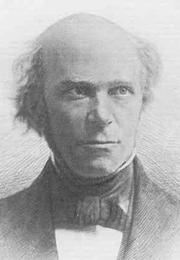
Rev. Theodore Parker

The new Martin Luther King Jr. Memorial is not just the King-in-Carbonite monolith that has caused so much controversy. There is much more to the National Mall’s latest addition, including inscriptions in marble of quotes from the martyred civil rights leader’s writings and speeches. There are more than a dozen examples of his oratory, a quotation from King’s 1963 “Letter From a Birmingham Jail,” and an excerpt from King’s Nobel Peace Prize acceptance speech in 1964.

Among them, this:

“The arc of the moral universe is long, but it bends toward justice.”

But Rev. King didn’t say it. Theodore Parker, an influential and eloquent Boston minister and abolitionist, did. King never pretended otherwise; it was one of his favorite quotes, and he used it often, but he usually credited its originator. Continue reading →

Ethics Dunce: The University of Alberta

"Now that you've been caught red-handed, there need to be an investigation to determine what color your hand is."

The University of Alberta’s Faculty of Medicine dean, Dr. Philip Baker, delivered a convocation speech to medical students last Friday that included verbatim excerpts from a speech given last year by Harvard professor Atul Gawande to graduates of Stanford University Medical School. Nevertheless, the plagiarizing dean has not been suspended and will remain working “until allegations are investigated in a formal procedure,” University officials announced. “This is somebody’s reputation and we take this very seriously.”

If the University takes it seriously, why hasn’t Baker been fired, or, for that matter, why hasn’t he resigned? Continue reading →

The Fireman, the Cheater, and Media Muddling

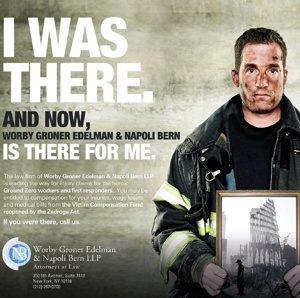
Come on, Robert! It's less embarrssing than Joey's gonorrrhea poster!

One of the reasons I launched The Ethics Scoreboard and later Ethics Alarms was that I felt  the media did not recognize ethics stories and failed to cover them. Well, more ethics stories are finding their way into the news, but true to the warning “Be careful what you wish for,” the reports usually botch them, and get the ethics lessons wrong. The saga of Enzo and the “Barefoot Contessa” was a particularly nauseating example, but there have been others recently. For example… Continue reading →

The Second Annual Ethics Alarms Awards: The Worst of Ethics 2010 (Part 1)

Happy New Year, and welcome to the Second Annual Ethics Alarms Awards, recognizing the Best and Worst of ethics in 2010!

This is the first installment of the Worst; the rest will appear in a subsequent post. (The Best is yet to come.) Continue reading →

The University of Central Florida Cheating Scandal Irony: the YouTube Ethics Hero Is Really the Ethics Dunce

[Let me begin by apologizing to Ethics Alarms readers for coming so late to the party on this one. I recently read about the UCF business school cheating scandal and the viral video it spawned, and learned that they have been a major source of blog chatter and media attention for more than a week now. It was all news to me. When you spend your  days and nights searching for stories presenting ethics issues and manage to miss one that people who aren’t even looking find with ease, you’re doing something wrong. I’m embarrassed. Many of you send me ethics stories you come across; keep doing that, please, and if you know of a big story that I seem to be ignoring, drop me an e-mail about it if you have the time [jamproethics@verizon.net]. Usually I’m ignoring it because I think the ethics of the matter are obvious, but sometimes it is because I have missed the forest for the trees. I’ll be very grateful.]

Now that I’ve arrived at the party, however, I intend to be the official pooper. The lionized professor and Youtube sensation in the incident, Richard Quinn, was a worse ethics violator that the students that he declared “disgusted him.”

In case you also missed the story, here are facts: Continue reading →

“How Not To Apologize” by Cook’s Source Editor Judith Griggs

Not many of you chose to read about the “Cook’s Source” fiasco, which is a shame. It is admittedly a tiny blip on the ethics radar screen–a dispute between a writer and a narrow audience website that launched an Internet vigilante movement—but there are many useful lessons to be learned. Now one of the two key figures, “Cook’s Source” editor Judith Griggs, has generously provided us with yet another: how not to apologize. Continue reading →