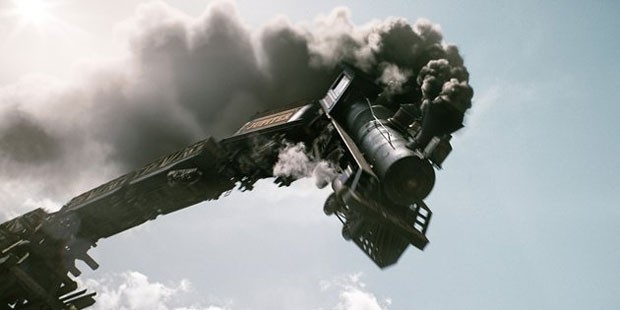
Steve-O-From-NJ authored an epic Comment of the Day, checking in at nearly 1800 words, which may be a record–it will take too long to check. The question is, since it an analysis of the soon-to-be-a-really-bad-memory-that-both-parties-will-constantly -remind- us-of impeachment, or as it is known on Ethics Alarms, Plan S, the Trump Impeachment Ethics Train Wreck, and one more car in the 2016 Post Election Ethics Train Wreck, is this an ethics post?
This was already on my mind, having read today another legal ethics blogger complaining that the impeachment debacle has forced her ethics blog into politics. Yeah, tell me about it.
Yes, it’s an ethics post. The impeachment was the culmination—for now–of what Ethics Alarms has been covering for three years as what I labelled early on as one of the most important and dangerous examples of unethical partisan conduct in decades. Steve-O hits many issues that have been extensively covered here from an ethics perspective, and, frankly, a summary right now is helpful. It also helps lay the foundation for a post I have been working on a while with his phrase–twice!–mixed motives.
Here is Steve-O-From-NJ‘s Comment of the Day on the post, “Saturday Ethics Warm-Up, Feb. 1, 2020: A New Month, Post Fake News Shame, And Impeachment Failure Freakout Edition.”
A few thoughts on the all but over impeachment:
After Friday’s vote, it’s all over but the formalities for the third impeachment and the second attempt at a soft coup by Congress against the president. It’s also the least legitimate of the three impeachments plus the one effort that never got to impeachment because the president resigned.
The Radical Republicans tried to push Andrew Johnson out of office because, as a Democrat and a southerner (he was from Tennessee), he was in the way of their harsh program of Reconstruction they wanted to impose on the South after the Civil War, so they essentially took a policy dispute up to eleven. Nixon oversaw criminal activities and lied repeatedly, so his trust was shot and he could no longer lead. Bill Clinton had a sleazy, but probably not impeachable, affair, but then perjured himself, which is a crime, to cover it up, a classic case of the coverup being worse than the act. The best the Democratic Party could come up with on this one was a phone call with, at best, mixed motives.
Nowhere in the Constitution or the other laws of this land does it say that the president or any other official must act totally selflessly at all times in the discharge of his duties, or he risks being impeached and removed from office. Nowhere does it say that, as chief diplomat of the United States, the president is not empowered to engage in political jiujitsu with other governments. Nowhere does it say that, as chief law enforcement officer of the United States, the president is not empowered to look into dealings by others with foreign governments that he has a question about. Most importantly, nowhere does it say that the president, or any other executive official, must defer to Congress, particularly to the House, in all things.
The Founding Fathers were very clear on the concept of separation of powers when they drew up the Constitution. They did not want any one official, or even one institution, making the laws and then prosecuting and punishing anyone accused of breaking the laws. They specifically did not want any of the three branches of government becoming more powerful than the others. That’s why it’s called checks and balances. The nation is still working out how that is supposed to work in every situation, but that’s the basic concept we all learned back around 3rd grade. They built in the power of impeachment to guard against gross abuses by corrupt officials, but they specifically rejected the idea of a parliamentary system where the legislature holds most of the power and can call a vote of no confidence in the government fairly easily.
They also specifically rejected the idea of one branch of government encroaching on the prerogatives of the others. Congress can pass all the laws it wants, but, unless the president signs them and later enforces them, they mean nothing. Congress can also do all the overseeing it wants, but, its power to demand testimony, documents, or anything else can be checked by the courts. That’s how it works. That’s how it’s supposed to work. Continue reading


 Ethics Alarms