The Complete “It’s A Wonderful Life” Ethics Guide, Updated And With A New Introduction For 2018

Once again I am posting the Ethics Alarms Ethics Guide to Frank Capra’s 1946 masterpiece “It’s A Wonderful Life,” perhaps the greatest ethics movies of all time, as this blog’s official welcome to the holiday season. The film is commonly thought of as a Christmas movie, but it really is a Thanksgiving story. Unfortunately, the movie is so well known, so much imitated, so familiar in its tropes and cliches that we really don’t think about it very hard. We should.

The movie is exactly the kind of important shared cultural touch-point that I am advocating when I emphasize the importance of cultural literacy to our nation’s connective tissue. The film teaches about values, family, sacrifice and human failings unlike any other: its power and uniqueness disproves the assertion, made in one online debate here this year, that new cultural creations inevitably and effectively supersede older ones. No, they really don’t, and like copies of copies, eventually the cultural values conveyed get fainter and less influential. “It’s A Wonderful Life” would be an excellent basis for a middle school ethics course. I haven’t seen a better, richer film for that purpose come along since, and I’ve been looking.

I am also constantly amazed at how many people haven’t seen the movie. My son’s girlfriend admitted that she hadn’t at dinner today. A few months ago I gave a DVD to a pharmacist at our local CVS after I made a reference to the film and he had no idea what I was talking about. He said he would wait until the holidays to watch it with his family. I hope he does: he left the job soon after. There are some classic movies that parents have an obligation to make sure their children see. This is one. Despite the many ethics complexities and nuances that the film glosses over or distorts, its basic, core message is crucial to all human beings, and needs to be hammered into our skulls at regular intervals, far more often than once a year.

What I wrote about this message in an earlier posting of this opus still seems right to me:

Everyone’s life does touch many others, and everyone has played a part in the chaotic ordering of random occurrences for good. Think about the children who have been born because you somehow were involved in the chain of events that linked their parents. And if you can’t think of something in your life that has a positive impact on someone–although there has to have been one, and probably many—then do something now. It doesn’t take much; sometimes a smile and a kind word is enough. Remembering the lessons of “It’s a Wonderful Life” really can make life more wonderful, and not just for you.

I wondered about posting the guide again this year, as this feels like a year in which Ethics Alarms lost old readers rather than gained new ones. Then I read it again, and it reminded me of some important things I had forgotten, and I wrote it. I also, as is my yearly habit, edited and added to the commentary a bit. I’m smarter this year than I was last year, and I bet you are too…especially if you’ve been reading Ethics Alarms, just from figuring out how I’m wrong.

I hope you all had a terrific Thanksgiving, and that the holiday season is joyous for all.

And here we go:

1. “If It’s About Ethics, God Must Be Involved”

The movie begins in heaven, represented by twinkling stars. There is no way around this, as divine intervention is at the core of the fantasy. Heaven and angels were big in Hollywood in the Forties. The framing of the tale seems to advance the anti-ethical idea, central to many religions, that good behavior on earth will be rewarded in the hereafter, bolstering the theory that without God and eternal rewards, doing good is pointless.

Yet in the end, it is an ethics movie, not a religious one. George lives a (mostly) ethical life, not out of any religious conviction, but because step by step, crisis after crisis, he chooses to place the welfare of others, especially his community and family, above his own needs and desires. No reward is promised to him, and he momentarily forgets why we act ethically, until he is reminded. Living ethically is its own reward.

We are introduced to George Bailey, who, we are told, is in trouble and has prayed for help. One has to wonder about people like George, who resort to prayer as a last resort, but they don’t seem to hold it against him in Heaven. The heavenly authorities assign an Angel 2nd Class, Clarence Oddbody, to handle the case..He is, we learn later, something of a second rate angel as well as a 2nd Class one, so it is interesting that whether or not George is in fact saved will be entrusted to less than Heaven’s best. Some lack of commitment, there— perhaps because George has not been “a praying man.” This will teach him—sub-par service! Good luck, George!

2. Extra Credit for Moral Luck

George’s first ethical act is saving his brother, Harry, from drowning, an early exhibition of courage, caring and sacrifice. The sacrifice part is that the childhood episode costs George the hearing in one ear. He doesn’t really deserve extra credit for this, as it was not a conscious trade of his hearing for Harry’s young life, but he gets it anyway, just as soldiers who are wounded in battle receive more admiration and accolades than those who are not. Yet this is only moral luck. A wounded hero is no more heroic than a unwounded one, and may be less competent as well as less lucky. (This is not an observation that one should make in public, as President Trump learned when he made a lifetime enemy of John McCain.)

3.  The Confusing Drug Store Incident.

George Bailey’s next ethical act is when he saves the life of another child by not delivering a bottle of pills that had been inadvertently poisoned by his boss, the druggist, Mr. Gower, who is addled by grief and drink after learning about the death of his own son. George’s act is nothing to get too excited over, really—if George had knowingly delivered poisoned pills, he would have been more guilty than the druggist, who was only careless. What do we call someone who intentionally delivers poison that he knows will be mistaken for medication? A murderer, that’s what.  We’re supposed to admire George for not committing murder.

Mr. Gower, at worst, would be guilty of negligent homicide. George saves him from that fate when he saves the child, but if he really wanted to show exemplary ethics, he should have reported the incident to authorities. Mr. Gower is not a trustworthy pharmacist—he was also the beneficiary of moral luck. He poisoned a child’s pills through inattentiveness. If his customers knew that, would they keep getting their drugs from him? Should they? A professional whose errors are potentially deadly must not dare the fates by working when his or her faculties are impaired by illness, sleeplessness or, in Gower’s case, grief and alcohol.

One could take the position that Mr. Gower “just made one mistake.” But trustworthy professionals don’t get to make such mistakes, not and still be trusted the next time. Trust is easily destroyed, and should be.

Mr. Gower also slaps George on the head several times. Today hitting a child like that is regarded as child abuse by a parent; when another adult hits a child, it’s grounds for arrest. This is one of many examples of evolving societal ethics in “It’s A Wonderful Life.” When the film was made, Mr. Gower’s conduct in beating a child employee was considered forgivable. If the local pharmacist slapped my son, I’d swear out a criminal complaint, and he still might end up shambling bum like Mr. Gower in the film’s alternate reality section.

4. The Uncle Billy Problem.

As George grows up, we see that he is loyal and respectful to his father. That’s admirable. What is not admirable is that George’s father, who has fiduciary duties as the head of a Building and Loan, has placed his brother Billy in a position of responsibility. As we soon learn, Billy is a souse, a fool and an incompetent. This is a breach of fiscal and business ethics by the elder Bailey as well a classic conflict of interest, both of which George engages in as well, to his eventual sorrow.

5. George’s Speech.

Continue reading

From The Ethics Alarms “Now What?” Files: The Hopeless Dallas “Cop Shoots Black Neighbor” Tragedy

I could easily put this story in the Ethics Alarms Zugzwang file, because I see no analysis or result that won’t make the situation worse.

A white off-duty police officer named Amber R. Guyger  entered the apartment of  Botham Shem Jean, a 26 year old accountant, and fired her service weapon twice at him, killing the St. Lucia immigrant. She claims that she mistakenly entered the wrong apartment after returning home from her 14-hour shift and believed  Jean, who is black, was an intruder.

Indeed, her apartment was directly below his. She had inexplicably parked her car on the 4th floor, where Jean’s residence was, rather than the 3rd floor, where hers was. So far, there is no indication that the shooter and the victim knew each other. Guyger had a clean record. Other facts are in dispute. The officer told investigators the apartment door was  ajar and then fully opened when she inserted her computerized chip key. That seems possible but unlikely.  Lawyers for  Jean’s family say the door was closed. How could they possibly know that?  Guyger said in court documents that when she opened the door,  she saw shadows of someone she thought was a burglar, and shouted commands before shooting. Lawyers for Jean’s family have elicited testimony from neighbors that they heard someone banging on the door and shouting, “Let me in!” and “Open up!” before the gunshots.  Why would the officer do that if she didn’t know Jean, or if she thought it was her own apartment? They also said they then heard Jean, say, “Oh my God, why did you do that?”

Boy, that sounds like an awfully convenient exclamation to be remembering now, don’t you think? But who knows? Maybe it proves the two knew each other. (Why didn’t Jean say, “Who are you?”) Maybe it is another “Hands Up! Don’t shoot!” lie for cop-haters and race-baiters  to adopt as a rallying cry. Continue reading

Labor Day Ethics Leftovers, 9/4/18: Big Lies, Big Jerks, Big Mistakes [UPDATED]


Good morning!

1. So, so predictable. Yesterday was fun: I assumed that the post about the undeniable pettiness, incivility and hypocrisy at Senator McCain’s funeral service in D.C. would prompt multiple exclamations of “But…but…Trump deserves it!”, “He’s worse!” and “What about what Trump does?” I was not disappointed. Each one of these desperate efforts to avoid facing the issue discussed and admit reality is signature significance for having crippling flaws in one’s ethics analysis abilities, gaping holes in one’s basic understanding of right and wrong, and a victim of stupidity-inducing bias. Nothing in the post excused or referenced the President’s own conduct in any way.

2. Baseball ethics. No, it is not unethical for pitchers to carry crib sheets. During the top of the eighth inning in Saturday night’s Phillies game against the Cubs in Philadelphia, third base umpire Joe West noticed the Phillies  pitcher looking at a card he had pulled from his pocket, and confiscated it. The card contained scouting reports on how to pitch a Cubs batter. The advanced analytics baseball teams now use to devise how to position fielders and pitch to batters are too detailed for the typical player to commit to memory. Lots of them carry little cheat sheets, sometimes in their hats. Although lots of old school players and tradition-loving fans hate the development, it’s here, and there are no rules against it.

Never mind: Joe West, who is one of the more arrogant and autocratic umpires, felt that the piece of paper constituted a “foreign substance” under the rules, and thus surmised that it was prohibited by the provision designed to stop pitchers from making the ball do tricks by surreptitiously applying K-Y Jelly or slippery elm. Yup, ol’ Joe thought the pitcher, Austin Davis, was  going to use the card to doctor the baseball. Good thinking, Joe! MLB quickly set him straight the next day, announcing that West, as he often is, for he is an awful umpire,  was mistaken.

The fact that West couldn’t figure that out himself, and that he is the longest tenured MLB ump, tells you why we will have robo-umps calling strikes within five years or less.

3. Nah, there’s no mainstream media bias! Today’s nauseating example of mainstream media’s refusal to report and comment on the news objectively comes from the New York Times—Surprise!—which writes sympathetically about the Democratic Party’s dilemma as it tried to derail the Supreme Court nomination of Bret Kavanaugh. There’s no filibuster any more! Multiple Democrats tell the Times how unfair this is. Guess whose name is completely absent from the article? Why, former Senate majority leader Harry Reid, who resorted to the so-called nuclear option to pass Barack Obama’s judicial nominations over Republican opposition. “They are making a mockery of the process, and that is because the No. 1 goal …. is to stack the bench with ideologues, because they know they cannot achieve their goals through the elected branches,” said the Republican leadership at the…no, wait, that quote is from Senator Chuck Schumer of New York, the current Democratic leader. He doesn’t mention that his predecessor is the reason the system is “broken.” At least the Times, in one brief sentence , acknowledge that “Democrats” eliminated the filibuster for federal judges below SCOTUS level. They do not make it clear that this shattered a long-standing Senate tradition, and that it made the GOP follow-up of killing the device for Supreme Court nominations both politically feasible and inevitable.

The Times also does not remind readers that its editorial board applauded Reid’s move at the time. Continue reading

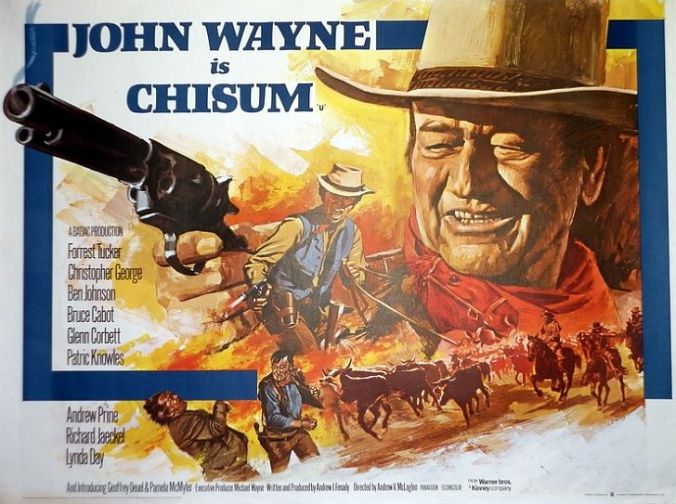
John Wayne Western Ethics: Just Thought I’d Mention This…

“Chisum” is a lesser effort by the Duke for sure; I saw the Western when it came out in 1970, and it made no impression on me at all, apparently. When I watched it again two days ago, almost nothing seemed familiar. There was one scene, however, that raised my eyebrows.

The story is very loosely based on John Chisum (of  Chisum Trail fame) and his involvement in the Lincoln County War of 1878 in the New Mexico Territory. At one point in the story, British rancher and Chisum’s neighbor Henry Tunstall rides to Santa Fe to seek help from Territorial Governor  Sam Axtell in the increasingly tense range war.  Henry does not know that he has been framed for cattle rustling, and when he  is intercepted by two deputies (they are in on the plot, but he doesn’t know that) who accuse him and tell him he is under arrest, he objects strenuously.  Saying he is late, Tunstall starts to reach into a pocket. One of the deputies shoots him dead. The two then plant a gun on Tunstall to back the story that the deputy fired in self defense.

But why did he have to do that? Continue reading

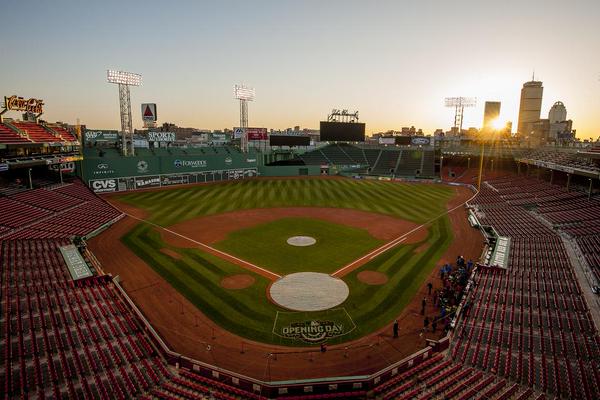
Morning Ethics Warm-Up, 3/29/18: Baseball Opening Day Edition, Plus Earlobes, Insults, And Tampons…

Good Morning, And Play Ball!

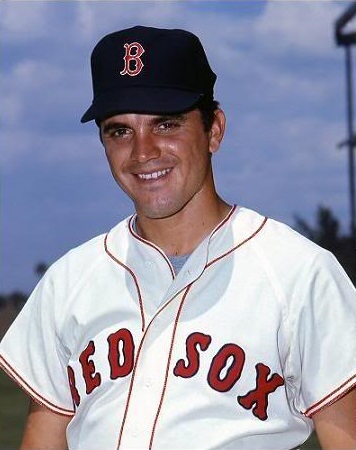
1. To Tony C.  This is always a happy day for me, but I want to mute my joy a bit by dedicating this baseball season to the late Tony Conigliaro. Since my teens, he has been my constant inspiration to live every day to its fullest, because no matter how bright and promising the future seems at any moment, everything can change in the blink of an eye, or an errant pitch from Fate right into your face.

That’s what happened to Tony C. on a cruel August night in 1967. He was playing right field and batting clean-up for his home town baseball team, in a season that would see them win a miracle pennant. He was young, handsome and incredibly talented. He had become the youngest player ever to hit a hundred home runs,  and was in his fourth big league season at the tender age of 22.Then everything changed. Tony’s existence was swept up and placed on a new and dark road that ended with a fluke heart attack and stroke at the age of 37, and a lingering twilight half-death in brain damage until he mercifully passed away eight long years later.

All we can do now is remember a beautiful young man and a brilliant athlete who gave his home town many thrilling moments to savor in the brief time allotted to him, who had everything, and then lost it without reason, warning or justice…and also remember that every day should be lived right, and well, with the determination to be the best we can be, because we may never have a chance to be any better.

Yes, this baseball season is dedicated to you, Tony.

For me, I guess they all are.

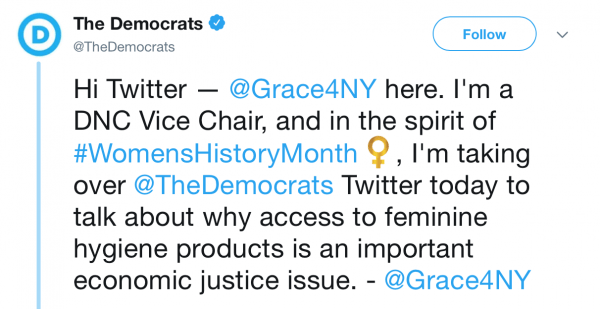
2. No, this isn’t The Onion. This is a real tweet from the Democratic Party, authored by Congresswoman Grace Meng:

She continues

“Women deserve equal access to our economy, not punishment for their gender. That’s why I’ve been working with my fellow women to fight for more access to tampons, pads, and the full range of menstrual products since 2015. …I’ve introduced legislation to make these products more affordable — because leveling the playing field and stopping period-shaming give women, especially low-income women, a better chance to succeed in our economy…What else would give women a better chance to succeed? Electing more women to fight these fights with me — because we need leaders who understand the experiences of those they represent. ..Head to and commit to vote in 2018 and beyond, because women can’t wait for economic fairness any longer.”

I hope I don’t have to explain what is wrong with this, and I eagerly anticipate being able to parry any brain-melted partisan who reads something like this and says, “Hey, what a good idea!” Yet obviously millions of people are in thrall to this kind of slippery slope progressivism: if a gender, or a race, or a nationality or any other tribe has a unique need or problem, then all of society must help pay for it, or life is unjust. Was a virus released into the water system of certain major cities.? What else can account for such abdications of personal responsibility being accepted as fair and reasonable?

Hey! Why doesn’t the government pay for my electric razor? Continue reading

Morning Ethics Warm-Up, 3/27/18: Redux And Déjà Vu!

Good Morning.

1 Yes, “enemy of the people” is accurate. I searched all over cable and network news this morning to find an outlet that wasn’t dominated by the breaking news that a President-to-be had an adulterous affair with a porn star 12 years ago. I couldn’t find one. The media-wide effort to undermine an elected President and his respect in the nation and the world at a time of great challenges and peril on all fronts is irresponsible, destructive, and demonstrates the collapse of journalism as a bulwark of American democracy.

Journalists don’t have to behave like this: they have chosen to, because they discern that a critical mass of citizens–bad ones–would rather see the President of the United States humiliated and weakened nationally and internationally based on his past than to permit him the same crucial advantage  that every other President since George Washington has been conceded and used. That is the inherent dignity and honor of the office itself. As I wrote here before, almost every President could have been embarrassed in this way, and some far more.  In the past, the public wouldn’t have tolerated it. A full year of “the resistance” and non-stop media attacks made this President uniquely vulnerable to ad hominem attacks, and the only protection left intact between sensational smears and responsible journalism were ethical standards, which is to say, with today’s journalism, nothing at all.

This is no less than a ruthless, ratings- and bias-driven attack on American institutions, and every future President, and the nation, and our democracy, and the world itself, will suffer for it. Ironically, Trump may suffer from it least of all, since no one who supported his candidacy cared about traditional standards regarding who was fit to inherit the legacy of Washington, Lincoln and the rest. Still, this concerted effort to reduce his tenure to endless character assassination does undermine him, and us.

I don’t know what the President meant when he dubbed the news media the “enemy of the people;” he does not use words with anything approaching precision or consistency. I do know what I mean by the phrase, however: an institution that exists to strengthen American democracy has been deliberately engaging in conduct designed to weaken it. That is the conduct of enemies of the people, and that is what the mainstream news media has become.

2. The next Black Lives Matter bandwagon. The news media was also playing tabloid in the Stephon Clark shooting controversy this morning, showing the dead man’s grandmother weeping, asking why he had to die, and asking why the officers couldn’t have shot him “in the arm.” We won’t see a resolution of this case for a long time, but that hasn’t stopped the NAACP, Al Sharpton, Clark’s family and the large number of police-haters on the left from concluding, before any investigation, that he was “murdered.” The family has also hired the same lawyer, Ben Crump, who represented the families of Trayvon Martin and Michael Brown, neither of whom were murdered, and both of whom are still referred to a murder victims on the Black Lives Matter website.

Déjà vu.

In Sacramento, California, on March 18, two officers responded to a radio call regarding a man who was breaking car windows.  The uniformed officers were checking the area on foot when a Sacramento County Sheriff’s Department helicopter pointed them in the direction of a possible suspect, Clark.

He was seen running through a back yard, jumping over a fence, then looking into a car parked in the driveway of what was later revealed to be his grandmother’s house. The officers approached Clark, guns drawn, and ordered him to show them his hands,  a standard command.  Instead Clark ran, with the officers in pursuit. They ordered  Clark to stop, but he ran around the corner of the house and out of the officers’ view. Again the officers followed, then ducked back behind the house, shouting “Show me your hands! Gun!”, then “Show me your hands!” followed immediately by “Gun, gun, gun!” Both officers opened fire, emptying their guns, killing Clark.

Clark had no gun, just a cell phone. The video is inconclusive. Continue reading

Morning Ethics Warm-Up, 3/17/2018: Mockingbirds, Headlines, And Reasonable Doubt

Good Morning, Scout!

1 Assorted blog stuff. I’m going to have to fly to Boston next month for the hearing on my motion to dismiss the specious defamation suit against me by an Ethics Alarms  commenter to whom my responses were no more defamatory than what I have said to many of you when provoked…Every now and then some blog or social media participant with a huge following links to an old post here, and I am swamped with visits from a lot of individuals with no serious interest in ethics. They almost never comment, and if they do, the comments typically don’t meet my posting standards. Still, they swell the traffic stats, and I’ll take ’em. In 2017 I had none of these fluky hit avalanches, after a 2016 that had several. This time, the post suddenly drawing interest is a 2014 essay about a letter written to director Terry Gilliam in 2005. You just never know…Expect a lot of Comments of the Day this weekend: I am way behind, and I’m sorry. Tough week.

2. Keep hope alive! Yesterday’s New York Times front page headline perfectly embodied the fake news-by-innuendo tactic that has marked the mainstream media’s efforts to pander to the “resistance.” The Special Prosecutor’s fishing expedition just subpoenaed the business records of the Trump organization relating to its dealings in Russia. Says the Times headline: “Investigation nears President.” Ooooh! Scary!

Hype, and unprofessional. This is the “He’s getting closer! And closer!” narrative the anti-Trump journalists have been flogging for a year. Yeah, I guess any time an investigation involves someone’s business it is “near” the owner, but why would that obvious fact justify a headline?  The reality is that Trump’s organization had business dealings in Russia (legal and unremarkable), the fact that Mueller is looking does not prove or suggest that those dealings had any connection to the campaign, and Mueller could have asked for these records a year ago. There is nothing ominous about the request from the President’s perspective at all, unless, as this whole fiasco has presumed from the moment Democrats seized on Wikileaks and fake Facebook news as the designated excuses for Hillary’s inexcusable defeat, there really was “collusion.”

That an investigation has been launched does not imply, suggest, or indicate wrongdoing. The news media’s reporting continues to suggest otherwise because they want the President to be guilty of something heinous. Imagine that: there are Americans who want their elected President to be proven guilty of wrongdoing.

3. To kill a “To Kill A Mockingbird.”  Harper Lee’s estate filed a complaint last week in federal court in Alabama, arguing that a Broadway bound stage adaptation of “To Kill A Mockingbird” by “The West Wing” creator and “A Few Good Men” writer Aaron Sorkin violates a contract, between Harper Lee and the producers that stipulates that the characters and plot must remain faithful to the spirit of the book. (I wrote about the complexities surrounding Atticus Finch’s character in a 2015 post.) Continue reading

Morning Ethics Warm-Up, 12/10/2017: Posts Collide! Journalists Self-Destruct! Women Undermine Themselves! And A Poll…

Good morning!

1  Bingo!  Amy Alkon, aka the Advice Goddess, has been staking out lonely territory as a feminist who feels the #MeToo mob and its attendant hysteria is setting the cause of women back, not advancing it. Here most recent post begins by mocking an LA Times hysteric who wrote that

“What happens when society ignores sexual assault? You get Lesotho, where girls aren’t even safe at the grocery store…”

Akon responded in part…

This sort of ridiculous hysteria — that our country is anything like a place where 19% of teenaged girls are forced to marry — makes things here cumulatively worse, not better.This is the safest, most modern, most individual rights-driven country in the world.

If you are in a profession where there’s a great deal of money and power, there are likely to be sociopaths of various stripes who will prey on you — whether you’re a man or a woman. No, sexual assault should not be ignored, but we also don’t help ourselves by turning an invitation out for a drink by a co-worker into some sort of victimization.

If it isn’t your boss trying to manipulate you into the sack when you want no such thing; if there’s no quid pro quo; if requests for a date stop when you ask for them to stop (or maybe after the second time), do you really need to identify as a victim?…

People have conflicting goals and desires. Any two people. Heterosexual men negotiate these with each other. They’re very comfortable with it — as am I, no matter what sex or sexuality you are or have. If one person isn’t holding the other down or saying “fuck me, or you lose your job…” …If there’s merely a need for a mild rebuff (like, “Sorry, I don’t date co-workers), well, this seems to me like a normal part of adult life.

I predict two things from the current hysteria (where, say, a stolen kiss from a drunken co-worker is equated with Harvey Weinsteining and may even be seen as a firing offense):

1. Employers will think twice about hiring women, especially when they have the option of hiring a commensurately qualified male.

2. Men will start seeing escort workers in larger numbers than ever, and it will become more acceptable than it’s ever been to pay for sex.

2. Who will save journalism, and when will it admit is needs saving? Washington Post politics reporter Dave Weigel‏ mocked the President for declaring his Florida rally “packed to the rafters” last week. Wiegel’s tweet included a picture of a half-empty Pensacola Bay Center.This was, it turned out, a mistake, but also a mistake brought about by confirmation bias, sloppiness, and hostility to the President. Once again, the news media handed the President the ammunition to discredit it, as it deserves to be discredited.Trump tweeted after the rally...

“@DaveWeigel WashingtonPost put out a phony photo of an empty arena hours before I arrived the venue, w/ thousands of people outside, on their way in…Real photos now shown as I spoke. Packed house, many people unable to get in. Demand apology & retraction from FAKE NEWS WaPo!”

Weigel apologized, tweeting,

“Sure thing: I apologize…Was confused by the image of you walking in the bottom right corner…It was a bad tweet on my personal account, not a story for Washington Post. I deleted it after like 20 minutes. Very fair to call me out.”

Weigel is a well-known Washington Post reporter, and the fact that he botched this in his own name rather than the Post’s doesn’t diminish its harm to the credibility of the already reeling news media one whit. The apology was nice, but it was also unavoidable. While Trump certainly has primed journalist skepticism with his adversarial relationship to reality, reporters are supposed to be professionals, and leaping to conclusions without confirmation or sufficient evidence isn’t professional, or worthy of public trust. Fact: Weigel would not have done this to Barack Obama.

Weigel’s gaffe was minor compared to CNN’s fiasco the day before, or the Brian Ross episode at ABC, but it deserves to be considered as part of the same pathology. Wrote Glenn Reynold on his blog today,

In attempting to “denormalize” Trump, they’ve denormalized themselves. If they simply reported fairly and accurately, without their screamingly obvious bias, they’d be able to do him much more damage. But they can’t help themselves.

Bingo. They can’t help themselves, and the ethics alarms when bias looms just don’t sound. Today the New York Times has a front page story, complete with a creepy photo of the President, featuring a long, insulting quote from Nancy Pelosi about how “unprepared” Trump was for the job. Oddly, nobody thought, “Wait, did we publish anything like this about the most unqualified President elected up to that  point? You know, the last one?”
Continue reading

Observations On The Acquittal Of Police Officer Philip “Mitch” Brailsford For The Fatal Shooting Of Daniel Shaver

http://www.youtube.com/watch?v=M62Va6Ft2cw

  • What a terrifying video. I am literally shaking.

I wasn’t at the trial, but I will break my usual rule by saying that this jury, which acquitted the officer of murder charges,  does not deserve the benefit of the doubt, because there is no doubt. I cannot see any path by which the actions of the officer in shooting Shaver can be called reasonable, or anything but murder.

  • Brailsford said he thought Shaver might have been reaching for a weapon. If he wasn’t lying, and I’ll assume he wasn’t, then he was paranoid, and so devoid of normal senses of perception that the police force was negligent all owing him to carry a gun, or to be on the force at all.

Still shaking…

  • How could it have not been clear that Shaver was terrified? Or that he was not desperately trying to follow the officer’s instructions?

Are officers in Mesa trained to talk like that? I assume that they are trained NOT to talk like that, which can only be expected to escalate panic and anxiety and cause the situation to go out of control.

  • Michael Piccarreta, Brailsford’s attorney, convinced jurors that his client acted as reasonably, as a police officer, considering the totality of circumstances. That means that Brailsford acted like any reasonable officer would have when he  fire his AR-15 at a terrified young man crawling toward him as  he had directed. The officer had been called because someone had been reported as pointing a rifle outside of hotel window. Obviously, Shaver had no rifle on him.

Piccarreta did one hell of a good job.

Still shaking… Continue reading

It’s Thanksgiving, And Time For The Complete “It’s A Wonderful Life” Ethics Guide [Updated And With A New Introduction For 2017 ]


Last year (to the day) when I posted the Ethics Alarms ethics guide to Frank Capra’s 1946 masterpiece “It’s A Wonderful Life,” one of the great ethics movies of all time, as this blog’s official welcome to the holiday season, I wrote, “I suspect we need it more in 2016 than usual.”  As it turned out, we need it even more in 2017.

Multiple forces have been hard at work for a full year now, roiling the nation, painting the future as dire and the present as unbearable, trying to divide us and even to encourage discord and conflict during this special time when we are supposed to remember what is most important in life. In case you have been infected, it’s not politics and not partisan agendas, but love, family, community, kindness, and friends. The simple message of Frank Capra’s masterpiece—it has aged far better than his other films, including, and maybe especially, “Mister Smith Goes To Washington”—that no one is a failure who has friends, is vital to recall when so many are rejecting friends because they don’t conform to some ideological talking point. This is madness, and watching and heeding “It’s A Wonderful Life” is a better remedy than Thorazine.

Senate Minority Leader Chuck Schumer actually told his Twitter followers this week to bring a chart prepared by a  think tank to attack the Republican tax plan during Thanksgiving dinner. This is part of the effort to politicize everything in our lives, by zealots who value power over humanity, country, and spirituality. They belong with Mr. Potter, not George and Clarence.

I need this movie more in 2017 than usual for other reasons. It has been a year in which I have lost many peers and cherished friends, and listened to too many of the living bemoan the passage of time and looming mortality.  I don’t think like that—a lifetime gift from my brave and fatalist father—but I can’t pretend that the game clock isn’t running out, or not face the fact that I have not sunk anywhere near the baskets I could have and should have. Fortunately, what I wrote in an earlier year introducing this post still resonates…

Everyone’s life does touch many others, and everyone has played a part in the chaotic ordering of random occurrences for good. Think about the children who have been born because you somehow were involved in the chain of events that linked their parents. And if you can’t think of something in your life that has a positive impact on someone–although there has to have been one, and probably many—then do something now. It doesn’t take much; sometimes a smile and a kind word is enough. Remembering the lessons of “It’s a Wonderful Life” really can make life more wonderful, and not just for you.

Have a terrific Thanksgiving, everyone.

And here we go:

1. “If It’s About Ethics, God Must Be Involved”

The movie begins in heaven, represented by twinkling stars. There is no way around this, as divine intervention is at the core of the fantasy. Heaven and angels were big in Hollywood in the Forties. The framing of the tale seems to advance the anti-ethical idea, central to many religions, that good behavior on earth will be rewarded in the hereafter, bolstering the theory that without God and eternal rewards, doing good is pointless.

Yet in the end, it is an ethics movie, not a religious one. George lives an ethical live, not out of any religious conviction, but because step by step, crisis after crisis, he chooses to place the welfare of others, especially his community and family, above his own needs and desires. No reward is promised to him, and he momentarily forgets why we act ethically, until he is reminded. Living ethically is its own reward.

We are introduced to George Bailey, who, we are told, is in trouble and has prayed for help. One has to wonder about people like George, who resort to prayer as a last resort, but they don’t seem to hold it against him in Heaven. The heavenly authorities assign an Angel 2nd Class, Clarence Oddbody, to handle the case..He is, we learn later, something of a second rate angel as well as a 2nd Class one, so it is interesting that whether or not George is in fact saved will be entrusted to less than Heaven’s best. Some lack of commitment, there— perhaps because George has not been “a praying man.” This will teach him—sub-par service!

2. Extra Credit for Moral Luck

George’s first ethical act is saving his brother, Harry, from drowning, an early exhibition of courage, caring and sacrifice. The sacrifice part is that the childhood episode costs George the hearing in one ear. He doesn’t really deserve extra credit for this, as it was not a conscious trade of his hearing for Harry’s young life, but he gets it anyway, just as soldiers who are wounded in battle receive more admiration and accolades than those who are not. Yet this is only moral luck. A wounded hero is no more heroic than a unwounded one, and may be less competent as well as less lucky.

3.  The Confusing Drug Store Incident

George Bailey’s next ethical act is when he saves the life of another child by not delivering a bottle of pills that had been inadvertently poisoned by his boss, the druggist, Mr. Gower. This is nothing to get too excited over, really—if George had knowingly delivered poisoned pills, he would have been more guilty than the druggist, who was only careless. What do we call someone who intentionally delivers poison that he knows will be mistaken for medication? A murderer, that’s what.  We’re supposed to admire George for not committing murder.

Mr. Gower, at worst, would be guilty of negligent homicide. George saves him from that fate when he saves the child, but if he really wanted to show exemplary ethics, he should have reported the incident to authorities. Mr. Gower is not a trustworthy pharmacist—he was also the beneficiary of moral luck. He poisoned a child’s pills through inattentiveness. If his customers knew that, would they keep getting their drugs from him? Should they? A professional whose errors are potentially deadly must not dare the fates by working when his or her faculties are impaired by illness, sleeplessness or, in Gower’s case, grief and alcohol.

4. The Uncle Billy Problem

As George grows up, we see that he is loyal and respectful to his father. That’s admirable. What is not admirable is that George’s father, who has fiduciary duties as the head of a Building and Loan, has placed his brother Billy in a position of responsibility. As we soon learn, Billy is a souse, a fool and an incompetent. This is a breach of fiscal and business ethics by the elder Bailey, and one that George engages in as well, to his eventual sorrow.
5. George’s Speech

Continue reading