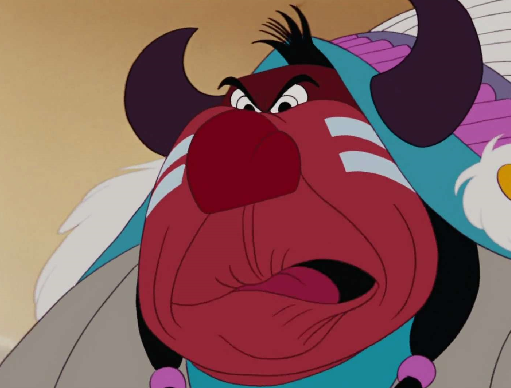
I recently watched the Disney “Peter Pan,” long my favorite of the classic animated films, which I had not seen from beginning to end in decades. I was genuinely shocked at the portrayal of the Indians, which would make the average movie Western seem politically correct and the Washington Redskins seem like a compliment. I know the story is a fantasy; I know that these are not supposed to represent real Native Americans, but a Victorian child’s visualization of the villains of their games. Nevertheless, it is hard to imagine the effect of such a film on a Native American child as being anything but devastating. The Neverland Indians, and their heroine, Tiger Lily, have been a human relations problem since at least the civil rights era, and the provocation is legitimate: did you recall (I had forgotten) that Tiger Lily belonged to the “Piccaninny tribe”? That James Barrie was a funny guy. Continue reading
political correctness
“My Little Pony” Ethics, Blaming the Victim, and the Dilemma Of The Bully Magnet
Nine-year-old Grayson Bruce likes “My Little Pony,” a long-running animated children’s TV show that has a cult following in the gay community. He decided to show his affection for the show by carrying his lunch in a “Rainbow Dash” themed bag featuring a popular equine character. Now some of Grayson’s fellow male students at the Buncombe County (North Carolina) elementary school he attends have stepped up their harassment of the boy as a reaction to his tastes in entertainment and accessories.
“They’re taking it a little too far, with punching me, pushing me down, calling me horrible names, stuff that really shouldn’t happen,” Grayson says. It’s not like he doesn’t understand why. “Most of the characters in the show are girls, and most of the people put it toward girls,” he notes. His mother complained to the school, and it says it is taking appropriate measures to deal with the bullies and bullying in general. It also told Grayson to leave Rainbow Dash at home, caliming that it is a “trigger for bullying” and a distraction. Mom, Noreen Bruce, objects. Continue reading
LEGO Ethics: When Political Correctness Doesn’t Hold Up To Reality
LEGO is under fire from gender equality activists for offering a feminine-oriented version of the brightly-colored construction blocks, dubbed the Friends line, that is aimed to appeal to the tastes of little girls. This special version of plastic bricks and mini-figures was launched in 2011:
“Unlike the bright primary colors of the regular Lego sets, the Friends colors tend toward pink and purple and soft pastels. The comical mini-figures of the regular Lego lines have been replaced by five slender and stylish plastic tweens of various ethnicities, each with her own narrative story, along with puppies, kitties, “My Little Pony”-style horsies and baby animals ranging from penguins to lions. Little girls are encouraged to build things, all right: patios, cozy kitchens, cafes, beauty shops, doghouses for the puppies, stalls for the horses, all characterized by a level of decorative detail unknown in the regular Lego universe.”
And guess what? Girls like it! LEGO had found that its market was 90% male, so it came up with LEGOS that indeed do engage little girls more than the traditional sets. Friends ended 2012 as LEGO’s fourth-best-selling product line. The number of girls playing with and enjoying LEGOs tripled. Continue reading
Ethics Hero: Comedy Central’s Stephen Colbert
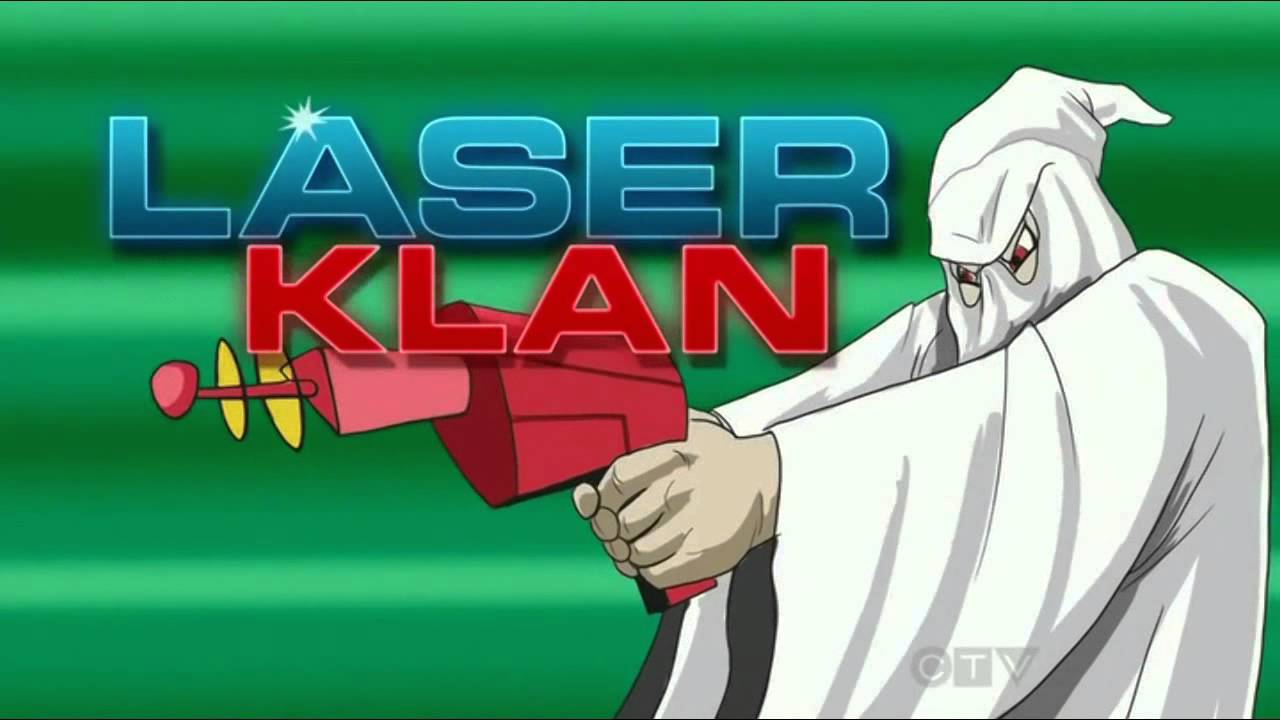
Putting the jester’s privilege to great use, Comedy Central comic Stephen Colbert not only defied his corporate masters, communications giant Viacom, but mocked them in the process. He was officially warned of the corporation’s “concern” about “Laser Klan,” his planned animated riff involving the Klu Klux Klan during Black History Month. Colbert aired it anyway.
I have to wonder if he would have done the same if Viacom had been concerned about offending Muslims, rather than, hmmmm, let’s see, being worried that some racial victim-mongers would decide that making fun of the Klan, sworn enemies of blacks, Jews, and, oh, so many others, was somehow disrespectful to blacks in February because only they could…oh, I don’t know what the complaint would be. I can’t blame the suits at Viacom…I bet someone at MSNBC and the NAACP are working up a political correctness offense theory right now, so Colbert will have to humble himself and beg for forgiveness.
Before that happens, though, let’s give Colbert his due. What he did takes principles and guts…and high ratings. Just be careful your numbers don’t fall off, Stephen.
And remember the Smothers Brothers.
___________________________
Graphic: YouTube
We Are All Dan Snyder Now
…and isn’t that a revolting development?
Few things infuriate me more than when unethical conduct by an individual or organization force me to side with the supporters of a position or a cause that I oppose myself. Last year, to cite the most egregious example, I found myself in the same camp with the National Rifle Association, Ted Nugent and worse when anti-gun zealots, uncritically backed by the news media, used dishonest, misleading, irrational and emotional appeals to try to pass more stringent gun ownership regulations on the wave of national horror over the Sandy Hook shooting. Indeed, the more fake statistics and shameless slippery slope arguments (“If we can save the life of only one child…”) that were aimed at guns and law-abiding gun owners, the more I saw the wisdom of Second Amendment absolutism.
Thanks to the exorbitant and irresponsible rhetoric by the likes of Diane Feinstein, Joe Biden, Andrew Cuomo, Piers Morgan, Jim Carrey and others—Don’t tell ME what I “need” to protect my family and home; there’s a possible serial killer on the loose in my Alexandria, Virginia neighborhood at this very moment who has been randomly knocking on doors and shooting people—I no longer trust the government to make rational decisions that affect my options as a potential gun owner. Good work, guys. Before you started using kids as props, lying about the number of shootings, and sounding for all the world like a nation trying to make sure only the government could own legal weapons, I was a supporter of more stringent firearms regulations. You lost me. I am officially convinced that we may need guns to protect ourselves against power-abusing people like you.
Now members of Congress are trying to strong-arm Washington Redskins owner Dan Snyder into changing the name of his football team, using the power of the government to pressure him, through the National Football League, into bending to their will on a matter that is absolutely none of their business. Great. Now I have to stand shoulder to shoulder with Snyder, whom we in the Washington area know as a spoiled rich kid, a bully, an egomaniac and a meddling fool who has progressively reduced the region’s beloved football team to tragic joke.
And you should stand with him too, if you think our Bill of Rights is worth preserving. Continue reading
Tom Yawkey, J. Edgar Hoover, Political Correctness and Gratitude
It’s not often that I am called upon to rebut a web post that relies on one of my articles for its unethical conclusions, but that is the position that Ron Chimelis has placed me in with his recent essay, Why the Boston Red Sox should rename Yawkey Way.
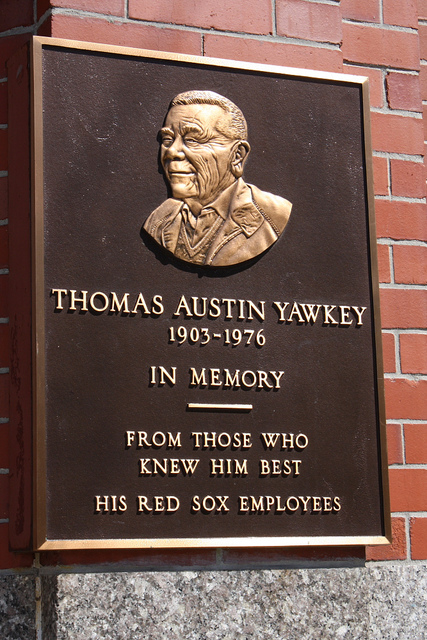
To catch you up quickly: Tom Yawkey was a lumber tycoon and baseball enthusiast who owned the Boston Red Sox from 1933 to 1976, making him the longest-tenured team owner in the sport’s history. Yawkey was almost certainly a racist; if he was not a racist, his team’s policies certainly were for many years. The Red Sox were the last major league team to integrate, and blacks did not have a significant place on the team’s roster until the late 1960s, two decades after Jackie Robinson broke the color line. From the beginning, Yawkey ran the Red Sox as a public utility, paying little attention to the bottom line as he tried to build a winner out of the franchise that had been a perennial loser since selling Babe Ruth to the Yankees in 1919. After his death, Yawkey’s wife Jean continued the family tradition, running the Red Sox, except for a few years, until her own death in 1992.
When Tom Yawkey died, the City of Boston re-named Jersey Street, which runs past the entry to Fenway Park where the Red Sox play, Yawkey Way in his honor.
In the unerring clarity of hindsight bias, Chimelis argues that Tom Yawkey is undeserving of any recognition by the city that he devoted much of his life to representing, enhancing, serving, inspiring and entertaining because racism is the ultimate crime, and anyone possessing that vile state of mind should be consigned to shame forever. It is a common point of view, and an unfair one. Continue reading
Ethics Hero: Jerry Seinfeld
One wonderful thing about extreme success combined with middle age is that you can, if you have the integrity, speak unpopular truths without caring who objects. Thus it was the Jerry Seinfeld correctly dismissed as irrelevant and misguided the suggestion that seeking racial and gender balance should be an objective in his comedy shows. In response to a question challenging his Web series, “Comedians in Cars Getting Coffee“as too white and male, the comedian said:
“People think it’s the census or something, it’s gotta represent the actual pie chart of America. Who cares? Funny is the world that I live in. You’re funny, I’m interested. You’re not funny, I’m not interested. I have no interest in gender or race or anything like that, but everyone else is, kind of with their little calculating, “Is this the exact right mix?” To me, it’s anti-comedy. It’s more about PC nonsense than ‘are you making us laugh or not’.”
Exactly. Not that the race and gender bean counters will let Seinfeld escape with an explanation of such obvious common sense. Here’s Mediaite’s Tommy Christopher playing his full hand of gender, race, guilt and quota cards: Continue reading
The Fifth Annual Ethics Alarms Awards: The Worst of Ethics 2013 (Part Two of Three)
The Ethics Alarms review of a truly disheartening year in ethics continues with fallen heroes, ficks, fools and follies with Part Two of the 2013 Worst of Ethics awards….and there’s one last section to come. Be afraid..be very afraid:
Fallen Hero of the Year
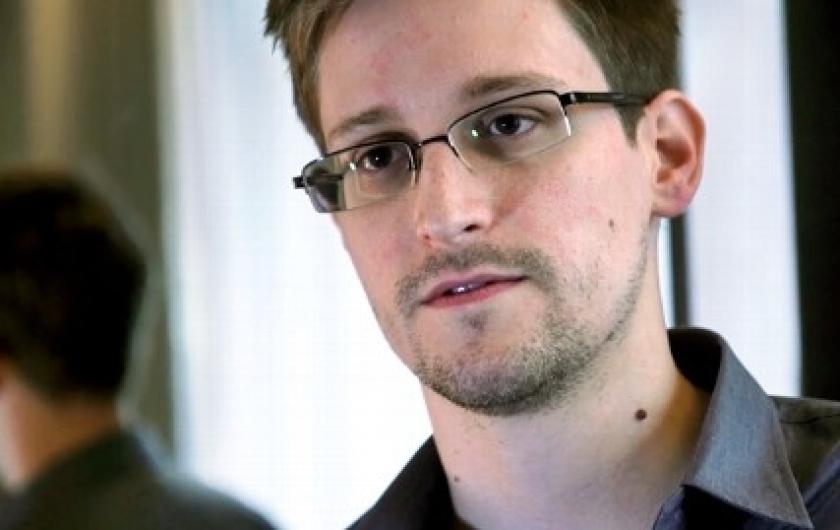
Edward Snowden, whose claim to civil disobedience was marred by his unwillingness to accept the consequences of his actions, whose pose as a whistle-blower was ruined by the disclosure that he took his job with the intention of exposing national secrets, and whose status as a freedom-defending patriot lies in ruins as he seeks harbor with not only America’s enemy, but a human rights-crushing enemy at that. The NSA’s over-reach and mismanagement is a scandal, but Snowden proved that he is no hero.
Unmitigated Gall of The Year
Minnesota divorce lawyer Thomas P. Lowes not only violated the bar’s ethics rules by having sex with his female client…he also billed her his hourly fee for the time they spent having sex , a breach of the legal profession’s rule against “unreasonable fees.” Yes, he was suspended. But for not long enough…
Jumbo Of The Year
(Awarded To The Most Futile And Obvious Lie)
“Now, if you had one of these plans before the Affordable Care Act came into law and you really liked that plan, what we said was you can keep it if it hasn’t changed since the law passed.”
—–President Obama
2013 Conflicts of Interest of the Year Continue reading
Natasha Leggero’s Stand: Protecting The Jester’s Privilege
In days of old when knights were bold, it is said, the King’s Fool was able to safely say outrageous, disrespectful things to the sovereign that might get anyone else drawn and quartered. This lucky exemption came to be known as the Jester’s Privilege, and it existed, and exists, for valid reasons. Humor, satire and all the other permutations of comedy are essential to societal sanity, and it makes sense to give the broadest discretion to practitioners of the craft in their efforts to provoke laughter—which is, as Reader’s Digest still reminds us monthly, “the best medicine.” That means that comics should not fear decapitation if their inspiration of the moment fails to provoke the desired mirth, or touches an audience member’s sensitive areas. In addition, the jester is sometimes able to expose a truth that will not be reached any other way.
It sounds like a good rule, and it is a good rule, but as with most ethics-related rules, applying it is difficult. Who gets the Jester’s Privilege…only professional comics, or does it apply to amateurs too? What about non-jesters just trying to be funny? “It was just a joke!” is a classic excuse invoked by insensitive and vicious people, including politicians, when they say something outrageous, as they try to use the privilege without a license, and in so doing, make it less effective for the humorists who really need its protection. Not everyone should assume that they have the full armor of the Jester’s Privilege. Mockery and ridicule are too often used as political weapons of targeted destruction.
Should some subjects be exempt from the Jester’s Privilege? The official position of comics, comedians, wags and wits has long been “No,” but even in Ye Olde Days, jesters sometimes went too far, and ended up with their heads on pikes. The problem any humorless king had after doing this, of course, was finding a jester willing to hazard a joke more edgy than “Why did the king cross the road?” For that reason, I think it’s vital that the Jester’s Privilege be strong and a near absolute. The sin that matters is not being funny, which means topics of unusual sensitivity take care of themselves.For centuries, for example, comics imitated and mocked those afflicted with speech impediments, especially stuttering, with big laughs guaranteed. Somewhere along the line, though, Porky Pig stopped being funny. The absence of laughs was enough to retire him; no heads had to roll.
On NBC’s New Year’s Eve show, the following exchange occurred between host Carson Daly, comic actress Jane Lynch and rising comedienne Natasha Leggero:
CARSON DALY: SpaghettiOs on Pearl Harbor Day, they sent out a tweet featuring their mascot holding an American flag asking people to quote “take a moment to remember #PearlHarbor with us.” It offended a lot of people, corporations glomming on to, you know, sentimental American historic traditions, seemingly looking for people in business. It wasn’t good. But you were offended for another reason.
JANE LYNCH: I’m offended because they were referring to SpaghettiOs as pasta.
NATASHA LEGGERO: I mean, it sucks that the only survivors of Pearl Harbor are being mocked by the only food they can still chew. It’s just sad.
Hilarity ensued, as the NBC gang laughed uproariously. Almost immediately, Leggero was getting flamed all over the social media and the wbs for denigrating the Greatest Generation. Steve Martin, I assume, would have humbled himself and apologized immediately, but not Leggero. Continue reading
A&E Does A Cracker Barrel
The fecklessness and lack of core principles exhibited by our corporations is often breathtaking.
A&E has now, like Cracker Barrel, stuck its pusillanimous finger in the air and decided that their “strong sense of integrity and deep commitment” to principle means that they do what whatever interest group has the most profit potential for them down the line wants them to do. Thus Phil Robertson is back on “Duck Dynasty,” and his “indefinite suspension” has been disclaimed by his employers. You can read A&E’s nauseating statement here…I considered posting it, but I don’t have the heart.
Everything I wrote previously about Cracker Barrel’s reversal on this same incident applies to A&E, but let me add this.
An organization with no core principles distinct from the profit motive is capable of anything, including outright evil. It is not worthy of trust. I would not and could not work for such an organization, and this episode makes me wonder if the entire concept of corporate ethics is a lie.
__________________________
Pointer: ablativmeatshld
Facts: Hollywood Reporter