Public School Ethics: The Assassin Game

"All right, class, Answer this: in the term 'assassin game.' which word describes the actual nature of what is being described? No seriously, help me here, because I can't figure it out..."

“All right, class, Answer this: in the term ‘assassin game.’ which word describes the actual nature of what is being described? No seriously, help me here, because I can’t figure it out…”

Montgomery  County Maryland’s Blair High School is embroiled in a controversy over the popularity of a student game known as “Assassin,” a role playing elimination game where players “kill” competitors using fake weapons, or, as in the Blair version of the game, their fingers. The game in various forms—it is also known as Gotcha, KAOS (Killing as organized sport), Juggernaut, Battle Royal, Paranoia, Killer, Elimination, or Circle of Death—has been around for decades. Proof: I played it in college, and had a blast. If you like that sort of thing, the game is fun, and whether you like it or not, it is harmless.

Ah, but some kinds of fun are no longer acceptable in large swathes of post-Newtown, thought-controlling, anti-gun, hysteric-dominated America, especially liberal enclaves like the Maryland suburbs. As a result, you get sentiments  like these:

  •   “I don’t think a game called Assassin is appropriate in schools. I want kids to be social with each other, but not in a ‘Gotcha’ . . . sort of way. It’s just inappropriate in our society.”—Blair Principal Renay Johnson

What’s “inappropriate?” Fantasy? Role playing games? Games that evoke entertainment and fiction portraying conflict and violence? Fun? Thoughts and attitudes that you don’t agree with or approve of? Continue reading
More Evidence That Word Banning Is Unethical

WHAT did you say?

WHAT did you say?

There is more to discuss, a lot more, regarding what I will now call “The Klosterman Apology,” because it sounds like  a Robert Ludlum novel. For now, however, since it is fresh in my jet-lagged mind, I’d like to focus on the inevitable result of declaring certain words and phrases so objectionable, hurtful, uncivil or politically incorrect that extraordinary means are employed to eliminate them. In the case of The Klosterman Apology, the words were “retard” and “retard,” and a Mom with a blog threatened “The Ethicist” from the New York Times magazine with an onslaught of political correctness bullies if he didn’t immediately express his abject contrition for having used these words in a harsh way a decade ago, in another job that didn’t directly involve ethics. Chuck capitulated, gracefully and well. As I will discuss in another post, I don’t think he had much choice. Still, word-banning is an ugly, and ultimately unethical business. Continue reading

Comment of the Day: “Jimmy Kimmel, Child Abuse, And Signature Significance”

(I am backed up three deep on the “Comments of the Day,” and I apologize to the deserving and patient commenters.)

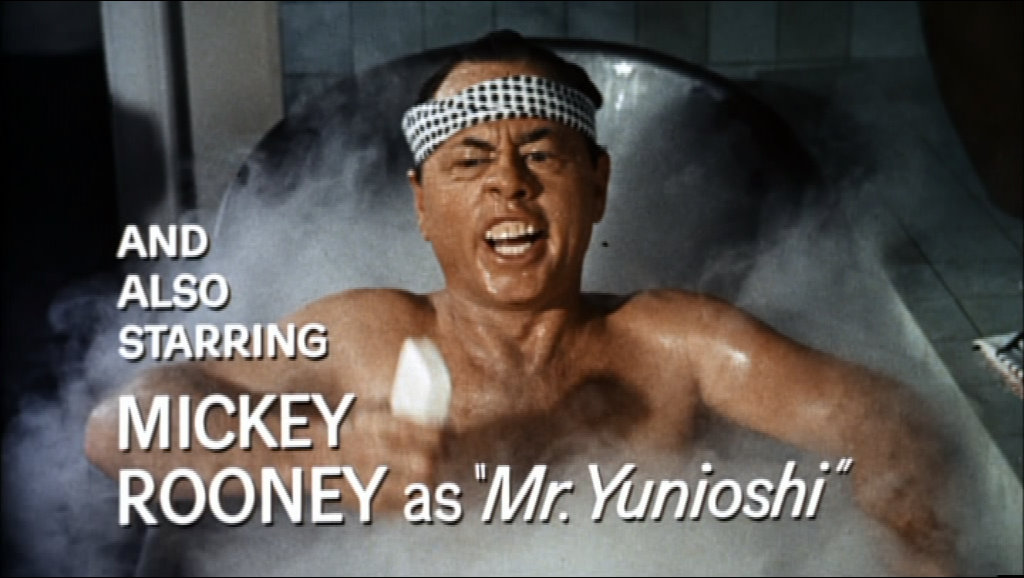
And who can forget Mickey Rooney's hilarious turn in that beloved American film masterpiece "Breakfast at Tiffany's"?

And who can forget Mickey Rooney’s hilarious turn in that beloved American film masterpiece “Breakfast at Tiffany’s”?

Alex Yuan raised an element of the revolting Jimmy Kimmel stunt discussed in my post, an extension of his penchant for using children as uncomprehending props for his often ugly comedy, that I glided right over: Why was showing a child suggesting that wiping out the Chinese was  a viable solution to national problems even considered fit for broadcast, when a similar comment about Jews, gays, Hispanics or blacks would be considered instantly taboo? Why doesn’t the ethics alarm sound when the minority being slurred or threatened is Asian?

Here is his Comment of the Day on the post, Jimmy Kimmel, Child Abuse, And Signature Significance:

It is interesting that you should mention political correctness because I can’t help feeling that in deciding it appropriate to air this segment, ABC – perhaps as a reflection of societal attitudes at large – is illustrating the alleged double standard against Asians when it comes to how topics concerning minorities and other protected classes are handled in public. Continue reading

Hallmark’s Christmas Carol Ethics Misadventure

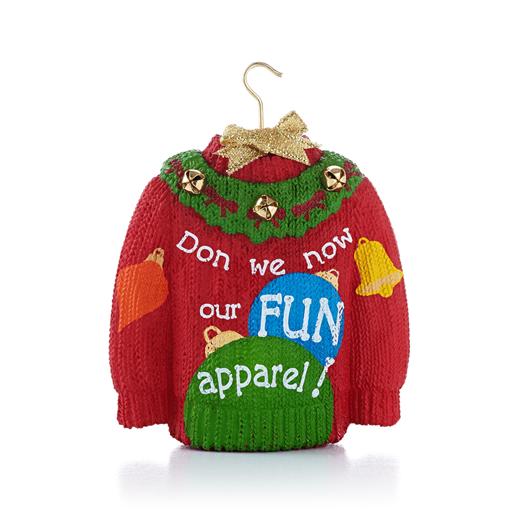
holiday-sweater-keepsake-ornamentTo consider this ridiculous controversy, let’s start at the very beginning (a very good place to start):

Here are the lyrics of the 19th Century Christmas carol “Deck the Halls,” one of the best known and most sung of the traditional carols these days because it doesn’t mention God, angels, Jesus or anything overtly religious:

Deck the halls with boughs of holly,
Fa la la la la, la la la la.
Tis the season to be jolly,
Fa la la la la, la la la la.

Don we now our gay apparel,
Fa la la, la la la, la la la.
Troll the ancient Yule tide carol,
Fa la la la la, la la la la.

(There are four more verses, but these are the ones most of us know.)

You would think that nobody could get in trouble using this particular holiday song, but Kansas City-based Hallmark was equal to the challenge. It decided to change the words for one of its new holiday ornaments, designed by “Keepsake Artist,” Matt Johnson. He  designed an ornament shaped like a typically gaudy Christmas sweater  sporting the altered lyric “Don we now our Fun apparel.” The word “gay” was removed.

Hallmark, much to its surprise, was flooded with complaints, and not just on the basis of one perceived offense, but several, and contradictory ones at that:

1. How dare they mess with the lyrics of a traditional and well-loved carol?

2. This was an anti-gay decision, literally and figuratively.

3. This was political correctness, to avoid criticism from gays.

Confronted with unseasonal hate mail and threats of a boycott, Hallmark did what many corporations do in such crises. It lied. Here was its initial statement, before Hallmark surrendered and apologized with one of those ‘we didn’t mean to offend anyone’ things : Continue reading

The Hopelessly Muddled Ethics Of Halloween Costumes

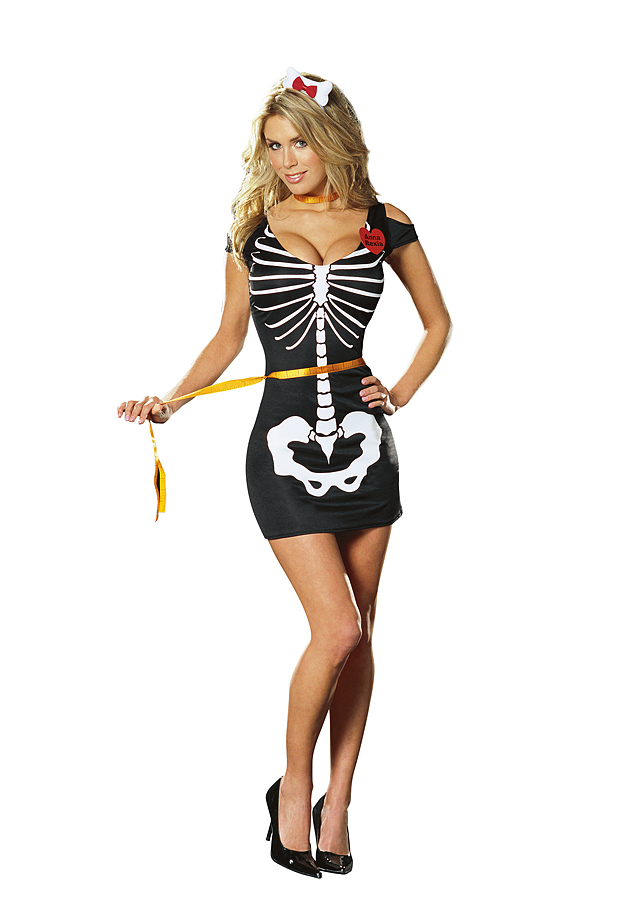
anna-rexia

“Anna Rexia”

Clearly, we need some rational ethics standards for Halloween costumes, but I doubt that we will ever have any unless political correctness is removed from the equation. The holiday is by its very nature in bad taste with a heavy dose of defiance. The tradition is all about invoking the things that frighten us, with death being tops on the list. Trivializing death or mocking it is any way is guaranteed to offend somebody. My solution: if it offends you so much, don’t participate in Halloween. Boycott it. Don’t give out candy. Let everyone else—you know, those enough to distinguish reality from make-believe and satire from insults—have a good time once a year.

Once Halloween is transformed into Halloweenie, as so many of the political correctness police would have it, it isn’t Halloween, and isn’t fun. We have properly purged the vandalism that once part of the ritual, and if every possibly offensive disguise and costume is deemed socially unacceptable, all we have left is an annual event where kids dressed in blinking lights (to avoid accidents) get non-sugar candy, fruit, dental floss or contributions to charities while dressed up as non-offensive politicians, Greenpeace captains, cartoon characters, occupations and maybe insects. Then parents x-ray the candy and limit how much of it the kids can eat. As for adults, they not only have to wear costumes that won’t offend their friends and fellow party goers, but also costumes that won’t offend somebody, somewhere, when an officious jerk at a party takes a photo with his phone and posts it for the world. What fun. Continue reading

The President And The Redskins: Learning Curve Flat As Ever

An updated graph of President Obama's learning curve on his practice of gratuitous commentary on the jobs, businesses, and duties of others. Oddly, it looks exactly like the last such graph, and the graph before that...

The  updated graph of President Obama’s learning curve regarding the Presidential practice of gratuitous commentary on the jobs, businesses, and duties of others. Oddly, it looks exactly like the last such graph, and the graph before that…

In the long list of example of President Obama interfering with private decisions, court cases and local matters that the occupant of highest office in the land has an obligation not to meddle in, his comments on the Washington Redskins are among the least annoying. It was a wishy-washy statement, all in all, that he gave to the AP:

“If I were the owner of the team and I knew that there was a name of my team — even if it had a storied history — that was offending a sizable group of people, I’d think about changing it.”

Does anyone doubt that owner of the Washington Redskins, Dan Snyder, hasn’t thought about it? On its face, the statement is petty, but of course, as the President resolutely refuses to learn, everything the President of the United States says, scripted or non-, regarding national policy or local matters, be they about red lines or how victims of gun violence look like his son, the President’s comments are seized upon, blown out of proportion, spun, used as weapons, provocations and ammunition, and generally warp public policy discourse, public opinion and personal and local decision-making. Continue reading

Are Universities Ethically Obligated To Tolerate Professors Who Embarrass Them By Saying Idiotic And Offensive Things?

Apparently the answer to the above is “Yes.”

"Duh!"

“Duh!”

If the university is a state school, then for it to fire a professor who makes ridiculous, foolish or hateful statements that make people wonder why they should ever entrust the minds of their tender charges into an institution that would knowingly hire cretins and jackasses to pollute student RNA, then this is probably a First Amendment violation, since it amounts to the government punishing speech and chilling free expression. If, on the other hand, the university involved is not a state school, then to send a professor packing because he or she has rammed his or her foot down his or her throat up to the knee is a violation of the crucial principle of academic freedom, which is, in brief, that to encourage the free discussion of ideas on a college campus, education being the purpose of the institution, literally no idea, point of view or position should be blocked or chilled by substantive negative action.

Three cases of recent vintage illustrate the university’s plight: Continue reading

Logo Ethics: How Insane Is Campus Political Correctness? A Quiz

Here are four logos from U.S. institutions of learning.  Each was or  is under attack by groups of students or administrators as being “offensive,” and in each case, the school’s administration either spent or is spending time and money to comply with the concerns. You have to guess the reason for the offense in each case.

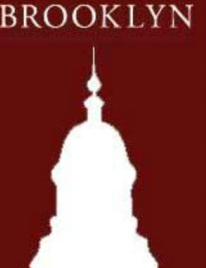
Ready? Here’s number #1, from Brooklyn College:

Logo1

Give up? Well, back in 2009, we have recently learned, Karen L. Gould, who had just taken over as the first woman president of Brooklyn College, raised $107,000 to replace the old logo (the silhouette of the school’s landmark La Guardia Hall clock tower), because she thought it looked like a giant penis. [An earlier version of the post surmised that she therefore believed the logo was sexist. There is no evidence of that; it was my surmise and my error.]

She would not be happy living in Washington, D.C., clearly.

Ready for the next one? Here’s #2, from the University of Connecticut: Continue reading

Slate’s Unethical “Redskins” Blackout

You know what Redskins really means, don't you? It means standing up to political correctness bullies.

You know what Redskins really means, don’t you? It means standing up to political correctness bullies.

Via the usually rational reporter David Plotz, we learn that Slate has decided that the Political Correctness Gods will no longer allow the on-line magazine to use the name of Washington’s NFL team when it is reporting on Washington’s NFL team. This is, of course, presumptuous, arrogant, and lousy journalism. It is not the media’s job to re-make the world into what pleases them. Slate doesn’t like the Redskins name so it’s not going to publish it. This seems to be the current mode of operation in the media today–it is no longer dedicated to reporting and commenting on the news, but rather reporting and commenting on the news it doesn’t find “offensive.”

The Redskins, as a team nickname, is certainly the strongest case for those who believe in censorship of team names with ethnic or national origins. The NCAA has already gone way beyond any rational execution of that mission however, and even in the case of Redskins, an unquestionably racist term when applied to Native Americans, the objection to a sports  team name with supposedly negative historical implication has a lot of the “a chink in the armor” nonsense about it. For in Washington, D.C. and in football bars and Sunday afternoon gatherings, Redskins is not a slur, and does not refer to native Americans. It is the name given to a squad of NFL players who play pro football in the name of Washington, D.C., and a franchise that is worshiped in the city. When the name is used, it is not aimed at Native Americans or intended to denigrate them. It does not refer to Native Americans, and not intended to give offense. It is intended to designate the football team, because that is the team’s name. How can someone be offended at the use of a name that is not intended and is not a slur in the context of the use in question? There two answers to this: 1) Most people, including rational Native Americans, aren’t, and 2) Because such people want to be offended.

The name “Redskins” was never intended as a slur, as I have explained here before. Continue reading

On The NFL Player’s Slur, The MSNBC Journalist’s Lie, Words, Conduct, Reason And Proportion

If Riley Cooper were black, of course, then he would be "cool."

If Riley Cooper were black, of course, then he would be “cool.”

There are words, there are thoughts, and there is conduct. Thoughts are not unethical.  Conduct can be unethical. Words can be considered conduct when they are intended to have, or do have, material and measurable direct effects. Verbal abuse is conduct. Using a rude, vulgar or hateful word may not be verbal abuse.

Although the NFL and his team, the Philadelphia Eagles have every right, and some good reasons, to punish, suspend or even terminate Riley Cooper because a video reveals the Eagles player as saying, “I will jump that fence and fight every nigger here!” at a Kenny Chesney concert, I don’t see any conduct there, just words. He did not direct the racial slur at any individual, and there is no evidence that it was intended to harm or intimidate any African-Americans. He did not intend for the outburst to be publicized of communicated to anyone but the friends he said it to. On a pure  just punishment for harm intended or achieved basis, it is ridiculous for Cooper to be facing the loss of millions and his athletic career because he uttered a single racial slur that was captured on a video. It cannot be defended logically or as a reasonable position. Using one racial slur in that setting doesn’t prove that Cooper is a racist. It doesn’t prove hate. Even if it did, hate is not illegal or even unethical until the hater acts on it in an unethical way. And a word is just a word. We don’t, or shouldn’t, fear mere words in a rational American society. We shouldn’t have taboos, or people who “cannnot be named,” like in the Harry Potter books. The ease and certitude with which otherwise intelligent people capable of making judgments involving proportion and common sense blithely go along with the batty idea that uttering a word, only uttering it and nothing more, should result in devastating consequences, is frightening. It is a per se unethical position, because it is unfair, and incompetent, because it is essentially crazy.

Having said that, I can understand why, since so many people are irrational about words, why the NFL or the Philadelphia Eagles, as a business decision, may decide that they don’t want Cooper associated with them any more. That is a rational choice, and may even be the best choice. That is not the same as saying that he deserves that result. If the bulk of NFL fans are fanatically politically correct, then the NFL and its teams cannot afford to ignore that. Sorry Riley. Continue reading