Ethics Dunce: Steve Martin (Coward, Too)

Life imitates art.

Shame on Steve Martin. He is a comedian. He tweets jokes. He tweeted a joke that was not racist in the least. (Everything that comments humorously on cultural quirks isn’t racist.) The political correctness bullies jumped on him too, because they nailed Phil Robertson and destroyed Justine Sacco. Martin, a novelist, a playwright, a TV writer, a comic and an actor, should have the integrity to stand up to this suffocating and unethical phenomenon. He has the stature to make a difference. He doesn’t have that integrity. He took the path of least resistance. He is a coward. He groveled. He apologized. The Blaze headlined that he “had to apologize,” No he didn’t. What he had to do was show some principle and strength of character when being manipulated and unfairly attacked, and he wasn’t up to the task.

By giving them what they crave, Steve Martin made the censors, bullies, cyber mobs and political correctness dictators more powerful, and hungrier still.

Without champions who will fight for free thought and expression, we will lose them. Martin and people of his intelligence and credibility have an obligation to be such champions, and he failed us all.

__________________________________

Spark and Pointer: The Blaze

The Unethical Destruction of Justine Sacco

Justine Sacco, victim.

Justine Sacco, victim.

Media executive Justine Sacco tweeted an impulsive, racially provocative joke on the social media site Twitter that a lot of people found offensive, didn’t like, or felt they could justify participating in cyber-bullying as if they found it offensive. As a result, she has lost her job, is being portrayed as a virulent racist across the web,  receiving threats and hate messages from strangers, and has become an international pariah.

It doesn’t matter what the tweet said. It was a tweet–140 characters directed at nobody in particular, that harmed nobody in any way, unlike, say, the tweets by various celebrities trying to direct mobs to where George Zimmerman could be found and beaten. Nobody attacking her knows this woman, what’s in her mind and heart, what she has done in her life or the good works and deeds she may be responsible for. And yet thousands of strangers, many of whom are almost certainly, on balance, less admirable people than Justine Sacco in many ways, have chosen to use her 140 ill-chosen characters as provocation to throw a huge, greasy monkey wrench into the gears of her life. Continue reading

Slate’s Unethical “Redskins” Blackout

You know what Redskins really means, don't you? It means standing up to political correctness bullies.

You know what Redskins really means, don’t you? It means standing up to political correctness bullies.

Via the usually rational reporter David Plotz, we learn that Slate has decided that the Political Correctness Gods will no longer allow the on-line magazine to use the name of Washington’s NFL team when it is reporting on Washington’s NFL team. This is, of course, presumptuous, arrogant, and lousy journalism. It is not the media’s job to re-make the world into what pleases them. Slate doesn’t like the Redskins name so it’s not going to publish it. This seems to be the current mode of operation in the media today–it is no longer dedicated to reporting and commenting on the news, but rather reporting and commenting on the news it doesn’t find “offensive.”

The Redskins, as a team nickname, is certainly the strongest case for those who believe in censorship of team names with ethnic or national origins. The NCAA has already gone way beyond any rational execution of that mission however, and even in the case of Redskins, an unquestionably racist term when applied to Native Americans, the objection to a sports  team name with supposedly negative historical implication has a lot of the “a chink in the armor” nonsense about it. For in Washington, D.C. and in football bars and Sunday afternoon gatherings, Redskins is not a slur, and does not refer to native Americans. It is the name given to a squad of NFL players who play pro football in the name of Washington, D.C., and a franchise that is worshiped in the city. When the name is used, it is not aimed at Native Americans or intended to denigrate them. It does not refer to Native Americans, and not intended to give offense. It is intended to designate the football team, because that is the team’s name. How can someone be offended at the use of a name that is not intended and is not a slur in the context of the use in question? There two answers to this: 1) Most people, including rational Native Americans, aren’t, and 2) Because such people want to be offended.

The name “Redskins” was never intended as a slur, as I have explained here before. Continue reading

“Argo” and the Horrible Thought

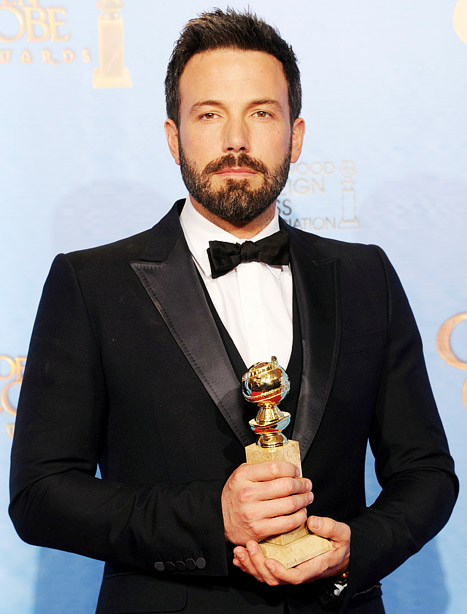
Thanks a bunch, Ben.

Thanks a bunch, Ben.

“Argo” prompted a disturbing thought that has been haunting me since I saw the picture. I am sorry that I had the thought, and hoped that it had been successfully banished by time and hope. Unfortunately, the juxtaposition of “Argo” winning the Best Picture Oscar combined with the inappropriate and intrusive appearance of Michelle Obama to announce it, complete with a politics-tinged speech that was as gratuitous as it was manipulative, caused that thought to begin burning in my brain again. Alas, here it is.

At the conclusion of “Argo,” former President Carter is heard emphasizing the obvious, that in 1980 he would have loved to have taken credit for the audacious  rescue of the six American Embassy workers from Iran that was engineered by his CIA. But, Carter says, do so would have endangered the remaining hostages, and though it would have helped his politically besieged Presidency (which was lost to Ronald Reagan that same year, in part because of Carter’s perceived weakness in handling the hostage crisis), giving all of the credit to Canada was the right and responsible thing to do.

I am no admirer of Jimmy Carter’s policies, personality, Presidency or leadership. He is, however, an ethical man. He was President before the hyper-partisanship that has rotted our politics, before the “perpetual campaign” style of leadership launched by Clinton, and before every act by every main stage player in Washington appeared to be dictated by the need to hold power, rather than by the needs of the people. My horrible thought is that I believe the current President and his  Machiavellian political advisors would not have done as Carter did, if the “Argo” scenario played out in 2012, as that Presidential election approached. This White House, facing the prospect of defeat, would find a way to leak its participation in the successful rescue, judging its retention of power a higher goal than protecting the hostages that may well have died anyway.

I wish I didn’t have this thought, but I cannot banish it. The unseemly chest-thumping and credit-grabbing over the killing of Bin Laden, the leaking of details about the deliberations leading to it, the deceptive handling of the Benghazi disaster, and yes, the inability of the President’s political strategists to resist attaching the President or his wife to anything remotely positive—even the Academy Awards— while refusing to accept responsibility for any mistake, miscalculation or failure (See Bob Woodward on the disinformation campaign regarding the looming sequester, beginning with Obama’s outright lie in the third Presidential debate, “The sequester is not something that I’ve proposed.”), all have me convinced that the days when we can trust a President to risk his own grip on power for the good of the country are gone, perhaps forever.

As I said, it is a horrible thought, and I fervently wish I didn’t have it. I want to trust and admire our nation’s leaders, the President most of all. But the leaders of both parties have earned this level of distrust, and I see no signs that they are capable of making that horrible thought, and other too, go away.

Incompetent Elected Officials Of the Month: Oh, Brother!

My mood after I wrote this...

As more and more observers predict that the individual mandate, a cornerstone of Obamacare, will be declared unconstitutional by the Supreme Court, I found my mind returning to the topics that have bothered me from the beginning. Why didn’t Congress make certain that it was on sound constitutional ground when it passed the law? Did they really understand what they were passing? Is it possible that our elected officials could spend so much time and occupy so much of the nation’s attention on an issue they didn’t understand? Surely our highest elected officials entrusted with devising the laws of this great nation must understand the powers and limits that relate to their duties in the Constitution. Don’t they? Isn’t that a minimum qualification for office?

George Mason Law Professor David Bernstein has provided clues to the answers to those question, and you’re not going to like them. He writes: Continue reading

Rush’s Apology, His Power, and His Responsibility

They're coming, Rush!

The Sunday morning talk shows had a real Rush Limbaugh bash-fest this morning, and that’s fine: he earned it, with his ill-considered and vicious attack on Sandra Fluke for stating her opinion. This is a real career crisis for Limbaugh, I think, and he knows it. His initial reaction to the furious criticism of his offensive comments about the Georgetown Law student was to refuse to back down, as has been his response to controversies his entire remarkable career, and it has served him well. Then he realized that this controversy was different. He had crossed a line of decency, fairness and civility that the culture as a whole, not just political adversaries, would not tolerate. He apologized, saying.

“For over 20 years, I have illustrated the absurd with absurdity, three hours a day, five days a week. In this instance, I chose the wrong words in my analogy of the situation. I did not mean a personal attack on Ms. Fluke.

“I think it is absolutely absurd that during these very serious political times, we are discussing personal sexual recreational activities before members of Congress. I personally do not agree that American citizens should pay for these social activities. What happened to personal responsibility and accountability? Where do we draw the line? If this is accepted as the norm, what will follow? Will we be debating if taxpayers should pay for new sneakers for all students that are interested in running to keep fit? In my monologue, I posited that it is not our business whatsoever to know what is going on in anyone’s bedroom nor do I think it is a topic that should reach a Presidential level.

“My choice of words was not the best, and in the attempt to be humorous, I created a national stir. I sincerely apologize to Ms. Fluke for the insulting word choices.”

Was it a “real” apology? I’m going to discuss the issue of apology ethics in the next post, but yes, it was as real as most apologies. If one’s definition of apology is ” a statement of contrition and regret freely and sincerely given,” the answer is no. Very few apologies meet that high standard, if only for the reason that few of us will apologize unless an apology benefits us in some way or is unavoidable. Rush’s reputation is based on daring, outrageousness and his refusal to back down from the ‘truth” despite assaults from the “drive-by” media and the politically correct; he, of all people, would never apologize for anything he said on his show if he had any choice in the matter. In this case, I assume that Limbaugh was hearing from his affiliates, his sponsors, other talk show hosts, and political figures that he was courting disaster if he didn’t back down. Continue reading

Paterno, Hoover, and Jones’s First Law

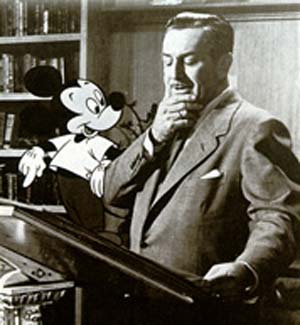
Would Uncle Walt have resisted the curse of Jones's First Law?

Jones’ First Law, one of many useful corollaries to Murphy’s Law (“Anything that can go wrong, will.”) is usually stated:

“Anyone who makes a significant contribution to any field of endeavor, and stays in that field long enough, becomes an obstruction to its progress – in direct proportion to the importance of his original contribution.”

This week was a good one for Jones (whoever he was; I can’t seem to find out) if not for the rest of us, because two classic examples of his principle were on display:  Penn State coach Joe Paterno, who managed to stay coach long enough to unravel his legacy and help lay the groundwork for an ethical, moral, legal, public relations, and financial catastrophe for the institution he had dedicated his life to, and J. Edgar Hoover, the subject of a newly-released Clint Eastwood directed film that shows how he too stayed long enough as the key figure of an institution he built—the FBI—to become an embarrassment to it. Continue reading

The Tragedy of Monica Lewinsky

At 21, Monica Lewinsky was charmed into an illicit sexual relationship by the President of the United States, a master charmer with a long record of similar dalliances. There are millions of extra-marital affairs in the U.S., but one involving the most powerful man in the country was certain to be at the center of historic media attention. Bill Clinton knew it, and he understood the risks. Monica Lewinsky did not and could not, and it was her life that was thrown tragically, permanently, off its tracks. Continue reading

Do Nicer People Earn Less Money? Of Course They Do. And That’s the Way it Should be.

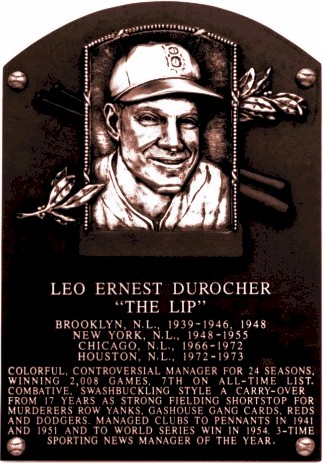
Leo Durocher figured out that "nice guys finish last" 60 years ago, and he never went to college. Now three academics, after extensive research, have "discovered" the same thing. Ah, scholarship!

A study by Cornell professor Beth A. Livingston,  Timothy A. Judge of the University of Notre Dame and Charlice Hurst of the University of Western Ontario study used survey data to examine “agreeableness” and found that disagreeable men made 18%, or $9,772 annually, more in salary than those who are more accommodating. The salary disparity was  less among women, with disagreeable females making 5% or $1,828, more than those who are easier to get along with. Does this shock you? It shouldn’t.

As is depressingly often the case, the academics who come up with such crack-brain studies—I read this one, and will want that wasted hour back when I’m on my death-bed so I can watch one last re-run of “Magnum, P.I.”—have so little experience with the working world and the reality of non-academic cultures that they don’t even comprehend their own research and draw absurd conclusions from it.

“The problem is, many managers often don’t realize they reward disagreeableness,” Livingston told the Wall Street Journal. “You can say this is what you value as a company, but your compensation system may not really reflect that, especially if you leave compensation decisions to individual managers.”

Oh brother. Continue reading

Group Bigotry: Is This The Way It’s Going To Be? AGAIN?

I'm a fan of women's curves, but I expected their learning curve to be better than this.

I already covered this topic when Christiane Amanpour held an unrestrained “males are inferior managers because all the blood rushes to their penises” session on ABC’s “This Week” a few Sundays ago, but since it is becoming clear that the outbreak of gender bigotry in the media is more widespread than ABC, a second alarm is warranted.

This week’s Time magazine has a column by Meredith Melnick entitled “Why Women Are Better at Everything.” Among its contents:

•    “Recently in the Wall Street Journal, MarketWatch columnist David Weidner noted that women ‘do almost everything better’ than men — from politics to corporate management to investing.”

•    “What’s the problem with men? ‘There’s been a lot of academic research suggesting that men think they know what they’re doing, even when they really don’t know what they’re doing,’ John Ameriks, the author of the Vanguard study, told the New York Times.”

•    “Women, who have only 10% of the testosterone that men have, seem inured to the phenomenon, according to Coates.”

•    “So, basically, the more women around, the better, as the Journal’s Wiedner said. His column referred to a recent book by Dan Abrams called Man Down: Proof Beyond a Reasonable Doubt That Women Are Better Cops, Drivers, Gamblers, Spies, World Leaders, Beer Tasters, Hedge Fund Managers, and Just About Everything Else.”

•    “…women are better soldiers because they complain about pain less. They’re less likely to be hit by lightning because they’re not stupid enough to stand outside in a storm. They remember words and faces better. They’re better spies because they’re better at getting people to talk candidly.”

•    “Of course, to most women none of this is much of a revelation.” Continue reading