Worst Ethics Column of the Month: Michelle Goldberg’s “The Lara Logan Media Wars”

There’s nothing so pointless as complaining about a phenomenon that is logical, natural, useful and just, on the grounds that it’s so darn mean. Nevertheless, that is the gist of a Daily Beast column by Michelle Goldberg, another in the increasingly ethics-challenged stable of journalists being assembled at Tina Brown’s slick website.

Ruing the fate that befell journalist Nir Rosen after he not only ridiculed the horrendous attack on ABC reporter Lara Logan by an Egyptian mob, but implied that as a ‘war-monger” she deserved it, Goldberg wrote…

“…it indicated that Rosen has deep, unexamined problems with women, particularly women who are his more-celebrated competitors. But it was also appalling to realize that this brief, ugly outburst was going to eclipse an often-heroic career. The media’s modern panopticon has an awful way of reducing us all to the worst thing we’ve ever done…Again and again, we see people who make one mistake either forced out of their jobs or held up for brutal public excoriation. But the more we live in public, the more we need to develop some sort of mercy for those who briefly let the dark parts of themselves slip out, particularly when they’re truly sorry afterward.”

Ah, yes, the old “one mistake” plea! Continue reading
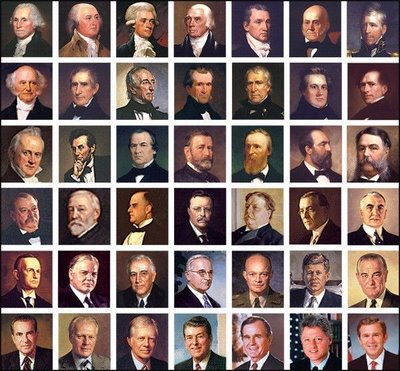
Presidents Day Ethics: The Presidents of the United States on Ethics and Leadership

In commemoration of President’s Day, Ethics Alarms presents the ethics wisdom of the remarkable men who have served their country in the most challenging, difficult, and ethically complicated of all jobs, the U.S. Presidency.

Ladies and Gentlemen, the Presidents of the United States:

George Washington: “I hope I shall possess firmness and virtue enough to maintain what I consider the most enviable of all titles, the character of an honest man.” Continue reading

Ethics Carnage in Wisconsin: The Ethics Grades So Far

The battleground

The story to date: Wisconsin’s Republican Gov. Scott Walker announced a budget-repair measure to address  looming budget deficits (in a state with a balanced budget mandate in its constitution) by requiring state employees to contribute a larger proportion of their pensions and health care plans, and  restricting their long-standing  collective bargaining rights. Wisconsin’s deficit is projected at $30 million for the remainder of the 2011, with a shortfall of $1.5 billion projected for next year. In response to Walker’s announcement and the near certainty of his plan being passed by the Republican dominated state legislature, 14 Democratic legislators fled the state to prevent a quorum and block a vote, teachers left their classes to protest in Madison, where they were joined by thousands of pro-union protesters, many of whom were organized and bused in by Organizing for America, a White House operated political group.

Let’s try to separate the ethics wheat from the chaff—amazingly, there is actually some wheat–and get an early line on the heroes, dunces, villains, and the rest as the Wisconsin budget battle threatens to become a full-fledged Ethics Train Wreck. Continue reading

Obama’s “Enemies,” Pat Caddell, and the Cognitive Dissonance Misdirection

The Cognitive Dissonance Misdirection (CDM) is as old as politics. I’ve written about it here before, but finally have decided that it deserves a formal name–especially because it has been shamelessly employed by news media attempting to minimize, obscure or bury legitimate criticisms of Barack Obama and his Administration.

Cognitive dissonance is created when something an individual feels strongly about is associated in some way with something else. If the individual strongly likes, admires, or desires the first thing, cognitive dissonance will draw the second thing into his favor. If the individual intensely dislikes the first thing, he will begin to feel more negatively toward the second thing now linked to it. This why, for example, popular celebrities get product endorsement deals, and unpopular ones don’t. When Denzel Washington or George Clooney says he likes a car, people start liking the car too. If the same car were endorsed by, say, Lindsay Lohan or O.J. Simpson, a lot of people would assume it was a lemon…and they might not even realize why. Cognitive dissonance works its influence subliminally, and that’s why it is such an effective tool of persuasion…and bias.

The media’s version of this has been perfected over the last two years. When a legitimately troubling comment, action, incident or gaffe reflecting badly on the President, his Administration, or his staff occurs, the mainstream media has often not reported the issue straight, as in “This happened,” or “Obama said this,” but by immediately linking the story to the President’s presumably biased adversaries—Republicans, conservatives, and talk radio—and making the criticism the story, as in, “Republicans are attacking President Obama’s  communications director Anita Dunn’s comments that seemed to praise Mao Zedong.” The fact that a high-ranking White House figure praising the greatest mass murderer in history, even in jest, is news, and should be criticized by Left and Right, was muted by the reporting of it. Continue reading

Unethical Post of the Month: Jonah Goldberg

In his latest post on the National Review website, conservative blogger Jonah Goldberg wonders why the CIA hasn’t had the sense to assassinate WikiLeaks founder and current renegade leaker Julian Assange. That’s right: Goldberg believes that in the national interest (for Assange has gathered and leaked massive amounts of classified information relating to U.S. military operations), the U.S. government should murder an Australian citizen without due process, a trial, or anything approaching regard for law, ethics, and human rights.

I make it a rule, in the interest of civility and respect, to control the urge to sink to pure name-calling, but really: what an idiot. And a dangerous one. Continue reading

Sunday Morning Revelations: Kurtz, Feldstein, Anderson, and Why We Can’t Trust the News Media

Media critic Howard Kurtz interviewed reporter/author Mark Feldstein this morning on CNN’s “Reliable Sources, who is promoting his book, Poisoning the Press, an insider’s account of how famed Washington, D.C. muckraker Jack Anderson bent, broke, or entirely ignored basic principles of ethics and decency in his quest to fill his column with damaging information about President Richard Nixon and his allies.

There were two moments in the interview that stand as persuasive evidence against anyone who maintains, against mountains of evidence to the contrary, that American journalism is fair, responsible, unbiased and ethical.

One was at the start of the interview, when Kurtz characterized Feldstein’s book as showing that Anderson was as willing to cut ethical corners as Nixon was. “Well, Nixon’s were felonies, and Anderson’s were misdemeanors,” Feldstein corrected him. “Nixon’s felonies killed thousands of people.”

What? Exactly what “felonies” was Feldstein referring to? Continue reading

Rahm Emanuel, History and Hyperbole Ethics

There are times when obvious exaggeration is nothing worse than politeness, nothing more than an expression of admiration and affection. “You’re the best boss anyone ever had,” is in this category, especially when the boss is retiring or dying. But when one is speaking in public about controversial and historical matters involving well-known public figures, the margin between excusable hyperbole and unethical dishonesty or worse is much smaller. Al Gore learned this when he played loyal Vice-President on the day his President was impeached by vote of the House of Representatives. Gore’s statement that Bill Clinton was “a man I believe will be regarded in the history books as one of our greatest Presidents” was intended as supportive, but interpreted as a toadying endorsement of Clinton’s unsavory and dishonest conduct, impeachable or not. It probably cost Gore the Presidency.

Worse yet was Trent Lott’s clumsy effort to praise the ancient, infirm and mentally failing Sen. Strom Thurmond at his 100th birthday party. Lott said, “I want to say this about my state: When Strom Thurmond ran for president we voted for him. We’re proud of it. And if the rest of the country had followed our lead, we wouldn’t have all these problems over all these years, either.” Thurmond, running on the Dixiecrat ticket, had opposed segregation, and Lott’s comment, less fact than flattery, made him sound like he longed for the days of Jim Crow and “white only”rest rooms. The lessons of these hyperbolic gaffes are similar: if the well-intentioned compliment concerns a public figure in historical context, historical exaggerations either appear to be unjust to history or its important figures, seem to make inappropriate value judgments, or come off as a blatant effort to mislead the public.

Rahm Emanuel hit the Trifecta with his fawning farewell to President Obama, as he left the White House to run for Mayor of Chicago. Obama, he said, is “the toughest leader any country could ask for, in the toughest times any president has ever faced.”

Wow. Continue reading

Mark Levin’s Irresponsible Substitute Host Ethics

What ever one may think about Mark Levin, the pugnacious conservative talk show host, ignorant he is not. Levin has had a distinguished career in government and law, and is a constitutional scholar. When he isn’t railing against the Obama Administration’s efforts to impose what Levin regards as “tyranny” and “totalitarianism,” he is lecturing his audience about how too much of the public and most Democrats are willfully uninformed about our nation and how the American system works.

Levin puts great stock in knowing and understanding American history, yet he willingly allowed Texas talk show host Michael Berry to fill in for him this month, proving that despite Levin’s rhetoric, he prefers ideological fervor over competence, truth and accuracy. Continue reading

Summer Rerun: “Ending the Bi-Partisan Effort to Destroy Trust in America”

[TV is full of reruns these days, and sometimes I am grateful for them, for it gives me a chance to see episodes of favorite shows I had missed for some reason or another. Back in early March, I posted the following essay about the origins of America’s current crisis of trust in our government, and how it might be cured by our elected leaders. Since then, the crisis has deepened, and as I was doing some routine site maintenance, I reread the post. It is still very timely (unfortunately), and since far fewer people were visiting Ethics Alarms in March, I decided to re-post it today, with just a few minor edits. I promise not to make this a habit. Still, trust is the reason why ethics is so important in America: if there is a single post of the more than 700 I have written here since October 2009  that I would like people to read, this is it.] Continue reading

Daniel Schorr’s Ethical Legacy

It was interesting, though a little jarring, to read and hear the outpouring of admiration for the late CBS and NPR journalist Daniel Schorr, who died last week at the age of 93, even as the same sources were decrying the biases of Fox News. For Daniel Schorr was the herald of ideologically slanted journalism, though he never admitted it and was notable for his self-congratulatory dedication to what he called journalistic ethics. His legacy is what we have now: self-righteous journalists who refuse to separate fact from opinion, and whose definition of “fair and balanced” is “expose the bad guys—that is, those who we think are the bad guys.”

Some of the odes to Schorr’s career themselves defy any reasonable definition of objective reporting. During his 25 years at NPR, Schorr comfortably settled into reliably pro-liberal, pro-Democrat reporting, calling, for example, the Supreme Court’s decision in Bush v. Gore, “a judicial coup” by “the Gang of Five, philosophically led by archconservative Antonin Scalia.”

“Some critics of Schorr and NPR felt his analysis veered into opinion — that he had a profoundly liberal take on the world that became more evident over time,” said NPR in its obituary of Schorr.

Gee…How could they think such a thing? Continue reading