Ethics Hero: Minnesota Twins Pitcher Phil Hughes

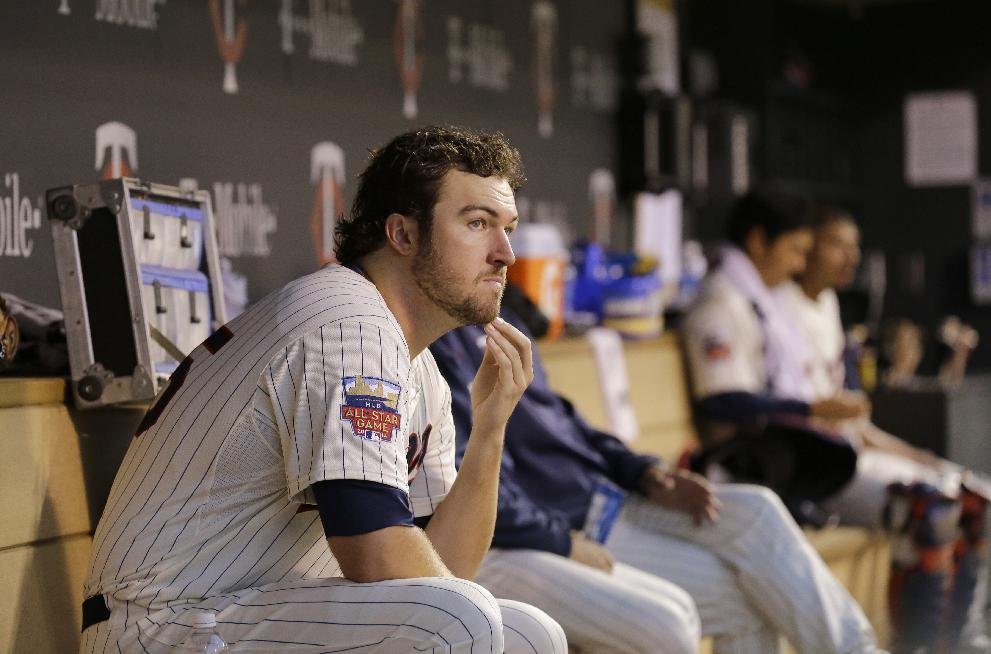
Phil Hughes

This is the final day of the regular baseball season, and an appropriate time to salute a major league player who placed principle over cash….even if I disagree with him

Phil Hughes was a bargain pick-up during the off-season for the Twins, a failed pitching phenom for the Yankees widely viewed to be on a fast slope to oblivion. He surprised everyone with a wonderful season for the otherwise woeful Minnesota team this season, potentially setting the all-time strikeout-to-walk ratio record, and began his final start of the campaign needing to throw eight and a third innings to reach 210 and trigger a $500,000 bonus in his contract.He would have made it, too, pitching eight dominant innings against the Diamondbacks and allowing just one run.  Then there was a downpour, with Hughes needing one more out to get the  extra $500,000.

After more than an hour’s rain delay, the game was resumed, but as is the practice in baseball, Hughes did not return to pitch: too long a delay, his arm too cold, too much risk of injury, especially after throwing so many pitches.  Hughes accepted the bad luck without complaint or rancor, saying that “some things aren’t meant to be.” Continue reading
Ethics Hero Emeritus (Independence Day Division): John Dickinson (1732-1808)

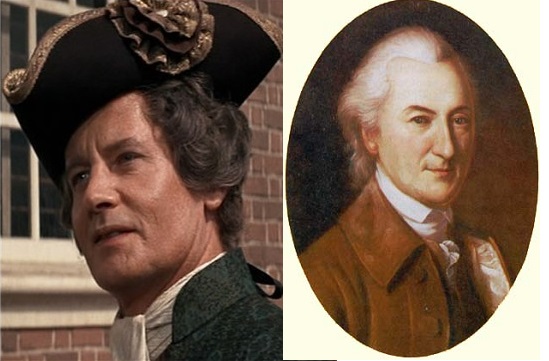
Villainous, singing version on the left; heroic, real life version on the right.

Villainous, singing version on the left; heroic, real life version on the right.

It is the American patriot John Dickinson’s curse that the very strength of character that caused him to stand out among the other Founders and that led them to respect him as much or more than any other also made him the black sheep in the inspiring tale of American independence. This led to relative obscurity. Although Dickinson is honored (along with his wife) by Dickinson College, Dickinson School of Law of the Pennsylvania State University, and University of Delaware’s Dickinson Complex, he is largely unknown to most Americans. He would be even less known, had Peter Stone not chosen to make him the villain of his 1969Tony-winning musical “1776,” where he was portrayed as a conservative loyalist who almost single-handedly foils the efforts of John Adams, Thomas Jefferson and Ben Franklin to declare independence from Great Britain. Whatever that choice’s dramatic virtues, it was unfair to Dickinson in every way.

Raised a Quaker, educated as a lawyer and a farmer by trade, Dickinson began public life in 1760 when he was elected to the Delaware legislature. During the next fifteen years he served both in that body and in the Pennsylvania legislature, a rare dual service made possible because he owned property in both colonies.

When the British Parliament instituted measures in the Colonies to raise revenue and provide for the quartering of British troops, Dickinson was one of the most eloquent and persuasive critics of the Crown, always with the intention of finding a satisfactory negotiated accord that did not involve the threat of armed rebellion. He urged Americans to rely primarily on economic pressure to oppose the hated Stamp Act, and he enlisted the influence of British merchants on the colonists’ behalf. His diplomatic orientation seemed like a prudent antidote to the firebrands calling for revolution in Boston, so the Pennsylvania legislature appointed him to represent that colony at the Stamp Act Congress of 1765. There he advocated the proposition that reconciliation was possible if the King and Parliament would only realize that colonial opposition was in the grand tradition English principles of political liberty. Dickinson set his reasoning to paper in his “Letters from a Farmer in Pennsylvania,” a series of deft essays that brought Dickinson international fame as a man of reason and principle. Continue reading

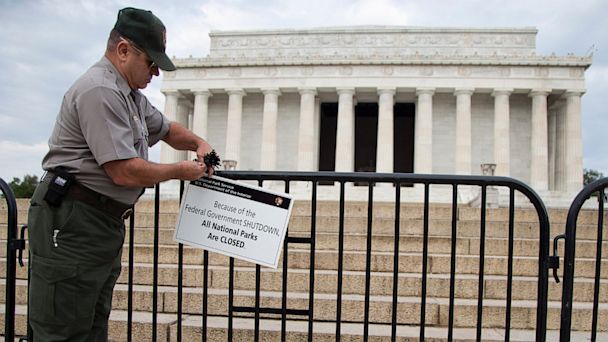
Ten Ethics Observations On The Government Shut-Down

lincoln_memorial

Stipulated: I am not in generally favor of government shutdowns, just as I do not favor strikes, boycotts, Massada-style mass suicides, wars, or any other destructive tactics, strategies and actions in response to impasses over important matters. Sometimes, however, they are necessary and responsible. Sometimes, they are not.

1. It is fascinating reading the comments on the shutdown from my friends on Facebook. It is startling how many of them simply parrot back partisan talking points they have heard on CNN and MSNBC, but especially striking are the angry rants of the government employees who appear to take the shutdown as a personal affront. How dare the evil Republicans disrupt their lives, their paychecks, their work schedule, their vacations! I wonder if my friends have the same reactions to labor strikes, wars and national disasters. Do they really believe that those elected officials struggling to decide on crucial matters of policy, firmly believing in a course that is right for the nation and reaching an impasse, should just shrug off the serious implications of the issue at hand and say, “But, hey, Joe Finsterwald will have a tough time if his agency has to shut down, and the Bradys’ DC vacation will be ruined, so the heck with it: go ahead with that law we think will be a disaster for the country. We’ll back off.” Do those Facebook complainers really think that would be responsible governance? You know, guys, this isn’t personal: it’s called politics and two party government. It’s part of the deal. Disagree with the policy arguments if you have the knowledge and perspective to do so, but taking the position that the entire business of running the country revolves around your convenience over the next few days or weeks is as juvenile as it is irresponsible. If you work for a private company, you risk disruptions because of business failures, competition and re-organizations. If you work for the government, you risk things like this. It’s not only about you.

2. What various polls show about what the American public believes or doesn’t believe is irrelevant, and anyone on either side of the dispute who cites them as support for the Affordable Care Act or gutting the Affordable Care Act is either naive or trying to deceive. Continue reading

White House “Ethics”: Obamacare Justifies The Means

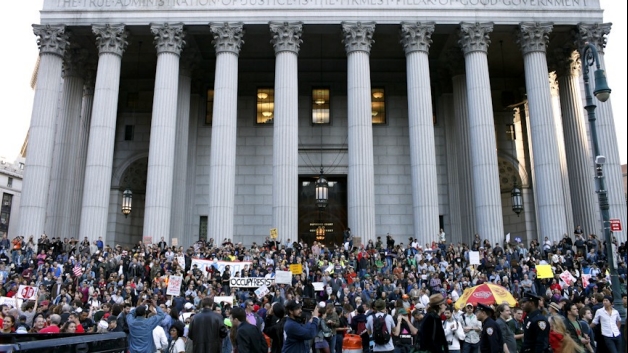
Supreme Court protests: pointless when anyone else organizes them, unethical when the White House organizes them.

I was stunned by the news reports of the White House organizing pro-Obamacare demonstrations outside the Supreme Court, and then found myself stunned that I was stunned.

It should have been obvious to all, which includes me, that President Obama and Democratic supporters of Obamacare were so determined to pass this mess that it stopped mattering to them long ago what democratic and constitutional principles were nicked, warped, distorted and violated in the process. This should be obvious regardless of whether one likes the final product (as if anyone knows what that really is, even today—principle nicked: transparent government).

The final bill was passed with a series of legislative maneuvers that had never been mustered all in the support of one controversial bill (principle warped: process and representative democracy); it was built on an expansion of Congressional power the is either unconstitutional or a frightening slippery slope (principle distorted: individual freedom); the individual mandate was (and is) simultaneously sold to the public as not being a tax while argued to the courts as one (principle violated: honesty and integrity), the Congressional Budget Office’s verdict was obtained using accounting tricks and deceitful projections (principle nicked: fairness); and misrepresentation was the norm on both sides of the debate (principles violated: respect for the public; candor, transparency and honesty). Now that the President is already campaigning for re-election and the health care law remains his signature accomplishment—if you consider it that and not a fiasco—the White House has made it clear that, while it may not be fair to say it will stop at nothing to save it, what it won’t stop at to protect the measure is a damning indictment of its integrity.

From the New York Times, one of the few non-conservative media sources to cover the story: Continue reading

Ethics Hero: Fox

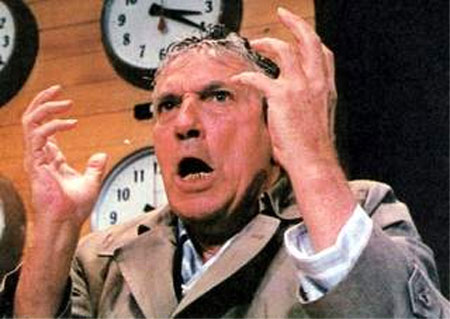
Now if you want to see a mad prophet on TV, you'll have to watch "Network." Thank you Rupert, Roger, Fox!

The Fox network, in ending its relationship with Glenn Beck after the expiration of his current contract as it announced yesterday, placed principle over profit. In today’s culture particularly, that is always a welcome development, an ethical one, and deserving of praise.

I can comfortably assign Fox Ethics Hero status and discount the braying from partisan Beck-haters like Media Matters, the shamelessly one-sided “media watchdog” that has declared “war” on Fox because it dares to deliver news from a generally conservative perspective. Beck was not brought down by their attacks, or by the boycotts against him by various interest groups. His show was still one of the most watched current events programs on cable, and Fox was still making money on it. The demise of Glenn Beck’s Fox show was not an example of successful suppression of conservative opinion by the Left. Continue reading

TARP Ethics Dilemmas: A Guide For Advocates and Critics

Surprise! The TARP bailout of October 2008 seems to have turned out remarkably well.  The Troubled Assets Relief Program, which was and still is attacked by conservatives and Tea Party critics as a $700 billion bailout for Wall Street giants who should have been allowed to fail, is now anticipated to eventually only cost the federal government about $25 billion, according to the Government Accounting Office.

When a policy that is widely criticized as wrong-headed in principle actually works, it presents ethical problems for both advocates and critics alike.

A few helpful tips: Continue reading

The Facebook Founder’s Sinister and Unethical Hundred Million Dollar Gift

When is a hundred million dollar gift to help schools unethical?

It is unethical when it represents the power of money taking control of government. It is unethical when it induces politicians to breach their duty to obey the law. It is unethical when it demonstrates that the principles of democracy and law can be bought, sold, and distorted for a price.

In a shocking development last week that received very little thoughtful or critical coverage from the news media, Facebook mogul and co-founder Mark Zuckerberg gave the Newark schools $100 million in return for dictating how the schools are run. Zuckerberg, backed by Oprah Winfrey, another billionaire, who put the school governance sale on her TV show,  wants Newark Mayor Cory Booker to run them.  New Jersey Governor Chris Christie, who also appeared on the strange Oprah segment, has agreed in principle to make Booker the overseer of his city’s infamously bad school system. As for the fact that a New Jersey statute doesn’t allow the governor to put the mayor of a city in charge of its schools once the state has taken over control of them, well, money, not the law, rules in New Jersey, and that appears to be just dandy according to the state’s governor, Zuckerberg, Oprah, Republicans, Newark parents, news editors and citizens.

Meanwhile, that whirring sound you hear is Thomas Jefferson spinning in his grave. Continue reading