The Seventh Annual Ethics Alarms Awards: The Best of Ethics 2015, Part II

DavisHand

The Awards continue (Part I is here)….

Most Important Ethical Act of the Year:

The US Supreme Court’s Decision in  Obergefell v. Hodges in which the Supreme Court considered whether states had to recognize a right to same-sex marriages, and narrowly decided that they must. The prejudice against homosexuality is ancient, deep, and complex, mixed up in confounding ways with morality and religion, and deeply divisive. Nonetheless, I felt that the opinion should have been unanimous; it’s a shame that it was not, but in the end, this will not matter. The result was preordained from the moment gays began coming out of the shadows and asserting their humanity and human rights. Since the Stonewall riot, the nation and the culture has learned a great deal about the number of talented and productive gay men and women in our society and our history, the pain, ostracizing, discrimination and mistreatment they have suffered, and the falseness of the myths and fears that lead to this suffering.  In the end, as Clarence Darrow said about blacks, it is human beings, not law, that will make gays equal. No topic immediately causes such emotional and intense debate, on this blog or in society, as this one, but the Supreme Court’s decision is a major step toward changing the ethical culture, by asserting  that gay men and women have the same rights,  in the eyes of the state, to marry those they love and want to build a life with, and by implication, that the beliefs of any religion regarding them or their marriages cannot eliminate that right.

Outstanding Ethical Leadership

Senator Rand Paul.   I am neither a Rand Paul supporter, nor an admirer, nor a fan.  However, his June filibuster-like Senate speech against National Security Agency counter-terrorism surveillance was a brave, principled,  important act, and a great public service. The point Paul made needs to be made again, and again, and again:  there is no reason to trust the NSA, and no reason to trust the current federal government either. The fact that on security matters we have no real choice is frightening and disheartening, but nevertheless, no American should be comfortable with his or her private communications, activities and other personal matters being tracked by the NSA, which has proven itself incompetent, dishonest, an untrustworthy.


Parent of the Year

Tonya Graham

Toya Graham, the Baltimore mother caught on video as she berated and beat on her son in the street for participating in the Freddie Gray rioting and looting. Continue reading

Is There An Ethical Obligation Not To Allow Idiots To Have Decision-Making Power In State Governments? The Case Of Flipper’s Privacy…

dolphins

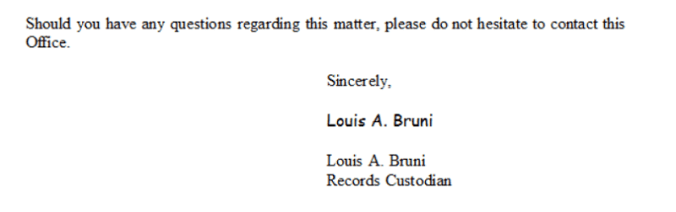
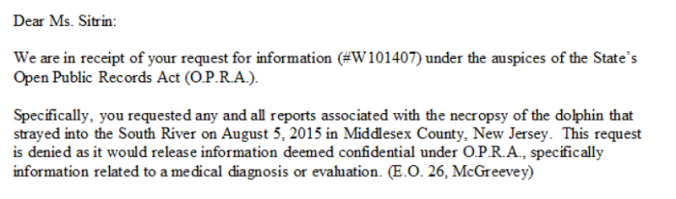
A dolphin died in New Jersey’s South River last year, so a blogger sought to discover what killed it. She duly filed a public record request to the NJ Department of Agriculture for the results of the dolphin’s autopsy.The Department turned down her request, on the grounds that it violated the amended Public Records Act, which includes an exception for HIPAA information, including diagnosis and autopsies:

Dolphin privacydolphin privacy 2That’s right: New Jersey wants to protect the dolphin’s privacy. No, there is no dolphin autopsy exception to New Jersey’s law, and no cetacean privacy inclusion in HIPAA. On the off-chance that it isn’t obvious, Louis Bruni is an idiot.

This should be funny, I guess, but my patience with fools and dolts making life more difficult, expensive, inefficient and frustrating has about run out. My rapidly developing theory on crazy people starting to shoot other, thus-far less crazy people is that constant contact with the Louis Brunis of the world drive them to it, when combined with hopelessly bewildering technology and outrageously complicated rules, laws, regulations and procedures and the brazen dishonesty and corruption of so many of the “public servants” who are pledged to care about our welfare.

One day a delicate soul, their sanity on the ragged edge, makes a simple request, not even in an important matter, and are foiled by someone who thinks Dead Flipper has privacy rights, and who nonetheless has his salary paid by taxpayers. Out of the millions and millions of Americans who cope with this crap every day, day after day, an infinitesimal percentage of the public can’t handle that one extra insult to logic and common sense. and snaps like a dry twig in the wind. Like Sweeney Todd, their now damaged mind concludes that there are two groups of human beings, those who make everyone else miserable because they are evil, stupid, or both, and those who are the first group’s helpless victims. “Kill them all!” the now deranged victims of our Brunis conclude: killing the miscreants is just, and killing their suffering victims is merciful.

And off they go.

Now imagine layer and layer of Brunis, up and down all levels of government, sometimes reaching executive levels with access to real power. You know, like Joe Biden. John Kerry. Michele Bachmann. No, don’t. We have enough crazy people all ready.

Here…this will calm you:

UPDATE: Here we discover that Mr. Bruni previously was fined for lying about attending….required ethics classes! [Pointer: Phil Alperson]

_________________________

Pointer: Fred, one of his best.


Observations on the Great Baseball Game Sorority Selfie-Shaming Affair

Screen-Shot-selfie girls

I was going to skip this one as too stupid even for my intrigue, but the combination of baseball, selfies, privacy, the generation gap, The Golden Rule, cultural rot…and those pictures above… is too much to resist.

In a now viral video clip, about a dozen comely members of the Alpha Chi Omega sorority attending the Arizona Diamondbacks-Colorado Rockies game this week were put on camera to serve as fodder for TV broadcasters Steve Berthiaume’s and Bob Brenly’s ridicule. The reason they were on camera is that it was an unusually attractive bevy of maidens, and that they were engaged in something that could best be called a selfie orgy. It went on and on as the announcers snickered, saying things like…

“Do you have to make faces when you take selfies?”

“Wait, one more now. Better angle. Oh, check it. Did that come out OK?”

“Here’s my first bite of the churro. Here’s my second bite of the churro.”

“That’s the best one of the 365 pictures I’ve taken of myself today!”

“Welcome to parenting in 2015!”

“Every girl in the picture is locked into her phone. Every single one is dialed in. They’re all just completely transfixed by the technology.

“‘Help us, please! Somebody help us!'”

As the internet weighed in, the girls found themselves being defended by most commentators, at least by most commentators under 40.

Observations: Continue reading

NO NO NO Children, Buzzfeed: You May NOT Do This, For It Is Creepy And Unethical

An unethical cascade...

An unethical cascade…

Before we commence, I do want to thank all of you are keeping me away from Hillary and Trump with more horrible ethics stories than I can keep up with.

Now that I’ve got that over with:

In what warped, sick universe is this kind of thing considered ethical?

Gad. It’s a veritable unethical cascade:

First, high school students takes surreptitious photos of their teachers while they should be, you know, getting educated…

Second, the students post the photos, which have not been consented to by the teachers, on Instagram…

Third, the students add salacious or otherwise provocative comments about the teachers as objects of their lust…

Fourth, the bottom-feeding website BuzzFeed picks up the photos and puts them in a feature called “13 Really Hot Teachers That Will Have You Begging For Detention.”…

How unethical is this? Let me count the ways… Continue reading

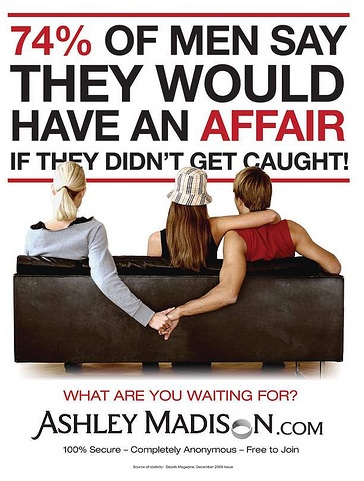
The Ashley Madison Files

The Gawker Mess: Is Integrity A Virtue When It Means Continuing An Unethical Policy?

gawker1The website Gawker is reeling in the aftermath of particularly Gawkerish  (that is, slimy) story exposing the efforts of a high-ranking male official at Gawker rival Conde Nast to secure the services of a male prostitute.  Following backlash even from those who usually tolerate  Gawker’s smug invasions into celebrity privacy, Nick Denton, the president of  Gawker Media, had the story taken down. He then wrote a post titled “Taking a Post Down,” defending his executive action.  Gawker Editor-in-Chief Max Read and Gawker Media Executive Editor Tommy Craggs resigned, and the editorial staff has protested the episode, noting that “business executives deleted an editorial post over the objections of the entire executive editorial staff.”

First, regarding Gawker’s plight: good. Couldn’t happen to a more deserving website. Second, and more controversial is this interesting ethics question that we don’t encounter very often outside the realm of “The Godfather” films: Is integrity applied to an inherently unethical culture a virtue?

When the Conde Nast outing story received furious blowback from media critics but also gay activists, who are flying high right now and thus not to be crossed, Craggs proposed that Denton issue a statement that Gawker was founded as a media gossip site and had always “unapologetically and often mercilessly” invaded the private lives  those who work in  the industry. “We stand by the story, which meets our simple, unwavering standard of being both true and interesting,” the statement was to say.

That simple, unwavering standard is and has always been unethical. Gawker hurts people for fun and titillation, and makes a profit out of doing so. Printing what is “true and interesting” without considering whether the often prurient interest factor outweighs the harm to the individuals and their families done by the site’s prying is inherently unfair and irresponsible. The pulled story was not atypical, but then Gawker has been typically immune to shame and decency. What had changed?

Denton’s various explanatory statements are ethically inert—not surprising, since he founded this monstrosity. Continue reading

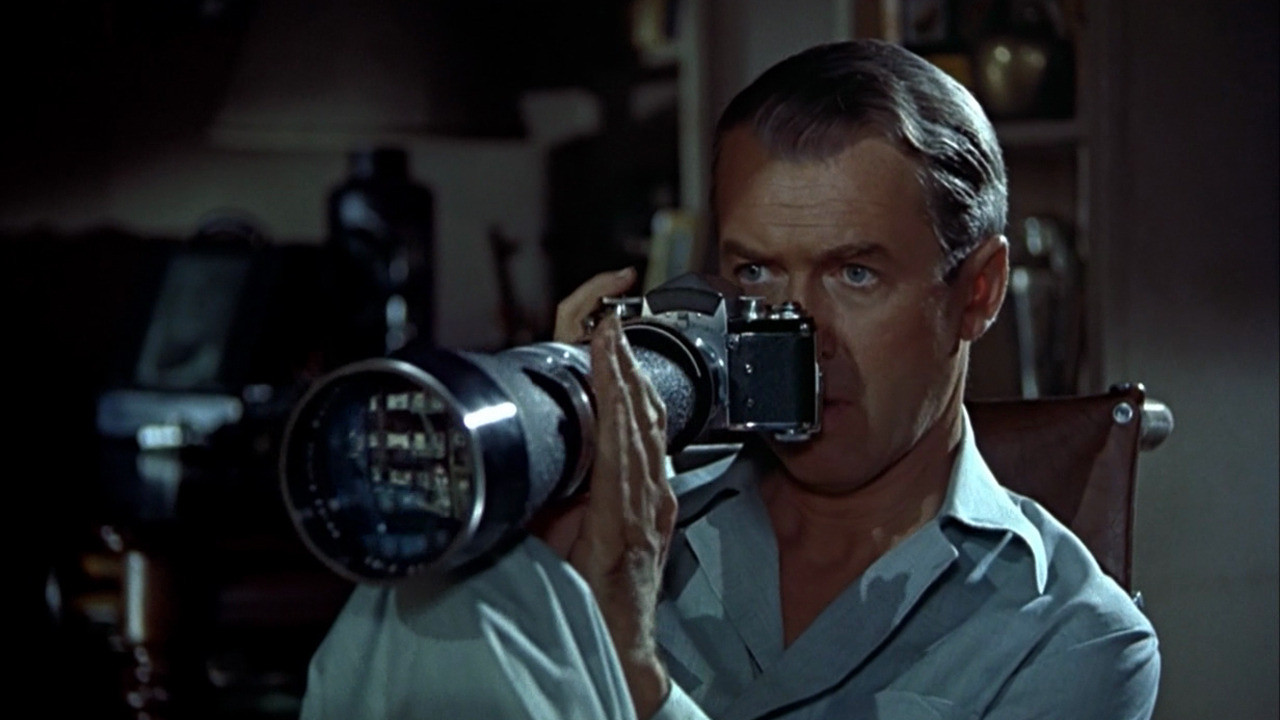
Ethics Quiz: “Rear Window” Ethics At The Ball Game

RearWindow1

The New York Daily News recounts the tale of two sisters attending an Atlanta Braves game who exposed a man’s cheating wife by taking photos of her as she apparently sexted another man with her arm around her husband. Delana and Brynn Hinson posted photos of her texts on Twitter.

The sisters said they slipped a note to the woman’s suspected husband as he was leaving, which read,

“Your wife is cheating on you. Look at the messages under Nancy! It’s really a man named Mark Allen.”

You can read the details—accurate or not—here.

I don’t care if the story is exactly as it was reported. Let’s assume it is.

The Ethics Alarms Ethics Quiz for the day is this:

Did the sisters behave ethically when they informed the husband about his wife’s secret texting?

Continue reading

Why Ethics Rules Are Useless Without Common Sense

HIPAA

An ethicist’s pet peeve: People who misuse formal ethics rules to justify unethical or stupid behavior because they never thought about what why the rule exists.

This happens a lot. My favorite example was the famous athlete enmeshed in a scandal. Ay a press conference, he said that he couldn’t answer specific questions because of “atttorney-client privilege,” and not one of the reporters had the education to say, “Huh? You’re the client! The attorney-client privilege prevents your lawyer from revealing what you told him. It doesn’t stop you from revealing anything, you cretin.” In my seminars, when an attendee cites a professional ethics rule as the reason why he shouldn’t do something, I often ask, “And why is that a rule? What’s wrong with what it forbids?” Often, disturbingly often, the individual has no idea.

The New York Times today featured another example: medical providers and others not even subject to the law using HIPAA to avoid giving out information they could and should give out, in mots cases misinterpreting the law to do so. Among the examples in the Times story:

  • A retirement home refusing to tell friends of a resident that the resident had died (only health care providers, health insurers, clearinghouses that manage and store health data, and their business associates are covered by The Health Insurance Portability and Accountability Act of 1996. a.k.a. HIPAA)
  • A hospital that  refused to accept information about a patient’s allergies from the patient’s daughter (Wow: hospitals can receive medical information; HIPAA restricts the ways they can disclose it)
  • Another relative of a patient reprimanded by hospital staff for talking about her loved one’s medical problems in the cafeteria, because, she was told, it was a HIPAA violation.
  • A minister told a church staff not to announce the names of ailing church members because it was would violate HIPAA  (That’s right: he really thought it was against the law to tell congregation that someone was sick.)
  • Some providers cite HIPAA to block patients from seeing their own records.

This is why morality alone doesn’t make people ethical, especially if they aren’t very bright. Continue reading

Hail Trump, King Of Signature Significance!

Because Senator Lindsey Graham properly said that Donald Trump needed to stop acting like a jackass and should get out of the Presidential race, Trump gave out the Senator’s cell-phone number.

Of course he did.

I almost wrote a post yesterday about how some right-wing pundits apparently have no concept of right and wrong, crippling them in matters like the Donald Trump campaign. I listened in amazement–I actually had to pull off the road, so as not to crash—as Sean Hannity and another right-wing fool (I didn’t catch his name) went on and on about how if only Trump could avoid “mistakes” and “self-inflicted wounds” what a great candidate he would be, and how impugning the courage of a war hero like John McCain was such bad strategy, because it distracted from his message. These people really understand nothing, not ethics, not common sense, not character, and certainly not signature significance, even though Donald Trump is the living embodiment of the term.

Signature significance, which is used often here, means that a single instance of conduct can be so remarkable that it allows an accurate assessment of the character of the individual engaging in it. It comes from the world of baseball statistical analysis, and the example is a starting pitcher allowing no runs, striking out 15, not walking a batter and giving up less than five hits in a complete game, 9 inning performance. Doing this just once is enough evidence to conclude, decisively and validly, that the pitcher involved is a superior one. Why? The reason is that the history of baseball shows that literally no pitcher who isn’t great can pitch even one game that good.

In ethics, signature significance refers to an act so blatantly wrong and yet intentional that no ethical individual would ever do it, even once, or a statement showing such complete ethics ignorance that it alone justifies withholding trust from anyone who would say it, even once. Ethics dolts like Sean Hannity really think that public figures who have shown beyond all doubt that they don’t know what ethical behavior is will suddenly be able to act ethical if they just try a little harder.  Donald Trump is the perfect example of why that is ridiculous, yet here Hannity was, yesterday, applying that logic to Donald Trump.

Trump is the epitome of signature significance. Again and again he has done and said things that if they were the only thing we had ever heard about the man, it would be sufficient to conclude with near 100% confidence that this guy is 1) untrustworthy and/or 2) dumb as a brick. Continue reading

Ethics Quiz: The Obamas’ “Private Party”

prince

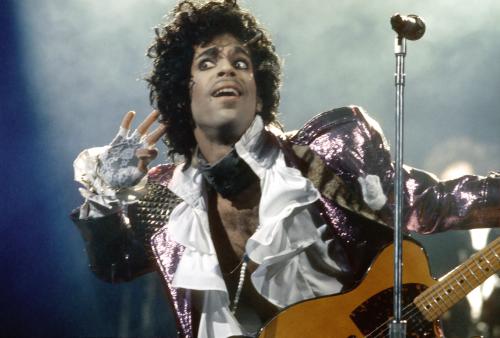
President Obama and his wife, Michelle invited about 500 guests to a White House party where pop icons Prince and Stevie Wonder entertained guests. Among the guests were Al Sharpton, Seattle Seahawks quarterback Russell Wilson and his date, singer Ciara, Jon Bon Jovi, James Taylor, Tyler Perry, Connie Britton, Angela Bassett, Gayle King, Tracee Ellis Ross, fashion designer Naeem Kha, American Express exec Ken Chenault,  former Attorney General Eric Holder, Education Secretary Arne Duncan and National Security Adviser Susan Rice, as well as about 480 others of doubtlessly equal glitter who didn’t squeal about the blow-out on Twitter or Instagram or who weren’t mentioned by other guests who did.

The party was not mentioned on the President’s official schedule, and it almost managed to occur without publicity until the White House news briefing on Monday afternoon, when Josh Earnest was grilled about it. The White House spokesman said two interesting things, one audacious in its blatant dishonesty and Orwellian logic, and the other ….interesting. The first:

“I think the fact that we’re talking about a private event and the fact that details of this are known is an indication that the president is committed to being transparent. At the same time, the president and first lady are going to reserve the right to host private parties at the White House, and they did it on their own dime.”

Further proving how transparent the President was, Earnest announced that no guest list would be provided to the press or the public. Now that’s transparency. The other statement:

[T]”he President and First Lady are going to reserve the right to host private parties at the White House, and they did it on their own dime. I think that’s consistent with the kinds of values that they have talked about.”

Your Ethics Alarms Ethics Quiz of the Day:

“Are there any ethical problems with the Obama’s “private party”?

Continue reading