Ethics Quiz: The Obamas’ “Private Party”

prince

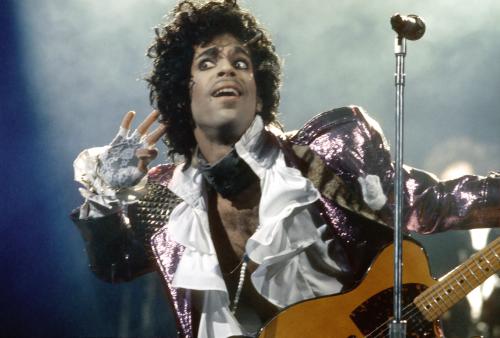
President Obama and his wife, Michelle invited about 500 guests to a White House party where pop icons Prince and Stevie Wonder entertained guests. Among the guests were Al Sharpton, Seattle Seahawks quarterback Russell Wilson and his date, singer Ciara, Jon Bon Jovi, James Taylor, Tyler Perry, Connie Britton, Angela Bassett, Gayle King, Tracee Ellis Ross, fashion designer Naeem Kha, American Express exec Ken Chenault,  former Attorney General Eric Holder, Education Secretary Arne Duncan and National Security Adviser Susan Rice, as well as about 480 others of doubtlessly equal glitter who didn’t squeal about the blow-out on Twitter or Instagram or who weren’t mentioned by other guests who did.

The party was not mentioned on the President’s official schedule, and it almost managed to occur without publicity until the White House news briefing on Monday afternoon, when Josh Earnest was grilled about it. The White House spokesman said two interesting things, one audacious in its blatant dishonesty and Orwellian logic, and the other ….interesting. The first:

“I think the fact that we’re talking about a private event and the fact that details of this are known is an indication that the president is committed to being transparent. At the same time, the president and first lady are going to reserve the right to host private parties at the White House, and they did it on their own dime.”

Further proving how transparent the President was, Earnest announced that no guest list would be provided to the press or the public. Now that’s transparency. The other statement:

[T]”he President and First Lady are going to reserve the right to host private parties at the White House, and they did it on their own dime. I think that’s consistent with the kinds of values that they have talked about.”

Your Ethics Alarms Ethics Quiz of the Day:
“Are there any ethical problems with the Obama’s “private party”?

Continue reading →

Ethics Quote Of The Week: The Sunlight Foundation

We will honor Twitter’s latest decision, but it stands at odds with a fundamental understanding of our democracy. A member of Congress does not and should not have the same expectation of privacy as a private citizen. Power can only be accountable with a generous application of transparency.

—The Sunlight Foundation, announcing the demise of its service Politwoops, a site that tracked and preserved tweets deleted by hundreds of politicians.

Maybe a better logo would have helped...

Maybe a better logo would have helped…

Twitter, without explanation, changed its stance on Politwoops, which allowed the public to see tweets that politicians, upon reflection, decided that they didn’t want the news media, constituents or opponents to see.

Says the Sunlight Foundation:

What our elected officials say is a matter of public record, and Twitter is an increasingly important part of how our elected officials communicate with the public. This kind of dialogue between we the people and those who represent us is an important part of any democratic system. And even in the case of deleted tweets, it’s also a public part — these tweets are live and viewable by anyone on Twitter.com and other platforms for at least some amount of time….Politwoops was created because public communications from public officials should be available to anyone who wants to see them. The site isn’t just about blunders, but rather revealing a more intimate perspective on our politicians and how they communicate with their constituents. It has created a unique lens to reveal how the messages from elected officials can change without notice or explanation — because Politwoops did not allow for such reversal of messaging to quietly be swept under the rug.

But Twitter is a private business, and can make whatever policies it wants.

I wonder who got to them…

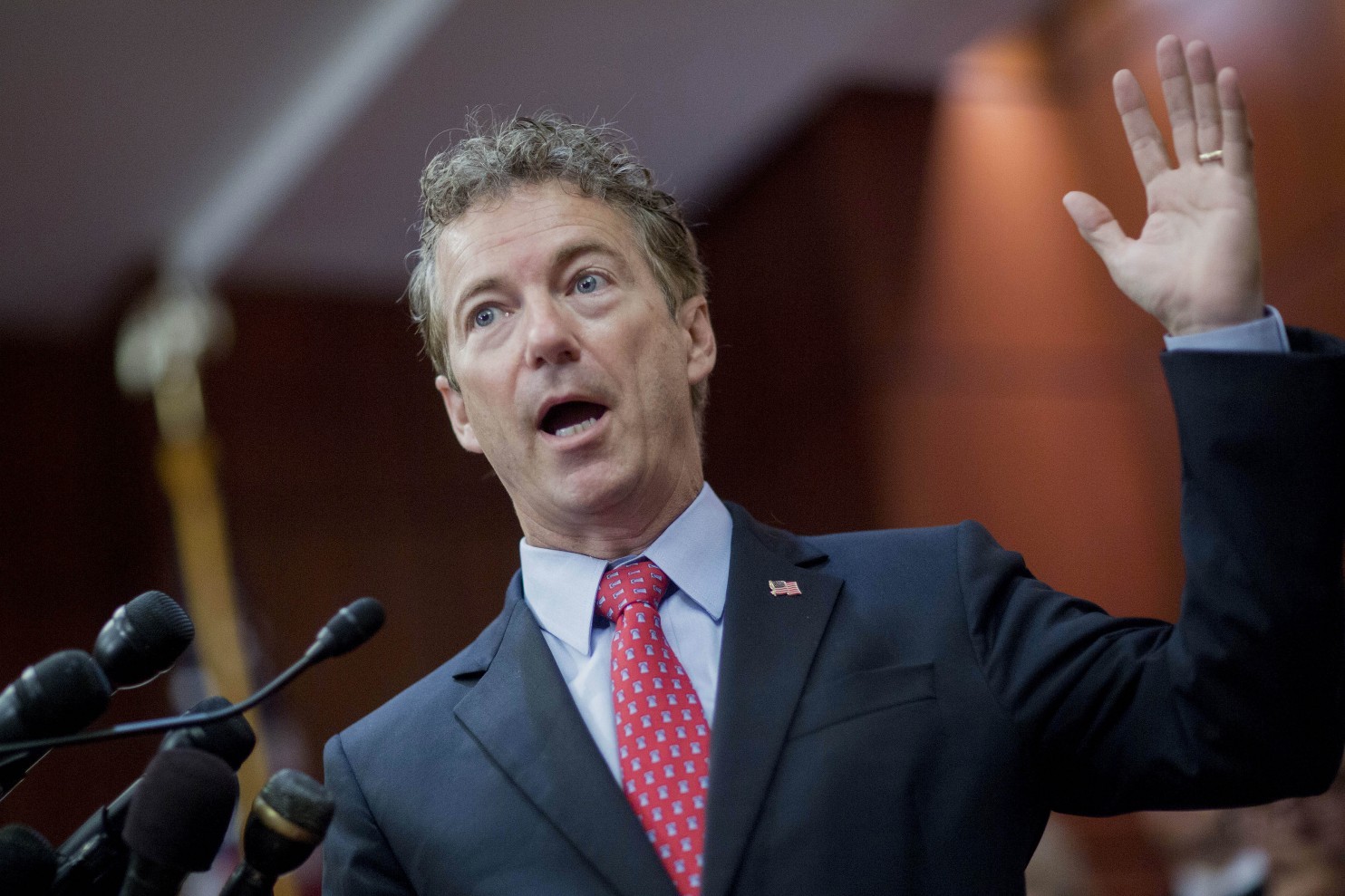
Ethics Hero: Senator Rand Paul

Thanks, Snator, we needed that.

Thanks, Senator, we needed that.

Rand Paul has disqualified himself from being considered for the Presidency by rational voters in many ways. His suggestion to MSNBC’s Rachel Maddow that he would have waited for market forces to end Jim Crow, and voted against portions of the Civil Rights Act was enough all by itself. Paul’s embrace of isolationism—he often sounds like Michael Moore on foreign policy—is as fanciful as it is dangerous.  He has no executive experience, and based on some of his statements (and positions), I’m convinced he’s just not very smart.

Not only that, but he is the most arrogant candidate in a field that may contain Chris Christie, and that’s incredible.

Nonetheless, his filibuster-like Senate speech against National Security Agency counter-terrorism surveillance, forcing key portions of the Patriot Act to expire, was a brave, principled, and important act. In the end it was also a futile act, and the Senate quickly passed provisions that Paul opposed. The Daily Beast headlined the story, “It’s NSA 1, Rand Paul 0.”

It was still a public service. Yes, Paul alienated most of his party, and he took a huge risk: a single terrorist attack here will automatically turn him into a national pariah, and coming the same week that we discovered conclusively that the TSA is a joke, the chances of such an event occurring seem likelier than ever. (Saying, however, as Paul did, that “people here in town …secretly want there to be an attack on the United States so they can blame it on me” was inexcusably  stupid. Really? People want to see American citizens die to make Rand Paul look bad, when he makes himself look bad on a regular basis?) The point Paul made, however, and it needs to be made again, and again, and again, is that there is no reason to trust the NSA, and no reason to trust the current federal government either. The fact that on security matters we have no real choice is frightening and disheartening, but nevertheless, no American should be comfortable with his or her private communications, activities and other personal matters being tracked by the NSA, which is incompetent (See: Snowden, Edward) and which lies, or the Obama Administration, which doesn’t care if the NSA lies, and has repeatedly shown that it has no qualms about violating the Constitution until a Court stops it. Continue reading →

Comment of the Day: “What’s Going On Here?” Ten Ethics Observations On The Miami Beach Police Force Racist E-mails”

praise

Nothing makes me consider  shouting praise to the skies like the situation I just experienced. I find myself in a hotel, away from home, waking up feeling sick, having to prepare for a two hour ethics lecture to young lawyers and knowing that writing a new Ethics Alarms post will either make me frantic or result in a product even more riddled with typos than usual. And there it is! A worthy Comment of the Day, allowing me to present high quality ethics content that I don’t have to write myself, giving me time to work, get back home and think. (Unless I die first, because boy, do I feel lousy.)

The perfectly-timed COTD in question is by the commenter formerly known as  Penn, and involves a topic that I am speaking about this morning, e-mail. I don’t even mind that he doesn’t agree with the statements that sparked his comment: that police should be required under threat of dismissal to report racist -mails from colleagues, and that workplace e-mails have to be monitored by responsible supervisors. Here is SamePenn’s Comment of the Day on the post, “What’s Going On Here? Ten Ethics Observations On The Miami Beach Police Force Racist E-mails.”

And thank you, thank you, thank you! Continue reading →

Obama Administration Ethics Train Wreck Update: The James Clapper Perjury Follies

NSA head James Clapper testifying, forgetting, speaking in code, misleading or lying. Something. Whatever.

NSA head James Clapper testifying, forgetting, speaking in code, misleading or lying. Something. Whatever.

The Obama Administration not only lies, but encourages and rewards lying. This is an inescapable conclusion. The saga of James Clapper’s perjury before Congress is a perfect, and depressing example.

At a March 2013 Senate hearing, Senator Ron Wyden, prompted by the leaks of classified information through Edward Snowdon, asked head of the NSA James Clapper, “Does the NSA collect any type of data at all on millions or hundreds of millions of Americans?”

“No, sir,” Clapper replied. “Not wittingly.”

That means, by any assessment, “If we do, it’s not intentional.” That was a lie. Clapper knew it was false. Wyden later said that he had sent his question to Clapper’s office a day before the hearing, and after the hearing had given Clapper’s office a chance to correct the misstatement after the hearing, but it did not. In June, the nation learned that the agency was routinely collecting data on the phone calls of millions of Americans. (This was the program just declared illegal by a federal court.)

NOTE: The original post erroneously attributed the decision to the Supreme Court. It hasn’t heard the case yet. That was a bad and careless mistake, and I apologize for it. Nothing like not checking your own links, Jack.

The government, including Clapper, has now attempted a dizzying array of rationalizations, excuses and obfuscations to avoid the unavoidable conclusion that Clapper lied to Congress while under oath, that he should be prosecuted, or at very least be fired by that leader of the Most Transparent Administration in History That Somehow Manages To Lie every Time A Mouth Open, Barack Obama. Even by the standards of this sorry administration, it’s an ugly journey into the cold heart of an untrustworthy government. Continue reading →

Another TV Doctor, Another Breach: Dr. Sanjay Gupta’s Heroic And Self-serving Ethics Blindness

Are TV doctors entertainers, journalists or doctors? In a way the question doesn’t matter: if they are doctors, then they are obligated to follow medical ethics and the standards of their profession at all times, no matter what else they may be taking compensation for. This is why “Dr. Oz” is ducking the issue when he tries to avoid accountability for pushing quack remedies on his TV show (if it ducks like a quack…) by arguing that he isn’t practicing medicine, but engaging in entertainment. He’s still a doctor, every second of his life, once he takes that oath.

CNN’s Dr. Sanjay Gupta has largely steered clear of ethical issues in his tenure as the network’s medical expert. Not entirely, however; for example, in 2009, he was prominently mentioned as a possible Surgeon General, and was in discussions with the White House while continuing his reporting on the air, raising real and potential conflict of interest concerns. The most recent controversy is more serious. Continue reading →

When Do Private Text Messages Between Two Individuals Justify Punishment?

text

I’d like to say “never,” except that when especially offensive private text messages become public, they aren’t private any more. As with e-mails, any time you send a text message that you know will embarrass you if it falls into malign hands or is seen by righteous eyes, you have authored the means of your potential destruction.

That’s not right, but that’s the way of the world.

Thus a Washburn University Phi Delta Theta fraternity member posted a photo of a man with a topless woman in bed as part of a fraternity text exchange following a chain of crude text messages between frat members. These were obtained by The Topeka Capital-Journal on a slow news day—Wow! Stop the presses! College guys are crude!-–and before you could say “thought control,” the national Phi Delta Theta organization suspended the Topeka campus chapter.

“We are very concerned by the messages reviewed thus far. Phi Delta Theta is a values-based organization and any behavior or statement contrary to those values is subject to significant action,” Phi Delta Theta spokesman Sean Wagner said in a statement. Naturally, the chapter president then grovelled an apology. Continue reading →

The Irony Of Wikileaks: Yes, It Is Despicable…But It’s Still Useful To Know That PBS, Ben Affleck And Prof. Henry Lewis Gates Are Despicable Too.

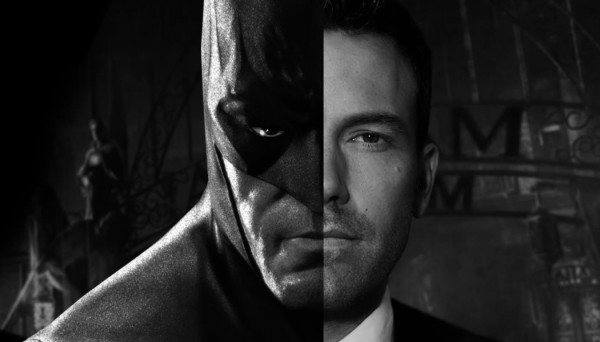
Batman is ashamed of you, Ben...

Batman is ashamed of you, Ben…

Once a secret is out, it isn’t a secret any more. Once privacy is shattered, it’s gone: that egg can’t be put back together again. I wish Sony’s e-mails hadn’t been hacked: everyone who isn’t operating under a policy that mandates that their communications must be archived and available for media and public examination, like, oh, say, Hillary Clinton, has a right to have private business and personal communication.

Julian Assange is a fick, and an uncommonly arrogant one. He encourages, aids and abets the theft of proprietary information in the interests of world anarchy, which is in the interests of nobody. So let’s see now…North Korea hacks Sony to chill our First Amendment rights, and Wikileaks helps magnify the damage by spreading private e-mails and documents far and wide.

Yechhh.

But it’s all out there now, and there is no virtue in averting our eyes and plugging our ears. There is a lot of unethical conduct exposed in those 30,000 documents and 170,000 emails hacked from Sony, and while the means by which it was exposed was illegal and wrong, we should still learn from what is now public information.

The fact that PBS and Harvard prof Henry Louis Gates Jr. can’t be trusted, for example, is good to know. Continue reading →

Unethical App: Yik Yak

The cute Yik Yak mascot, hanging out at a fraternity, where ethics go to die.

The cute Yik Yak mascot, hanging out at a fraternity, where ethics go to die.

Yik Yak is a suddenly surging social media app that is running viral on college campuses. The app allows users to post anonymous messages (“yaks”) that only appear to users within a 1.5-mile radius. The New York Times called it “ a virtual community bulletin board—or maybe a virtual bathroom wall at the student union.”

Yik Yak is unethical.

There.

Yik Yak was created in late 2013 by Tyler Droll and Brooks Buffington, fraternity brothers (and based on their names, escapees from a Dickens novel) who came up with the idea after seeing that there were only a handful of popular Twitter accounts at Furman College, where they were frat brothers, almost all belonging to campus big shots and athletes. With Yik Yak, they say, they hoped to create a more “democratic social media network” where users didn’t need a large number of followers or friends to have one’s thoughts read widely. Continue reading →

The Strange And Unethical Case Of The Aging, Ageless, Part-Time Actress

Cheer up, Junie! Remember the sage words of the great Satchel Paige: “How old would you be, if you didn’t know how old you was?”

Cheer up, Junie! Remember the sage words of the great Satchel Paige: “How old would you be, if you didn’t know how old you was?”

In October of 2011, Ethics Alarms offered an Ethics Quiz that asked, “Did the Internet Movie Data Base do anything unethical by publishing the actress’s real age without her permission?” The occasion was a lawsuit asking for over a million dollars in damages by an anonymous film actress who claimed that Amazon’s Internet Movie Data Base harmed her career by researching and publishing her real age without her permission. My conclusion at the time was that Actress X was

“shooting at the wrong villain. If there is age discrimination in Hollywood, confront it: a number shouldn’t disqualify her from any roles at all. I am not saying that fighting such a long-standing tradition in the show business culture isn’t a daunting task, but that’s the real problem, not a web service that conveys information about movies and movie stars by publishing facts.”

Well, it’s almost four years later, this dubious case has wound its way to trial, and we are now learning some fascinating things: Continue reading →