Ethics Hero Emeritus: Actress Jean Stapleton (1923-2013)

Edith Bunker, being stifled.

Edith Bunker, being stifled.

Jean Stapleton, the superb character actress best known as “Edith Bunker” from “All in the Family,” has died. She exemplified the actor who, given the chance to use her talents for cultural good beyond mere entertainment, not only did so but did so beyond all reasonable expectations.

Edith Bunker, the submissive, not-too-bright, loving, loyal and thoroughly confused character she played on the 70’s sitcom, always broke my heart. I found Stapleton’s portrayal difficult to watch, even when she was too funny to resist. Edith was an abused spouse who didn’t realize she was being abused. I think many women who were similarly abused resolved to change the course of their lives because watching Stapleton accept being “stifled” and insulted by the man she loved made them recognize the pattern they had accepted too. Yet Edith Bunker, in Stapleton’s hands, made “All in the Family” more than the portrait of a redneck bigot and his enabling wife, broadcast to be mocked by smugly liberal viewers reveling in their intellectual and moral superiority. We felt Archie was redeemable—as indeed the show slowly revealed that he was—-beyond his hard-wired prejudices, in part because such a sweet, good woman loved him. (The other parts included the superb writing of the characters and Carroll O’Connor’s nuanced Archie.) What an achievement Stapleton accomplished by playing a negative stereotype in a way that both promoted sympathy, understanding and rejection, while never becoming so ridiculous that the audience stopped caring about her. She deserved every one of her eight Emmy nominations and three awards: in fact, she smoked the competition every year. There wasn’t a better or more important  performance, male or female, on TV while “All in the Family” was on the air.

That’s not why Jean Stapleton is an Ethics Hero Emeritus, however. Continue reading

Comment of the Day: “‘The Ethicist’ and the Doctor”

"Your secret is safe with me, but I have to ask...what that stolen Renoir doing up there?"

“Your secret is safe with me, but I have to ask…what that stolen Renoir doing up there?”

Jeff Long scores his first Comment of the Day with a welcome excursion into the thickets of medical confidentiality. As I expected, many readers were troubled by my support of strict patient-doctor confidentiality as dictates by AMA medical standards. Jeff does an excellent job elaborating on why I (and the professions like law, medicine and the clergy) take the position they do. In professional relationships, trust is essential, and you can trust professions that approve of breaching confidentiality when a damaging secret is involved.

Here is Jeff’s comment, on the post “The Ethicist and the Doctor.”

“First, with regard to Matthew’s example of the cheating spouse who contracts an STD, I think it would probably be difficult to come up with a better example of “the system working as intended.” In the world where doctors respect confidentiality, at least one person gets treated. In the world where the doctor blabs to the world (or at least, to the spouse), there’s a good chance that nobody does. In fact, if the cheater forgoes treatment out of fear of exposure, s/he is putting the spouse at even GREATER risk than in the former scenario, since the STD goes untreated and has a larger window in which to infect the spouse. Certainly, the ideal world is the one where the cheater gets treated AND confesses to the spouse, but the onus for that lies with the cheater. It’s not the doctor’s place. Continue reading

“The Ethicist” and the Doctor

It's all Greek to "The Ethicist"!

It’s all Greek to “The Ethicist”!

The third New York Times writer to take over the mantle of “The Ethicist” column, Chuck Klosterman, may be the most reliable yet, but he ended up wandering into the ethical weeds in his recent advice to an ethically-perplexed doctor, and engaging in advice column malpractice.

A physician asked him what was his ethical course when a patient divulged to him that his persistent headaches may have arisen from the stress of keeping a secret: he was responsible for a crime that had been pinned on an innocent man. Before the consultation, the doctor had promised his patient that “whatever he told me would not leave the room.”  Now the physician was having second doubts, and wondered if he was right to keep the confidence to his patient at the expense of an innocent man’s freedom and reputation.

Klosterman’s answer:

“I would advise the following: Call the patient back into your office. Urge him to confess what happened to the authorities and tell him you will assist him in any way possible (helping him find a lawyer before going to the police, etc.). If he balks, you will have to go a step further; you will have to tell him that you were wrong to promise him confidentiality and that your desire for social justice is greater than your personal integrity as a professional confidant.”

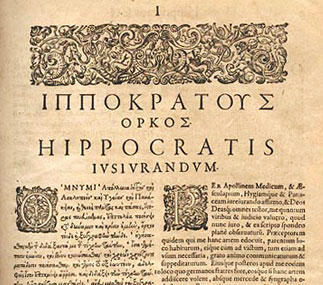
First of all, I don’t understand why a doctor is asking this question to a newspaper ethicist unless he doesn’t like what professional and medical ethicists are telling him. Klosterman, in reaching his reasonable-sounding but flat-out wrong reply, simply discards the concept of professionalism, beginning with the Hippocratic Oath…. Continue reading

Education Ethics Dunces: The Duncanville (Tx) School District And All Supporters And Enablers Of Jeff Bliss, Who Is Part Of The Problem With U.S. Education, Not The Solution

There are days when I despair of the nation and its society, when all the evidence points to a culture that has lost its way and is wandering deeper and deeper into the fog and mire. Today is such a day, and the Jeff Bliss saga is the perfect horrible exclamation point on my silent scream, which may go vocal any minute now.

To read the praise being heaped on Bliss, an 18-year-old Duncanville (Texas) High School sophomore, one would think he was a precocious education philosopher who spontaneously emitted the solution to the nation’s public school woes. In fact, what he did was strenuously object when he felt his teacher didn’t give the class long enough for an assignment, kept complaining when she ordered him to be quiet, and was quite properly ordered out of the classroom. This caused him to launch into a diatribe about her teaching methods, which was captured on a fellow student’s cell phone and put on YouTube. And here it is:

Continue reading

How Not To Quit Your Law Firm

"Bye! Come see me at my new firm! Just follow the trail of embers..."

“Bye! Come see me at my new firm! Just follow the trail of embers…”

The legal world is buzzing and tittering over a remarkable exit memo sent to firm clients and others by a disgruntled and departing partner at Ogletree Deakins. His detailed version of the events leading to his bitter good-bye was unusual enough that it was leaked to Reuters, and subsequently published elsewhere on the web. In legal circles, it is pretty viral at this point. Why? Because the author is a prominent employment lawyer, and the memo is the epitome of airing dirty laundry, burning bridges to ashes, and throwing a stink bomb on the way out the door…in short, it’s unprofessional conduct, and extremely so.

The diatribe begins with sensational allegation of management misconduct (but without names attached…these are lawyers, after all): Continue reading

Professionism 101: What Not To Do At Your Desk

desknonos_1

A confused commenter who wanted to take the side of that potty-mouthed TV broadcaster fired for making his first words on the job “…fucking shit” has argued that A. J. Clemente should be re-hired because “it could happen to anyone.” Wrong. It could not “happen to anyone,” I explained to her, because civil professionals don’t say “fucking shit” in public or on the job. A.J. is further displaying his cluelessness and gray matter deficit by trying to exploit his 15 minutes of infamy, appearing on Letterman and thus bidding to be known forever as “the guy who said ‘fucking shit’ in his first seconds on TV.”  Why would he think this is the way to start anew and make potential employers believe in his professionalism? Is he bidding to be a reality show cast member?

Who is advising this poor guy? Politicians, like Texas governor Rick Perry, go on shows like Letterman after a well-publicized gaffe to show they are good sports and that they understand that they messed up, but these are celebrities who are already famous for the mistake. For them,the  tactic is designed to remove the sting by laughing along with everyone else. For an unknown like Clemente to do this is self-destructive: it makes far more people aware of the embarrassing incident, it looks like he is exploiting his incompetence, and suggests that he doesn’t understand how serious his conduct was. Letterman doesn’t care if A.J. wrecks his future on the show; Dave just wants some cheap laughs. Not only is A.J. not professional or bright, he apparently has no friends or family members who are, either.

Well, enough of A. J. He has offered a vivid example of one kind of career-killing job conduct, and Salary.com has some more, in a feature it calls “Crimes in the Cubicle.” The list by Heather Dugan suggests 15 varieties of conduct to eschew at one’s desk, and it is all about professionalism, as well as etiquette, civility, decorm, dignity, office demeanor, respect for others…ethics, in short. It is a good collection: send the link to the young man or woman of your acquaintance who is starting their first office job. Or send it to A. J. Clemente.

Perhaps he should start here.

_______________________________

Source and Graphic: Salary.com

Ethics Hero: Michael Bublé

This video, and therefore the incident, is three years old now and viewed on YouTube by millions,  but it’s new to me, and it raises my opinion of Michael Bublé , an old-fashioned but youngish Vegas-style crooner in the Andy Williams mold, but cuter.

Here is what’s ethical about the singer’s spontaneous conduct:

  • He was kind. Few performers allow their concerts to be hi-jacked like this.
  • He was courageous. Professionals know that any time you give up control, anything can happen.  Bublé was confident that he could handle whatever came his way, but it is still a risk.
  • He was generous. His reaction to realizing the kid could really sing was pitch-perfect.
  • He demonstrated the Golden Rule, and explicitly so, when he made the decision to bring the 15-year-old on stage, saying, “I remember being your age.”

…all marks of an Ethics Hero, and a lucky one, because this could have gone horribly wrong.

_________________________________

Pointer: Kathleen Dunn (via Facebook)

U.S. Education: A Lost And Untrustworthy Profession

lostThe extent and sheer audacity of the 2009 Atlanta schools testing scandal, now resulting in teachers and administrators facing prison time, shows (or perhaps I should say “should show”) the complete folly of calling for more funding as the solution to the rotting U.S. education system. Indeed, I would argue that budgets should not be increased one penny anywhere until the educational establishment demonstrates that it is capable of policing itself, holding members of its profession to higher standards, which is to say, standards, of ethical conduct and professionalism, and can prove that it is more interested in the goal of teaching students than it is in pensions, job security, and cash. Continue reading

Ethics Note To Paul Krugman: The News Media Isn’t Your Toy

Not bankrupt, at least, not financially...

Not bankrupt, at least, not financially…

The crippling lack of respect and contempt our warring ideological factions have for those on the other side is never better illustrated that when one partisan believes a satirical negative story about an adversary stalwart that any unbiased observer whose brain wasn’t partially melted by hatred would have flagged as false in a heartbeat. Thus do our biases make us stupid. The phenomenon was the basis of some well-derived mockery  last month, when Washington Post blogger Suzy Parker fell for the silly published on the parody website The Daily Currant that Sarah Palin had joined Al-Jazeera, and used the obviously phony tale to hammer Palin for hypocrisy.  I suggested that a journalist this gullible and biased wasn’t qualified to practice her craft, as she was obviously incapable of overcoming her prejudices and personal dislikes so that she could distinguish truth from comforting fiction.

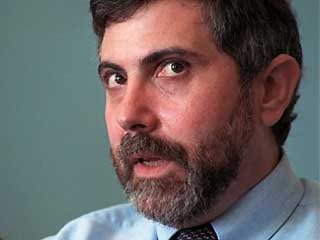
The Right mocked Parker and the Post hardest of all—suuure there’s no liberal bias in the media!—- especially the Bad Boy of rightward blogs, Breitbart. Then along comes another gag story from the same source, The Daily Currant, announcing that New York Times tax-and-spend advocate, progressive cheerleader and Pulitzer prize-winning economist Paul Krugman has declared for bankruptcy, and Brietbart, for exactly the same reasons Parker believed that Palin would go to work for the Arabs,  couldn’t figure out that it wasn’t  true. Breitbart published this: Continue reading

Just What Every President Doesn’t Need…A Traitor

"My observations while serving in the President's trust are held in strictest confidence, and...HOW much? Sure, I'll write a book!"

“My observations while serving in the President’s trust are held in strictest confidence, and…HOW much? Damn! Sure, I’ll write a book!”

President Obama is hardly the first President to be blind-sided by a “tell-all” exposé authored by someone who had an obligation to keep his mouth shut and his keyboard quiet. The unethical practice of a President’s former advisors, cabinet members, secret security agents, servants and others who held his trust cashing in and publishing often bitter, agenda-driven books detailing juicy and uncomplimentary details of what went on behind closed doors began gaining steam during the Reagan years (something else to detest David Stockman for) and has accelerated in every administration since.

The latest sniper shot from a grassy knoll is the work of Vali Nasr, a professor and former senior State Department adviser who worked with Richard Holbrooke, previously Obama’s special envoy to Afghanistan and Pakistan. In his new book, which, of course, had to be published while Obama was still in office to have a chance of making the former advisor the money he craves, Nasr relates details of what he regards as the incompetent White House foreign policy decision-making apparatus, in which vital calls that should have been left to experts were run through Obama’s political team, whose judgment was based on polls and narrow, short-term political considerations. Continue reading