Is There An “Almost Naked Lovely Lawyer Principle”?

cathy-mccarthy

Not really.

But it’s complicated.

Cathy McCarthy (above) is a 2013 graduate of Loyola Law School-Los Angeles, and she is sounding the clarion call for the right of bikini model-lawyers to be taken seriously. She wrote…

I graduated law school a year ago after receiving an academic scholarship and passed the California Bar last November on my first try. I am also a model and have had moderate success, building fan base of over 26,000 people where I do mostly bikini promotions. Does this make me better or worse at my job? According to some people, it makes me unable to be taken “seriously” in the business community. In fact, two weeks ago, I was reprimanded by a coworker for my online presence and was told to “handle the situation.”I fought back and was ultimately let off the hook, but this is not the first time that I have faced backlash from colleagues who think that a lawyer should not also get the privilege of “looking hot in a bikini.”

Unlike the case with primary and secondary school teachers, where a published presence on the web that is sexually provocative can interfere with a healthy student-teacher relationship, there is no automatic impediment to a lawyer client relationship posed by the lawyer moonlighting as a bikini model, a fold-out, or even a porn star. The profession acknowledges this in several legal ethics opinions affirming lawyers’ First Amendment rights. Lawyers can express themselves any way they choose, provided that it does not undermine their ability to represent their clients in any way. Continue reading

More Airport Ethics: The TSA, the Bedonkadonk and the Slobs

Badonk

I’m not sure what to make of this scene, which I witnessed at Washington’s Reagan National airport as I waited to be scanned prior to my flight to Miami. I have some thoughts, though.

The young, zaftig, fascinatingly-shaped African American woman in front of me was wearing one of tightest, most revealing, shape-hugging, leaving-nothing-to-the-imagination knit dresses I or anyone has ever seen, especially in an airport. The garb was obviously chosen to highlight, as in broadcast world-wide, her most prominent and unusual asset: an awe-inspiring derriere, which appeared to be fit, toned, and suitable for showing a drive-in movie. She was attracting side-glances and open-mouths from all around her, male, female, and probably the machinery too, and obviously reveled in the attention.

When she stepped into the imager and was told to raise her hands over her head, she giggled and did a spontaneous bump and grind move, threatening the integrity of the structure. That did it. The young African-American male TSA agent was launched into smiles, winks, and a stream of comments on the women’s super-structure, along the lines of, “Damn, girl! Don’t go distracting me like that! How am I supposed to do my job? And man, I am distracted! Why, some big old terrorist could walk right by me while I’m taking you in, and then where would we be?” Laughs all around from the other agents, giggles and more gyrations from the woman, more banter from her admirer. Continue reading

Ethics Quiz: The Reporter’s Non-Compliant Shoulders

Appropriate courtroom fashion?

Appropriate courtroom fashion?

At the 2nd District Court in Ogden, Utah, female reporter Morgan Briesmaster was barred by court security from entering the courtroom to cover a story because her sleeveless blouse (left) violated the official dress code.

She eventually gained access by wearing a parka. Up until then, she told other journalists, she waited in the lobby  “where she watched other courtgoers stroll through security with jeans and low-cut shirts.” Her boss ridiculed the situation, comparing it to high school yearbook dress codes, and noted that “any time a reporter is stopped from covering the news, it’s a concern.” There actually is a rule against wearing “tank tops” in that court, but I wouldn’t call what Briesmaster wore a tank top.
 

Your Ethics Alarms Ethics Quiz, which you may think is too easy, is this:

Was the court security unfair and unreasonable to bar reporter Briesmaster based on her shoulder-baring clothing?

Continue reading

Yet Another Consequentialism Lesson From Baseball

It's for your own good, kid.

It’s for your own good, kid.

Consequentialism is the ethical fallacy of  judging an action right or wrong according to its ultimate effects, which are unknowable at the time the decision is made. This is, essentially, the equivalent of a “the ends justify the means” philosophy applied as a backward-looking tautology: if the end result turns out to be desirable, then it  justifies the means and the act was ethical. If the ends are undesirable, then the conduct was wrong unethical. People do tend to think to think this way, which is why decisions that don’t work out are frequently called mistakes. Conduct is not a mistake, however, if it was the best possible decision at the time, arrived at logically and according to sound principles.

Sports, and particularly baseball, reinforce the adoption of consequentialism, which is one way sports can make people stupid….especially sportswriters, who love to second-guess managers, players and coaches by using hindsight bias: it’s easy to pronounce a decision a mistake once you already know its results. Easy, and unfair.

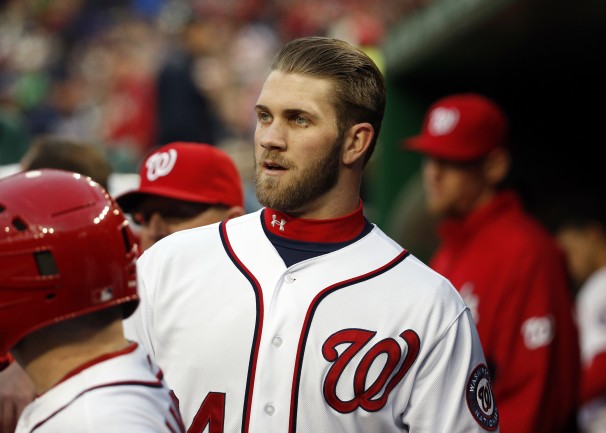
On Saturday afternoon, Washington Nationals manager Matt Williams punished his 21-year-old star outfielder Bryce Harper for not running hard to first base on a ground ball tapper back to the pitcher in the top of the sixth inning. The punishment Williams levied was Old School: Williams benched the young player—just like Joe Cronin did to Ted Williams in 1939 and 1940–sending the message that either you hustle and play hard, or you don’t play, no matter how good you are. This is his duty as a manager, a leader, a mentor and a teacher, and it makes a vital statement to the entire team. Continue reading

Annoyances For The Obsessing Traveling Ethicist

Hepburn

I just got home from another day trip, and am too weary to essay a significant post. Allow me, instead, to give readers a taste of what goes through one’s mind when you have begun to focus exclusively on ethics in preparation for a key, out-of-state presentation:

  • The incompetence of supposed professional broadcasters. Shortly before leaving for the airport on Sunday, I watched the local Fox affiliate report on the new Vogue cover, featuring Kim Kardashian and Kanye West. One of the two anchorwomen noted that there was a parody of the cover titled “Vague” featuring Kermit and Miss Piggy in the same poses. She pronounced it as “Vagg.” Her partner did not correct her. I think newsreaders should be able to read, don’t you?
  • Dishonesty in headlines. With the Kardashians still gnawing at my brain, I noticed an issue of “Star” in an airport magazine rack. The headline read, “Kardashians Cancelled!” Filled with momentary hope for civilization, I looked up the corresponding story in the rag. It stated that cable’s “Keeping Up With The Kardashians had been renewed, but that the family was worried that it might be cancelled next year. Yes, the headline was “X” and the story was “Not X.” I don’t care that the Star is just a glossy paper tabloid—how can anyone justifying this? Deceitful headlines are bad, but at least they are literally true, if misleading. Tabloid ethics are as low as ethics can be, but this flat-out false cover headline seems to have breached them… a neat trick.
  • More  incompetence of supposed professional broadcasters. CNN’s John Berman showed a clip of Bill, Hillary and Chelsea Clinton with Jimmy Kimmel and said…”Next…what Jimmy Kimmel did with three generations of Clintons.

Continue reading

When “Oopsie!” Isn’t Acceptible: It’s “Spring Forward,” You Idiots!

daylight_savings

From Ron Sarro, a friend, former D.C. journalist, once president of the Washington Press Club, and a reliable source:

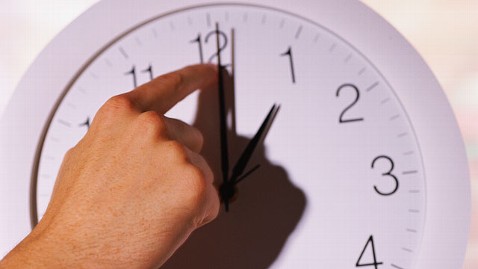
“The ABC National weather woman just advised viewers “Don’t forget to turn your clocks back” on Sunday, then demonstrated how to use a machine to mix a booze drink. Its ‘Spring forward, Fall back,”  ABC, which made no effort to correct the error.”

Oh, nice. Now people who rely on ABC will be two hours off on Sunday. Imagine what kind of carnage this reporter’s gaffe will cause, and there is absolutely no way ABC can fix the problem. Sure, the correct information is out there in many places, but thousands, perhaps thousands of viewers will suffer because an inept and unprofessional reporter wasn’t thinking or taking appropriate care.

Sure, mistakes will happen…and this one should have been flagged immediately in the studio, and fixed on the spot. Moreover, there are certain kinds of information that cannot be excusably miscommunicated—the addresses of 911 call emergencies, for example.  Explaining to a patient over the phone how much medicine to take. Even conveying recipes in cooking shows. Such information flags itself; anyone should know that when one is telling millions of people to do something that might completely disrupt their lives if done incorrectly, you must be accurate, and you must be certain that you have the correct information and are accurately transmitting it.

We should be able to rely on professionals to understand this. There is very little professional and therefore very little trustworthy either about the broadcast networks any more, however….so we can’t.

A lot of people are going to learn this the hard way on Sunday.

_______________________

Graphics: ABC News

Ethics Hero: Boston Red Sox Pitcher Ryan Dempster

ivory-billed woodpecker

With a guaranteed contract that would pay him $13.25 million this year, all Boston Red Sox starting pitcher Ryan Dempster had to do was fail to make the team or be relegated to the disabled list to collect it all. Dempster felt, however, that his physical condition would not allow him to contribute to the team’s efforts to defend its 2013 World Championship, and that under the circumstances, decided that it would be better for all concerned if he didn’t play in 2014 and spent the year with his family. Thus, while not retiring, Ryan Dempster announced that he would forfeit the money owed to him.

Dempster made $13.25 million last year, and had made millions for many years before that; he certainly doesn’t “need” the money. Nevertheless, for a professional athlete to handle himself this way is about as rare as an ivory-billed woodpecker sighting.  “I could have had a choice of trying to spend the entire season trying to work through those and trying to be able to pitch,” he said in his statement, delivered at the Red Sox Spring Training camp where the team is about to begin training. “But I just felt like it’s something that’s preventing me from doing the job I want to do, and I’m not going to go out there and put my team at a disadvantage or me at a disadvantage by not being able to compete the way I’m able to compete.”

Ryan Dempster, professional athlete, just placed team, family, integrity, and fairness above $13.25 million dollars.

Ethics Hero.


Ethics Quote: Sid Caesar (1922-2014)

Sid Caesar

“I remember a satire we did on ‘High Noon.’ The townspeople were supposed to abandon me and return their deputy badges to me by pinning them on my chest. I was supposed to have a sponge inside my shirt. But I didn’t have time to change. So they kept coming, saying, ‘Sorry, Sheriff,’ and pinning on the badges. After it was over, I went backstage, and somebody said, ‘Hey, you did real good pain takes.’ I told him the pain was for real.”

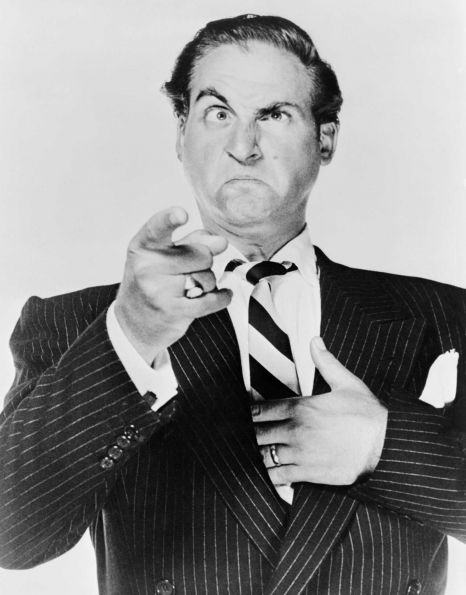
—-Comedy great Sid Caesar, who died yesterday at the age of 91, recounting for the New York Times an example of a how he suffered for his art, which was, always, making us laugh.

Caesar’s anecdote is as perfect a description of professionalism as I have ever seen, or ever will see.

Thank you, Sid Caesar, for devoting your life, body and soul, to laughter.

Ethics Dunce: Slate Editor David Plotz

SlateDavid Plotz, journalist and editor of the on-line culture magazine Slate, takes on the California Supreme Court in an essay in his magazine, harshly criticizing the 7-0 decision yesterday to deny Stephen Glass the opportunity to practice law in the state. Glass has been attempting for almost 20 year to persuade some state that a star journalist who was exposed as a pathological liar is a trustworthy lawyer. Plotz’s attack on the opinion as smug and self-righteous says a lot more about Plotz and his field of journalism than it does about the court. It  exposes the perils of a non-lawyer delving into legal ethics without even a modicum of research. Mostly, the exercise shows how far journalism has fallen, when the editor of a prestigious on-line journalistic enterprise essentially denies the importance of professionalism. “It’s a job,” he concludes about the law, trying to bring lawyers down to the depths of his own, thoroughly debased line of work.

Not that the decision isn’t ripe for criticism, for it is. In particular, the majority reasoning continues the legal field’s strange hypocrisy of applying a far more stringent standard to the character of those trying to get their licenses that it does to those who have proven themselves unworthy of holding them. The District of Columbia, supposedly one of the toughest jurisdiction regarding legal discipline, recently administered a mild reprimand to a Justice Department attorney who had been practicing on a suspended license for more than two decades. John Edwards, whose trail of lies while deceiving his dying wife and devising schemes to hide his pregnant mistress in order to gull the Democratic party into nominating him for President, has managed to avoid any discipline at all despite the fact that his continuing leave to practice law disgraces every lawyer on the planet. And, of course, the very same court Plotz derides now recently delivered the stunning conclusion that a non-citizen who entered the country illegally and engaged in years of lies to remain here is nonetheless fit to be a lawyer. (Naturally, Plotz liked that decision.) None of these are mentioned in the post. Continue reading

Ethics Dunce: Law Professor Josh Blackman, Too Desperate To Take A Cheap Shot At Justice Scalia

Supreme Court Justice Scalia, though not quite to the absurd degree of Sarah Palin, is a conservative who inspires such visceral dislike from the residents of the American Left that he often inspires them to behave irrationally in their eagerness to express their contempt. Such was the case this week, when Scalia sharply rebuked a lawyer making his oral argument before the high tribunal in the case of Marvin Brandt Revocable Trust v. United States, a property rights dispute over the conversion of abandoned railroad rights of way into public trails. The advocate, Steven Lechner, was before Scalia and his colleagues for the first time, and began his argument by reading from his notes. This is not cool, and violates Supreme Court tradition, rules, and long-observed standards.

Tony Mauro, blogging at the Legal Times, explains: Continue reading