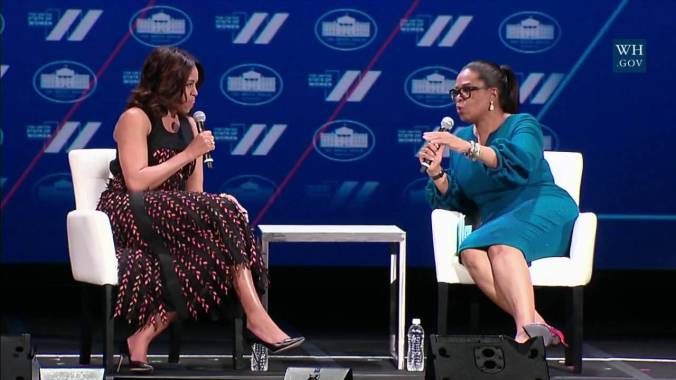
“We feel the difference now. See, now, we are feeling what not having hope feels like. Hope is necessary. It’s a necessary concept and Barack didn’t just talk about hope because he thought it was just a nice slogan to get votes. He and I and so many believe that — what else do you have if you don’t have hope,What do you give your kids if you can’t give them hope?”
—First Lady Michelle Obama, in an interview with Oprah Winfrey broadcast last week.
I was going to ignore this unforgivable statement, as there have been so many notable melt-downs from progressives and Democrats that if I commented on all of them it would be all freak-out, all the time on Ethics Alarms. However, the video really bothered me, and the timing of the remarks were so inappropriate—Let’s ask Syrians, who your husband decided to abandon in their desperation when he allowed his promise of a “red line” to evaporate as Assad turned his chemical weapons on them, how much hope they have, Mrs. Obama!—that I tried to think of any previous First Lady who so blatantly abused her role as a non-partisan symbol of stability and optimism for all Americans. There hasn’t been one. No First Lady, even the outspoken Barbara Bush or the activist Eleanor Roosevelt, has come close to declaring that hope was dead in America. It is especially irresponsible for a First Lady to talk like this as her husband leaves office. His predecessor was gracious, and the First Family owes its successor the same courtesy and respect. Continue reading →
The ACLU of Colorado last week posted the above video of an Aurora, Colorado police encounter with two black citizens last February.
The sequence, drawn from one of the officers’ body camera, shows Darsean Kelley and another man being stopped by police after they had received a call about a man allegedly pointing a gun on a child, but with no description of the man. Kelley and his companion were standing on the sidewalk in the vicinity of the alleged incident. Police asked the men to sit down, which Kelley said was impossible to do because he had a groin injury. Officers then told both men to put their hands behind their heads and turn around. As his friend remained silent and apparently compliant, Kelley kept his hands raised and asked why he was being detained. Immediately after he said, “I know my rights!” one of the officers shot him in the back with a stun gun. He fell backwards into the street.
The police then arrested Kelley on a charge of disorderly conduct for failing to obey a lawful order. In his report, the officer wrote that he thought he might be reaching for a weapon. The ACLU of Colorado then filed a motion to dismiss the case arguing that Kelley was unlawfully detained and arrested without probable cause or reasonable suspicion.
Observations:
1. Kelley and the other man were unlawfully detained and arrested. Were they unlawfully stopped? No. The police could stop men in the vicinity of a complaint like the one they had received in order to investigate it. When people become belligerent or uncooperative during such legal stops, cops sometimes become suspicious, or decide to use their power to stick it to an individual who shows hostility when the officers feel they are just doing their jobs, or trying to. This is when such situations escalate.
I’m sure the officers regarded the “I can’t sit down” claim as suspicious and provocative. I would. Note that no harm befell the other man, who remained quiet and followed the officers’ instructions. This is the correct way to respond.
2. I’m sure Kelley felt that he was being “stopped for being black.” I would if I were him. How are police officers today supposed to allay this suspicion at the outset of a legitimate stop? (Or maybe they WERE stopped for being black…)
3. What is the policy for tasing? The typical hierarchy for the use of force in police departments used to be this:
Table 1: Use-of-Force Continuum
Suspect resistance
Officer use of force
1. No resistance
1. Officer presence
2. Verbal noncompliance
2. Verbal commands
3. Passive resistance
3. Hands-on tactics, chemical spray
4. Active resistance
4. Intermediate weapons: baton, Taser, strikes, nondeadly force
5. Aggressive resistance
5. Intermediate weapons, intensified techniques, nondeadly force
6. Deadly-force resistance
6. Deadly force
(Adapted from the Orlando, Florida Police Department’s Resistance and Response Continuum)
…
After the introduction of more powerful electronic control devices, many departments changed their use-of-force directives for handling suspects who were only passively resisting the lawful orders of the officer, and increased the required level of resistance by suspects to warrant use of stun guns or tasers from passive resistance to active, physical resistance.
Table 2: Levels of Resistance Defined
Passive Resistance
The subject fails to obey verbal direction, preventing the officer from taking lawful action.
Active Resistance
The subject’s actions are intended to facilitate an escape or prevent an arrest. The action is not likely to cause injury.
Aggressive Resistance
The subject has battered or is about to batter an officer, and the subject’s action is likely to cause injury.
Deadly-Force Resistance
The subject’s actions are likely to cause death or significant bodily harm to the officer or another person.
Adapted from the Orlando, Florida, Police Department’s Resistance and Response Continuum
I don’t know what the Aurora police policy is, but certainly under the kinder, gentler, saner revised standards above, stunning Kelley was excessive. Police brutality is not an unfair description of what he experienced. Continue reading →
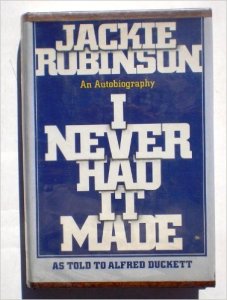
What does Jackie Robinson’s autobiography have to do with Colin Kaepernick, you ask? Well…nothing at all, really.
Over at the NBC Sports website, Craig Calcaterra is an over-qualified baseball pundit who chose to blog about the sport he loves rather than practice law. Good for him; I admire his choice, and always will. Unfortunately, as I suppose could have been predicted, Craig now appears to be getting bored with writing about baseball and increasingly ventures into social and political commentary, at which he is strikingly biased and incompetent. His latest effort, which given its subject matter has gleaned more publicity and links that any of his many, many astute posts about what he is supposed to be writing about, is best described as pundit malpractice.
It also represents a rationalization for unethical conduct that is not currently represented on the Ethics Alarms Rationalization List.
Someone sent Craig this quote, from Jackie Robinson’s autobiography, as baseball’s color-line breaker thought back to the first game of the 1947 World Series:
“There I was, the black grandson of a slave, the son of a black sharecropper, part of a historic occasion, a symbolic hero to my people. The air was sparkling. The sunlight was warm. The band struck up the national anthem. The flag billowed in the wind. It should have been a glorious moment for me as the stirring words of the national anthem poured from the stands. Perhaps, it was, but then again, perhaps, the anthem could be called the theme song for a drama called The Noble Experiment. Today, as I look back on that opening game of my first world series, I must tell you that it was Mr. Rickey’s drama and that I was only a principal actor. As I write this twenty years later, I cannot stand and sing the anthem. I cannot salute the flag; I know that I am a black man in a white world. In 1972, in 1947, at my birth in 1919, I know that I never had it made.”
“Colin Kaepernick is not Jackie Robinson and America in 2016 is not the same as America in 1919, 1947 or 1972. But it does not take one of Jackie Robinson’s stature or experience to see and take issue with injustice and inequality which manifestly still exists…the First Amendment gives us just as much right to criticize Kaepernick as it gives him a right to protest in the manner in which he chooses. But if and when we do, we should not consider his case in a vacuum or criticize him as some singular or radical actor. Because some other people — people who have been elevated to a level which has largely immunized them from criticism — felt and feel the same way he does. It’s worth asking yourself, if you take issue, whether you take issue with the message or the messenger and why. Such inquiries might complicate one’s feelings on the matter, but they’re quite illuminative as well.”
Let’s begin with the fact that there is nothing similar about Jackie Robinson and the 49ers quarterback, except their race and the broad occupation of “sports” that they shared. Continue reading →
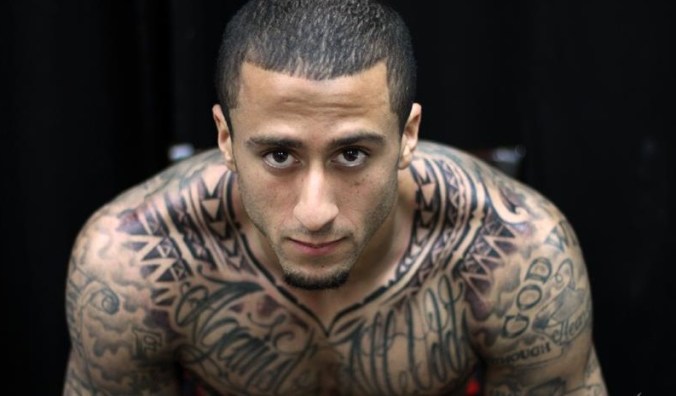
San Francisco 49ers quarterback Colin Kaepernick refused to stand for the playing of the national anthem before Friday night’s 49ers-Green Packers exhibition game as a protest against the United States. He has apparently been doing all NFL preseason, but it wasn’t noticed until the most recent game.
Questioned about his certain to be controversial gesture, the mixed race athlete—he had one white parent, and was raised by a white adoptive parent—explained thusly:
“I am not going to stand up to show pride in a flag for a country that oppresses black people and people of color.To me, this is bigger than football and it would be selfish on my part to look the other way. There are bodies in the street and people getting paid leave and getting away with murder.”
Observations:
1. Give him credit for one thing: he isn’t trying to take advantage of the King’s Pass. His star immunity is at low ebb, since Kaepernick’s status with his team is shaky and his job as a first string quarterback is in doubt, not because of his political views, but because he has been injured too much and not all that great when healthy. What he did was not in his own best interests. It took guts.
So does leaping naked into a zoo’s tiger exhibit.
2. His action wasn’t a protest. It was grandstanding. It generated publicity for a message that was incoherent. All his gesture said was “Colin Kaepernick is upset and has an irrationally inflated concept of how much anyone cares, or should care.”
3. Kaepernick could have salvaged his act by being ready with a well-reasoned, well-stated, articulate and persuasive explanation. Based on what he said, which was ignorant, counter-factual and foolish, we must assume that he actually gave thought to his response, and that this pathetic statement was the best he could come up with. That shows him to be incompetent, ill-informed, and not very bright. Continue reading →
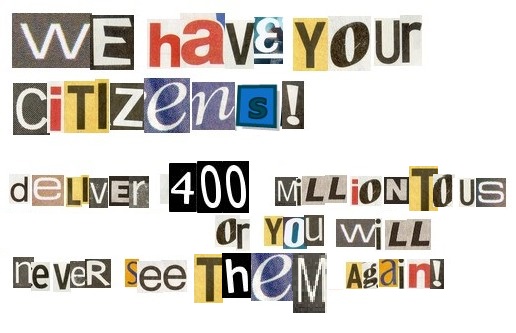
“The Obama administration secretly organized an airlift of $400 million worth of cash to Iran that coincided with the January release of four Americans detained in Tehran, according to U.S. and European officials and congressional staff briefed on the operation afterward.
Wooden pallets stacked with euros, Swiss francs and other currencies were flown into Iran on an unmarked cargo plane, according to these officials. The U.S. procured the money from the central banks of the Netherlands and Switzerland, they said.
The money represented the first installment of a $1.7 billion settlement the Obama administration reached with Iran to resolve a decades-old dispute over a failed arms deal signed just before the 1979 fall of Iran’s last monarch, Shah Mohammad Reza Pahlavi….Senior U.S. officials denied any link between the payment and the prisoner exchange. They say the way the various strands came together simultaneously was coincidental, not the result of any quid pro quo….But U.S. officials also acknowledge that Iranian negotiators on the prisoner exchange said they wanted the cash to show they had gained something tangible….Iranian press reports have quoted senior Iranian defense officials describing the cash as a ransom payment. “
Isn’t this, then, the equivalent of paying ransom for hostages? Continue reading →
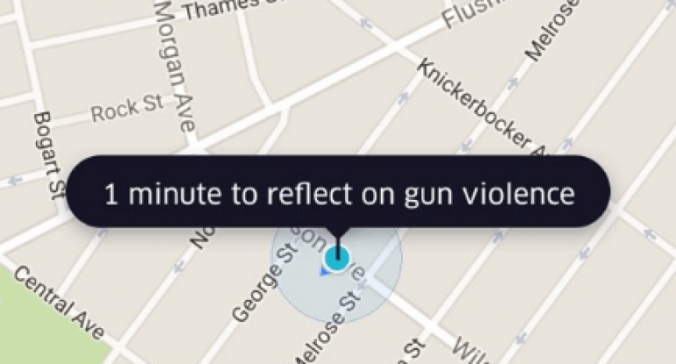
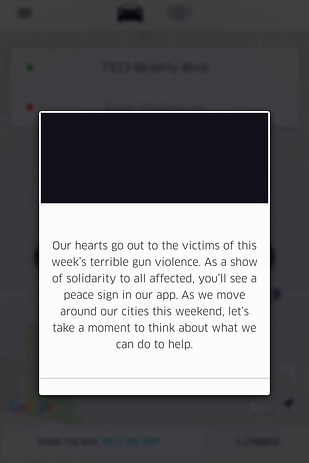
Uber, the transportation networking company, now subjects customers seeking to book a ride to a directive calling on them to think about gun violence before they continue the process. When users open the Uber app, they see a message reading, “Our hearts go out to the victims of this week’s terrible gun violence….As we move around our cities this weekend, let’s take a moment to think about what we can do to help.” Thusly:
Okay, here’s what Uber can do to help. Stop referring to law enforcement action, even if it’s excessive, as “gun violence.” Stop referring to racially motivated hits, like the murder of the Dallas police officers, as “gun violence,” as if in some alternate universe where there are no guns, Micah Johnson would have hurled spitballs at the officers to show his contempt. In fact, Uber can shut up entirely.
And stop suggesting that the shooting of two individuals in a police confrontation is equivilent to the assassination of five police officers. How despicable.
We saw this kind of arrogant, obnoxious abuse of the customer/service relationship when Starbucks decided it was appropriate to challenge its customers to have dialogue with 20-something barristas about race. Uber knows how to get me to my destination, supposedly. It has no more expertise regarding social and law enforcement policies than my mail carrier, and if he tells me to take a minute to think about gun violence before I can get my mail, I’m telling him to go to hell.
Uber is showing disrespect for its customers and its customers’ time. The company has no right to rob me of a single moment to force-feed me its anti-gun chairman’s political views, and I would say the same if they were pro-gun sentiments. It’s unethical to make me a captive audience for ten minutes, five minutes, a minute or a second. I’m calling for a ride, not indoctrination, not presumptuous attempted enlightenment, not to be told to save the whales, reduce my carbon foot print, vote for Hillary, or think about gun violence. Continue reading →
I think you should see “Zootopia,” and maybe even let your children see it, provided that you are prepared to spend about two hours deprogramming them afterwards. Thus you may not want to read further unless you want to encounter numerous spoilers.
Children’s stories, TV shows and movies have long been the vehicle for moral and ethical messages, as well as allegories that may or may not worm themselves into unsuspecting juvenile psyches. Because there are young minds involved, engaging in what can be value-warping and indoctrination if not handled with proper humility and care is a high calling, and for the most part, Disney has always been up to the task.
I like Disney animated movies, and always have. I even like some of the flops, like “Treasure Planet.” Pixar, which is now part of the Disney creative empire, has been even more daring and aggressive in ethics story-telling, and has not seriously abused the privilege. Other studios, like DreamWorks, have been more heavy-handed in their moralizing. No animated film in memory, however, has set out to pound specific political and social points of view into the brains of kids as blatantly, relentlessly and ambitiously as “Zootopia.”
I should add “incompetently.” Like all fantasies with delusions of social significance, “Zootopia” relies on metaphors, and in this film, they become a tangle of confused and sometimes contradictory and hypocritical messages. Wrapped as they are in an often charming, funny, well-acted and well-plotted piece of technically expert art, these muddled messages approach being sinister. That the film has been almost universally praised—it has an amazing 98% positive rating on the review site “Rotten Tomatoes”—speaks either to a culture-wide conspiracy to turn the next generation into political correctness zombies, or to the mass incompetence of the film reviewing profession. Continue reading →
Matt Yglesias is now called a blogger, but he has been an editor and a writer at places like The Atlantic and Vox. He’s a journalist; an opinion journalist, for the most part, but a journalist. He also seldom meets a progressive idea he doesn’t like, which is fine, I suppose; after all, that just makes him like about 90 percent of all journalists.
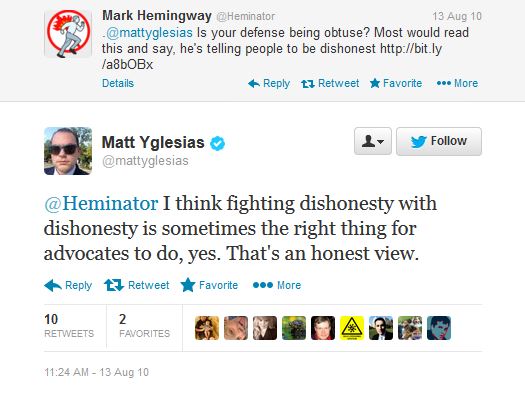
He also endorses lying. The tweet above from Matt is a couple years old, but was recently raised again in an interview with the conservative Daily Caller and some of Matt’s Twitter exchanges with other writers.
“Fighting dishonesty with dishonesty is sometimes the right thing for advocates to do, yes,” wrote Yglesias last week. He seemed shocked that anyone would be troubled by this, asking a conservative writer, “Do you really think deception is immoral in all circumstances?” He told the Daily Caller that he approves of lying by policy advocates, but of course he would never lie, because his job as a blogger is to inform.
Does that mean that he would flag, expose and criticize a lie from a politician or advocate he favors, used in the service of a progressive policy Yglesias wants to see succeed? Say, a health insurance program where the primary public policy-making advocate swears will allow everyone to keep their current health care plans, “Period!”? Will Matt vigorously expose hype by climate change advocates like Al Gore, or false budget claims by politicians like Bernie Sanders? If Yglesias thinks that the public wrongly believing that Mike Brown was surrendering when he was shot will lead to important social reforms, will he expose the lie, or bolster it? What are the implications of a journalist’s belief that lying to the public may be ethical for officials and advocates?
“13 Hours,” directed by Michael Bay,dramatizes the Sept. 11, 2012 attack on the Benghazi consulate in Libya, a tragedy, and also the center of an ongoing controversy over Clinton’s tenure as Secretary of State and her truthfulness. The movie hits theaters today, two weeks ahead of the Iowa caucuses.
“The release of ’13 Hours’ will re-start the conversation over Benghazi and introduce a whole new audience to the events of that night,” says Brian O. Walsh, president of Future45, a conservative, Clinton-hating super PAC. “Coming just weeks before the first votes are cast and in the form of a major motion picture from Hollywood, the timing couldn’t be worse for Secretary Clinton.”
He’s right. I haven’t seen the film, but the subject matter is bad enough. It is brutally unfair and an abuse of its influence and power over public opinion for Hollywood to release a feature film distorting a relevant historical event during the run-up to a national election. Doing so turns entertainment into propaganda, and confuses an already bewildered, ignorant and intellectually lazy public. It is irresponsible. Continue reading →
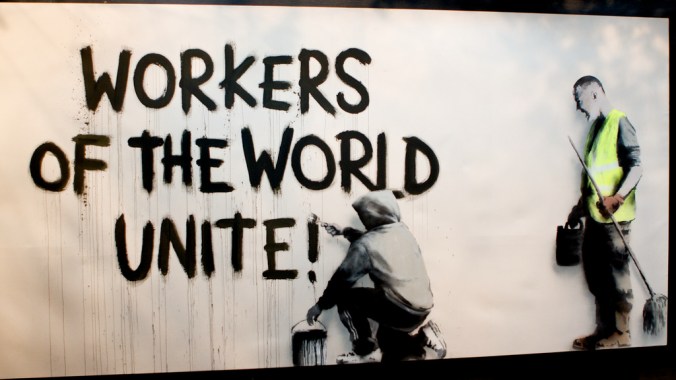
The Washington Post has jettisoned Harold Meyerson, who has been the leftest of the leftists on the Washington Post op-ed pages for about 13 years…not surprising, as he also serves as editor at large for The American Prospect. Mayerson, according to his last column, was told that he was a goner because he was losing readers and because his columns were repetitious, which they certainly were. How many times, after all, can one read “Workers Unite!”? From Occupy Wall Street to BlackLivesMatter, there was no revolt of the oppressed and downtrodden that Meyerson didn’t support, nor any standard issue socialist/progressive position that he did not wholeheartedly embrace.
The Post has other kneejerk leftists among their pundits, a disproportionate number in fact (this was also part of the Post’s motivation to let Meyerson go), but I found Meyerson more infuriating than the others because he seemed so much more intelligent than his positions and statements would suggest. He was the epitome of an opinion journalist whose opinions seemed to be calibrated to achieve a grander agenda, rather than honest expressions of truth or even what he really believed. He is a columnist in the Saul Alinsky tradition of liberalism, willing to bend truth for the greater good, to win converts for the Great Worker Rebellion, or whatever it would be.
No newspaper should employ a journalist who is willing to deceive its readers, even on the pretense of saving the world.