Ethics Dunce: Doug Wilkey

Let’s shame this guy but good: he deserves it.

The horror.

The horror.

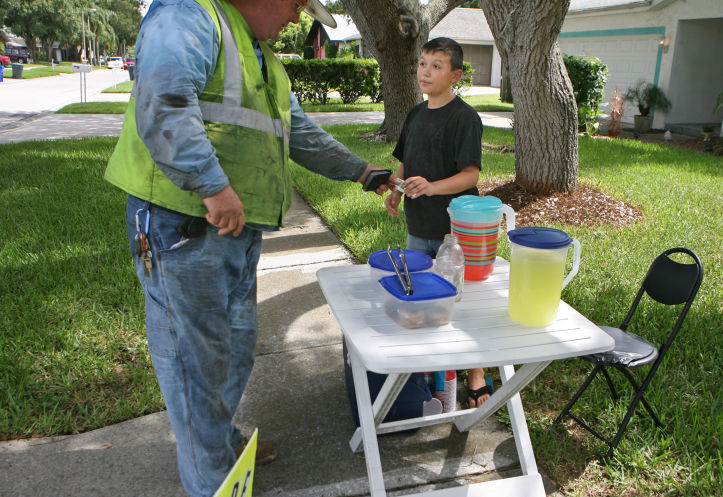
Dunedin, Florida 12-year-old T.J. Guerrero has received a neighbor’s  permission to set up a lemonade stand in front of his property for the last couple years. This isn’t some kind of mega-stand: it’s exactly like the ones I purchased sweet drinks of varying quality from last weekend. It’s Florida, and T.J. is unusual: he is virtually running the 3 to 7 business all year long.

Another neighbor named Doug Wilkey, 61-years-old going on “Get off my lawn, you lousy kids!,”  has emailed City Hall at least four times in two years demanding that T.J. ‘s traditional foray into junior capitalism be shut down. He says that the kid’s  operation is illegal, and that it causes excessive traffic, noise, trash, illegal parking and other problems that, he says, threaten to reduce his property values.

To its credit,  local government officials appear to have the sense of proportion Wilkey does not. “We’re not in the business of trying to regulate kids like that; nor do we want to do any code enforcement like that,” said Dunedin planning and development director Greg Rice. “We are not out there trying to put lemonade stands out of business.” Continue reading

Child Care Ethics And Leashes For Toddlers: CNN and Its Viewers Flunk An Ethics Alarm Test

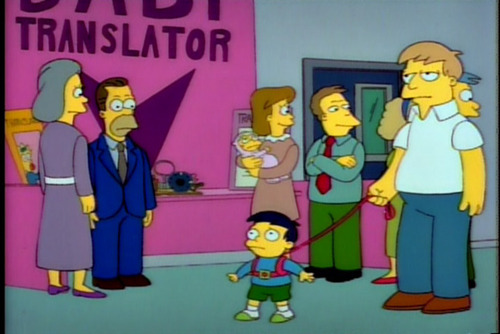
Kids on leashes

It is constantly amazing to me that journalists so seldom identify obvious and critical ethics issues in the topics and events they cover. The rest is mixed emotions: this absence of ethics awareness is a serious culture-wide problem; then again, were this not so, I’d probably be in a different, and less stimulating profession.

Today I sat down to lunch as CNN engaged in a breathless discussion of whether using leashes on toddlers and even older children was a good idea, as it is either a growing trend among parents, or CNN was having a slow news day. The phone lines were open, and many viewers weighed in, with the primary camps expressing the following positions:

1. “If it makes children safer, then there is no reason not to do it. Safety is everything. Kids have been killed running into the street.  A leash will prevent that.”

2. “This shows the decline of child-rearing skills in the United States. If you can’t control your kid better than this, you are the problem.”

If the question of whether it was fair, kind, respectful or right to treat  your child like a cocker spaniel occurred to anybody in this discussion (I know the CNN staff never considered it), I saw and heard no evidence of this. Yet that is the central question, and it is an interesting one to consider. The fact that matters of human dignity, responsibility, respect, fairness, autonomy, kindness, proportion and prudence need to be balanced to answer the question at hand never came into the discussion, and those debating the issue demonstrated neither awareness of the competing ethical values, nor the ability to know how to employ them. Continue reading

Ethics Quiz: If There Is Going To Be A Racial Double Standard For Bigoted Statements, Can We Please At Least Know What It Is?

stop-sign2

Item: Donald Sterling, billionaire owner of the NBA Clippers, while speaking with his mistress/girl friend/ escort in the bedroom, announces that he doesn’t want her bringing black men to Clippers games. In the process, he does not say anything specifically derogatory about African- Americans. He believes the statement is private, and that he is talking to someone he could trust.He was wrong. A recording of the conversation was leaked to the press, and Sterling has been roundly vilified as a vile racist, threatened with a boycott by the players, mostly African-American, in the NBA, fined 2.5 million dollars and banned from the game.

Item: Via Mike Wise, Washington Post sports writer—

“Following Wednesday’s Pacers-Wizards game in Indianapolis, during the time when NBA rules permit media members to be present, the music blaring in the Indiana locker room was filled with vile language: racist, homophobic and misogynist. Afterward, I complained on Twitter that if Commissioner Adam Silver truly wants an inclusive league, he ought to address this (common) practice.”

Result: Wise, who is white, was attacked as a racist. What NBA players listen to in the locker room is none of his business, he is told (but what Donal Sterling says in his bed room is their business.) The NBA has done, and is expected to do, nothing.

Item: Appearing on ESPN where he is a commentator, Charles Barkley, former NBA star (and an African-American), decided to deride the women of San Antonio, Texas as fat. “There’s some big ‘ol women down there,” said Barkley. “That’s a gold mine for Weight Watchers.” He added, “Victoria is definitely a secret. They can’t wear no Victoria’s Secret down there.” A spokesperson for a fat acceptance group protested:

“Making slurs about body size is just as offensive as making comments about body color. One would think being a black man, he’d be more sensitive to having his physical body criticized. It’s totally out of line. He should absolutely apologize.”

Barkley not only refused to apologize, but defiantly challenged anyone objecting to his remarks, jokes or future comments to “change the channel.”  Nobody expects Barkley to suffer any consequences from this series of events.

Item: In 2007, talk show provocateur Don Imus got into a facetious discussion with a broadcast team member about how te women’s basket ball team from Rutgers was “rough looking” and had some “nappy-looking ho’s.” He also referenced Spike Lee’s “Do the Right Thing,” and the film’s “Jigaboos vs.  Wannabes.” Imus apologized profusely, pronouncing the exchange inappropriate, thoughtless and stupid. Under pressure from various civil rights groups,  WFAN, which produced his show, fired Imus, who has never regained his previous prominence.

Item: In 2013, media professional Justine Sacco tweeted a race-based joke before boarding a plane to Africa: “Going to Africa. Hope I don’t get AIDS. Just kidding. I’m white!” A furious cyber mob condemned her as a racist, and demanded her punishment. When she landed in Africa, she learned that she had  been fired.

Your Ethics Alarms Ethics Quiz for today is…

What the hell is going on here?

Continue reading

Unethical Website of the Month: “I Love Dogs”

This isn't the puppy in the post, but I've been looking for an excuse use this photo...

This isn’t the puppy in the post, but I’ve been looking for an excuse use this photo…

I love dogs too, but encouraging people to beat alleged animal abusers to the verge of death just doesn’t seem right to me. I’m funny that way.

Indeed, I wonder about the values and mental stability of those who think this is a rational and ethical response to the perpetrator of any kind of crime, not just animal abuse.

“I Love Dogs” has sent into the web a virtual “Wanted Poster” with a photo of a real human being, ostensibly a canine abuser who “nearly beat this pup”—also pictured—“to death.” The poster suggests that readers should share the poster if they “believe that he deserves the same.”

Sure enough, many do. The post has gleaned many thousands of likes, about 5000 shares, and a wave of comments like those that follow here. I’ve included the names of the posters, who obviously didn’t think their comments were anything to be ashamed of. I wish I could include the thousands more like them, but there is too much anonymity in crowds. Posting the commenters’ names that appear below is a public service. I suggest avoiding them. Also proofreading their work, as they all appear to have dropped out of the third grade…

Continue reading

KABOOM! Does Everyone Upset About The “Affluenza” Sentence Feel Better Now?

Top: Morris. Bottom: Me.

Top: Morris. Bottom: Me.

Today we travel cross the pond for a head explosion-prompting episode. A charming young woman and mother named Loren Morris, now 21, began having sexual intercourse  with an 8-year-old boy five years ago, and continued for two years until he was ten years old, involving about 50 forced sexual acts.

The boy, now 14, was overheard bragging about his premature sex life at school, and that led to his molester’s arrest and trial. This week a judge today gave Morris a two-year prison sentence at Worcester Crown Court. She will be eligible for release on parole after only a year.

This case is relevant to a couple of recent Ethics Alarms controversies. Presumably Morris is being sentenced leniently on the basis of her horrific crime being committed while she was a juvenile, even though she is an adult now. As I asserted in the stateside case of the juvenile assault ripening into a murder, I think a juvenile whose crime is only discovered and proven after he or she enters adulthood should be tried and punished as an adult. Continue reading

Comment of the Day: “Noah” Ethics

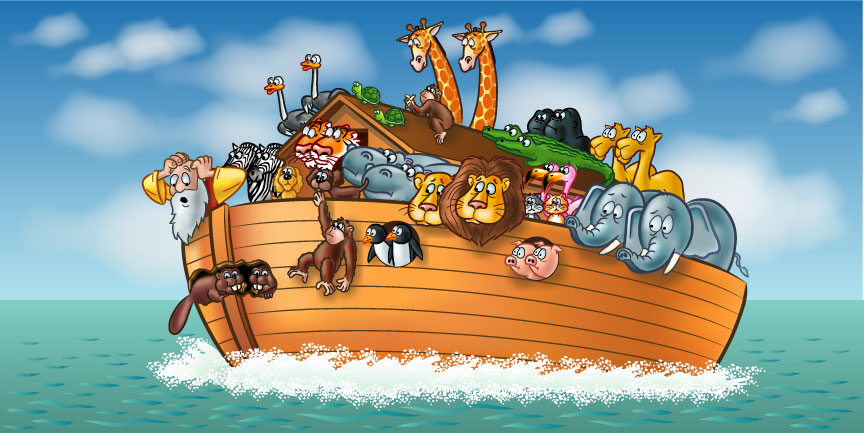
noahs-beaver-problem

Patrice, the Ethics Alarms resident Catholic theologian (and a dear friend), weighs in on the “Noah” controversy, in the this Comment of the Day on the post, “Noah” Ethics:

My undergraduate theology degree is indisputably from a Catholic perspective, although many of the scholars we studied were not Catholic, nor even Christian. I was required to take only 4 semesters of biblical literature, but even those few academic hours of biblical studies taught me enough about biblical analysis to understand how “The Bible” (which, as I’m sure you know, is just a mutually-agreed upon canon of literature which omits as much as it includes) came to be. I often think that it is a shame that true knowledge about biblical literature mostly seems to reside only in academia. Unfortunately, most of the zealots out there would and probably do regard biblical scholarship as an attack on God. The battles over the centuries over biblical inerrancy/infallibility/literalism are merely unread footnotes to most people. Continue reading

“Noah” Ethics

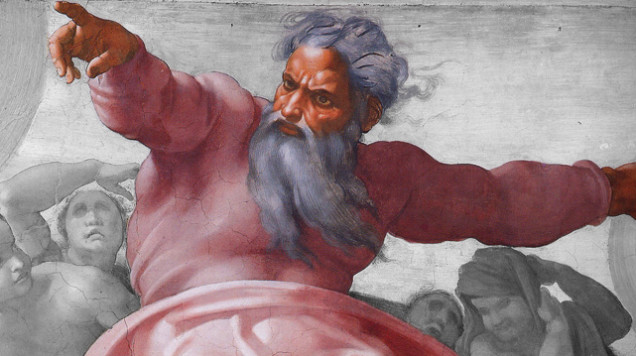
God

There is nothing unethical about “Noah,” the biblical spectacular that harkens back to the grand old days when Cecil B. DeMille reigned supreme. I haven’t seen the movie, and yet I can say that with absolute certainty. The reason I can say it that there is no way on earth that a movie about Noah and the Ark, in this day and age, could possibly be unethical. Even if the Old Testament were literal fact, which it is not, cannot be and in all likelihood was never intended to be, “Noah” couldn’t possibly be unethical, because it is a movie.

Never mind that of all the Biblical fables, with the possible exception of Adam and Eve, the tale of Noah is perhaps the most obviously impossible. The movie is art—of one kind or another—and does not represent itself as a documentary or make any factual assertions whatsoever. Thus it can be distinguished from a truly unethical film like Oliver Stone’s “JFK,” which intentionally misrepresented recent historical facts to “prove” a theory of the Kennedy assassination that was irresponsible and almost certainly false. Is “Noah” dishonest? It is impossible to be dishonest about a presumptively non-historical event about which there is no direct evidence whatsoever, and when there is no intention to deceive. Is it disrespectful? Art has no duty to be respectful. Is it fair? Fair to who? An artist’s stakeholders are those who appreciate his or her art. Does it do harm, or intend to? No. Continue reading

“My Little Pony” Ethics, Blaming the Victim, and the Dilemma Of The Bully Magnet

Rainbow Dash...awwww!

Rainbow Dash…awwww!

Nine-year-old Grayson Bruce likes “My Little Pony,” a long-running animated children’s TV show that has a cult following in the gay community. He decided to show his affection for the show by carrying his lunch in a “Rainbow Dash” themed bag featuring a popular equine character. Now some of Grayson’s fellow male students at the Buncombe County (North Carolina) elementary school he attends have stepped up their harassment of the boy as a reaction to his tastes in entertainment and accessories.

“They’re taking it a little too far, with punching me, pushing me down, calling me horrible names, stuff that really shouldn’t happen,” Grayson says. It’s not like he doesn’t understand why. “Most of the characters in the show are girls, and most of the people put it toward girls,” he notes. His mother complained to the school, and it says it is taking appropriate measures to deal with the bullies and bullying in general. It also told Grayson to leave Rainbow Dash at home, caliming that it is a “trigger for bullying” and a distraction. Mom, Noreen Bruce, objects. Continue reading

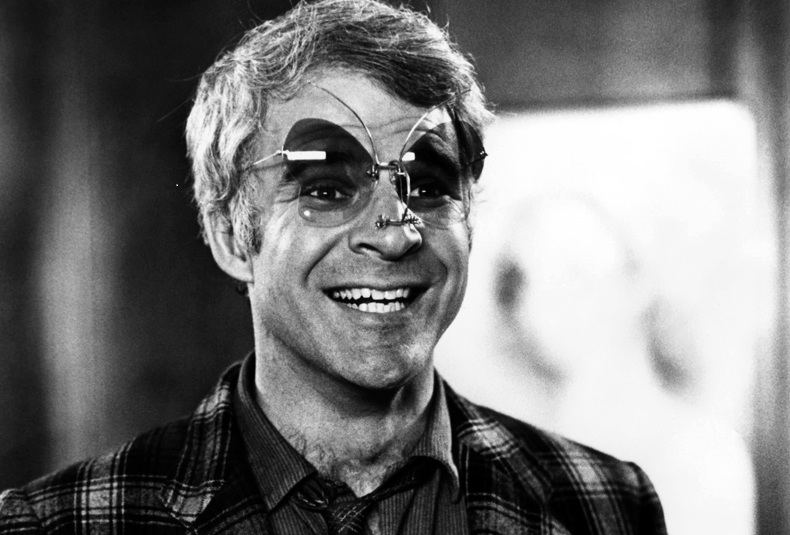
Ethics Dunce: Steve Martin (Coward, Too)

Life imitates art.

Shame on Steve Martin. He is a comedian. He tweets jokes. He tweeted a joke that was not racist in the least. (Everything that comments humorously on cultural quirks isn’t racist.) The political correctness bullies jumped on him too, because they nailed Phil Robertson and destroyed Justine Sacco. Martin, a novelist, a playwright, a TV writer, a comic and an actor, should have the integrity to stand up to this suffocating and unethical phenomenon. He has the stature to make a difference. He doesn’t have that integrity. He took the path of least resistance. He is a coward. He groveled. He apologized. The Blaze headlined that he “had to apologize,” No he didn’t. What he had to do was show some principle and strength of character when being manipulated and unfairly attacked, and he wasn’t up to the task.

By giving them what they crave, Steve Martin made the censors, bullies, cyber mobs and political correctness dictators more powerful, and hungrier still.

Without champions who will fight for free thought and expression, we will lose them. Martin and people of his intelligence and credibility have an obligation to be such champions, and he failed us all.

__________________________________

Spark and Pointer: The Blaze

The Unethical Destruction of Justine Sacco

Justine Sacco, victim.

Justine Sacco, victim.

Media executive Justine Sacco tweeted an impulsive, racially provocative joke on the social media site Twitter that a lot of people found offensive, didn’t like, or felt they could justify participating in cyber-bullying as if they found it offensive. As a result, she has lost her job, is being portrayed as a virulent racist across the web,  receiving threats and hate messages from strangers, and has become an international pariah.

It doesn’t matter what the tweet said. It was a tweet–140 characters directed at nobody in particular, that harmed nobody in any way, unlike, say, the tweets by various celebrities trying to direct mobs to where George Zimmerman could be found and beaten. Nobody attacking her knows this woman, what’s in her mind and heart, what she has done in her life or the good works and deeds she may be responsible for. And yet thousands of strangers, many of whom are almost certainly, on balance, less admirable people than Justine Sacco in many ways, have chosen to use her 140 ill-chosen characters as provocation to throw a huge, greasy monkey wrench into the gears of her life. Continue reading