It’s Time To Fire And Discipline Marilyn Mosby

Mosby in 2015, ruining lives, pandering to the mob, and undermining justice...

Mosby in 2015, ruining lives, pandering to the mob, and undermining justice…

The third (of six) indicted Baltimore police officer charged in the death of Freddie Gray was acquitted last week, and how the rest of the trials, if they even occur, will play out is now a foregone conclusion. To be fair, this was a forgone conclusion from that moment that Baltimore City Attorney Marilyn Mosby charged the officers a year ago without sufficient justification beyond her own political ambitions, those of her husband (who is now running for mayor), racial bias and a desire to mollify rioters. Most commentators believed the charges were premature, rushed to avoid civic unrest. To say that is really to say that she allowed a mob to dictate to law enforcement. This was unethical, dangerous and despicable then, and remains so today.

If officer Caesar R. Goodson Jr., who drove the police transport van in which Gray suffered the spinal cord injury that killed him, could not be found guilty of intentionally killing Freddie Gray, nobody can. Says the New York Times,

“His acquittal on seven counts leaves the state without any convictions after three trials, in one of the nation’s most closely watched police misconduct cases — and continues to leave open the question of what, exactly, happened to Mr. Gray inside the van….Judge Barry G. Williams, who presided over the Goodson trial, issued the verdicts to a hushed, packed courtroom. He drew no conclusions about exactly when during the van ride Mr. Gray got hurt, saying there were several “equally plausible scenarios.” And he rejected the state’s contention that the officer had given Mr. Gray an intentional “rough ride” and knowingly endangered him by failing to buckle him into the van or provide medical help.” 

The prosecutor isn’t supposed to ruin the lives and careers of presumptively innocent law enforcement officials to try to find out what happened to Freddie Gray. The prosecutor is supposed to investigate until sufficient evidence tells her that a crime was committed, and the she has enough of that evidence to get a legitimate conviction. The three trials have shown that such evidence either doesn’t exist, or was never found. No, we don’t know what killed Freddie Gray, and that’s called “reasonable doubt.” Continue reading
Ethics Quote Of The Day: Baltimore Judge Barry G. Williams

Prosecutors are not supposed to play this game...

Prosecutors are not supposed to play this game…

“I’m not saying you did anything nefariously, I’m saying you don’t know what exculpatory means.”

—- Judge Barry G. Williams, presiding in the Baltimore trial of Officer Caesar Goodson Jr for his alleged role in the death of Freddie Gray, excoriating the prosecution for illegally withholding Brady evidence from the defense.

There is more evidence that the Baltimore prosecution of six police officers for the death of Freddie Gray a year ago is less a matter of seeking justice than it is a sacrificial offering of  innocent law enforcement professionals to avoid civil unrest.

I have already chronicled the disturbing pattern of the prosecution in this case, where premature and dubious charges were brought against the officers in the wake of destructive rioting and threats from African-American activists. Now it appears that a statement supporting the officers by Donta Allen, the man sharing the police van with Gray—who ended his trip fatally injured—was never made available to the defense. Because  the statement was potentially supportive of the officers in their defense, the material had to be handed over by prosecutors under the Supreme Court decision in Brady v. Marylandthe landmark 1963 case holding in 1963 that “the suppression by the prosecution of evidence favorable to an accused upon request violates due process where the evidence is material either to guilt or to punishment, irrespective of the good faith or bad faith of the prosecution.”

There were only two people present during Ray’s final ride, other than Gray himself:  Goodson, the driver, and Donta Allen, another arrested subject who was  separated from Gray by a thin metal screen.

Allen has  made wildly conflicting statements about what transpired. He initially told police that Gray was “trying to knock himself out” in the back of the van, then later denied that statement to the news media. However, Allen had a second session with police investigators a year ago, shortly after the charges against the officers were brought by City Attorney Marilyn Mosely. In that meeting, Allen reiterated and confirmed his original statement that suggested Gray was trying to injure himself. Prosecutors never brought his second statement to the attention of the defense.
Continue reading

From “The Ethics Incompleteness Theorem” and “The Ends Justify The Means” Files, The Pautler Case: My Favorite Legal Ethics Dilemma Ever!

"Irena's Vow" Pictured L to R: Maja Wampuszyc, Tracee Chimo, Tovah Feldshuh (kneeling), Gene Silvers

The Sundance Channel was doing a “Law and Order” marathon this week, and I happened to see an episode from 2002 that I had missed. It was based on the Pautler case in Colorado from the same year.

In “DR 1-102,”  Assistant DA Serena Southerlyn (Elisabeth Rohm) deals with a hostage crisis in which a man suspected of bludgeoning two women to death claims he will release his captive, held at knifepoint (above), if he can consult with an attorney. Southerlyn volunteers to enter the scene, and obtains both the hostage’s release and the killer’s  surrender, but only by deceiving him into believing that she is his lawyer, and not a prosecutor working for the police and the State. Although Southerlyn is hailed as a hero, the bar seeks to disbar her, charging her with violating Disciplinary Rule 1-102 (now New York RPC 8.4 d., which prohibits lawyers from lying.  .

Actually, Serena did a lot more than that, as did her model, Mark Pautler, the Jefferson County (Colorado) assistant D.A. whose real life conduct created a legal ethics dilemma that is debated to this day.

On June 8th, 1998, Chief Deputy District Attorney Mark Pautler  arrived at a gruesome crime scene where three women lay not just murdered, but chopped in the skull.  All had died from hit in the head with a wood splitting maul. The killer was William Neal, who had apparently abducted the three murder victims, one at a time, and killed them over a three-day period. Now, police said, he was at another locale, having released three hostages he had held in terror for about 30 hours. Neal left in the apartment a tape recording that detailed all of his crimes, including a fourth murder and rape at gun point.

Neal contacted police at the apartment using his cell phone and personally described his crimes in a three-and-a-half hour conversation. The officer speaking with Neal took notes of the conversation and occasionally passed messages to Pautler and other officers at the scene. A skilled negotiator, she urged the maniac to surrender peacefully. Efforts to ascertain the location of Neal’s cell phone were unsuccessful, and it was feared that if Neal did not surrender, others would die.

Neal made it clear he would not surrender without legal representation. The police did not trust the public defenders office to handle the situation, fearing that a defense counsel’s advice might lead Neal not to place himself in police custody. Pautler also believed that a public defender would advise Neal not to talk with law enforcement. Neal was savvy enough, he felt, that a police officer could not effectively pretend to be his lawyer, so Pautler agreed to impersonate a defense attorney over the phone He told Neal that his name was was “Mark Palmer.”

Though in the ensuing phone conversation Pautler tried to avoid giving direct legal advice, it was clear that Neal believed “Mark Palmer” worked for the public defender’s office and represented him. And the deception worked: Neal eventually surrendered without further incident.

Not surprisingly, the Colorado Bar had problems with Pautler’s conduct. He was charged with violating two ethics rules, the equivalent of the one used in the “Law and Order” episode and also Colorado Rule 4.3, which requires a lawyer to inform an unrepresented party so it is clear that he isn’t representing him, and to give no legal advice other than to get an attorney. They could easily have charged him with violating others. like Rule 1.3, requiring diligent representation (Call me a stickler, but trying to trick your client into surrendering to police isn’t what the rule has in mind), Rule 1.4, which requires a lawyer to keep a client informed (“Oh: I’m really a prosecutor!“), Rule 1.6, Confidentiality (Pautler shared what Neal told him with police; a lawyer can’t do that! ) Rule 1.7, Conflicts of Interest (Ya think?) and Rule 4.1, which prohibits lawyers making false statements of fact, like “I’m here to help you.” Continue reading

Unethical Quote Of The Week: Baltimore Activist Rev. Wesley West, From The Freddie Gray Ethics Train Wreck

Train Wreck

“I’m angry because this is what we deal with, and when I say ‘we,’ we’re talking about the black community and I’m a part of and represent that community as well, it seems like we have no voice when it comes to these issues. When it comes to conversations like this, we’re not involved. This should have been a jury trial where the community had a voice in this case. Of course a system works in a system’s favor, that’s how I look at it. That judge represents the system, and the police officer represents a system, but they’re all one system working together. And again I don’t think case was actually tried fairly when it comes down the community being involved.”

-Baltimore activist Reverend Wesley West, quoted by CBS news, in the wake of Freddie Gray’s arresting officer, Edward Nero, being found not guilty today of all charges brought against him as a result of Grey’s death following his arrest in April of 2015

The Freddie Grey Ethics Train Wreck, a bi-product of the Ferguson Ethics Train Wreck which was a direct result of the Trayvon Martin-George Zimmerman Ethics Train Wreck, is still rolling, in case you wondered.

This is the second trial of the accused officers to support the conclusion by many independent analysts that charges were brought against six Baltimore officers in the tragedy without sufficient evidence or investigation, in order to quell social unrest and mollify African American activists like West. That made the charges, by City Attorney Marilyn Mosby—whose husband just happened to be preparing a run for mayor, a coincidence, of course— unethical, and a capitulation to government by mob.

West is impugning the justice system despite knowing nothing of the evidence presented or what happened in the events leading to Gray’s death. His contention that “the community” should have a say in a police officer’s guilt or innocence is a direct appeal to mob justice. His statement is also factually false, especially in this instance. The community had far too much influence in the prosecution of Nero and the other officers already, using violence and the threat of more violence to extort the city. Continue reading

Comment of the Day (2): “Ethics Hero: Dallas District Attorney Craig Watkins”

jag

The celebration here of Dallas DA Craig Watkins’ installment of an open file policy to ensure that crucial evidence that might exonerate a criminal defendant doesn’t get “inadvertently” left out of the material shared with defense counsel prompted this comment from one of the Ethics Alarms resident Marine vet, THE Bill:

“I’ve always wondered why the civilian courts haven’t adopted the military practice of having both the prosecutor and the defense council in the same office under the same command as they do in JAG. It would seem that this would eliminate the US versus THEM mindset.”

I responded…

“It’s because of loyalty and trust, Bill. The adversarial relationship and the appearance of such assures the accused that the two lawyers aren’t colluding against the defendant, and attorney-client confidentiality is surely at risk if there is not physical distance. That’s why in law firms a lawyer with a client who might be adverse to another lawyer’s client in the same firm has to be screened from substantive contact with the other lawyer.”

(I will note here that the last section about screening is an over-simplification of a very complex and confusing issue, as when and if screening is permitted varies state to state, and in many cases still isn’t enough to deal with an unwaivable conflict of interest.)

texagg04 then added the following discussion of the cultural differences between the military and civilian America, and how this informs the differences between the ways the respective systems deal with criminal prosecutions.

This is an appropriate place to salute tex, who is among the most prolific, serious and vital Ethics Alarms commentators. As his comments are often in an advocacy or adversarial mode rather than an expository one, his percentage of  officially recognize commentary excellence is less than it should be considering the consistent quality and frequency of his participation here. He has long made Ethics Alarms better and sharper, if perhaps scarier for first time swimmers in these waters, since thanks to tex (and others), the tide is swift and merciless.

I hope he realizes how much I value  and appreciate his thoughtful and vigorous contributions.

Here is texagg04’s Comment of the Day on the post, “Ethics Hero: Dallas District Attorney Craig Watkins.”

There is a presumption given the weight of military Commissions combined with the added weight of the Oaths of Office, that barring any obvious corruption, the officers in charge are not corrupted. Whereas in the civilian world, the presumption that so much burden lies on the state and the accused’s innocence until proven guilty, that even a hint of amiability between defense and prosecution is enough to worry about corruption. Continue reading

Ethics Hero: Dallas District Attorney Craig Watkins

Craig Watkins, a D.A. who understands his ethical priorities.

Craig Watkins, a D.A. who understands his ethical priorities.

In Law School, I had the honor of being instructed in the superb Georgetown Law Center Criminal Justice Clinic, by far the single best course of any kind I participated in at any level of my formal education. Our mentor in prosecutor ethics was Seymour Glanzer, the man who, as an Assistant U.S. Attorney, cut the deal with Nixon’s White House Counsel John Dean that cracked open the Watergate scandal.

Sy had one mantra he repeated to the clinic students often, trying the beat it into our heads forever: the prosecutor must be the center of justice and ethics for the criminal system. Defense attorneys have to defend the accused whether they are guilty or not, but prosecutors are charged with achieving justice, not convictions. “If you don’t have sufficient legal and reliable evidence to convict a defendant of a crime, or have any doubts about that client’s guilt, drop the case,” he told us.

His principles do not hold sway among many, perhaps even most prosecutors, to the shame of the criminal justice system. Too many see their duty as convicting as many accused as possible, putting the law-abiding public at ease by closing cases and filling prisons. Over-zealousness, sometimes to the extremes of withholding exculpatory evidence from defense attorneys while placing questionable eye-witnesses and unreliable experts on the stand under oath, is rampant in district attorney offices across the country.

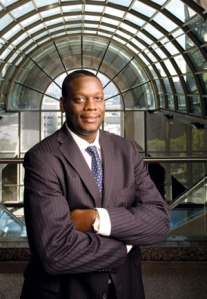
The worst of the worst may have been Dallas. Vanessa Potkin, chief counsel of The Innocence Project at Cardozo Law School, argues that “no other county in the country beats Dallas. It’s a county that beats out most states in the country.”

It’s an indication of a system that needs reform, she says, with  “staggering numbers of the innocent put in prison.” That is why the recent steps taken by new Dallas District Attorney Craig Watkins are so important, and so necessary. Continue reading

Dear BlackLivesMatter And Friends: If You Won’t Be Responsible, At Least Leave LeBron James Alone

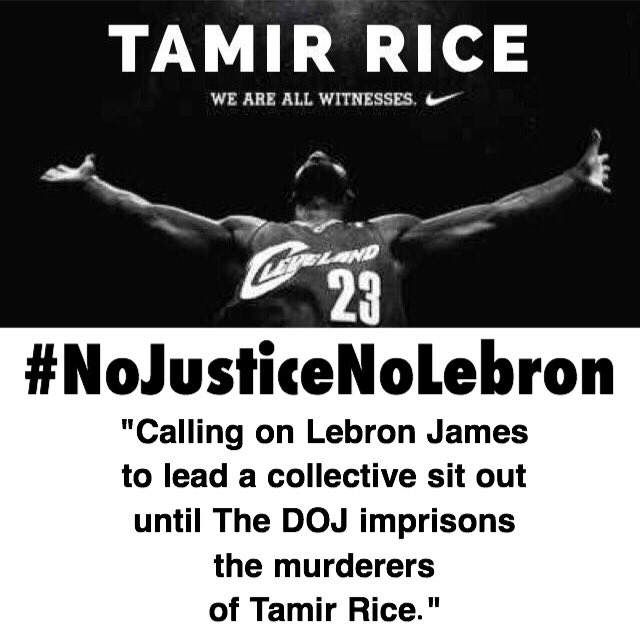
No Justice LeBron

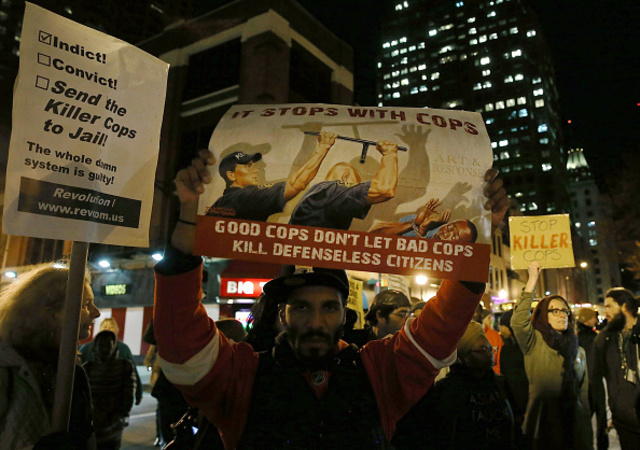
It should be apparent by now that BlackLivesMatter is a racist domestic terrorist organization. Terrorism is causing chaos for the sake of causing chaos in the imagined pursuit of a political agenda. That’s what the group, smug and shameless as ever, did over the post-Christmas weekend, disrupting the Mall of the Americas and blocking traffic at the Minneapolis airport. No, they haven’t killed anyone yet; they claim to be non-violent. We’ll see about that when they get sufficiently frustrated. One thing is certain about irrational, self-glorifying organizations: you never know how irrational they will get.

Now the Tamir Rice mess in Cleveland has presented BLM and its allies—which include all three Democratic candidates for President, according to their pandering rhetoric, as well as the Democratic National Committee— with a target more relevant to their alleged mission than disrupting children’s choir performances, losing money for small businesses and inconveniencing  Minnesotans who never did an African American harm in their lives. Using the hashtag #NoJusticeNoLebron, the Ferguson activated activists, led by writer Tariq Touré, have launched a Twitter barrage  imploring NBA superstar and Cleveland Cavaliers hometown hero LeBron James to refuse to play in NBA games until the Department of Justice, “imprisons the murderers of Tamir Rice.” Justice is of course investigating the fatal November 2014 shooting, since the Obama Administration tacitly encourages the divisive myth that any time a  white officer shoots a black man, it is presumptively a civil rights violation.

Like virtually everything that has come out of the incoherent, anti-white, anti-police movement surrounding the various controversial police shootings (of blacks only, however, though there have been more fatal shootings of whites…but never mind, that doesn’t advance the mythical narrative), this plan is ludicrous, unfair, and demonstrates the ignorance and/or contempt the protesters have for due process and the rule of law. Continue reading

Professionalism Tales: The Hilarious Prosecutor

Clown lawyerDeputy District Attorney Robert Alan Murray is a funny guy. Having apparently decided that it was too obvious to tell an arrested kid that he would be summarily shot, which is always a gas—you should see their faces!—and a bit too risky to put a whoopie cushion on a judge’s chair behind the bench—those old fogies have no sense of humor—the young California prosecutor hit on the brilliant idea of altering the transcript of the police interrogation of a Spanish-speaking defendant who was charged with lewd or lascivious acts with a child younger than 14 years old.

Murray, the dickens, added this wacky exchange to the transcript:

Officer: “You’re so guilty, you child molester.”

Suspect: “I know. I’m just glad she’s not pregnant like her mother.”

He kills me, he just kills me! Inexplicably, though, the assistant public defender complained about the altered transcript, told a judge, and the judge dismissed all charges against the accused child molester.Who would have guessed the public defender would use the gag to defend his client? What a party pooper. Continue reading

Mistrial In The First Freddie Gray Trial: There’s No Way Out Of This Ethics Train Wreck

Judge Declares Mistrial In First Freddie Gray Trial

In Baltimore this week, a judge declared a mistrial in the case of Baltimore Police Officer William G. Porter after jurors said they were deadlocked regarding all of the charges against him in the death of Freddie Gray. Porter, 26 and an African American, is the first of six police officers to be tried in Gray’s death. He has been charged with with involuntary manslaughter, second-degree assault, reckless endangerment and misconduct in office. Street protests began almost immediately.

Let’s review this disaster so far, shall we? Continue reading

KABOOM! TNT Promotes A Tainted Prosecutor As A Star

coldjustice

And all this time I believed that TNT reality star Kelly Siegler was a real star prosecutor who had actually convicted guilty people while observing the law and professional ethics.

Kaboom!

head_explodes

That was the sound of my brains exploding through the top of my skull, this time because they deserved to. I never learn.

Or is the state of prosecutorial ethics in the United States so wretched that Kelly Siegler is the best ex-prosecutor that TNT could find?

I’ll stick my neck out and say, “no.” I say that even though the state of prosecutorial ethics is pretty terrible. Kelly Siegler left her job as a Harris County, Texas district attorney in 2008 after successfully prosecuting 68 murder trials. In 2013, TNT signed her up to star in a reality show called“Cold Justice,” now in its third season on the cable network.

Good title! A state-court judge recommended a new trial for a Texas inmate named David Temple, prosecuted by Siegler in 2007  for allegedly killing his pregnant wife. He was convicted, but the court says the “legendary prosecutor” illegally withheld critical exculpatory evidence.  Wrote Judge Larry Gist in his opinion calling for a re-trial: “Of enormous significance was Siegler’s testimony at the habeas hearing that apparently favorable evidence did not need to be disclosed if the state did not believe it was true.”  Continue reading