The Sexting Persecution Of Cormega Copening

sexting

Charging kids with crimes for sexting themselves to a fully consenting fellow kid always seemed excessive and cruel to me. This story is the reductio ad absurdum that settles the matter.

In Fayetteville, North Carolina, 17-year-old Cormega Copening and his girlfriend Brianna Denson, also 17, began exchanging naked photos of themselves in text messages when they were 16. They were the only ones who saw the pictures, but someone somehow tipped off local authorities, who searched Copening’s phone and discovered them.

Copeling and Denson were charged with sexual exploitation. The Cumberland County Sheriff’s Office concluded that Denson had committed two felony sex crimes...against herself. A warrant cited her as both the adult perpetrator and the minor victim of two counts of sexual exploitation of a minor, second-degree exploitation for making her photo and third-degree exploitation for having her own nude photo in her possession. A conviction could have put Denson in prison and would have required her to register as a sex offender for the rest of her life. Denson pleaded guilty to a lesser charge and was given 12 months of probation.

Her sexting partner Copening, however, is still facing as much as ten years prison time for two counts of second-degree sexual exploitation and three counts of third-degree exploitation. As with Denson, the third-degree charges arise out of the pictures Copening had of himself.  That’s not the worst of the mind-twisting logic of this prosecution, however. North Carolina is one of two states in the country (the other: New York) that makes 16  the age of adulthood in the criminal system. The state’s consent laws consider anyone 16 and under a minor, but allows minors 16 or over to be charged as adults.

Gilbertian result: Copening is facing conviction, as an adult, for exploiting a minor—himself. Continue reading

Statutory Rape Case Study: The Ethical Necessity Of Prosecutorial Discretion

animal-house-1

Reason tells the troubling story of computer science majoring college student Zach Anderson, 19, who made the acquaintance of a girl  on the “Hot or Not?” app. He was in Indiana, she was in Michigan, a short drive away. They arranged a sexual liaison, a one-time hook-up. The girl lied about her age, though, in person and on her website profile: she was really just 14, just like innocent Larry “Pinto” Kroger’s seductive girl friend in “Animal House” (shown above in her last-second moment of candor*) and thus unable to legally consent to sex. Unlike Pinto, Zach’s fate wasn’t amusing. He  was arrested and tried.

The girl admitted that she lied about her age, and her parents didn’t blame Zach. They asked that the case be dropped. It wasn’t. Without a defense on the facts of the case, Zach made a plea bargain, pleading guilty in exchange for the prosecutor’s promise not to oppose his request for leniency under a Michigan provision for first-time sex offenders under 21 that allows them to avoid off the sex offender registry. The prosecutor then double-crossed him, technically not opposing leniency but reminding the judge that he had rejected such appeals to the leniency provision in the past. (Yes, that is opposing it. Yes, that’s unethical. Yes, the prosecutor is an asshole.)

Then Berrien County District Court Judge Dennis Wiley sentenced Anderson to 90 days in jail and placed him on the Sex Offender Registry for 25 years, lecturing him: Continue reading

Atrocious People, Part I: The Dog Rescuer, Elantra Cunningham, And What To Do About Her

bad-apples1

Let me make the ultimate conclusion of this post immediate and prominent:

The dog rescuer, , is admirable and ethical in every way. , the irresponsible and ungrateful woman who placed the dog in peril and had Hammons arrested for rescuing it is unethical and shockingly lacking in civilized values.

Let us all henceforth regard them and treat them appropriately according to their conduct in this matter.

There.

Now the details.

22-year-old Elantra Cunningham, owner of both the dog and the car, insisted that a police officer arrest Hammons for trespass and destroying private property. “It was not an arrest made by the deputy’s own volition,” Chief Deputy Lee Weems explained. “The woman pressed charges for breaking out the window of the car, and the deputy did what he had to do.”

Animal control cited Elantra for leaving her dog in a hot vehicle. Hammons spent the night in jail.

Comments: Continue reading

In Massachusetts, The Unethical Kind Of Prosecutorial Discretion

The DA explains why he's glad the law was broken. Wait...WHAT?

The DA explains why he’s glad the law was broken. Wait…WHAT?

Prosecutorial discretion is a critical aspect of the prosecutorial function. There are many good reasons for a prosecutor  to charge an individual with a crime in a particular case, and among the factors a prosecutor may legitimately consider in making this decision are, according to the American Bar Association’s ethical guidelines:

  • whether there is evidence of the existence of criminal conduct;
  • the nature and seriousness of the problem or alleged offense, including the risk or degree of harm from ongoing criminal conduct;
  • a history of prior violations of the same or similar laws and whether those violations have previously been addressed through law enforcement or other means;
  • the motive, interest, bias or other improper factors that may influence those seeking to initiate or cause the initiation of a criminal investigation;
  • the need for, and expected impact of, criminal enforcement to punish blameworthy behavior; provide specific and/or general deterrence;
  • provide protection to the community; reinforce norms embodied in the criminal law; prevent unauthorized private action to enforce the law;
  • preserve the credibility of the criminal justice system; and other legitimate public interests.
  • whether the costs and benefits of the investigation and of particular investigative tools and techniques are justified in consideration of, among other things, the nature of the criminal activity as well as the impact of conducting the investigation on other enforcement priorities and resources
  • the collateral effects of the investigation on witnesses, subjects, targets and non-culpable third parties, including financial damage and harm to reputation
  • the probability of obtaining sufficient evidence for a successful prosecution of the matter in question, including, if there is a trial, the probability of obtaining a conviction and having the conviction upheld upon appellate review; and
  • whether society’s interest in the matter might be better or equally vindicated by available civil, regulatory, administrative, or private remedies.

None of these suggest that the prosecutor’s personal sympathy with the motives of the lawbreaker is a sufficient or ethical reason not to charge when a serious crime has been committed. That, however, appears to be how Bristol County (Massachusetts) District Attorney Sam Sutter sees his role: arbiter and enabler of righteous criminal activity. Continue reading

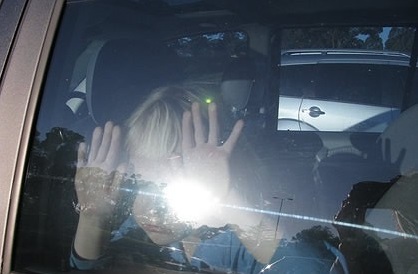
Ethics Quiz: Four Young Children Locked In A Hot Car

kid-in-hot-car

Mom and mom advocate Lenore Skenazy writes the Free Range Kids blog, which I have to remember to check out regularly. She is the source of today’s Ethics Quiz, which she obviously believes has an easy answer. We shall see.

Charnae Mosley, 27, was arrested by Atlanta police and charged with four counts of reckless conduct after leaving her four children, aged 6, 4, 2, and 1, inside of her SUV with the windows rolled up and the car locked.  It was 90 degrees in Atlanta that day. The children had been baking there for least 16 minutes while their mother did some shopping. A citizen noticed the children alone in the vehicle and reported the children abandoned.

Skenazy believes that the arrest is excessive—that the mother made a mistake, but that compassion is called for, not prosecution:

“[T]he mom needs to be told that cars heat up quickly and on a hot summer day this can, indeed, be dangerous. She does not need to be hauled off to jail and informed that even if she makes bail, she will not be allowed to have contact with her children…No one is suggesting that it is a good idea to keep kids in a hot, locked car with no a.c. and the windows up. But if that is what the mom did, how about showing some compassion for how hard it is to shop with four young kids, rather than making her life infinitely more difficult and despairing?The kids were fine. They look adorable and well cared for. Rather than criminalizing a bad parenting decision (if that’s what this was), how about telling the mom not to do it again?”

Do you agree with her? Here is your Ethics Alarms Ethics Quiz of the day:

Was it cruel, unfair, unsympathetic or unkind for Atlanta police to arrest Mosely for leaving her four young children locked in a hot car?

I am an admirer of Lenore Skenazy, but her pro-mother bias led her seriously astray this time. I think she is applying rationalizations, consequentialism and dubious, indeed dangerous reasoning to let this mother off a hook that she deserves to stay on. In her post, she even suggests that the car’s air conditioning was on, though there is no reason to believe that it was based on the reports. If the A-C was on, that changes the situation: I very much doubt that a mother would be charged with leaving four children in a locked, hot car if the car was not, in fact, hot. (One report states that the SUV windows were open, but that wouldn’t support the charges. If the windows were open, then Mosely left her children alone in public, which is a different form of child endangerment, but still dangerous. For the purpose of the quiz, I am assuming that the windows were shut, and that the air conditioning was not on. So does Skenazy.)

Let’s look at Lenore’s analysis errors:

  • She notes that the children were “fine.” What if they hadn’t been fine? That wouldn’t change what Mosely had done in any way, and what she did was irresponsible, dangerous and potentially deadly. Sixteen minutes, scientists tell us, is more than enough time for temperatures in a closed car to rise sufficiently high to cause heat stroke. Mosely, and obviously her children, were lucky—this is classic moral luck—and that shouldn’t be allowed to diminish the seriousness of what she did. (Aside: I just realized that to find that link, I made the same Google search that Justin Ross Harris made before leaving his infant son to die in his own hot vehicle, which has added to the circumstantial evidence causing him to be charged with murder.)
  •  The rationalizations peeking through Slenazy’s excuses for the mother’s conduct are quite a crowd. Along with #3. Consequentialism, or  “It Worked Out for the Best,” there is #19. The Perfection Diversion: “Nobody’s Perfect!” or “Everybody makes mistakes,” it’s twin, #20, The “Just one mistake!” Fantasy, #22. The Comparative Virtue Excuse: “There are worse things,” #25. The Coercion Myth: “I have no choice,”  #27. The Victim’s Distortion, #30. The Prospective Repeal: “It’s a bad law/stupid rule,” and #33. The Management Shrug: “Don’t sweat the small stuff!” There are probably some more, but that’s plenty.
  • If Skenazy believes that the “it was just a mistake” explanation should protect the mother from prosecution here, presumably she would make the same argument if all four kids (or just one) died. A lot of prosecutors feel the same way. I don’t.
  • If Mosley did this once, she may well have done it before, and is a risk to do it again. The best way to teach her not to do it again is, at very least, to scare her, inconvenience her, publicly embarrass her, and use the legal system to show how serious her wrongful conduct was, and how seriously society regards it. There is no guarantee that a lecture from a cop wouldn’t have just produced just an eye-rolling “Whatever…my kids were just fine, and I know how to take care of them” reaction, a repeat of the conduct, and eventually, a tragedy….followed, of course, by public accusations that the police were negligent and abandoned four children to the care of a dangerously reckless and incompetent mother.
  • I’m sorry, Lenore, but this-“How about showing some compassion for how hard it is to shop with four young kids, rather than making her life infinitely more difficult and despairing?” —makes me want to scream. How about not having more children that you can take care of safely? How about recognizing that your children’s safety comes first, with no exceptions, ever? How about meeting the minimum level of parenting competence, and not remaining ignorant about conduct that has been well publicized as cruel and potentially fatal to dogs, not to mention young children? In this case, compassion is a zero-sum game: compassion for the mother means showing none for her children.

When ethics fails, the law steps in. Too many children die every year from this tragic mistake that arises from distracted parenting, ignorance, and poorly aligned priorities. Prosecuting parents like this one for non-fatal incidents is exactly how the law serves as a societal tool to increase public awareness and encourage better conduct. It is in the best interests of Mosely’s four children as well as the children of every parent who reads about or hears her story to prosecute her to the full extent of the law.

_______________________________

Pointer and Source: Free Range Kids

Facts: Yahoo!, WSB

Comment of the Day: “The Kaitlyn Hunt Affair: Upon Further Review…”

And if Kaitlyn Hunt looked like this, would we be having this discussion?

And if Kaitlyn Hunt looked like this, would we be having this discussion?

John Garrison’s incisive Comment of the Day decisively adds Kaitlyn Hunt’s parents to the Kaitlyn Hunt Ethics Train Wreck, which has already enlisted them, the vigilante group Anonymous (itself a self-perpetuating ethics train wreck), the lazy news media, which apparently misreported the essential facts of the case, and the social media as passengers since my first post on the debacle.

Here are his comments on the follow-up post, The Kaitlyn Hunt Affair: Upon Further Review:

“There are a number of things that concern me about this case. First, I do agree that the law is very harsh in Florida. But we never seem to get the actual story from Kaitlyn’s parents. At first, they said that they were 17 when they started dating, and that the parents vindictively waited until Kaitlyn turned 18. That story seems to have changed around the time the police report was released stating that actual ages of the girls. At that time, the family claimed that the police not redacting the address was retaliation against them going to the media, even though it is not remotely unusual for the police not to redact the address of the accused.

http://www.examiner.com/article/kaitlyn-hunt-arrest-record-released-free-kate-family-disgusted-with-sheriff Continue reading

The Kaitlyn Hunt Affair: Upon Further Review…

This may not have been Juliet and Juliet after all...

This may not have been Juliet and Juliet after all…

As happens all too often with these viral ethics stories, the facts in the Kaitlyn Hunt case as represented in the first accounts appear to be wrong. Kaitlyn did not first become involved with her girlfriend when both were minors. According to an arrest affidavit , Kaitlyn and her girlfriend began dating in November 2012 when the younger girl was 14 and Kaitlyn was already 18.

Sorry, but that changes everything. Unless one is ready to assert as fact that lesbian relationships in which an adult, however young, becomes involved with a child are less dangerous and potentially damaging than heterosexual ones, Kaitlyn broke a law that is legitimate and sensible as it applies to her, and that law should be enforced. A 14- year old is not capable of meaningful or legal consent, and the opportunity for older, more experienced teens to exploit their inexperience, innocence and deference to older peers is significant and a genuine source of parental—and legal, and societal— concern. If the law permitted an 18/14 year-old sexual relationship between female teens, it would be difficult to explain why 18/12  year-old sexual relationships were materially different, and that being so, legal prohibition on 18-year-old young men seducing 12-year-old girls would be difficult to maintain. Continue reading

The Kaitlyn Hunt Affair

Child abuser?

Child abuser?

Once again, the ethical complexities of applying statutory rape and age of consent laws to relationships between non-adults and just barely adults has led to an ethics train wreck. The worst example in recent years has been the epic criminal system abuse of Genarlow Wilson, which if you are unfamiliar with his story and its aftermath, you should catch up here and here. The Kaitlyn Hunt case,however, has potential to be an epic of its own.

It appears that Floridian teen Kaitlyn Hunt was involved in a consensual, same-sex relationship with another girl in her school while both she and her partner were minors. They had started dating at the beginning of the school year, and the relationship had been known to both parents for months. Clearly the parents of the younger girl did not approve, for when Kaitlyn turned 18—the other girl was 15—they filed a criminal complaint with police. Continue reading

Ethics Dunce: Nicollet County Attorney Michelle Zehnder Fischer

Yes, this is certainly a good use of time, money, and public opprobrium.

The evil miscreant, facing her just desserts!

The evil miscreant, facing her just desserts!

An 86-year-old woman in Minnesota, Margaret Schneider, admits that she voted twice in a primary election, and attributes it to confusion, a memory lapse (she may have early dementia), and maybe believing that her later vote would cancel out her earlier one. The local Jaubert, prosecutor Michelle Zehnder Fischer, is bringing felony charges against Margaret, supposedly because a statute requires her to do so or risk misdemeanor charges herself.

Did I mention that Margaret, in addition to being 86 and having cognitive issues, suffers from Parkinson’s? Throw the wily old bat in the clink!!!! Continue reading

In the Wake Of The BP Disaster, Another Andersonville Trial

Someone has to be held responsible, even if nobody is to blame.

Someone has to be held responsible, even if nobody is to blame.

I don’t know about you, but I was certainly surprised to discover that in the view of the Justice Department, two men I had never heard of, Robert Kaluza and Donald Vidrine, were the ones responsible for the April 20, 2010 explosion of a BP oil rig that caused millions of barrels of oil to leak into the Gulf of Mexico for months, polluting the waters and the shores and causing billions of dollars of damages. That is the clear implication of the decision to prosecute the two rig  supervisors for manslaughter in the deaths of the eleven BP workers who perished in the blast.

Obviously, this makes no sense at all. Other government authorities have treated the BP spill as resulting from a complex series of errors, misjudgments, and regulatory violations on the part of several companies and their management teams. The allocation of responsibilities and damages will take years to unravel. How then can Kaluza and Vidrine, who are accused of disregarding abnormally high pressure readings that according to the government should have alerted them to the danger of a  blowout at BP’s Macondo well, be the ones facing criminal charges and prison time? How can this be fair, just, or even possible?

It isn’t fair or just. It is possible because it is easier to finger the two middle-managers who inherited the flawed well equipment that was a ticking time bomb than to put a whole company, or many companies, behind bars. As the F.B.I. agent investigating the theft of the Declaration of Independence keeps telling Nicholas Cage’s treasure hunter in the Dan Brown rip-off  movie “American Treasure,” “Somebody has to go to jail.” Kaluza and Vidrine may be the designated villains for the BP spill. Their only crime was one of moral luck: they were in the wrong place at the wrong time, the final links in a tangled chain of incompetence, corruption and miscalculations. Continue reading