Nakoula’s Arrest and Imprisonment: The Big Chill [UPDATED]

More than a week ago, one of my blogging, legal, ethics idols, Ken at Popehat, took issue with my post stating that the midnight questioning of Nakoula Basseley Nakoula (the alleged producer of “Innocence of Muslims,” the crude anti-Islam film then being blamed by the Obama administration for all the violence that erupted in the Middle East on September 11) would appear both abroad and at home to be in retaliation for his exercise of his free speech rights, and should have been avoided even if it was otherwise justified by his parole violations. Ken wrote:

“…What separates us from the mob is the rule of law. We shouldn’t ignore the rule of law by violating First Amendment principles in what Eugene Volokh correctly points out would be an utterly vain attempt to appease a mob. On the other hand, we shouldn’t hinder the rule of law to avoid the appearance of appeasement, either. That’s still letting the mob dictate our actions and our adherence to our own laws. “We would normally do X, but we mustn’t because it might enrage the mob” is just the flip side of “We would normally do X, but we mustn’t because it might embolden the mob.” Both are a sucker’s game. The mob’s actions are going to be driven by its own culture and by the people manipulating the mob for their own political gain. Jack, and others, seem to be saying that the mob will misunderstand the orderly administration of the law in this instance: but is there really any chance that the mob will ever make an honest attempt to understand, or will care, or that the forces manipulating them will react honestly? Respect the rule of law and fuck ’em if they don’t like it.”

On this blog, commenter tgt was more succinct:

“Jack’s view of law is that if you are enough of a dick, you should be immune from prosecution for any action.” Continue reading
Revisiting the Tragedy of the Dead Child in the Locked Car

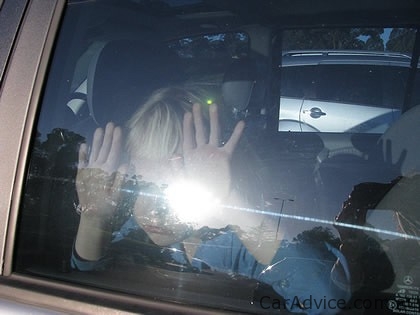
Almost two years ago, I wrote about Washington Post feature writer Gene Weingarten’s provocative and sensitive 2009 exploration of the tragic cases in which a distracted parent leaves a small child in an over-heated car. The issue, now as then, is how society should treat such parents, who are without exception crushed with remorse and guilt, their lives and psyches permanently scarred. Weingarten’s original piece, which won him a 2010 Pulitzer, did not take a position on how such parents should be treated by the criminal justice system. In today’s Washington Post, he does.

Weingarten writes:

“The parents are a continuing danger to no one, nor could anybody sanely argue that fear of prison is even a minuscule factor in preventing this. So we are left with the nebulous notion of punishing, for punishment’s sake alone, an act of accidental negligence that by its nature subjects the doer to a lifetime of agony so profound that it is unfathomable to anyone who has not lived it. Prosecution is not, in my view, warranted.”

Weingarten is thoughtful, analytical, reasonable, compassionate and fair. He is also, in this case, dead wrong. Continue reading

The Great Chicken Sandwich Caper, Safeway and the Duty to Think

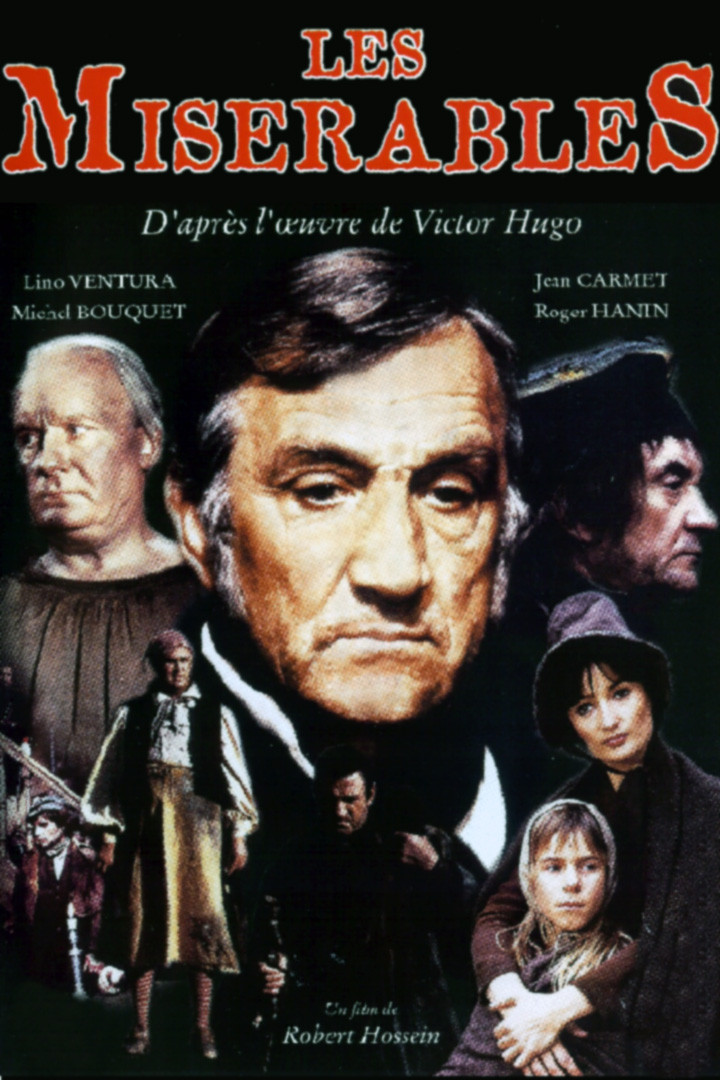
In the updated American version, Gene Valjean steals two chicken sandwiches for his starving and pregnant wife, and he is hounded by the relentless Safeway manager, Fred Javert.

[ Update (11/2/2011): Safeway has dropped the charges stemming from this incident, and rescinded its one year ban of the Leszczynskis. None of the commentary on the story is affected by this development. The damage is done, including to Safeway’s image. The fact that the grocery chain decided not to do any more damage, and took a week to decide it, is not anything to admire.]

Periodically Ethics Alarms breaks into a debate over whether prosecutorial discretion is fair and just. When appropriate, it is fair and just, and here is an example of the kind of injustice that occurs when the law is enforced without concern for proportion, intent, or common sense.

The villain in this case was not a prosecutor, however, but a Safeway manager.

Nicole Leszczynski, who is 30-weeks pregnant, her husband Marcin, and daughter Zophia were shopping at a Hawaii Safeway where they bought about $50 worth of groceries. During their shopping, Nicole began feeling faint, and ate two chicken sandwiches, a deal at only $5.  The couple forgot about  the sandwiches when they checked out their other items, however. (Full disclosure: I’ve done this. With a banana.) The store detained them and refused to accept payment. Then the store manager called the police, and they were placed under arrest for larceny.

In accordance with police policy when both parents are arrested, 3-year-old Zophia was taken by Child Protective Services, and not returned to the Leszczynskis until the next day. Continue reading

The John Edwards Indictment

Cornell law professor Michael Dorf makes my heart leap in admiration by bucking the popular trend—especially among Democrats and soft-hearted media types who 1) only like seeing Republicans and conservatives get in trouble for sex scandals and 2) think Edwards “has suffered enough” —of arguing that the prosecution of John Edwards for campaign fundraising violations is based on a weak legal case. On his blog, Prof. Dorf  argues persuasively to the contrary:

“At its core, the indictment alleges that Edwards knowingly: 1) in violation of federal campaign finance law, accepted money well in excess of the individual campaign contribution limits; 2) spent that money to hide his extramarital affair with Rielle Hunter; and 3) in violation of federal campaign finance law, failed to disclose either the donations or the expenditures….

“…The real question with respect to the government’s point number 1) is whether the hundreds of thousands of dollars were given to Edwards ” for the purpose of influencing any election for Federal office.”  Subject to a whole lot of irrelevant exceptions, that’s the statutory definition of a “campaign contribution.”  It is nearly inconceivable that the money for hiding the Hunter affair was not “for the purpose of influencing” the 2008 Presidential primary.  What other possible purpose could it have served? Continue reading

Ethics Dunces: Joe Klein and Chris Matthews

John Edwards agrees with Chris Matthews

Journalist Joe Klein has been a candidate for an Ethics Dunce award for a long time, because he has been ethically suspect or worse for a long time. His defining integrity moment came when he lied about his authorship of the Bill Clinton roman-a-clef, “Primary Colors.” Since that time, Klein has gradually evolved into a shamelessly biased and ethically muddled political commentator from the left. Too bad. He’s a perceptive guy and a wonderful writer, but he makes his living now shooting from the hip, so we seldom get the benefit of his best qualities.

It was inevitable that the Chris Matthews Show would allow Klein’s ethical blindness to reach full flower.  Matthews has been on his own journey of self-diminishment since MSNBC decided to become the anti-Fox; where once he could be counted on to treat the issues of the day fairly and avoid partisan cheerleading, the Obama years have seen him abandon any effort at objectivity or even-handedness. Matthews’ Sunday morning panel show now eschews ideological balance and has Matthews posing questions to a rotating group of reliable conservative-bashers, with an occasional straight journalist mixed in who at least pretends to be neutral.  On Sunday, Matthews asked his panel about the appropriateness of the Justice Department’s prosecution of uber-cad John Edwards for violations of the federal election laws. It’s not a bad question, and reasonable people can disagree about the answer. The charges against Edwards stem from solicitation of large cash gifts from two long-time friends and supporters while he was simultaneously running for president and trying to cover up the existence of his love-child with Rielle Hunter and the adulterous affair that spawned her.  The money was given directly to Hunter, raising a legal question as to whether it was really a campaign contribution at all. Continue reading

The Great Norwalk Kindergarten Heist

The Tanya McDonald controversy

A homeless woman is facing 20 years in prison if she is convicted of stealing over $15,000 of Norwalk, Conn. taxpayer funds. The details of her crime are controversial: she lied about her residence to get her child into what she believed was a better school system, but one that, as non-resident, she was not entitled to use. The details also create a tangled mess of law, justice, ethics, fairness, compassion, public policy, finances, class and education.

Let’s try to unravel it, shall we? Continue reading

Outrageous Prosecution: The Eric Rinehart Story

Asst. U.S. Attorney DeBrotas predecessors

Eric Rinehart, a 34-year-old police officer in  Middletown, Indiana, began consensual sexual relationships with two young women, ages 16 and 17. Rinehart was going through a divorce at the time, and in Indiana, he was doing nothing illegal, for 16 is the age of consent in the Hoosier state? Unethical? I tend to think so, but that isn’t part of the story.

One of the girls told Rinehart that she had posed for erotic photos for an earlier, presumably younger boyfriend, and suggested that she do the same for him. So Rinehart gave her his camera, with which she took the lascivious photos. This inspired Rinehart to take some more sexy photos and at least one video of both girls, which he downloaded to his computer.

For this, Rinehart was convicted on two federal charges of producing child pornography. Continue reading

“He’s Suffered Enough”: Ethical Lawyering, Dubious Ethics

Attorney Barry Wilson is undoubtedly doing his job, and it is a tough one: arguing for the justice system to do less than throw the book at Boston’s disgraced former Boston City Councilor Chuck Turner, who richly deserves it. This is the lawyer’s sacred duty to a client that makes the profession the butt of jokes and the object of contempt, but it is an ethical and systemic necessity.  It also can be stomach-turning in cases like Turner’s. All Wilson has in his defense arsenal is the hoary “he’s suffered enough” argument. It is always ethically dubious, and this time it boarders on ridiculous.  Continue reading

Ethics Fouls and Julian Assange’s Rape Case

Well, well, well, Mr Assange!

How does it feel to have your own embarrassing and confidential information leaked to the media and publicized to the world?

On the sound ethical principle that two wrongs doesn’t make a right, The Guardian acquiring and publishing the leaked police report relating to Assange’s rape charges in Sweden is no less unethical because Assange is a smug foe of confidentiality. Nevertheless, it is hard to recall an instance when seeing the tables turned on someone was so satisfying. Ethics foul: Whoever leaked the records, and The Guardian for printing them. But thanks anyway.

It is satisfying for reasons other than delicious irony. Continue reading

Should a Prosecutor Be Lenient So A Rich Felon Can Keep His Big Bucks Job?

Good intentions, it is said, pave the road to Hell. It’s an especially direct road when the good intentions are those of a prosecutor who doesn’t have the skills or common sense to reach the correct decision to resolve a rather easy ethical conflict. An ethical conflict occurs when there are valid ethical arguments for diametrically opposed actions, and one must weigh the priorities, implications and likely results in order to make the most ethical choice. Mark Hurlbert, the district attorney for Eagle, Colorado, faced such a conflict, as prosecutors often do. He botched it royally, and that road he’s paving is going to reach far beyond Colorado. Continue reading