The Seventh Annual Ethics Alarms Awards: The Best of Ethics 2015, Part I

Sweet Briar montage

Welcome to the Seventh Annual Ethics Alarms Awards, our blog’s retrospective of the best and worst in ethics over the past year, 2015.

It was a rotten year in ethics again, it’s fair to say, and Ethics Alarms, which by its nature and mission must concentrate on episodes that have lessons to convey and cautionary tales to consider probably made it seem even more rotten that it was. Even with that admission, I didn’t come close to covering the field. My scouts, who I will honor anon, sent me many more wonderfully disturbing news stories than I could post on, and there were many more beyond them. I did not write about the drug company CEO, for example, who suddenly raised the price of an anti-AIDS drug to obscene levels, in part, it seems, to keep an investment fraud scheme afloat. (He’ll get his prize anyway.)

What was really best about 2o15 on Ethics Alarms was the commentary. I always envisioned the site as a cyber-symposium where interested, articulate and analytical readers could discuss current events and issues in an ethics context. Every year since the blog was launched has brought us closer to that goal. Commenters come and go, unfortunately (I take it personally when they go, which is silly), but the quality of commentary continues to be outstanding. It is also gratifying to check posts from 2010 and see such stalwarts who check in still, like Tim Levier, Neil Dorr, Julian Hung, Michael R, and King Kool.  There are a few blogs that have as consistently substantive, passionate and informative commenters as Ethics Alarms, but not many. Very frequently the comments materially enhance and expand on the original post. That was my hope and objective. Thank you.

The Best of Ethics 2015 is going to be a bit more self-congratulatory this year, beginning with the very first category. Among other virtues, this approach has the advantage of closing the gap in volume between the Best and the Worst, which last year was depressing. I’m also going to post the awards in more installments, to help me get them out faster. With that said….

Here are the 2015 Ethics Alarms Awards

For the Best in Ethics:

Most Encouraging Sign That Enough People Pay Attention For Ethics Alarms To Occasionally Have Some Impact…

The Sweet Briar College Rescue. In March, I read the shocking story of how Sweet Briar College, a remarkable and storied all-women’s college in Virginia, had been closed by a craven and duplicitous board that never informed alums or students that such action was imminent. I responded with a tough post titled “The Sweet Briar Betrayal,” and some passionate alumnae determined to fight for the school’s survival used it to inform others about the issues involved and to build support. Through the ensuing months before the school’s ultimate reversal of the closing and the triumph of its supporters, I was honored to exchange many e-mails with Sweet Briar grads, and gratified by their insistence that Ethics Alarms played a significant role in turning the tide. You can follow the saga in my posts, here.

Ethics Heroes Of The Year

Dog Train

Eugene and Corky Bostick, Dog Train Proprietors. OK, maybe this is just my favorite Ethics Hero story of the year, about two retired seniors who decided to adopt old  dogs abandoned on their property to die, and came up with the wacky idea of giving them regular rides on a ‘dog train” of their own design.

Ethical Mayor Of The Year

Thomas F. Williams. When the Ferguson-driven attacks on police as racist killers was at its peak (though it’s not far from that peak now) the mayor of Norwood, Ohio, Thomas F. Williams, did exactly the opposite of New York Mayor Bill de Blasio in response to activist attacks on the integrity of his police department. He released a letter supporting his police department without qualification. At the time, I criticized him for his simultaneously attacking activists as “race-baiters.” In the perspective of the year past, I hereby withdraw that criticism.

Most Ethical Celebrity

Actor Tom Selleck. In a terrible year for this category, Selleck wins for bravely pushing his TV show “Blue Bloods” into politically incorrect territory, examining issues like racial profiling and police shootings with surprising even-handedness. The show also has maintained its openly Catholic, pro-religion perspective. Yes, this is a redundant award, as “Blue Bloods” is also a winner, but the alternative in this horrific year when an unethical celebrity is threatening to be a major party’s nominee for the presidency is not to give the award at all.

Most Ethical Talk Show Host

Stephen Colbert, who, while maintaining most of his progressive bias from his previous Comedy Central show as the successor to David Letterman, set a high standard of fairness and civility, notably when he admonished his knee-jerk liberal audience for booing  Senator Ted Cruz

Sportsman of the Year

CC Sabathia

New York Yankee pitcher C.C. Sabathia, who courageously checked himself into rehab for alcohol abuse just as baseball’s play-offs were beginning, saying in part,

“Being an adult means being accountable. Being a baseball player means that others look up to you. I want my kids — and others who may have become fans of mine over the years — to know that I am not too big of a man to ask for help. I want to hold my head up high, have a full heart and be the type of person again that I can be proud of. And that’s exactly what I am going to do.”

Runner-up: MLB Commissioner Rob Manfred, who dismissed the ethically-addled arguments of Pete Rose fans to reject his appeal to be have his lifetime ban for gambling lifted.  For those who wonder why football never seems to figure in this category: You’ve got to be kidding.

Ethics Movie of the Year

SpotlightTIFF2015

“Spotlight”

Runner-up: “Concussion”

Most Ethical Corporation

Tesla Motors, the anti-GM, which recalled all of its models with a particular seatbelt because one belt had failed and they couldn’t determine why. Continue reading
Incompetent Elected Official Face-Off: Jackson, Miss. Councilman Kenneth Stokes vs. Minneapolis City Council Member Alondra Cano

worse

The mind-blowing conduct of Minneapolis City Council member Alondra Cano and the shocking words of Jackson, Mississippi City Council member Kenneth Stokes raise many questions. Who elects these people? How is it possible that individuals this ignorant of basic American values, this defiant of common decency, and this contemptuous of the responsibilities of elected officials acquire any power at any level of government?

I suspect that the answers, whatever they are, will be useful in diagnosing the dread illness that has created so many supporters for Donald Trump. The challenge for today, is simpler, if not necessarily easier: Which of these local embarrassments is worse? Let’s review their recent headlines, shall we?

Alondra Cano was an enthusiastic participant in the unethical and illegal Black Lives Matter demonstrations at the Mall of America and the Minneapolis-St. Paul airport after Christmas.  They were called “protests,” but the objects of the civil disobedience were unrelated in any way to the matter being protested, unless the objective was to do damage to ordinary American life—and it was—and to intimidate ordinary, law abiding citizens. This wasn’t courageous elected officials joining a civil rights march for a legal demonstration in the Sixties. Cano allied herself with racist thugs, against the system and the citizens she was elected to represent. Continue reading

Race-Baiting Scalia (For Doing His Job)

Ignore them, Nino.

Ignore them, Nino.

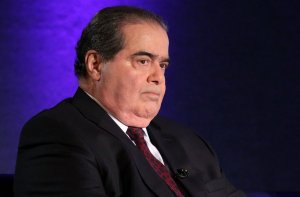
As is often the case with topics here, I heard about the uproar over Justice Antonin Scalia’s controversial question during oral argument on the latest challenge to affirmative action accidentally, when a Facebook friend re-posted a furious message from his friend calling Scalia a moron and a racist. Even reading a second hand account of what somebody read that Scalia said (the transcript hadn’t been released, but never mind: that was enough for my friend’s African-American friend to call a Supreme Court Justice a racist and for my friend, who is a liberal-minded professor, to endorse it), I could tell that the attack was unfair and worse, outright race-baiting.

What Scalia was alleged to have asked a lawyer was whether affirmative action actually hurt blacks by putting them in “more advanced” institutions, that they “don’t belong” in elite schools. I knew, no matter what Justice Scalia really said, that he was talking about some blacks, not all blacks. That’s obvious: if an African American student can be admitted to an elite school without the “thumb on the scale” of affirmative action, obviously he or she is qualified and belongs there. But more importantly, I knew from personal experience that being admitted to a top school when the student’s credentials wouldn’t normally warrant it could be disastrous.

I worked in the administration of Georgetown Law Center in the late seventies and early eighties, as the school was trying to increase its percentage of black students. I was involved in the process sometimes, and was stunned by its unfortunate revelations: for example, some of the black students we accepted from elite colleges lacked basic reading, writing and critical thinking skills. I remember one Yale grad in particular who could not write a comprehensible sentence.

Georgetown Law set up a special class for these minority students (and a couple of  white “legacy” admits who were sons of wealthy alums, one of which I had specifically told his father could not possibly graduate, based on his college grades and test scores.) Then the school was sued by one of the affirmative action students, who claimed that making him take the remedial class was demeaning and racist. Of course he would have been better off in a less demanding law school. Affirmative action did none of these students any favors. In my opinion then and now, their welfare, confidence and self-esteem was  sacrificed so Georgetown could look progressive, and to the dubious objective of diversity for diversity’s sake.

It wasn’t just my Facebook friend’s friend that was bashing Scalia as a racist. It was much of the news media. “Justice Scalia Suggests Blacks Belong at ‘Slower’ Colleges” reported Mother Jones. “Scalia: Maybe black students belong at ‘less-advanced’ schools” reported The Hill. MSNBC’s slur was Justice Antonin Scalia floats ‘lesser schools’ for black students.  A New York Times editorial—the paper has, it appears, lost its mind– said that Scalia raised an “offensive premise which has not gotten such a full airing at the Supreme Court since the 1950s.” The New York’s Daily News  headlined“SUPREME DOPE” over a photo of Nino. Continue reading

When Race-Sensitivity Becomes A Pathology: The Case Of Kevin Durant’s Shoes

The offensive shoes, and even though they cost $180, the offense is not the shoes...

The offensive shoes, and even though they cost $180, the offense is not the shoes...

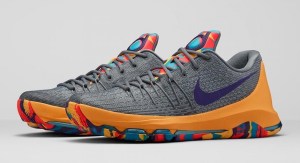
NBA star Kevin Durant, who grew up in Maryland’s majority African American Prince George’s County, put both his initials and those of his home community on Nike’s  “KD8 PG County” model basketball shoe. Rather than being grateful or feeling honored, however, many in the community are complaining that Nike, and Durant, has “offended” the area.

“As you can imagine, we are very proud of the success of Prince George’s County native Kevin Durant, and the pride that he has in growing up in the county,” the office of County Executive Rushern L. Baker III (D) said in an e-mail sent to Nike. “We do want to make the Nike corporation aware that ‘P.G.’ is a term that many in Prince George’s County consider pejorative and/or an insult.”

What? I’ve lived in the Washington, D.C. area for decades and heard the county called “P.G.” and “Prince George’s” interchangeably without comment. Now the County’s initials are offensive?

Explains the Washington Post: “Insiders” say the initials could just as easily stand for “Pretty Ghetto” or “Pretty Grim.”

Oh.

Of course, “P.G.” could also just as easily stand for Poor Godzilla, Putrid Gin, Parsimonious Greeks, or Penis Garnish.

Kevin Durant, who is black, decides to give his community a call out and gets slammed for it by activists and race-baiters who are actively searching for ways to elevate themselves, manufacture publicity and influence, and gain the power of the victim.

A group that is perceived—accurately in too many cases—to be so determined to find racial offense that its allies, supporters,  friends and in this case, members must be constantly vigilant and wary to avoid being accused of offense will eventually find their one-time allies sympathy replaced by resentment.

Who in their right mind want to deal with people who are looking for ways to call them bigots? There is a limit to how tolerant society will be of the “microagression” game, and there should be.

Racial sensitivity is edging toward racial super-sensitivity, and that will eventually become a handicap—a self inflicted one—if it hasn’t already.

Ethics Observations On The Second Democratic Candidates Debate, Part 2 of 2

Dems three

The transcript is here.

Part I is here.

6. Sooner or later, a Democrat is going to have to answer a question about the “safe places,” microaggressions,” college campus meltdown that is, I think, just gathering momentum, and choose between alienating the young black base that elected Barack Obama, or horrifying people who believe in free speech and thought, presumably a few iconoclast Democrats and a lot of independents. Significantly, CBS didn’t ask Sen. Sanders that question.

Well, it’s significant if you  believe that CBS is protecting the Democrats. As we saw in Bernie’s coddling of Black Lives Matter, and know from the fact that he’s a Marxist at heart, he doesn’t really expect to be nominated and has no spine (see Part I), Sanders was a good bet to fully endorse the anti-free speech position taken by the students at Yale, Amherst and Mizzou. That would have put the whole Party, which right now is Hillary, on the spot. Surely CBS would never do that. The alternative is to believe that last night’s journalists were inept.

Only Hillary was asked the question, and she ducked it with something akin to what Olson Johnson called “authentic frontier gibberish”:

DICKERSON: Secretary Clinton, you told some Black Lives Matter activists recently that there’s a difference between rhetoric in activism and what you were trying to do, was — get laws passed that would help what they were pushing for. But recently, at the University of Missouri, that activism was very, very effective. So would you suggest that kind of activism take place at other universities across the country?

CLINTON: Well, John, I come from the ’60s, a long time ago. There was a lot of activism on campus — Civil Rights activism, antiwar activism, women’s rights activism — and I do appreciate the way young people are standing up and speaking out. Obviously, I believe that on a college campus, there should be enough respect so people hear each other. But what happened at the university there, what’s happening at other universities, I think reflects the deep sense of, you know, concern, even despair that so many young people, particularly of color, have…You know, I recently met with a group of mothers who lost their children to either killings by police or random killings in their neighborhoods, and hearing their stories was so incredibly, profoundly heartbreaking. Each one of them, you know, described their child, had a picture. You know, the mother of the young man with his friends in the car who was playing loud music and, you know, some older white man pulled out a gun and shot him because they wouldn’t turn the radio down.Or a young woman who had been performing at President Obama’s second inauguration coming home, absolutely stellar young woman, hanging out with her friends in a park getting shot by a gang member.And, of course, I met the mothers of Eric Garner and Tamir Rice, and Michael Brown and Trayvon Martin and so many of them who have lost their children.So, your original question is the right question. And it’s not just a question for parents and grandparents to answer. It’s really a question for all of us to answer, every single one of our children deserves the chance to live up to his or her god-given potential. And that’s what we need to be doing to the best of our ability in our country.

DICKERSON: All right, over to Kevin Cooney.

Hilarious.

Continue reading

Ethical Quote Of The Week: CNN’s Mike Rowe

In this case, it’s unfair to Mike Rowe’s brilliant and measured rebuttal to MSNBC’s race-baiting talking head Melissa Harris-Perry’s latest ethics pollution to just quote a brief paragraph or two, so I’m going to quote virtually  his entire Facebook post.

Rowe, the man’s man star of the Discovery Channel’s “Dirty Jobs” show and now CNN’s “Somebody’s Gotta Do It” was responding to Melissa Harris-Perry’s dressing down of a guest who referred to new House Speaker Paul Ryan as “hard-working.” This woman’s mission in life seems to be to make it impossible for white people to speak, since she is meticulously eliminating all words and phrases as either racist, homophobic, misogynist or insensitive. (Donald Trump should send her a bonus, for this kind of thing is what is driving his support) In her latest assault, she said this:

“I want us to be super careful when we use the language “hard worker.” I actually keep an image of folks working in cotton fields on my office wall, because it is a reminder about what hard work really looks like. But in the context of relative privilege, when you talk about work-life balance, the moms who don’t have health care aren’t called hard workers. We call them failures. We call them people who are sucking off the system.”

Rowe’s diagnosis of Harris-Perry’s world-view was this: Continue reading

Stupid Ethics Or Unethical Stupidity, Will Someone Please Explain To Alabama Why Appearances Matter?

Alabama-county-mapThis opens a fascinating inquiry. Is it unethical for a state to appear stupid? Is appearing to be unethical inherently stupid? If something looks incredibly unethical but is really just stupid, then is it unethical anyway?

Welcome to Alabama.

Alabama is in a dire budget crisis and must cut state services. So this week it announced that 31 satellite state Motor Vehicle Division offices would no longer have access to driver’s license examiners as a result of the cuts. Alabama added a controversial voter photo-ID law last year, and opponents who argue, like the Obama Dept. of Justice, that the idea of making sure that voters are who they say they are is part of a plot to deny the vote to African Americans could not have asked for a smokier gun. Of the ten Alabama counties with the highest percentage of non-white registered voters—Macon, Greene, Sumter, Lowndes, Bullock, Perry, Wilcox, Dallas, Hale, and Montgomery, according to the Alabama Secretary of State’s office—Alabama is closing driver license bureaus in eight of them. Every county in which blacks make up more than 75 percent of registered voters will see satellite DMVs closed.

If  Alabama was looking for a way to validate the “disparate impact” principle where a state can be found to be racist by  the impact of its actions whether or not there was racist intent, it could not have done better. If it was trying to give ammunition to those who have argued that the Supreme Court “gutted” the Civil Rights Act when it ruled that the 1965 criteria that allowed the Justice Department to assume racism when an old Confederacy state was involved was out of date, and either new data had to be used or states with Stephen Foster songs as their State anthems were going to have to be treated like all the other states and allowed to govern themselves, it could not have been more effective.

“Make IDs essential to vote, then make it harder for blacks to get drivers licenses! What an ingenious plan! BWAHAHAHAHAHAHA!!! Nobody’s going to see through that!

Or was it:

“Well, gotta cut somewhere—hey, lets; close the DMVs in these counties I just hit with those darts. What? Oh, who cares what the demographics are…we aren’t trying to target anyone…everyone knows that Alabama has a history of being fair and just! Want to go out back and juggle chain saws with me?”

What a conundrum. Stupid? Unethical? Stupid and unethical? So obviously unethical that it’s self-destructively stupid? So stupid that it is unethical for anyone that handicapped to be placed in a position of influence? Continue reading

#BlackZombiesMatter: When The Most Ethical Response To Race Activists Is Mockery

Wait, what color is that hand? I'm keeping track here...

Wait, what color is that hand? I’m keeping track here…

I have no idea what it would like to be black. I accept the truth of  Clarence Darrow’s empathetic words in his defense of Ossian Sweet: I assume being black must be overwhelming at times, all consuming, distorting how everything is seen and experienced. Nevertheless, it does not justify everything, It does not excuse anything. There are some reactions to the black experience that can be fairly labelled destructive, or foolish, or paranoid, or racist. Or ludicrous. When we see these reactions, we ought not to indulge them, nor hesitate for a second to call them exactly what they are. The fact that black Americans are reacting to being black does not mean that the reaction is always worthy of respect, and if there is a mass delusion born of emotion or demagoguery or fanaticism or despair, the best response may well be a bucket of cold water, or to point and laugh. Hard.

AMC’s “The Walking Dead” and it’s prequel “Fear the Walking Dead” are among the most diverse TV shows on network or cable, filled with villains, victims, heroes and martyrs of all races and combination of races, most of whom are doomed. Yet these shows have become yet another target of the Black Lives Matter movement, an even wackier one than Bernie Sanders. Apparently the shows discriminate against black characters. Well, it does if you are so besotted with racial grievances and suspicion of American culture that you can’t think straight.  Just as the group sees hands upraised when there were none, it sees, along with lunatic race-baiter/author Tananarive Due,  racial bias against black men in two shows that are thoroughly post-racial—you know, when the dead are eating the living, color really, really doesn’t matter. Black men was an essential qualification of this latest grievance, because arguably the most admirable and interesting character oin either show so far is a black woman, Michonne, played by Danai Gurira. Never mind, it’s black men that the show, like America, hates.

I know these shows rather well, in part because they  contain great ethics hypothetical. I’ve been trying to think of any white character that these race obsessed guilt-mongers wouldn’t find offensively-treated if they were black. The putative star of “The Walking Dead,” Rick, is a weak leader, not too bright, and unstable. Make him black, and he’s an insult to black men; right now, he’s just an insult to police, Southerners, fathers, leaders, and American characters played by British actors. If Due and the rest can be insulted by the  fates of the wide variety of black characters that have appeared on both shows so far, they can find a way to be insulted by any characters, plot developments, costuming make-up, or manner of death. Continue reading

The Nurturing Of Race Hate, Part Two: The Daniele Watts Saga

daniele-watts

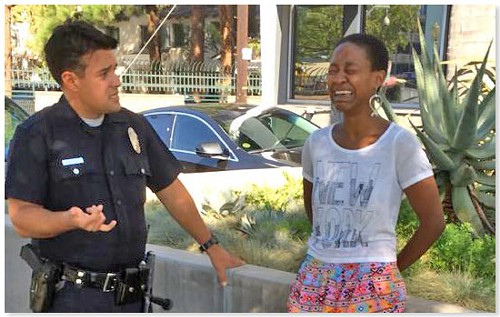
Last September, African-American actress Daniele Watts (“Django Unchained”) engaged in lewd, if non-felonious, public conduct, then exploited the tensions arising out of Ferguson to claim victim status, police harassment and race prejudice. When the police were exonerated by the recording of her arrest and she was ordered to apologize by a judge (and asked to apologize by civil rights leaders, who were embarrassed after they rallied to her support only to find that she had played the race card without  justification), she failed—twice—to deliver a sincere apology. She is defiant and intoxicated by her martyrdom, another young African American who has been convinced of her entitlement to be an anti-white racist.

To appreciate the tale, we have to go back to September 11, 2014, when the actress and her white boyfriend, a “celebrity chef,” were visibly engaged in sexual conduct in their car in broad daylight on an LA street. Neighbors complained—we have not yet reached the point where rutting in public is legal and acceptable, but give progressives time—and police responded. Naturally, as this was at the height of the Ferguson controversy, the news media immediately reported the story as more police harassment of black citizens, this time for “kissing while black.” Here’s a typical account from  September 14: Continue reading

Suggested Journalism Ethics Rule For The Washington Post: If You Want To Publish Race Hate, Anti-American Op-Ed Pieces,At Least Insist That They Don’t Misrepresent The Facts.

Is that too much to ask?

Sunday last,  the Washington Posts’s Outlook section included an anti-American diatribe against police and whites by a California public defender named Raha Jorjani. I know there are black racists that see the world, law enforcement and government as he does, and there is nothing wrong or irresponsible in the Post allowing such screeds to see the light of day in its pages—all the better to expose them. I would feel better if the equivilent racist bile from the white side was not treated differently, but I tire of pointing out this double standard, at least right now.

But no editor should allow such a piece to include factual distortions on the scale of the opening paragraph, which begins,

Suppose a client walked into my office and told me that police officers in his country had choked a man to death over a petty crime. Suppose he said police fatally shot another man in the back as he ran away. That they arrested a woman during a traffic stop and placed her in jail, where she died three days later. That a 12-year-old boy in his country was shot and killed by the police as he played in the park.

Suppose he told me that all of those victims were from the same ethnic community — a community whose members fear being harmed, tortured or killed by police or prison guards. And that this is true in cities and towns across his nation. At that point, as an immigration lawyer, I’d tell him he had a strong claim for asylum protection under U.S. law.

What if, next, he told me he was from America? Black people in the United States face such racial violence that they could qualify as refugees.

The short and well-earned response to his last sentence is “Bullshit.” Before one can even get to his offensive and absurd (and paranoia-seeding: the lawyer must regard it as good for business) thesis, the utter dishonesty of his premises disqualify the op-ed for serious consideration, as well as raise question about the way this guy would practice law. If that is how he represents facts in court, he won’t be a lawyer long: Continue reading