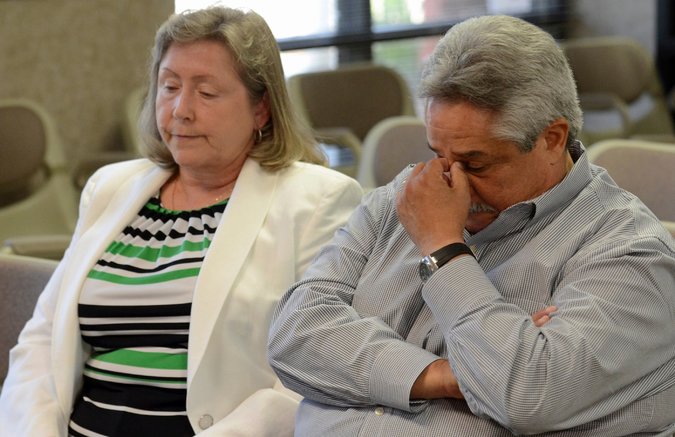
Accidental illegal Mario Hernandez waits to finally get the citizenship he thought he already had. Those 10 votes he cast without being eligible don’t matter, because he wasn’t trying to defraud anyone. What else is there to the story? That’s it, right? Problem solved!
Last week, the New York Times happily related the heart-warming tale of Mario Hernandez, a former federal employee and an Army veteran who for decades thought he was a United States citizen but wasn’t. The problem was rectified at last when he was sworn in as a citizen in a ceremony in Jacksonville, Florida. In the process of telling the story, the Times casually notes that he voted in every major election since Jimmy Carter’s in 1976. The Times’ ethics alarms are long dead: to them, this is just a detail on the way to arguing one of its pet agenda items, that the immigration system needs fixing. It does, but one weird story where a series of record-keeping errors resulted in a botched citizenship status doesn’t prove it. Because he has a different concern, however Wall Street Journal blogger James Taranto did the math. Hernandez, a non-citizen, voted in ten elections, by his own admission, and nobody knew.
That is significant, and does prove something. It proves that the Democratic, NAACP, Eric Holder mainstream media claim that there is no evidence that people are voting in elections who shouldn’t is a problem worthy of addressing is a cynical excuse to cry racism to tar Republicans who are pushing for an obvious, practical, responsible requirement of photo ID cards to establish voter eligibility. As Taranto points out, such a system would have not only prevented Hernandez’s invalid—but tallied*—votes, but also would have alerted him decades ago of his citizenship problem. More important, the incident illustrates the inherent dishonesty of the argument that because a large number of such votes by non-citizens haven’t been caught, they problem doesn’t exist. If one non-citizen, however innocently, could have voted ten times over decades without it being noted, it is fair to assume that there is a problem. Voter IDs address the problem; it is irresponsible not to address the problem, and to argue that only racism could be behind an effort to improve the integrity of a system that allows a single non-citizen to cast ten votes is unfair, irresponsible and intentionally misleading. Continue reading






 Ethics Alarms