Political Correctness Delusions #2: The U.S. Military Naming Its Helicopters After Native American Tribes Is A Slur

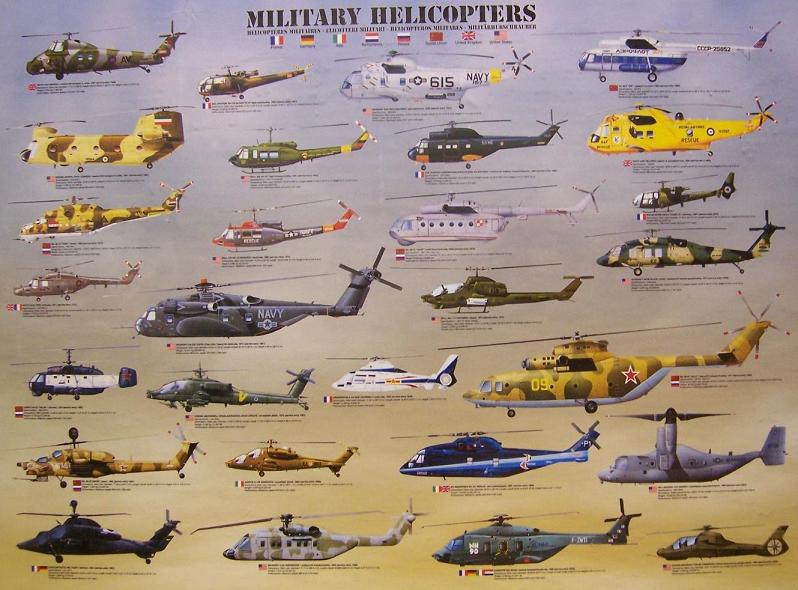
Military Helicopters 0088

The scourge of political correctness causes many kinds of damage, but the most ominous is that it intentionally greases a steep slippery slope. The effort to constrain private and public expression according to an endlessly versatile definition of “offensiveness”  is a desirable weapon for political activists, grievance bullies, censorious and debate-challenged advocates, weenies, and busybodies. Once one specious argument for strangling another small sliver of free speech succeeds, usually after capitulation in the face of relentless vilification and hounding aided and abetted by the press, this ugly and anti-American faction of the progressive movement just moves on to another target. The process  will never end, although it will get more oppressive, restrictive and absurd. That is, it will never end until a backlash and an outbreak of rationality stops it in its tracks.

The Patent Office’s politically motivated (and doomed) attack on the Washington Redskins was an example of political correctness at its worst, and sure enough, here comes another deluded censor with a related and even sillier grievance. Simon Waxman wrote a jaw-dropping op-ed for the Washington Post arguing that the military’s use of Native American names and works on its helicopters and weaponry is a “slur.” Why, you ask? Because the white man cheated and defeated the Indians using superior fire power, that’s why. Yeah, sure, we pretend to honor their bravery now, but that’s just to salve our guilty consciences.  He blathers…

The message carried by the word Apache emblazoned on one of history’s great fighting machines is that the Americans overcame an opponent so powerful and true that we are proud to adopt its name. They tested our mettle, and we proved stronger, so don’t mess with us. In whatever measure it is tribute to the dead, it is in greater measure a boost to our national sense of superiority. And this message of superiority is shared not just with U.S. citizens but with those of the 14 nations whose governments buy the Apache helicopters we sell. It is shared, too, with those who hear the whir of an Apache overhead or find its guns trained on them. Noam Chomsky has clarified the moral stakes in provocative, instructive terms: “We might react differently if the Luftwaffe were to call its fighter planes ‘Jew’ and ‘Gypsy.’ ”
Continue reading

Five Ethics Observations On The Redskins Trademark Decision

Washington-Redskins

1. Several commenters predicted that the ruling of the U.S. Patent Office cancelling the registered trademark of the Washington Redskins would warrant a “Kaboom!” here, the Ethics Alarms designation reserved for occurrences or statements so outrageous that they make my head explode. Please. Even pre-weakened by previous cranial fireworks, my head isn’t that unstable. The decision was neither a major surprise, nor was it as momentous as the ignoramuses in the media, social media, and Harry Reid pronounced it to be.  (More on the decision here.) The Redskins retain their federal trademark registrations until all appeals have been exhausted, and that process could take years. The registrations will be canceled only if the team loses all appeals, and if I were owner Dan Snyder, I would appeal up to the Supreme Court if I had to. This should be done not to preserve the Redskins name, which is archaic and at this point more trouble than its worth, but to beat back the forces of government censorship of thought and words, of which the anti-Redskins campaign is a significant, if relatively trivial, part.

2. Washington Post sports columnist Sally Jenkins, not a fan of the name, beat me to a column about what is really troubling about the decision, as she wrote… Continue reading

“Camp Kill Jews” Ethics

And they say “Washington Redskins” is offensive.

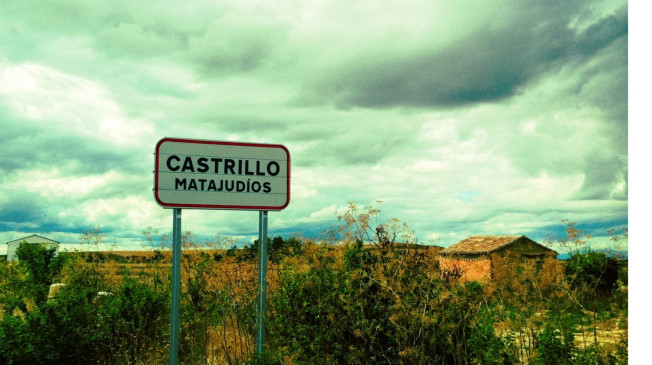
"What a charming name! What does it mean in your language? Oh...wait, WHAT???"

“What a charming name! What does it mean in your language? Oh…wait, WHAT???”

From Spain comes the news that the town of Castrillo Matajudios, which literally means “Camp Kill Jews,” has voted to change its name after 400 years. This appears to be part of Spain’s recent, rather belated, I would say, efforts to acknowledge and express regret to Jews for the persecution they endured during the Spanish Inquisition.

Strange as it seem, the current name probably came into being not to denigrate Jews, but to protect Jews in the town who had officially converted to Catholicism under threat of torture and death. As such, it is a piece of history, and the words convey information about the town, the country, and the people who lived there, not a slur….except to someone who knows nothing about the town.

I’m not aware of a perfect analogy for this situation. It has some similarities to the plight of the towns of Blue Ball, Pennsylvania, named for a famous and long-gone hotel in the area, and the Amish community of Intercourse, Pennsylvania, named when a common uses of that term conveyed “fellowship.” In a  parallel universe where political correctness was dictated by social conservatives rather censorious progressives, these towns might be getting coercive signed letters from Republican Senators “suggesting” that they change their names to something less offensive, even though, as with the Redskins name, history and context would be lost. Continue reading

Preliminary Ethics Observations On The NFL Bullying Scandal

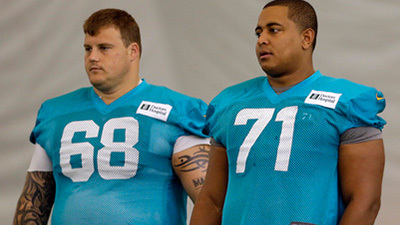
The bully and the bullied.

The bully and the bullied.

If you are unfamiliar with this story, the details are here. There is much that remains in question, but the basic outline of the incident is this:

  • The Miami Dolphins, like most professional football teams and also most college teams, have a tradition of “hazing” rookies, humiliating and harassing them in various way, “all in good fun, of course.”
  • The ironically named Richie Incognito, a starting guard for the Dolphins, was known as an especially relentless and enthusiastic hazer.
  • Last weak, the team’s second-year tackle Jonathan Martin walked out on the squad and checked into to a hospital, saying he could  he could no longer deal with the continued harassment from his teammates.
  • Incognito was shown to have referred to Martin using abusive language and racial epithets in voice messages.
  • Based on the evidence of the voice mails, the Dolphins suspended Incognito, who is being defended by his team mates. Sources are saying that his career with the Dolphins, and perhaps the NFL, may be over.
  • It is likely that the Dolphin coaches were aware of Martin’s hazing.

This is the perfect ethics problem to approach with what I regard as the most important clarifying question in beginning any ethical analysis:  What’s going on here? Continue reading

Slate’s Unethical “Redskins” Blackout

You know what Redskins really means, don't you? It means standing up to political correctness bullies.

You know what Redskins really means, don’t you? It means standing up to political correctness bullies.

Via the usually rational reporter David Plotz, we learn that Slate has decided that the Political Correctness Gods will no longer allow the on-line magazine to use the name of Washington’s NFL team when it is reporting on Washington’s NFL team. This is, of course, presumptuous, arrogant, and lousy journalism. It is not the media’s job to re-make the world into what pleases them. Slate doesn’t like the Redskins name so it’s not going to publish it. This seems to be the current mode of operation in the media today–it is no longer dedicated to reporting and commenting on the news, but rather reporting and commenting on the news it doesn’t find “offensive.”

The Redskins, as a team nickname, is certainly the strongest case for those who believe in censorship of team names with ethnic or national origins. The NCAA has already gone way beyond any rational execution of that mission however, and even in the case of Redskins, an unquestionably racist term when applied to Native Americans, the objection to a sports  team name with supposedly negative historical implication has a lot of the “a chink in the armor” nonsense about it. For in Washington, D.C. and in football bars and Sunday afternoon gatherings, Redskins is not a slur, and does not refer to native Americans. It is the name given to a squad of NFL players who play pro football in the name of Washington, D.C., and a franchise that is worshiped in the city. When the name is used, it is not aimed at Native Americans or intended to denigrate them. It does not refer to Native Americans, and not intended to give offense. It is intended to designate the football team, because that is the team’s name. How can someone be offended at the use of a name that is not intended and is not a slur in the context of the use in question? There two answers to this: 1) Most people, including rational Native Americans, aren’t, and 2) Because such people want to be offended.

The name “Redskins” was never intended as a slur, as I have explained here before. Continue reading

On The NFL Player’s Slur, The MSNBC Journalist’s Lie, Words, Conduct, Reason And Proportion

If Riley Cooper were black, of course, then he would be "cool."

If Riley Cooper were black, of course, then he would be “cool.”

There are words, there are thoughts, and there is conduct. Thoughts are not unethical.  Conduct can be unethical. Words can be considered conduct when they are intended to have, or do have, material and measurable direct effects. Verbal abuse is conduct. Using a rude, vulgar or hateful word may not be verbal abuse.

Although the NFL and his team, the Philadelphia Eagles have every right, and some good reasons, to punish, suspend or even terminate Riley Cooper because a video reveals the Eagles player as saying, “I will jump that fence and fight every nigger here!” at a Kenny Chesney concert, I don’t see any conduct there, just words. He did not direct the racial slur at any individual, and there is no evidence that it was intended to harm or intimidate any African-Americans. He did not intend for the outburst to be publicized of communicated to anyone but the friends he said it to. On a pure  just punishment for harm intended or achieved basis, it is ridiculous for Cooper to be facing the loss of millions and his athletic career because he uttered a single racial slur that was captured on a video. It cannot be defended logically or as a reasonable position. Using one racial slur in that setting doesn’t prove that Cooper is a racist. It doesn’t prove hate. Even if it did, hate is not illegal or even unethical until the hater acts on it in an unethical way. And a word is just a word. We don’t, or shouldn’t, fear mere words in a rational American society. We shouldn’t have taboos, or people who “cannnot be named,” like in the Harry Potter books. The ease and certitude with which otherwise intelligent people capable of making judgments involving proportion and common sense blithely go along with the batty idea that uttering a word, only uttering it and nothing more, should result in devastating consequences, is frightening. It is a per se unethical position, because it is unfair, and incompetent, because it is essentially crazy.

Having said that, I can understand why, since so many people are irrational about words, why the NFL or the Philadelphia Eagles, as a business decision, may decide that they don’t want Cooper associated with them any more. That is a rational choice, and may even be the best choice. That is not the same as saying that he deserves that result. If the bulk of NFL fans are fanatically politically correct, then the NFL and its teams cannot afford to ignore that. Sorry Riley. Continue reading

Ethics Alarms Recap: A Long Weekend of Ethics

If the long Presidents Day weekend took you hither and yon and away from ethical dilemmas and controversies, welcome back! Here is what went on here in a lively three days: