
Van Der Sloot’s Defense: Worst Rationalization Ever?

Yup: It's Natalee's fault.

Joran van der Sloot finally pleaded guilty yesterday to the murder of a Peruvian woman, Stefany Flores, whom he had met in a bar. His lawyer, Jose Luis Jimenez, blamed the crime on van der Sloot’s earlier arrest for the disappearance of Natalee Holloway in Aruba and the widespread suspicion that he was the missing teenager’s killer.

Defense lawyers, in the zealous representation of their clients, must often come up with creative theories bordering on the risable to try to wring every last drop of helpful spin out of a hopeless case. It bothers non-lawyers and legal ethicists alike when attorneys assert things about a case or their client that they couldn’t possibly believe is true, though it is enough to meet the low bar of the Rules of Professional Conduct for the lawyer to believe that such statements might be true, perhaps in a parallel universe. They are in the “well, how about this?” category. A defense lawyer with a despicable client like van der Sloot, who appears to be a stone cold sociopath, doesn’t have much to work with. Continue reading
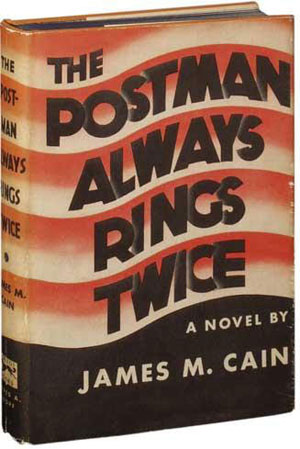
Strauss-Kahn and His Accuser, Victims of The Postman

The accuser of Dominique Strauss-Kahn, the former IMF head who has been devastated by her sensational rape charge, now admits that parts of her original account of the incident and an earlier accusation of rape she made to seek asylum in the U.S. were false.

The Altantic’s Megan McArdle sums up the Ethics Train Wreck thusly:

“There are two possibilities here, neither of them good:

1) A woman with an unsavory past, who has done desperate things to get out of terrible economic conditions, was raped by a prominent figure, and he’s going to get away with it because of her history.
2) A serial cad had consensual sex with a chambermaid, and she attempted to destroy him with a false rape allegation for personal gain. And because of the presumption that women don’t lie about rape, she has succeeded in destroying him . . . though not so much in the personal gain part. To quote Ray Donovan, ‘Where do I go to get my reputation back?'” Continue reading

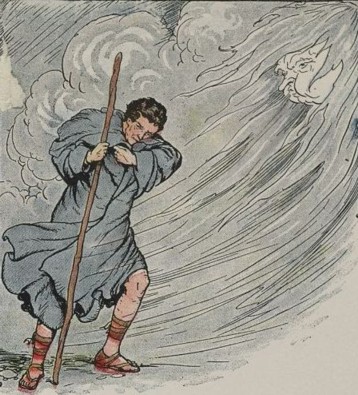
Aesop’s Unethical and Misleading Fable: “The North Wind and the Sun”

Today, by happenstance, I heard an Aesop’s Fable that I had never encountered before recited on the radio. Like all Aesop’s Fables, this one had a moral, and it is also a statement of ethical values. Unlike most of the fables, however, it doesn’t make its case; it is, in fact, an intellectually dishonest, indeed an unethical, fable.

It is called “The North Wind and the Sun,” and in most sources reads like this:

“The North Wind and the Sun disputed as to which was the most powerful, and agreed that he should be declared the victor who could first strip a wayfaring man of his clothes. The North Wind first tried his power and blew with all his might, but the keener his blasts, the closer the Traveler wrapped his cloak around him, until at last, resigning all hope of victory, the Wind called upon the Sun to see what he could do. The Sun suddenly shone out with all his warmth. The Traveler no sooner felt his genial rays than he took off one garment after another, and at last, fairly overcome with heat, undressed and bathed in a stream that lay in his path.”

The moral of the fable is variously stated as “Persuasion is better than Force” , or “Gentleness and kind persuasion win where force and bluster fail.”

The fable proves neither. In reality, it is a vivid example of dishonest argument, using euphemisms and false characterizations to “prove” a proposition that an advocate is biased toward from the outset. Continue reading

When the “Everybody Does It” Excuse Works: Police Dog Cruelty in North Carolina

In January, Ethics Alarms named the North Carolina State Personnel Commission an Ethics Dunce for reinstating North Carolina State Trooper Sgt. Charles Jones, who had been fired for abusing one of his police dogs. He had been videoed as he hung the dog, Ricoh, and kicked him for not releasing a chew toy on command. The Commission heard testimony from officers regarding the brutal training methods routinely used by the police, and ruled that by practice and law, what Jones did was not what they call “abuse” in North Carolina, at least when it is done to police dogs.  “Though disturbing, the treatment of Jones’ animal does not rise to the level of ‘abuse,'” the ruling reads, and even if it did, the Commission noted that the Wake County, N.C., animal ordinance specifically exempts police dogs.” In other words, abusing police dogs is acceptable conduct for K-9 trainers.

The ruling came after the testimony of other dog handlers had prompted the Highway Patrol to suspend all use of dogs, anticipating public outrage. Governor Easley also pushed for Jones’s dismissal after the video surfaced, and he made certain that the Commission’s reinstatement of Jones was appealed.

You’re not going to like the result. Continue reading

The Reggie Bush Affair

The Reggie Bush affair, in which the NFL star was stripped of his 2005 Heisman Trophy as the year’s outstanding college football player (to be more accurate, he was about to be stripped of it and chose to relinquish the award voluntarily), is one of those periodic incidents that exposes the media’s rudimentary and flawed ethical instincts, as well as the public’s. Baseball’s steroid scandal is another example. At its core, the Bush situation is infuriatingly simple: he was not eligible for the Heisman in 2005, because he had accepted gifts from alumni and other benefits and amenities forbidden by NCAA rules. It doesn’t change the correctness of  the decision to rescind Bush’s award to note that the NCAA is corrupt, that college athletes are exploited by the system, that anyone would be tempted by all the people trying to throw money, cars and other trinkets at them, that the mess of big time college football isn’t cured by punishing Reggie Bush, or any of the other dozen excuses, rationalizations and irrelevant arguments bleated into cyberspace by various sports pundits who lack the skills to decipher a basic ethics problem. Continue reading