The Wrenching Problem Of David Ortiz, The Human Slippery Slope

papi_fame

Ethics conflicts force us to choose when multiple ethical principles and values point to diametrically opposed resolutions.  Often, a solution can be found where the unethical aspects of the resolution can be mitigated, but not this one. It is a tale of an ethics conflict without a satisfactory resolution.

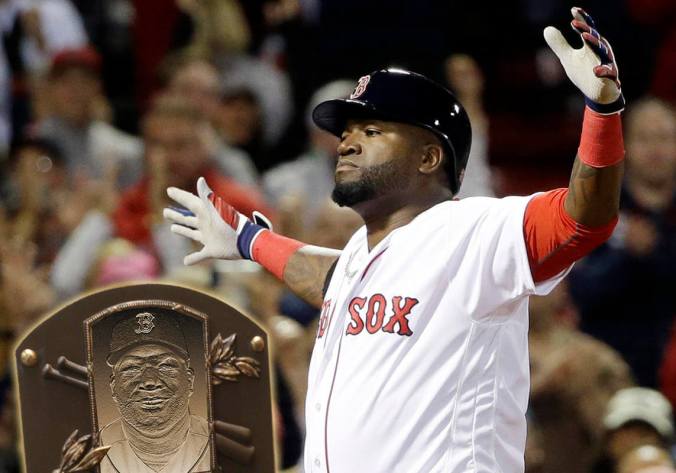
I didn’t want to write this post. I considered waiting five years to write it, when the issue will be unavoidable and a decision mandatory. Today, however, is the day on which all of Boston, New England, and most of baseball will be honoring Red Sox designated hitter David Ortiz, who will be playing his finale regular season game after a 20 years career.  His 2016 season is quite possibly the best year any professional baseball player has had as his final one; it is definitely the best season any batter has had at the age of 40 or more. Ortiz is an icon and a hero in Boston, for good reason. Ortiz was instrumental in breaking his team’s infamous 86-year long “curse” that saw it come close to winning the World Series again and again, only to fail in various dramatic or humiliating ways. He was a leader and an offensive centerpiece of three World Champion teams in 2004, 2007, and 2013. Most notably, his record as a clutch hitter, both in the regular season and the post season is unmatched. You can bring yourself up to speed on Ortiz’s career and his importance to the Red Sox, which means his importance to the city and its culture, for nowhere in America takes baseball as seriously as Beantown, here.

That’s only half the story for Ortiz. Much of his impact on the team, the town and the game has come from his remarkable personality, a unique mixture of intensity, charm, intelligence, generosity, pride and charisma. After the 2013 terrorist bombing of the Boston Marathon, which shook the city as much as any event since the Boston Massacre, Ortiz made himself the symbol of Boston’s anger and defiance with an emotional speech at Fenway Park. Then he put an exclamation point on his defiance by leading the Red Sox, a last place team the year before, to another World Series title.

Performance-based arguments against electing Ortiz to baseball’s Hall of Fame are, at this point, untenable. Entering his final game, Ortiz had 541 home runs, (17th all-time), 1,768 RBI, (22nd), and 632 doubles, (10th).  He is only the third player in history to have more than 500 home runs and 600 doubles.  He ranks among the greatest post season hitters in baseball history with 17 home runs, 60 RBI and 21 doubles. His postseason average is .295 with an on base percentage of .409, a slugging percentage of .553 and a .962 OPS (the sum of the two.) Most great players did worse in the post season than during the regular season, for the obvious reason: the competition was better. Ortiz was better, which informs regarding his character and dedication.

The one lingering argument against admitting Ortiz to the ranks of Ruth, Williams, Aaron, Mays, Cobb, Hornsby, Griffey and the rest is that he has spent most of his career as a designated hitter, the American League’s 1973 invention, much reviled by National League fans and baseball traditionalists, designed to allow real batters relive fans from watching pitchers make fools of themselves at the plate. This makes him “half a player,” the argument goes. No designated hitter has ever been elected to the Hall, so that argument has prevailed so far. It was always a weak one—how did being lousy fielders like so many Hall of Fame sluggers make them greater players than one who never hurt his team at all with his glove? Now that a designated hitter has shown himself to be in the elite ranks of all the greatest batters, the argument sounds more like hysterical anti-DH bias than ever.

I should also note, before getting to the main point of this post, that I love Ortiz. I am a lifetime Red Sox fan, Boston born, bred and marinated, and Big Papi is special. He is one of the most interesting and admirable sports figures of my lifetime, and what he has meant to my city and my favorite sport is beyond quantifying. Few great athletes demonstrate persuasively that they are also great and admirable human beings. Ortiz is one of them.

Nonetheless, it is crucial that David Ortiz not be elected to the Hall of Fame when he becomes eligible five years from now, and that he never be admitted. On the matter of assessing the fitness for baseball honors of those who defiled the game by inflating their statistics, changing the outcome of games and harming players who abided by the rules, David Ortiz is a human slippery slope. Ortiz deserves to be in the Hall based on all admission criteria, including character and sportsmanship, but his admission will open the doors wide for players who are unfit, polluting the Hall of Fame and baseball’s values forever.

It’s not worth the trade off. This is the ethics conflict: one cannot be fair and just to “Big Papi” without doing widespread harm to the sport, and I would argue, the entire culture. Continue reading


Why It’s Unethical For Journalists To “Fact Check” Donald Trump—Especially CNN Journalists

Donald Trump

In Donald Trump’s meaningless statement yesterday, which was covered by the news media as if it was the revelation of the millennium, he  officially conceded that Barack Obama is a natural born U.S. citizen. He also used the silly media attention to drag out his announcement into a long campaign infomercial for which he didn’t have to pay a cent. Nice, and it serves the broadcast media right for giving any significance to a five-year-long trolling exercise.

Trump used the phony controversy over President Obama’s birth certificate to get publicity five years ago, because he is shameless. That’s all. Did he really think Obama was born in Kenya? Oh, who knows? He is an idiot, after all. Then again, he is a skilled professional troll. Whether he believed it or not, Trump used the issue to get attention then, and now has used his 180 degree reversal to get attention now. Obviously nothing has changed that would justify this flip-flop if he believed what he insisted was true for five years. A more transparently cynical and insincere retraction I cannot conceive. Who cares what Trump says he believes at any point, about anything?

But I digress. What really seemed to enrage the journalists who have embraced Rationalizations #28. The Revolutionary’s Excuse: “These are not ordinary times,” and #31. The Troublesome Luxury: “Ethics is a luxury we can’t afford right now” to anoint themselves as full-time volunteer members of the Hillary for President campaign, was that Trump said this:

“Hillary Clinton and her campaign of 2008 started the birther controversy. I finished it.”

Quoth the thoroughly partisan news media,

“ARRGH!!!!:

Continue reading

In Defense Of Hillary, A Perfect #22

Not running....

Not running….

Rationalization #22, Comparative Virtue or “It’s not the worst thing,” is my personal candidate for the worst rationalization of them all. It is so objectively so devoid of common sense, and so desperate in its relativism, that I am amazed at how often allegedly intelligent people employ it. Ethics Alarms is always on the lookout for a perfect #22, and this summer has brought a bumper crop. Donald Trump, master of rationalizations, had one in June, just four days after Madeleine Albright scored one, saying about Hillary Clinton’s e-mail scandal,

“…nobody is going to die as a result of anything that happened on emails”

Albright also could well have been wrong about that, as we now know, and only moral luck prevented one of Hillary’s carelessly handled e-mails from falling into hands that might have engineered harm for a U.S. agent abroad. Clearly, however, partisans trying to minimize Clinton’s absolute incompetence, recklessness and dishonesty regarding her private server and its illicit use are drawn to Rationalization #22, because today’s example is also an unethical attempt to excuse Hillary’s conduct by putting it in “perspective”—and what a perspective!

First let’s again review the rationalization…

22. The Comparative Virtue Excuse: “There are worse things.”

If “Everybody does it” is the Golden Rationalization, this is the bottom of the barrel. Yet amazingly, this excuse is popular in high places: witness the “Abu Ghraib was bad, but our soldiers would never cut off Nick Berg’s head” argument that was common during the height of the Iraq prisoner abuse scandal. It is true that for most ethical misconduct, there are indeed “worse things.” Lying to your boss in order to goof off at the golf course isn’t as bad as stealing a ham, and stealing a ham is nothing compared selling military secrets to North Korea. So what? We judge human conduct against ideals of good behavior that we aspire to, not by the bad behavior of others. One’s objective is to be the best human being that we can be, not to just avoid being the worst rotter anyone has ever met.

Behavior has to be assessed on its own terms, not according to some imaginary comparative scale. The fact that someone’s act is more or less ethical than yours has no effect on the ethical nature of your conduct. “There are worse things” is not an argument; it’s the desperate cry of someone who has run out of rationalizations.

(It is also the mark of someone corrupted by the Clintons. #22 got a workout, you may recall, when Bill Clinton’s lies, cover-up and obstruction of justice  regarding the intern he transformed into a Presidential sex toy got him impeached.)

Now here is the perfect #22, a headline on an editorial at MassLive, a Massachusetts news and politics website, Can it get better than this?

Clinton’s email shenanigans weren’t crime of the century

Continue reading

Presenting Three New Rationalizations: “Narcissist Ethics,” “The Dead Horse-Beater’s Dodge,” And “The Doomsday License”

the end of the world

I knew this was going to happen. Even as the Ethics Alarms Rationalizations list approached 70 self-serving lies in all, the cracks and crevices between them were being explored, mined and exploited. All three of today’s new additions turned up in a single, ill-begotten comment to a recent pots, and while I immediately recognized them as rationalizations, I also failed to find an exact fit for any of them on the list. It is by such a process that all rules and laws inevitably expand into near uselessness, because humans are so adept at finding loopholes.

I’m going to have to be vigilant lest the rationalizations become so thinly sliced that the list is too burdensome to be useful: some of the current entries have been criticized as redundant already. Nonetheless, I believe the three being unveiled now cover rationalization territory worth mapping. Here they are:

Rationalization 8A. The Dead Horse-Beater’s Dodge, or “This can’t make things any worse”

Rationalization 8, The Trivial Trap  or “No harm no foul!”, relies on #3. Consequentialism, or  “It Worked Out for the Best” for its dubious logic, but is less demanding. #3 posits that unethical conduct that ends up having beneficial or desirable results has been purged of its unethical nature. #8 argues for an even more lenient standard, holding that as long as the unethical conduct—usually a lie—has no negative effects, it can’t be wrong. The Dead Horse-Beater’s Dodge, carries things even further with the theory that as long as a situation can’t be made worse by wrongful conduct, the conduct itself can’t be wrongful. The most famous invocation of #8A of recent vintage is Hillary Clinton’s exasperated question during the Benghazi hearings, “At this point, what difference does it make?” Her argument: a lack of candor now about the fatal events in Benghazi can’t bring back the dead, so why harp on it?

In ethics, wrongful conduct is usually identifiable by its nature and intent. “This can’t make things any worse” is an assumption that individuals seldom can make with guaranteed accuracy, and it usually presumes consent from the supposedly bottom-lying individual or organization that the unethical act is done to. Get the informed consent, 8A devotees, and then we’ll talk.

No, looters, the fact that a business is a smoldering wreck does not make stealing even damaged merchandise from it “okay.” No, pulling the plug on a comatose patient without his previous consent or that of someone he has authorize to give it is still wrong, both legally and ethically. In most cases, the presumption that conduct unethical in its form and substance will not “make things any worse” is something about which the rationalizing wrong-doer can’t possibly be certain. That’s what makes it a rationalization: it is a lie we tell to ourselves.

Rationalization 50A.  Narcissist Ethics , or “I don’t care” Continue reading

The Drunk Lesbian Couples Study, The Golden Fleece, And Fiscal Responsibility

golden-fleece

Old Dominion University has recieved a $1 million grant from the National Institutes of Health to conduct research on the pressing issue of whether lesbian couples drink too much due to stress.   The grant states that

“Sexual minority women (i.e., women who self-identify as lesbian and bisexual) report more heavy drinking, more alcohol-related problems, and higher rates of alcohol use disorders as compared to heterosexual women. Despite this awareness, no studies have examined how relationship factors and partners’ alcohol use contribute to hazardous drinking among female sexual minority couples.”

Professor Jonathan Turley, who flagged this story, adds, “There may be a good reason for that.”

I almost made this an Ethics Quiz, asking if funding such research with taxpayer funds was responsible. I don’t present ethics quiz question when I am certain of the answer, though, and the more I thought about this, the more I began thinking of the late Senator William Proxmire’s Golden Fleece Awards.

In 1975, Proxmire launched the award with a press release announcing that the National Science Foundation had “won”after spending $84,000 to fund a study on the origins of love. For more than a decade, the Democrat from Wisconsin used his awards, which were chosen by Proxmire’s hand-picked panel of budget hawks, scientists and others, to focus attention on frivolous spending by dozens of government agencies, including the Department of Justice, the National Institute of Mental Health, and NASA, on trivial issues and mysteries. He also got a lot of publicity for the stunt, and sometimes even managed to kill the Golden Fleece-winning projects with the public outrage they generated.

Naturally, scientists hated this, and had contempt for Proxmire, whom they called “anti-science.” One scientist he mocked even sued Proxmire for defamation, in a case that reached the Supreme Court. In another example of alcohol-related research being called into question, Proxmire gave the award to the National Institute on Alcohol Abuse and Alcoholism in 1975 for funding research into alcohol and aggression in fish and rats, stating that ” the most effective way to understand human conditions and problems is to observe human behavior.” University of California psychobiologist Harman Peeke, whose project was halted midstream by the fleece, bitterly responded,  “I would really enjoy having Proxmire make a proposal to give people alcohol and ask them to fight. That’s simply unethical and immoral.”

There were and are five core objections to Proxmire’s awards, which shadow government research projects to this day: Continue reading

Pundit Malpractice: NBC Sports Defends Colin Kaepernick By Misrepresenting Jackie Robinson

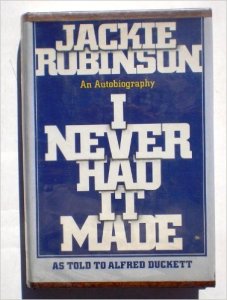
What does Jackie Robinson's autobiography have to do with Colin Kaepernick, you ask? Well...nothing at all, really.

What does Jackie Robinson’s autobiography have to do with Colin Kaepernick, you ask? Well…nothing at all, really.

It also represents a rationalization for unethical conduct that is not currently represented on the Ethics Alarms Rationalization List.

Someone sent Craig this quote, from Jackie Robinson’s  autobiography,  as baseball’s color-line breaker thought back to the first game of the 1947 World Series:

“There I was, the black grandson of a slave, the son of a black sharecropper, part of a historic occasion, a symbolic hero to my people. The air was sparkling. The sunlight was warm. The band struck up the national anthem. The flag billowed in the wind. It should have been a glorious moment for me as the stirring words of the national anthem poured from the stands. Perhaps, it was, but then again, perhaps, the anthem could be called the theme song for a drama called The Noble Experiment. Today, as I look back on that opening game of my first world series, I must tell you that it was Mr. Rickey’s drama and that I was only a principal actor. As I write this twenty years later, I cannot stand and sing the anthem. I cannot salute the flag; I know that I am a black man in a white world. In 1972, in 1947, at my birth in 1919, I know that I never had it made.”

This naturally made Craig, whose mind sometimes cannot help itself from shifting into progressive cant autopilot, think about Colin Kaepernick’s incoherent grandsitting as he refuses to stand on the field with his team for the National Anthem. He wrote,

“Colin Kaepernick is not Jackie Robinson and America in 2016 is not the same as America in 1919, 1947 or 1972. But it does not take one of Jackie Robinson’s stature or experience to see and take issue with injustice and inequality which manifestly still exists…the First Amendment gives us just as much right to criticize Kaepernick as it gives him a right to protest in the manner in which he chooses. But if and when we do, we should not consider his case in a vacuum or criticize him as some singular or radical actor. Because some other people — people who have been elevated to a level which has largely immunized them from criticism — felt and feel the same way he does. It’s worth asking yourself, if you take issue, whether you take issue with the message or the messenger and why. Such inquiries might complicate one’s feelings on the matter, but they’re quite illuminative as well.”

Let’s begin with the fact that there is nothing similar about Jackie Robinson and the 49ers quarterback, except their race and the broad occupation of “sports” that they shared. Continue reading

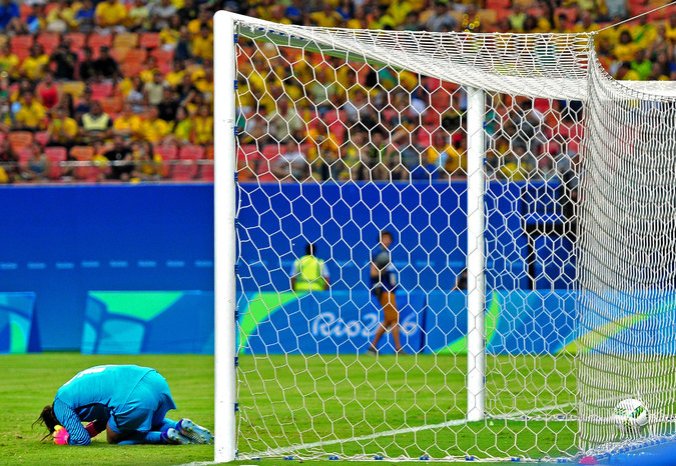
Good: Hope Solo Finally Loses The Protection Of The Star Syndrome; Bad: U.S. Soccer Still Doesn’t Get It; Good: Hope Provides Rationalization #59

Solo loses

The Star Syndrome, a.k.a “The King’s Pass,” #11 on the Ethics Alarms Rationalization List, is the ethics bane of organizations generally and sports especially. It is one of the major catalysts of cultural corruption, whether the “star” is Bill Clinton, Lance Armstrong, Manny Ramirez, O.J. Simpson, Roget Ailes,  Brian Williams, George S. Patton, or Werner Von Braun. To refresh your memory…

11. The King’s Pass, The Star Syndrome, or “What Will We Do Without Him?”

One will often hear unethical behavior excused because the person involved is so important, so accomplished, and has done such great things for so many people that we should look the other way, just this once. This is a terribly dangerous mindset, because celebrities and powerful public figures come to depend on it. Their achievements, in their own minds and those of their supporters and fans, have earned them a more lenient ethical standard. This pass for bad behavior is as insidious as it is pervasive, and should be recognized and rejected whenever it raises its slimy head.  In fact, the more respectable and accomplished an individual is, the more damage he or she can do through unethical conduct, because such individuals engender great trust.

Thus the corrupting influence on the individual of The King’s Pass leads to the corruption of others, through…

11. (a) “I deserve this!” or “Just this once!”

Especially common to the hero, the leader, the founder, the admired and the justly acclaimed is the variation on the Kings Pass that causes individuals who know better to convince themselves that their years of public service, virtue and sacrifice for the good of others entitle them to just a little unethical indulgence that would be impermissible if engaged in by a lesser accomplished individual. When caught and threatened with consequences, the practitioner of this rationalization will be indignant and wounded, saying, “With everything I’ve done, and all the good I’ve accomplished for others, you would hold this against me?” The correct answer to this is “We are very grateful for your past service, but yes.

There are few more striking examples of this phenomenon than women’s soccer star Hope Solo. The New York Times neatly summarizes her last decade of dubious conduct (I’m being diplomatic): Continue reading

Hillary Gets Caught In A (nother) Whopper

Why yes, this IS the thanks you get, General!

Why yes, this IS the thanks you get, General!

From the New York Times (Aug. 18):

Pressed by the F.B.I. about her email practices at the State Department, Hillary Clinton told investigators that former Secretary of State Colin L. Powell had advised her to use a personal email account.The account is included in the notes the Federal Bureau of Investigation handed over to Congress on Tuesday, relaying in detail the three-and-a-half-hour interview with Mrs. Clinton in early July that led to the decision by James B. Comey, the bureau’s director, not to pursue criminal charges against her.

From Page Six:

Colin Powell has broken his silence about his alleged involvement in the Hillary Clinton email scandal, saying her team is falsely trying to blame him.When asked by the FBI about her email use at the State Department, Clinton reportedly told investigators that former Secretary of State Powell had advised her to use a personal email account at a private dinner. But Powell, who had said last week in a statement that he had no recollection of the conversation, told Page Six at Saturday’s Apollo in the Hamptons event, “The truth is she was using it (her personal email) for a year before I sent her a memo telling her what I did [during my term as secretary of state]. “Her people have been trying to pin it on me.”

When asked why Clinton’s team were attempting to blame him, he responded, “Why do you think?”

Conclusion: Hillary Clinton lied to the F.B.I.

Ethics musings: Continue reading

Ethics Observations On The Naked Trump Statues

Naked Trump

Last week, five identical statues of a grossly caricatured nude Donald Trump  appeared overnight on street corners in San Francisco, Los Angeles, Cleveland, Seattle, and New York City.  The Washington Post reported that the anarchist collective INDECLINE made and placed the statues. It called the  project “The Emperor Has No Balls.” Indeed, the otherwise anatomically correct statues showed the Trump effigy missing those particular features, though not bright yellow pubic hair. If you really want to see these assaults on your consciousness and sanity, go here.

I advise against it.

Ethics Observations: Continue reading

Tales From The “Bias Makes Us Stupid” Files: Is It Possible That The News Media Really Thinks That Donald Trump’s Latest Stupid Blather Is More Newsworthy Than Hillary Trading State Department Favors For Foundation Contributions

Media bias

In a statement that is mindblowing for its shameless ethics ignorance, Slate editor Josh Voorhees wrote,

“The latest batch of State Department emails from Hillary Clinton’s tenure, released Tuesday, further highlights the occasionally overlapping interests between the agency and the Clinton Foundation. The messages, which don’t directly involve the Democratic nominee herself, aren’t going to overshadow Donald Trump’s ongoing self-immolation—nor should they—but they are worth a closer look.”

“Nor should they?”

Nor should they?

By what possible set of warped values could the latest inanity from a Presidential candidate who constantly says silly, inarticulate and ultimately meaningless things the second they pop into what we generously call “his brain,” be more worthy of public attention than revelations that the other candidate for President used her position in the State Department for the enrichment of herself and her family?

The former is a well-established idiot free-associator idiotically free-associating with the same results he always gets. Why is this news? It is only news because the news media, knowing well that Trump just utters  jokes, ad-libs, random observations, musings, insults and all sorts of other things that adults never say in public because his confused and disoriented fans enjoy them, intentionally treats them as serious statements of a serious person, when they know very well he is not. The latest of these is the Trump assertion that Obama is “literally” the “founder of ISIS.” It is as newsworthy as if Trump said “Obama is literally a tree frog.” OK, everyone knows this isn’t true, and that Trump is a babbling fool. Got it. Next? Yet this non-story gets absurd attention: like at ABC News, The National Memo, Business Insider, Fox News Insider, Politicus USA, Washington Post, Raw Story, The New Civil Rights MovementDaily Kos, The Times of Israel, CBS New York, RT, Balloon Juice, New York Magazine, Guardian, Independent Journal Review, Mother Jones, NBC News,and Mediaite.

Before that, it was media hysteria over Trump’s bizarre “Second Amendment people” crack being a crime, which Popehat neatly debunks here. Ken White’s  opening statement is also enlightening: “Donald Trump, against all advice and rumors of pivot, will continue to be Donald Trump.”

Exactly. Which means his continuing to say stuff that mature and responsible people don’t say is not legitimate front page news.

Ah, but it provides an excuse not to explain to the public how stunningly corrupt Hillary is and has been. That is the objective, and an biased and unethical objective it is. Continue reading