The Ethics Alarms New NFL Season Ethics Quote Of The Week: Ex-Football Fan Steve Almond

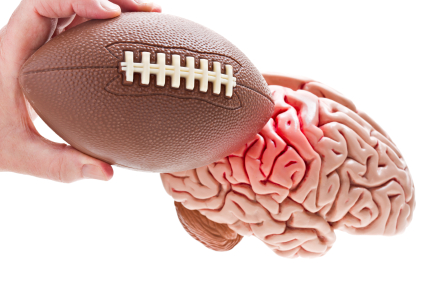
football-brain-injury-symptoms

“We know, on some level, that a good many of the players we cheer for each Sunday will be revealed as all too human when they wind up battling dementia. But… fans have a whole suitcase full of rationalizations intended to preserve our right to consume, and thus sponsor, this hyper-violent game. “The players know the risks!” we insist. “They get paid millions!” But ultimately, our most effective dodge resides in our willingness to view the game as one big movie.”

Steve Almond, author of “Against Football, in an essay today for the Washington Post titled “Hollywood’s version of the gridiron is just fantasy football
(It hypes violence for the sake of drama — then reassures us everything is okay)”

Perfect timing for this article, a reminder of what fans are really watching and cheering for during the pro football season, which began today.

No, I won’t be watching.

Her’s another chilling quote from Almond’s article: Continue reading

A Nation Of Assholes: The Ultimate, Undeniable And Crucial Reason Donald Trump Must Never Be President

assholesI have had this essay ready to go for at least a month; I honestly didn’t think it would be necessary to post it. Nonetheless,  I kept in on the bench, just in case. I was confident that the point to be made was too obvious, and that even those bitter, angry, irresponsible, ignorant whateverthehelltheyares who are keeping Trump’s candidacy afloat—and thus making it more difficult to sort out the real candidates—would have figured it out by now. I was wrong.

There are lots of reasons why Donald Trump shouldn’t be anyone’s candidate to be President. He is a narcissist, for one thing, and that is a pathology. Narcissists are dangerous in positions of power. He has no experience in politics, which he appears  to believe, based on his statements, consists primarily of bribing people, since that is what it largely means in his eternally corrupt businesses of construction and gambling, and pitching them things, which is not the same as persuasion.  He seems to think leading a company and leading a nation are similar jobs: they are not, though they involve some common skills. Trump is largely ignorant of most issues facing us, and takes pride in winging it, simply saying the first thing that pops into his mind. What Presidents of the United States say have cascading impact: think about the horrible consequences of Obama’s infamous “red line” statement, which has led to the willingness of despots and terrorists to defy U.S. interests and warnings, confident that nothing would be done by a confrontation-averse President. Anyone assuming President Trump would be different in this regard from candidate Trump is the sort of person who would trust Iran to follow a nuclear agreement, a current monstrosity that is also, in part, the result of Obama’s “red line” gaffe.

The one area where Trump has actually put forth a fleshed-out policy is red meat nonsense, completely unworkable and impractical, as well as offensive to core American values. That is his absurd “Deport them all, build a wall, amend the Constitution” illegal immigration prescription. Yes, the illegal immigration joint negligence perpetrated by greedy business interests and cynical Democratic party strategists who would trade the best interests of the nation and the rule of law for long term demographic trends favoring their party is infuriating and frightening. Still, proposing ludicrous solutions that can’t be accomplished (even if sane people wanted them to be) is neither a mark of intelligence nor responsible leadership.

Beyond immigration, Trump is all generalities and posturing. He’s “tough.” Tough can be good; tough without principles, and Trump appears to have none, is, by turns, bluster, stubbornness, cruelty, recklessness and bullying. Donald Trump really seems to have no regard for ethics at all, which makes him, by definition, untrustworthy. Being untrustworthy is an ethical deficiency no leader can have. Continue reading

Ethics Observations On The Great “2015 Best American Poetry” Scandal

William Wordsworth (April 7, 1770-April 23, 1850)

William Wordsworth (April 7, 1770-April 23, 1850)

Sherman Alexie is the editor of the 2015 edition of Best American Poetry, an annual anthology that came out this week. One of his choices for inclusion was “The Bees, the Flowers, Jesus, Ancient Tigers, Poseidon, Adam and Eve” by Yi-Fen Chou.

After being informed by Alexie that his short poem, previously published in a small journal, had been honored with selection,  Yi-Fen Chou contacted Alexie to reveal that he wasn’t Yi-Fen Chou, but boring, white, privileged  Michael Derrick Hudson of Fort Wayne, Indiana.

Hudson explained to Alexie, and in his bio for the anthology, that he had posed as an obscure Asian poet rather than as an obscure WASP poet after his poem was rejected by 40 different journals when it was submitted under his real name. He decided to test his theory that the poem would suddenly seem better to editors if it had a little pro-diversity, cultural bias behind it. He was right. Now two editors had favored it.

Alexie left the poem in the collection, with the poet’s real name, and has been attacked for doing so, from all sorts of angles. Hudson has received criticism as well. Alexie wrote a heartfelt, thoughtful, and self-contradictory explanation of why he thought he did the right thing. Read it, if you can stand it. Also worth reading is Jesse Singal’s essay, inspired by this rhyme-crime, in New York Magazine about bias.  His most useful statement—“It can feel threatening to acknowledge that we are all susceptible to bias. The reality is that it’s simply a part of being human”—is wise. Otherwise, he is far too kind to Alexie simply because he was transparent and thoughtful in analyzing his conduct. Transparent and thoughtful Alexie is. He is also wrong.

Observations: Continue reading

At Target, One Of Life’s Little Ethics Tests


target-logo

We were just shopping at Target, buying everything from dog food to throw pillows to laundry detergent. The lines were long, I was feeling crappy, and the bill was $142.78. The stuff was all loaded into the trunk of our car, a long walk from the entrance, when my wife noticed a tiny 25 watt light bulb—price: $2. 27— that had slipped into a crevice in the cart. “Ooooh, I bet they didn’t charge us for that,” she said.

Immediately, I was hit with a furious rationalization assault trying to kill my ethics alarms like Santa Anna’s men climbing over the Alamo’s walls:

  • “Who cares? They won’t care. Let’s just go!”
  • “It wouldn’t have been missed if the line didn’t make us late! Target deserves to lose the bulb!”
  • “We can tell them about it next time!”
  • “Nobody would go back and return this!”
  • “The walk and the inconvenience are more trouble than the lousy bulb is worth!”
  • “You think it’s stealing? Fine, leave it in the cart. Then we don’t get it either.”
  • “This wasn’t my fault!”

We went back and gave the unpaid for bulb to the customer service clerk. She raised an eyebrow and said, “Really?” Not “Wow, you people are so ethical. I’m going to tell my children about you” really, but “Wow, you people are idiots. Nobody does this. It’s a lousy $2.27! I’m going to tell my friends about this, and they will laugh long and hard” really.

This is anti-ethics bias micro-aggression, and in its own, incremental, crummy way, it makes society more unethical and untrusting because it treats ethical conduct as aberrational. If I had been feeling better and my usual annoying, feisty self, I may well have said,

“Oh, is a customer being honest ridiculous to you? So from that I assume that you approve of minor theft, is that accurate? Does that mean you are lifting low priced items from the store, and allowing your friends and family to do so? Let me talk with your manager, please. I want to ask him if you reflect Target policy. I’d like it clarified myself. What priced items are considered so disposable that theft of them is expected to be shrugged off as trivial? Under five bucks? Ten? Twenty? Why stop at twenty? Fifty? A hundred?”

“Before I explain your reaction to your supervisor and ask if that accurately reflects the store’s attitude toward not paying for inexpensive merchandise, let me convey this for future reference. The proper response to a customer who returns an unchecked item rather than just leaving with it is ‘Thank-you!’ and a smile. Not “Really?” and a smirk. Got that?”

Dirty Harry would have added, “Well, do ya…punk?”

Unethical Presidential Candidates Sunday (EXTENDED): Hillary Clinton’s Amazing Unethical, Ethical, Unethical, Unethical,Unethical, Unethical Non-Apology

fireworksWOW!

Jethro Gibbs, the hero of CBS’s long-running hit procedural drama NCIS, enlightens his charges with “Gibbs’ Rules.” As I have mentioned before, I like Gibbs’ Rules, but one of them is almost always dead wrong. The most cited of the rules is #6: “Never apologize — It’s a sign of weakness,” a rule that Gibbs and the show’s writers borrowed from John Wayne’s character in “She Wore A Yellow Ribbon.” ( “Never apologize, mister, it. It’s a sign of weakness.”). Sincerely apologizing for genuine harm, mistakes or misconduct is not weakness, but a sign of character, accountability, honesty, courage, respect and fairness.

Hillary Clinton doesn’t believe in accountability, honesty, courage, respect and fairness, so it’s not surprising that she never apologizes. Neither does Donald Trump. It’s a clanging, earsplitting ethics alarm for anyone seeking a leader, for this means that they do not have the integrity or decency to admit genuine wrongdoing, and seek instead to maintain the illusion that they are infallible. It is even possible that they are in the throes of Rationalization #14, Self-validating Virtue, the mark of narcissists. Refusing to apologize is a terrible sign for a leader, a manager, even a friend.

Out of this ominous character flaw has come one of the most remarkable non-apologies in decades. When prompted by MSNBC’s Andrea Mitchell to apologize for her mishandling—her intentional mishandling, remember— of the e-mails she sent and received while Secretary of State, the Remarkable, Astounding, Ethics-Defying Candidate Hillary Clinton told her…

“At the end of the day, I am sorry that this has been confusing to people and has raised a lot of questions, but there are answers to all these questions.And I take responsibility, and it wasn’t the best choice.”

Sound the trumpets and summon the sculptors! That is an unethical non apology for the ages: Continue reading

From Canada, An Ethical Candidate Test: Has He Ever Secretly Peed Into Someone’s Coffee Cup?

horrible coffeeJerry Bance, a service technician running as a Canadian Conservative Party candidate, was dropped by the party after video surfaced of him urinating into a coffee mug during a 2012 house call.

Yes, I’d call that signature significance, wouldn’t you? I wouldn’t trust a service technician who had done this even once.

Aside: Possible sub-rationalization of  Rationalization #20. The “Just one mistake!” Fantasy: #20A: “I only peed in a customer’s coffee cup once!”

Possible parlor game! “Name the funniest rationalization for secretly peeing in a coffee cup.” Example: 15. The Futility Illusion:  “If I don’t do it, somebody else will.”

But I digress. Where was I? Oh, right: If I wouldn’t trust him to fix my sink, I shouldn’t trust him to be a legislator.  Or do we hold legislators to a lesser standard of trust than repairmen?

They don’t in Canada, apparently.  Bance “is no longer a candidate,” said Conservative spokesman Stephen Lecce. Bance, he said, was dropped for not being truthful during the candidate screening process. I guess he didn’t answer that “Have you ever peed in someone’s coffee cup?” question candidly.

Here’s my question: would the ethics-challenged people currently supporting Donald Trump for President change their minds if video surfaced of The Donald peeing in, say, Megyn Kelly’s coffee cup?

Nah. After all, “She should have seen it coming.” (Rationalization #36)

Welcome To “Unethical Presidential Candidates Sunday”! First Up, Rationalization 19 A: The Insidious Confession, Or “It Wasn’t The Best Choice”

Presidential cnadidates

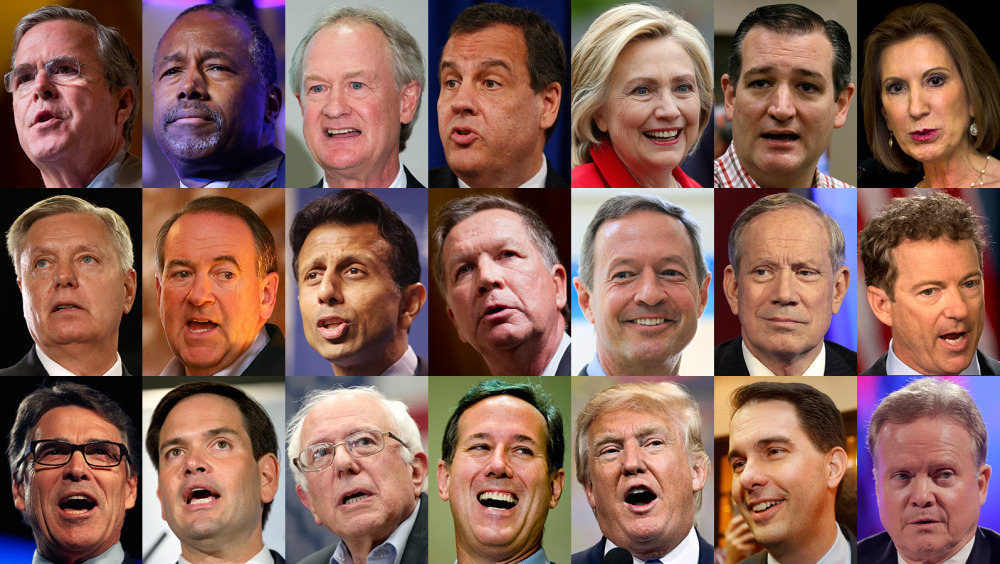
I have tired of suppressing legitimate ethics issues regarding the various Presidential candidates, especially the most obviously unethical ones, Hillary and The Donald, for fear of having this pan-ethics blog mired in the swamp of politics. For this day, at least, I’m going to stop wrestling myself to the ground and stop holding back my rising gorge, and focus specifically (though maybe not exclusively: you never know) on the 54—or is it 22? I get the number of Bill Cosby victims mixed up with the announced Presidential candidates sometimes—on the pack of Republicans and Democrats with designs on the White House. So look out, Jeb, Ben, Chris,  Ted, Carly, Jim Gilmore), Lindsey, Mike, Bobby,  John, George, Rand, Rick, Marco, Rick, Donald Trump, Lincoln, Hillary, Martin, Bernie, Professor, Jim (Webb)….this is

Unethical Presidential Candidates Sunday!

First up…Hillary Clinton gave us a new rationalization! Say hello to Rationalization 19A, the latest addition to the Ethics Alarms Rationalizations List, #19A The Insidious Confession, or “It wasn’t the best choice.”

When Hillary Clinton first used her poll-tested, Campaign War Room generated description of her arrogant, defiant, incompetent and irresponsible (and possibly sinister) choice to send official communications on a private email server as not “the best choice,” I recognized it as misleading and dismissive, but assumed it was just a wan variation on my least favorite rationalization, the dreaded #22, “It’s not the worst thing.” Hillary used the same phrase this week, cementing my conviction that it is a talking point, but also making its real meaning clear.

“It wasn’t the best choice” is really a sneaky sub category of Rationalization #19:
Continue reading

For Your Labor Day Ethics Edification: “The Science of Persuasion”

The-Six-Universal-Truth-of-Influence-Robert-B-Cialdini

Making better decisions is essential to making ethical decisions, and a lot of what we discuss here relates to overcoming impediments to unethical thinking and decision-making. This 2012 video is germane to Ethics Alarms; it also includes some of the ideas in Dr. Z’s Rules, which I presented here.

This animated video describes Dr. Robert Cialdini ‘s “six universal principles of persuasion” that people and organizations tend to use to influence the thinking, values and opinions of those of us who are not willing or able to reason in an orderly and unbiased fashion. (Dr. Zimbardo las a somewhat different six). It reflects the research in Dr. Cialdini’s book, “Influence” The Science of Persuasion.”

As those who come here often know, I like to use a variety of approaches and tools. Cialdini’s framework is just one of them, but one worth understanding.

The video is a bit over 11 minutes.


Disqualified For High Office: Senator Ted Cruz (R-Tx)

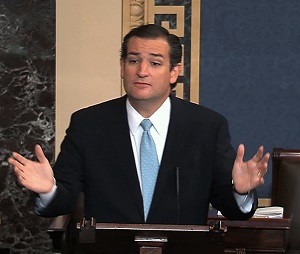
See, Ted, it's crazy to keep criticizing Iran while suggesting that the US should be come LIKE Iran. Never mind. Just stay in the Senate, and you can say stupid things you don't believe with minimal harm.

See, Ted, it’s crazy to keep criticizing Iran while suggesting that the US should be come LIKE Iran. Oh, never mind. Just stay in the Senate, and you can say stupid things you don’t believe with minimal harm. Deal?

Eventually, I may have to post a full list of the current Presidential candidates who have definitively disqualified themselves, by evidence of character, integrity, honesty, temperament, trustworthiness, leadership ability  and core values (or, in the cases of Hillary Clinton and Donald Trump, the absence of them), from the very office they seek. Frankly, I’m afraid that no one will be left.

Senator Ted Cruz’s recent statement about Kim Davis, the now correctly jailed Kentucky clerk who cites God’s authority to justify defying the law, is so irresponsible, dishonest and cynical that he has to be moved to the top of the list.

Here it is. My comments are in bold.

“Today, judicial lawlessness crossed into judicial tyranny. Today, for the first time ever, the government arrested a Christian woman for living according to her faith. This is wrong. This is not America…

This is a lie, and a gross mischaracterization of the facts. Kim Davis can live and worship any way she chooses. She objects to same sex marriage, and she may refuse to associate with gay married couples, refuse to attend gay weddings, make whatever statements opposing gay marriage she chooses, picket gay weddings, lobby for a Constitutional amendment and more.

What she cannot do is refuse to perform the duties of her office, and withhold from citizens the government services they have a right to receive because of her religious beliefs. It is beyond legitimate question in law and ethics that she does not have the right to do this. She has been arrested for defying a court order and being in open contempt of legal judicial authority. This is not unprecedented, this is America, and must be America if democracy and rule of law is to function. Continue reading

Update: More Abortion Advocate Struggles With Ethics In The Midst Of The Planned Parenthood Videos Revelations

panda

As the pro-abortion lobby has rushed to defuse the ticking time bomb of comprehension that might make lazy and inattentive American think. “Wait, that’s what happens in an abortion?,” its dishonest, desperate, and unethical arguments have been as revealing as the videos themselves, and as damning.

Frankly, I’ve been surprised: they really don’t have much that makes ethical sense, just “it’s legal!” and “It’s Our Bodies And We’ll Kill If We Want To!” (a little known B-side flop by the recently departed Leslie Gore.)  I recently wrote about their defenses in the posts Planned Parenthood Videos Surprise: Forced To Defend Abortion Ethics Acknowledging The Existence Of A Second Human Life In The Equation, Advocates Run Out Of Arguments (Part One) and Part Two: Bad Analogies. As I wrote in the latter: “If an advocate has persuasive, honest, strong arguments not based on fallacies and rationalizations, I assume that those would be the ones he or she would use.”

More evidence that they don’t possess them and also don’t care to have an honest debate recently came to light.

The most bizarre was an article in the Washington Post ostensibly about the ongoing drama at the National Zoo in Washington, D.C. The female panda there gave birth to twins (“Awwwww!”) then abandoned and neglected the smaller one (“OH NO!!!”) which soon died. Before the little panda’s demise, those clever abortion advocates of the Post saw an opportunity, and had a female reporter, Sarah Kaplan, author an article which the Post titled “The perfectly sensible reason why panda mothers and other creatures selectively abandon babies.”

If you want to think it’s a coincidence, go ahead. I don’t. To Kaplan’s credit, she avoided any overt analogies to human beings, and played it straight, as she always does. (She’s a terrific reporter.) Still, there is that headline. It’s sensible to “abandon” babies that will be too difficult for the mother to care for, “abandon” in the wild being the equivalent of “kill.” This points to  Rationalization #51—the latest on the Ethics Alarms list-–as a defense for abortion: “It’s natural.” Continue reading