Late Deflategate Update: Patriots Owner Robert Kraft Does A Full Corleone

Tom Hagen

Ruthless mob “Godfather” Michael Corleone had lied  to the fictional Congressional committee investigating organized crime. The smoking gun witness who had cut a deal to destroy Michael’s fake stance as a persecuted patriot and honest businessman had just been intimidated into recanting, seeing his older brother sitting with his targets and knowing that if he betrays the Family, his brother’s head would end up in his bed. So lies and corruption have triumphed, and as the scene from “Godfather Part II” fades, Michael Corleone’s lawyer, Tom Hagen, is shouting over the gavel and the crowd noise, to the disgusted and defeated Committee chair,

“SENATOR! SENATOR! This committee owes an apology, this committee owes an apology — an apology Senator!”

This memorable scene was immediately what my mind was jerked back to when I read New England Patriots’ owner Robert Kraft’s defiant statement regarding his team’s latest cheating scandal, in the section where he said…

“If the Wells investigation is not able to definitively determine that our organization tampered with the air pressure in the footballs, I would expect and hope that the League would apologize to our entire team and in particular, Coach Belichick and Tom Brady for what they have had to endure this past week. I am disappointed in the way this entire matter has been handled and reported upon. We expect hard facts as opposed to circumstantial leaked evidence to drive the conclusion of this investigation.”

I see now from a brief Googling of “Tom Hagen Robert Kraft” that I was not alone, and no wonder. Kraft’s guys have stonewalled, denied, mocked, deflected, tap-danced, and allowed loyal ethics-challenged sportswriters, bloggers and fans to block for them.  Belichick and Brady almost certainly have covered their tracks sufficiently to avoid their just desserts, and Kraft is demanding an apology when it is he who should be apologizing—to the NFL, to opposing teams, to New England, to Boston, and to the fans, for allowing a corrupt and unethical culture to flourish under his ownership. Has any criminal, having avoided conviction because he or she could not be found guilty beyond a reasonable doubt, had the chutzpah to demand an apology from the prosecution? Did Casey Anthony  or O.J., as despicable as they are, dare to rub society’s nose in their triumph like that? Continue reading


STUPIDITY SATURDAY Bonus: The Deflategate Deniers, Excusers, Rationalizers and Corrupters

dumb football fan

[This post took so long to write that I am posting it on Sunday. Pretty stupid.]

Every few months an ethics story erupts that convinces me that I’m wasting my time. I started writing about ethics online in disgust over the Clinton-Lewinsky scandal, which revealed to me that no politicians, few journalists and a tiny minority of the public understood the difference between, right, wrong, and a desperate rationalization. I was aghast at the vigorously nodding heads on talk shows when some ethically-challenged dolt would say that “everyone lies about sex” (so it’s okay), or that because other leaders may have had illicit sex, that made it acceptable, or that Clinton deserved special dispensation because he was an effective and popular President, or that he and Lewinsky were consenting adults, or that personal conduct was irrelevant to the job, or that other Presidents had done worse. These were all just lazy, poorly reasoned and culturally corrupting rationalizations, but nobody except a derided few seemed to know it.

So I’ve been writing about these and other ethics issues, including rationalizations, for about 15 years, and nevertheless, when something like the Patriots cheating scandal arises, I hear the same unethical, ignorant crap, as if nothing has changed. And, of course, nothing has. All I can hope to do, in conjunction with others who don’t want to see society devolve into a Hobbesian Hell, is to try to convince enough rational people that we can, by constantly explaining, arguing, and pointing the way, just keep things as barely endurably corrupt as they are now.

I got depressed just writing that last sentence.

The issue regarding the New England Patriots giving their quarterback an edge by cheating—deflating the balls so he could throw more accurately–isn’t controversial or hard to understand. If the team broke a rule that relates to sportsmanship, the fairness of the competition and the integrity of the result, and it is hard to see how it didn’t, then the NFL should punish the team severely. [ The NFL, true to its black heart, has made it clear that its investigation will not allow a resolution of this until after the Super Bowl, meaning that it hopes the controversy will deflate. I’m sure it could resolve all questions and identify the accountable parties faster if it wanted to—it doesn’t want to.] To do otherwise essentially endorses cheating. Moreover, since the team involved has a head coach who has made it clear that he is willing to cheat (having been caught before), that coach must be held accountable for the unethical culture he has nurtured whether he was directly involved in this particular episode or not. This is truly Ethics 101, Management 101, Culture 101, Sports 101—let’s just call it “101.” Yet so many, from the elite among sportswriters to the public that devotes an obscene amount of their passion, time and money to following football just don’t get it. Continue reading

Comment of the Day: “Unethical Quote of the Month: Patriots Quarterback Tom Brady”

"Is this a deflated ball I see before me?"

“Is this a deflated ball I see before me?”

“Inflategate”—-the developing NFL scandal about the New England Patriots’ under-inflated, more easily thrown footballs in the team’s last play-off win and perhaps others—is a big deal to 1) people who hate the Patriots; 2) football fans who care about whether their game has any integrity and 3) people like me, who think there is no justification for cheating, in sports, in business, or in life. Those who argue that it’s “much ado about nothing,” usually without being able to quote a line or explain a plot turn from the Shakespeare comedy they’re alluding to, do so because 1) they are Barry Bonds fans; 2) they don’t know the difference between a football and a plantain, and don’t care. except that they wouldn’t want to eat a football by mistake; 3) they are typical NFL football fans and want to “oh, pshaw!”  anything that reflects badly on the sport that gives their brutal lives meaning, 4) they are John Edwards, or 5) they are members of the New England Patriots organization, and perhaps were involved in the ball deflation.

Pats quarterback Tom Brady (that’s how you know I’m from Boston: I call the team the “Pats”) gave a highly unconvincing press conference yesterday in which he maintained that he would never notice that the tool of his trade that he has plied approximately since he exited the womb felt different than usual, and, like his coach, the brilliant and soulless Bill Belichick, has no idea how the team’s balls got deflated. The credibility of that claim was severely undermined for me by Brady’s use (“This isn’t ISIS…”) of my least favorite rationalization of them all on the Ethics Alarms compendium, the infuriating #22:

The Comparative Virtue Excuse: “There are worse things” : If “Everybody does it” is the Golden Rationalization, this is the bottom of the barrel. Yet amazingly, this excuse is popular in high places: witness the “Abu Ghraib was bad, but our soldiers would never cut off Nick Berg’s head” argument that was common during the height of the Iraq prisoner abuse scandal. It is true that for most ethical misconduct, there are indeed “worse things.” Lying to your boss in order to goof off at the golf course isn’t as bad as stealing a ham, and stealing a ham is nothing compared selling military secrets to North Korea. So what? We judge human conduct against ideals of good behavior that we aspire to, not by the bad behavior of others. We should each aspire to be the best human being that we can be, not to just avoid being the worst rotter anyone has ever met.

Behavior has to be assessed on its own terms, not according to some imaginary comparative scale. The fact that someone’s act is more or less ethical than yours has no effect on the ethical nature of your conduct. “There are worse things” is not an argument; it’s the desperate cry of someone who has run out of rationalizations.

(Or someone whose coach had the equipment guy deflate the footballs.)

Now comes blogger Windypundit to expand on my derision of Brady’s embrace of #22 from a different and useful perspective. Here is his Comment of the Day on the post, “Unethical Quote of the Month: Patriots Quarterback Tom Brady”:

In a way, Brady has a point, but it’s not what he thinks it is, and it doesn’t cut in his favor. In the grand scheme of things, nothing that happens on the field of play is very important. In fact, most of the rules of sports are arbitrary — the location of the free throw line, the number of bases the runners have to tag, the pressure in the football. The rules don’t have any higher meaning. And that’s precisely why there’s no excuse for not following them.

The big issues — when you can disconnect the life support, when a cop can shoot an unarmed person, when the President can order a drone strike — are full of complications and nuance. It’s hard to come up with a clear set of rules that will apply in every possible situation. You may think you have it all figured out, and then a scenario arises that you never thought of, and your simple set of rules, if followed blindly to the letter, would produce a terrible result. So maybe after you think through all the consequences, you decide that you’ve found a valid exception, and you change the rules. Or maybe, if the matter is important enough and you believe the rules are immoral, you break the rules as an act of conscience.

But I can’t see that happening much in sports. There is no greater good that could be used to justify breaking the rules. What terrible result could arise from blindly following the rules of football to the letter? A team loses a game? That might cost the team a bit of money, and I can see where crazed fans would get upset, but you know what? Nobody dies if the Patriots don’t make the playoff. This isn’t ISIS after all.


Unethical Quote of the Month: Patriots Quarterback Tom Brady

Disappointed kid

“This isn’t ISIS. No one’s dying.”

–New England Quarterback Tom Brady, in the course of denying culpability in the latest New England Patriots cheating scandal.

Tom Brady now joins the Ethics Alarms Rationalization Spouter’s Hall of Fame, which I just started. You just can’t embody Rationalization #22, Comparative Virtue, or “It’s not the worst thing” any better than this obnoxious attempt to minimize the significance of Deflategate.

That’s the way to teach the kids to be fair competitors and good citizens, Tom! And does a star athlete whose attitude regarding cheating in his profession amounts to this fill you with trust in his integrity, honesty, and sportsmanship?

Not me.

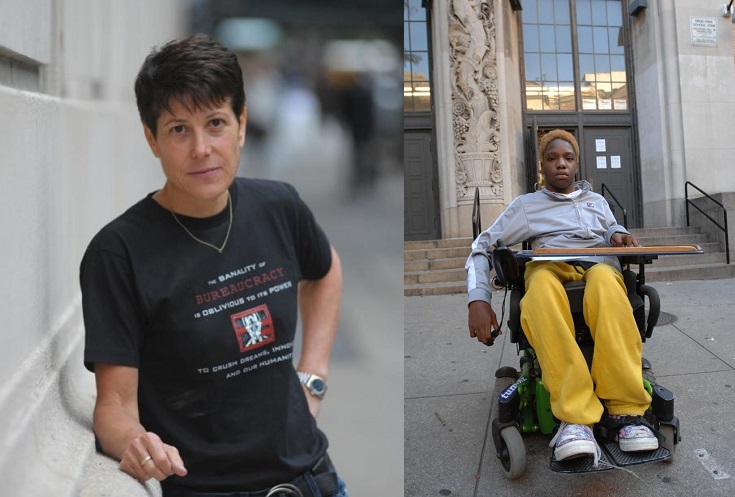
The Special Needs Student, the Compassionate Teacher and the “Awww!” Factor (UPDATED)

Debra Fisher

Regular readers here are familiar with the “Ick Factor,” the common phenomenon where a situation that causes an emotional response of revulsion, disgust or fear is labelled unethical when there is nothing unethical about it. Many kinds of conduct are icky, but still on the right side of ethics, if only one can put aside the gag reflex. The reverse of the Ick Factor is the less common “Awww!” Factor, where particular conduct seems loving, caring and nice, but is in fact unethical in one or more respects. Such is the case of New York City special needs teacher Debra Fisher.

In October, Fisher was suspended when e-mails were discovered on the school computer system showing that she had been spending school time raising funds for a special project on behalf of Aaron Phillip, a thirteen year old special needs student who is an aspiring animator with his own blog. The project’s goal was to raise $15,000 for a nonprofit devoted to developing Aaron’s talent, an organization called “This Ability Not Disability” founded and administered by Fisher.

Awww!

The problem was that while her efforts on behalf of the student were supported by the school, Fisher, an occupational therapist at Public School 333 with nine years of service, did not have permission to perform them during school hours. Thus she was suspended for six weeks. Now she is suing the school system for back pay, telling reporters, “I’m just trying to fight for what I believe is right.”

If she believes she is right, then she shouldn’t be working at the school at all, because she is in fact dead wrong.

But awfully nice. Continue reading

The Sixth Annual Ethics Alarms Awards: The Worst of Ethics 2014 (Part 2)

Rice and Janay

Ethics Corrupter of the Year

(Awarded to the unethical public figure whose prominence, popularity and success most corrupts the public’s ethical values)

Janay Palmer Rice, beloved punching bag of NFL star Ray Rice, who was caught on camera smooching with her man shortly after being cold-cocked by him in a hotel elevator, married him, and has repeatedly defended her husband, prompting confused female pundits to defend her. She is not only the embodiment of Rationalization #42. The Hillary Inoculation, or “If he/she doesn’t care, why should anyone else?”, she is also a good bet to get some young women killed by giving them a role model who stands for standing by your abusive man with the hard right hook.

Double Standard Of The Year

In a year of double standards, the treatment of soccer star (and accused child abuser) Hope Solo by her sport, feminists, the media and the public takes the prize. The standard, as I understand it, is that big, strong female athletes can beat up smaller, weaker family members with impunity, and it’s no big deal, but when a male athlete does the same, he is scum. Got it.

Uncivil U.S. Official of the Year

Victoria Nuland, Assistant Secretary of State for European and Eurasian Affairs and the top American diplomat in Europe, was caught saying in a viral Youtube video saying “Fuck the EU.”  Now that’s diplomatic. Of course, she wasn’t fired, because she works for the Obama Administration

The Jesse Jackson Award 

(For the Year’s Worst Amateur Diplomat)

mo_selfie_lg

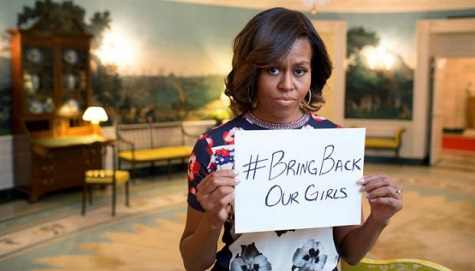
First Lady Michelle Obama, who helped her husband make the U.S. look weak and ineffectual (he needs no help), by engaging in this ridiculous effort at hashtag diplomacy. Those kidnapped girls were never found, and Boko Haram, the Nigerian terrorist group that took them, I learned today, just killed a reported 2000 more victims. Time for another sad picture, Michelle!

Most Unethical Sports League

The NFL, last year’s winner, was even more unethical this year, with the Ray Rice and Adrian Peterson fiascos, Commissioner Roger Goodell showing no innate instinct for right and wrong and both the league and its teams making up rules and policies according to talk show calls, polls and wet fingers in the air. Meanwhile, it’s still making billions paying young men to lobotomize themselves. What a great sport.

Sports Cheat of the Year

Alex Rodriguez, suspended Yankee star, had denied, denied, denied, threatened to sue Major League Baseball and the union, and insisted that he had not, as an investigation had determined, used performance enhancing drugs supplied by Biogenesis. Then, just as his season-long suspension was lifted, it was revealed that A-Rod had, under oath, admitted using steroids from 2010 to 2012.

Annual Sports Ethics Controversy That Gets Worse Every Year

Steroid cheats (like Rodriquez) and their fitness for admission to Baseball’s Hall of Fame

Unethical Lawyer of the Year

Michael Fine, the Ohio lawyer who allegedly hypnotized female clients in order to sexually molest them.  Runner Up Alexa Van Brunt. She didn’t do anything unethical; she just advocates ethics rules that would eliminate the core of legal ethics, proving that she doesn’t understand her own profession.

Unethical Judge of the Year

judge_mccree

Wade McCree, the handsome devil pictured above (he circulated this selfie), who, presiding over a felony child-support case, conducted a secret sexual relationship with the woman seeking support from the defendant. This was just the latest of his embarrassments.  Runner up: Texas District Judge Jeanine Howard, who handed down a stunningly lenient sentence of probation and 250 hours of community service at a rape crisis center for a man who confessed raping a 14-year old girl at her school.


Unethical National Broadcast Journalist Of The Year

CNN’s Carol Costello. She was biased, smug and incompetent all year long, but reached her nadir when she gleefully played a recording of Bristol Palin explaining to police how she had been assaulted, saying to her viewers, “You can thank me later.” She refused to apologize on the air, or to Palin. Continue reading

Ethics Dunce: Phylicia Rashad

COSBY-AND-RASHAD

Phylicia Rashad, the African American actress best known for playing “Claire Huxtable,” Bill Cosby’s wife on his legendary sitcom, was resolute about not be dragged into the crisis facing her on-screen hubby, as woman after women has come out with allegations that she was raped, sexually assaulted or drugged by funny, ol’ Bill. She should have stayed that way. Unfortunately, she allowed a Hollywood celebrity reporter to pull some quotes out of her, and now she has a crisis of her own. Now we know she values loyalty, group identification, show business protocol and her own financial interests over decency, fairness, honesty, justice, compassion, respect for women, and truth.

Or, I suppose, she might be an idiot.

Rashad’s take on Cosby’s problems was also odd, as it focused very little on the man being accused of such heinous acts. She didn’t say, or at least such remarks weren’t reported, that he was a wonderful human being, or that she could not imagine the man she worked so closely with all these years doing what so many alleged victims claim. She said that she “loves” him. In show business, this is like the host of a TV talk show saying a guest is a close personal friend: it is routine, and means nothing.  Rashad’s defense of Cosby consisted of dismissing his victims’ stories as baseless, and this:

“What you’re seeing is the destruction of a legacy. And I think it’s orchestrated. I don’t know why or who’s doing it, but it’s the legacy. And it’s a legacy that is so important to the culture….Someone is determined to keep Bill Cosby off TV. And it’s worked. All his contracts have been cancelled…This show represented America to the outside world. This was the American family. And now you’re seeing it being destroyed. Why?”

Why. Huh. That’s a head scratcher isn’t it? Yes, why would the entertainment value of family situation comedy about a wise, loving father , the wife whom he adores and his brood of adorable, normal, kids, including three, and ultimately four, teenage girls be diminished in the least by overwhelming evidence that the actor playing said father is a sick, ruthless, sexual predator and the King of Hypocrites? Continue reading

The Absolute Worst Of The Terrible Arguments For Putting Barry Bonds In The Hall Of Fame

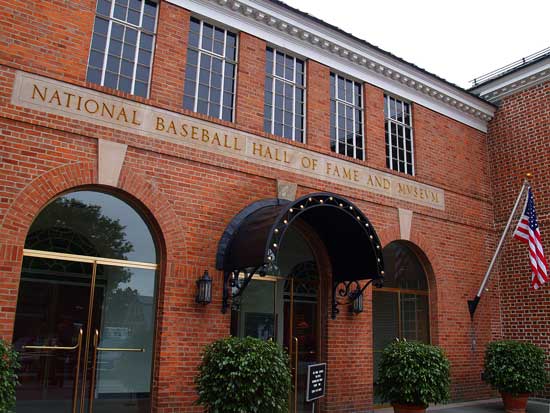
815-Baseball-Hall-of-Fame-CEvery year at this time, I issue commentary on the “steroid-users in the Major League Baseball Hall of Fame” controversy. I’m not going to disappoint you this year.

Today the Hall will announce who the baseball writers deemed worthy, and, as usual, the acknowledged steroid cheats with Hall of Fame statistics will be resoundingly rejected. I don’t feel like revisiting this subject in depth again right now: I have done so before, many times. However, yesterday I nearly drove off the road listing to MLB radio commentators Casey Stern and Jim Bowden, supposedly baseball experts, give their reasons for voting for the entire range of steroid cheats, from Barry Bonds and Mark McGwire to Roger Clemens and the despicable Alex Rodriquez.

Baseball’s Hall of Fame, alone among the sports Halls,  includes ethics in its criteria for entry: a player must exhibit sportsmanship, integrity and have been a credit to the game. The average sportswriter who votes for candidates is about as conversant in ethics as he is in Aramaic, leading to an endless debate involving every rationalization on the list and  analogies so terrible that they melt the brain.For example, I constantly hear and read that the evidence that Barry Bonds used steroids is “circumstantial” so it is unfair to tar him as a steroid user. Such commentators don’t know what circumstantial evidence is. Criminals can be justly convicted beyond a reasonable doubt by circumstantial evidence, which is also known as indirect evidence. Direct evidence, if believed, proves the existence of a particular fact.  Circumstantial evidence proves facts other than the particular fact  to be proved, but reason and experience indicates that the indirect evidence is so closely associated with the fact to be proved that the fact to be proved may be fairly inferred by existence of the circumstantial evidence. There is direct evidence that Bonds was a steroid-user, but the circumstantial evidence, as the well-researched book “Game of Shadows” showed, is so voluminous that it alone is decisive. Literally no one thinks Bonds is innocent of using steroids. [You can read my analysis of the case against Bonds here, here, and here.]

Stern and Bowden, however, claim that it is unfair to refuse the honor of Hall of Fame membership to suspected steroid users because it is inevitable that some players who used steroids and were never caught or suspected will make it into the Hall, if there aren’t such undetected cheat in the Hall already. Continue reading

Ethics Quiz: Is “Hidden City” Flying Unethical?

Hidden City

Last month, United and Orbitz filed a lawsuit against a website called Skiplagged, which among other things helps consumers plan trips with cheaper airfare using a tactic called “Hidden City.” Hidden City travel is when a traveler wants to go to a city that costs more to fly to directly than another city that uses the real destination as a connection. Thus, if you want to go to Charlotte, you book a cheaper flight that involves a change of planes in Charlotte, and just take your carry-on luggage and skip the last leg of the trip. Anyone can search and book Hidden City flights, but it is a chore.  Skiplagged makes it relatively easy.

Airlines punish frequent flyer passengers who use the method. They argue that gaming the system this way makes it difficult to track passengers and unfairly takes advantage of the hub-and-spoke system, where airlines fly to hub cities and add connecting flights from there. The lawsuit is trying to shut down Skiplagged,  alleging “unfair competition” that promotes “strictly prohibited” travel. The suit seeks $75,000 in damages, and 22-year-old site creator Aktarer Zaman is fighting it, seeking funds, so far successfully, on GoFundMe, where he originally sought  $20,000 to afford his legal bills and is closing in on twice that amount. My guess? If this gets to a jury, Zaman will win. The Streisand Effect is also in play: the airlines risk making everyone aware of this cost-saving maneuver, while getting bad publicity as well.

Zaman argues that the Hidden City ploy is legal. You know my answer to that ( Rationalization #4. Marion Barry’s Misdirection, or “If it isn’t illegal, it’s ethical”)and it’s also the first  Ethics Alarms Ethics Quiz of 2015:

Is the Hidden City tactic ethical?

Bloomberg refers to Hidden City flying as a “scam” and “cheating.” Is that a fair description? The ticket purchaser has paid for the whole flight, so why is it cheating to get off half-way through it?

I think it’s a close call, but I have to side with the airlines.  The closest analogy that I can come up with is card-counting in blackjack: it’s not cheating, and it’s not illegal, but the casinos have a right to prohibit it in their own interests. The rationalization (Rationalization # 18. Hamm’s Excuse: “It wasn’t my fault.”) is that the existence of a loophole is the airline’s problem to fix, and if they can’t fix it, taking advantage of it is fair. But it isn’t fair, any more than it is fair for travelers to avoid baggage fees by taking large bags through security to the gate, and then passing them off, at no cost, on the way into the plane. It’s dishonest, and the Hidden City trick is also dishonest. You pay the airline to take you to a specific destination. How they get you there is irrelevant: a ticket to Minneapolis is a ticket to Minneapolis, and if you use it to get to Chicago instead because the airline charges more to go there, you engaged in bad faith negotiation.  The ploy is also unethical because if it becomes widespread, airlines will have to raise fares, and all air travelers will suffer.

One of Zaman’s arguments also positions him on my bad side: he points out that his site merely shows the airfares, and that the passengers book the tickets. Right. That was the same argument made by radical pro-life websites that posted the names and addresses of abortion practitioners so fanatics could track them down and kill them. Pro-anoerexia websites don’t starve young women, they just encourage them to starve themselves. If Hidden City flying is cheating, he’s facilitating it.

Reluctantly, I have to agree that it’s unethical.

______________________________

Ethics Alarms attempts to give proper attribution and credit to all sources of facts, analysis and other assistance that go into its blog posts, and seek written permission when appropriate. If you are aware of one I missed, or believe your own work or property was used in any way without proper attribution, credit or permission, please contact me, Jack Marshall, at jamproethics@verizon.net.

Is It Ethical For Professors To Date Students?

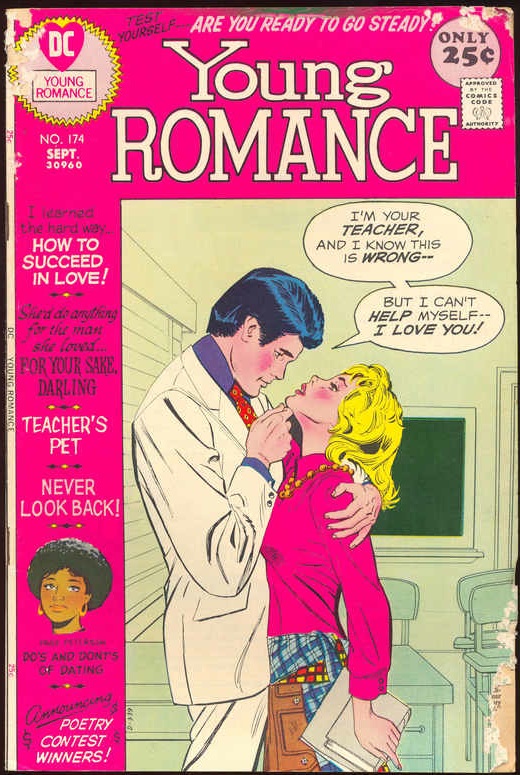
teacher-student datingProfsBlog asks the question regarding law professors and law students, but the question doesn’t change by narrowing the definition. The question is really, and only, “Is it ethical for teachers to have romantic relationships with students?” The answer is, has been, and forever shall be, “No.”

The answer to an ethics question sometimes becomes obvious when it is apparent that every argument on one side is either a logical fallacy, an unethical rationalization, or the application of an invalid ethics principle. Such is the case here, and thus I somewhat question the motives of the author of the post, Kelly Anders. Wishful thinking, perhaps? Asking the question creates the illusion that there is a real controversy. In this case, there isn’t.

I addressed this question a long time ago, in an early post here barely seen at the time but among the most frequently visited since. I wrote:

[P]rofessors [are] obligated to maintain a position of authority, objectivity and judgment as mentors and teachers of the whole student body, and [have] a duty to their schools not to allow their trustworthiness to be undermined by having intimate relationships among the same group that they [are] supposed to be supervising and advising. Dating a student is a professional breach of trust, and one that adversely effects the integrity of the entire educational institution…. The appearance created when a supervisor/manager/leader indulges in intimate relations with someone over whom they have authority, status and power—and every professor has authority over every student, in class or out— undermines the institution and the profession, by sending the false message that such relationships are standard, approved, and implicitly desirable in the culture where they occur…A professor has a potential teacher-student relationship with all students at a university, not just those in his or her classes.

Dating a student who happens not to be in one of those classes is what lawyers call “a distinction without a difference.” Many students and professors will reasonably assume that the pairing arose out of the student-teacher relationship, and in some ways it almost certainly did. A teacher always has superior power over any student by virtue of his or her position of authority, and it is an abuse of that power to use it to entice students into dates or bed…

[It] is naive to ignore the extended conflicts such relationships create. Might the professor’s best friends on the faculty be more generous when grading their friend’s significant other if he or she is one of their students? Will the professor consciously or subconsciously be easier on the friends of his student lover if they are in his class? The fact that the question can be asked shows that the situation should not occur where it can be asked.

Students, all students, must be off-limits as romantic partners for professors and administrators in universities, regardless of what rules are in place.Professors who date students risk their jobs because a student body is not their sexual smorgasbord, and it is a breach of trust and duty to treat it like one.

I wouldn’t change a word, except that typo I just noticed, and just fixed in the original. Nor is anything I wrote then revolutionary or new. These are the realities of authority, professionalism, leadership and power. It’s just that sometimes people really, really wish they were not. Continue reading