In Sports, Discretion Is The Enemy Of Integrity

The Denver Bronchos last second win over the San Diego Chargers last weekend was one more game decided by a controversial pass interference call. That rule, with which the NFL has been tinkering and which is now complicated by a video review system, is becoming increasingly controversial this season. Wrote Times football columnist Ben Shpiegel,

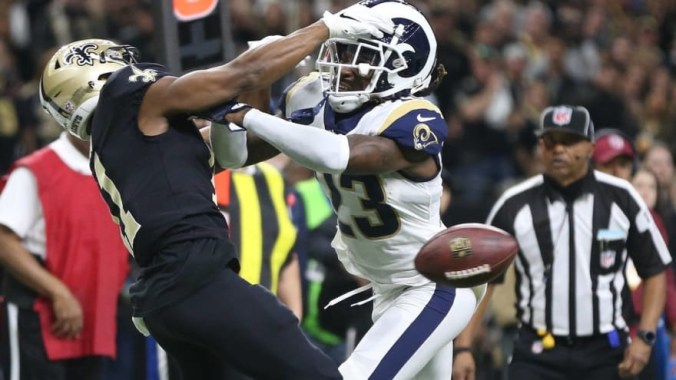
[E]very week across the N.F.L.’s vast empire one player interferes with another before a pass arrives — and goes unpunished for it. In these moments, when yellow penalty flags remain lodged in officials’ pockets, aggrieved coaches weigh emotion against reason: Do they challenge the non-call, hoping that by sheer luck it will be overruled by the new video review mechanism? Or do they stew on the sideline, red flag pocketed, and resign themselves to the unlikelihood of a reversal?…After 12 weeks of wasted challenges and lost timeouts, of inconsistency and obfuscation, the league’s erratic application of the defined standard for overturning an on-field decision — “clear and obvious visual evidence” — has made the football masses yearn for simpler times, such as when no one knew what constituted a catch. Over all, through Week 12, 15 of 77 reviews of pass interference were overturned, though nearly half of those reversals — seven of 15 — were initiated by the officials in the replay booth, who are responsible for challenges in the last two minutes of the half… The questionable calls have dented confidence in a mechanism ostensibly intended to restore it after a mess of an N.F.C. championship game, in which Rams cornerback Nickell Robey-Coleman, without consequence, walloped Saints receiver Tommylee Lewis before the ball arrived.

The dilemma isn’t restricted to football. In any sport where an official’s judgment plays a big role in game results, the interjection of technology and the universal broadcast of games has created an integrity crisis. Before multiple camera angles and the  possibility of replays, umpires and referees could blow a crucial call and nobody would be the wiser, or at least would be able to prove that the game was decided by a non-player’s botch. Now, bad calls are there, on a big screen, then the internet, for all to see over and over. The Luddite argument that missed calls are the “human element” and “part of the game” made sense when there was nothing to be done about it. It is ridiculous now. Continue reading
The NBA’s Integrity And Trust Problem Bites It In The Finals

NBA_2015_Finals_Game6

I don’t watch the NBA any more. The reason is that the games are so obviously subject to manipulation by bias that it is, well, not quite as dubious for legitimate sport as professional wrestling, but still too much so to be worth my time…or yours, frankly, but people spend time cheering for pro wrestlers too.

The problem is the referees, who have so much discretion in calling fouls that they can make the game turn out any way they choose. The fact that the NBA has such a huge home court advantage despite the fact that all courts are the same is also suspicious. Baseball, in contrast, with fields that vary materially in size and dimensions, has a very small home team edge. Biases, intentional or subconscious, control pro basketball, accounting for oddly frequent games decided in the last ten minutes, a propensity for allowing superstars to get away with infractions that lesser players do not, and seven game play-off series.

Sorry, I don’t like being a patsy, so I refuse to care.

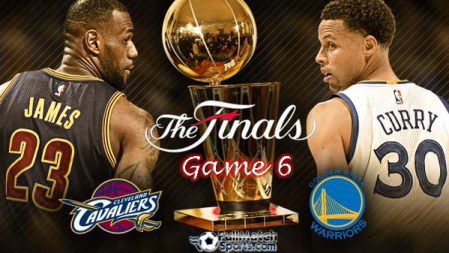
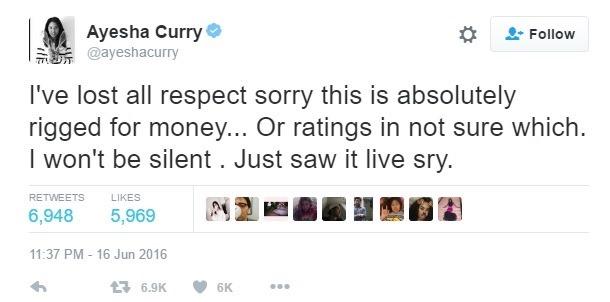
There’s going to be a huge Game 7 of the NBA Finals  on ABC Sunday, because the underdog Cleveland Cavaliers beat the Golden State Warriors and denied them the NBA  Championship for the second straight game last Thursday night. Game Six’s exciting finish was greatly affected by the fact that Warriors uber-star  Steph Curry got ejected in the closing minutes of play after receiving a technical foul. Ayesha Curry, his wife, alleged a different kind of foul, tweeting…

ayesha-curry-tweet

Lots of other fans came to the same conclusion, though Ayesha was quickly informed by the league that they knew where her mother lived, or something, and she deleted the tweet.  Warriors’ head coach Steve Kerr wrote after the loss, “He gets six fouls on him; three were absolutely ridiculous.” Kerr knows that referees will usually move heaven and earth not to let a superstar foul out in regulation of a play-off game…unless, perhaps, there’s a good reason to let it happen. Continue reading

Deflategate Ethics Verdict: Prove It, Then Ban Bill Belichick

FOOTBALL

It looks as if New England Patriots head coach Bill Belichick cheated…again. If the NFL cared about such mundane matters as integrity, fairness, honesty and ethics, it would take the kind of appropriate action any other organization is obligated to take when the evidence shows that a high-performing member of the organization is a rotten apple: throw him out, or at least discipline him and his team severely.

Will the NFL do this to the most successful play-off head coach in its history?

Don’t make me laugh. Continue reading

Ethics Heroes: The Al Ittihad Soccer Team

Spontaneous  sportsmanship  broke out in a recent international soccer match between Al Nahdha, an Omani soccer club, and Al Ittihad, a Saudi soccer club. I’ll take my encouragement from wherever I can get it these days.

Al Nahdha’s goalkeeper was about to make a clearance early in the second half of a 2-2  tie, but hesitated because his shoelace was untied, and seemed worried that his shoe would fly off. An opposing player, a Brazilian striker named  Jobson, noticed the goalkeeper’s dilemma  and  instead of taking advantage of the soccer equivalent of a wardrobe malfunction, tied his opponent’s shoelace for him. The surprised and grateful goalkeeper slapped Jobson on the back and gave him a high-five as the crowd cheered its approval, then he kicked the ball.

A ref, however, spoiled the moment by signaling that the goalie had delayed the game by taking too long with his clearance. He awarded an indirect free kick to Al Ittihad , and Al Nahdha lined up to defend.  Then, after talking the situation over, the Saudi team took what could have been its shot at a game-deciding goal.
The team just kicked the ball harmlessly past the goal, refusing  the penalty (and rebuking the referee), while also making certain that its earlier good sportsmanship wasn’t rendered pointless by a gratuitous ruling.

The crowd loved it.

I bet I would have too, if I would let myself be caught dead at a soccer match.

[Disclaimer: The title on the video above is the opinion of the video poster, and does not necessarily represent the views of Ethics Alarms.]

__________________________

Pointer: Jonathan Turley

Case Study: The Botched DP, Baseball, Ethics Evolution, and “Getting It Right”

manager-mike-matheny-argues

I know this is a long essay.

Yes, it involves baseball.

Bear with me. I think it is worth your time.

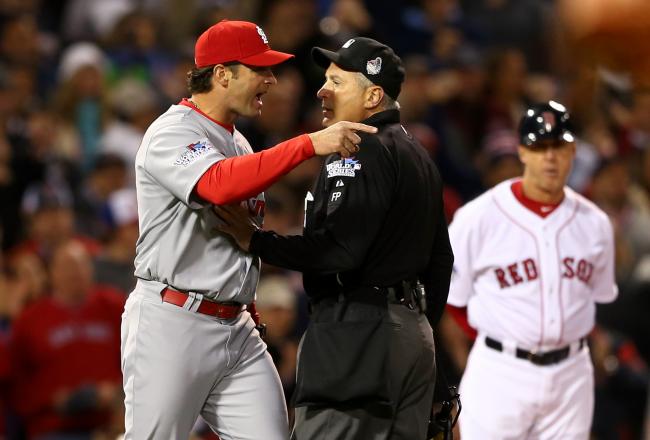
Last night, in Game 1 of the 2013 World Series, embarrassingly kicked away by the St. Louis Cardinals and won handily by some team called the Boston Red Sox,  an intricate ethics drama appeared, allowing us to see the painful process whereby a culture’s ethical standards evolve and change in response to accumulated wisdom, altered attitudes and changing conditions. An obviously mistaken umpire’s call was reversed by the other umpires on the field as the Cardinals manager argued not that the original call had been correct, but that reversing it was a violation of tradition, established practice and precedent….in other words, doing so was wrong, unfair, unethical because “We’ve never  done it this way,” a variation of the Golden Rationalization, “Everybody does it.”   You should not have to appreciate baseball (but if you don’t, what’s the matter with you?) to find the process illuminating and thought-provoking. Continue reading

Basketball Ethics: A Writer Advocates Violence on the Court

To the credit of the Boston Celtics and their coaching staff, the team won its N.B.A. semi-final series against the Orlando Magic without resorting to thuggery. That is because they ignored the advice of Boston Herald sportswriter Ron Borges, who wrote a column in Friday’s edition urging the team to physically assault, and conceivably injure, the Magic’s on-court enforcer, Dwight Howard.

No doubt about it: Howard is a very dirty player, and in the relaxed enforcement atmosphere that the N.B.A. allows its refs to adopt during the play-offs, he had gone beyond dirty to abusive. Borges’ recommendation? Mug him. Hurt him. Continue reading