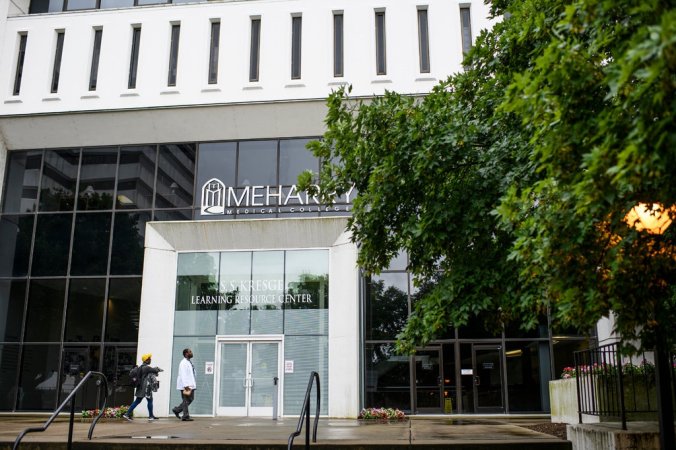
Meharry Medical College is a 143-year-old historically black institution in Tennessee. Last week it announced that it had received the second-largest grant in its history, a $7.5 million gift to study public health issues that affect African-Americans.
But the gift has prompted attacks from African-American health experts and activists. The source of the funds, Juul Labs, is the fast-growing e-cigarette company and partially owned by the tobacco giant Altria. “Juul is cozying up to the black community, and that makes it harder for some parts of the black community to call them out on their targeting of African-Americans,” says Sharon Y. Eubanks, who is an advisory board member of the Center for Tobacco Control Research and Education at the University of California. By “targeting African-Americans”, she means that the company and Altria market its completely legal products to blacks (among other groups), who choose to buy them. [Full disclosure: I worked as an ethics consultant for Altria for many years, and enjoyed the relationship tremendously. Altria was the reason I shaved my head.]
According to the NAACP’s Youth Against Menthol campaign, about 85 percent of African-American smokers aged 12 and older smoke menthol cigarettes, compared with 29 percent of white smokers, and Juul markets menthol pods while Altria markets menthol versions of its cigarettes, like Marboro. And how, exactly, is the African -American community helped if Meharry, the nation’s largest medical research center at a historically black institution, refuses the Juul grant to demonstrate, well, something?
You got me. This, however, is part of a growing fad among the virtuous and the “woke”—refusing to allow organizations, entities and families that they have decided are bad from using alleged ill-gotten gains to do good. Continue reading
 Ethics Alarms