Obnoxious, Offensive, And Unethical: Facebook “Research” Turning Users Into Guinea Pigs

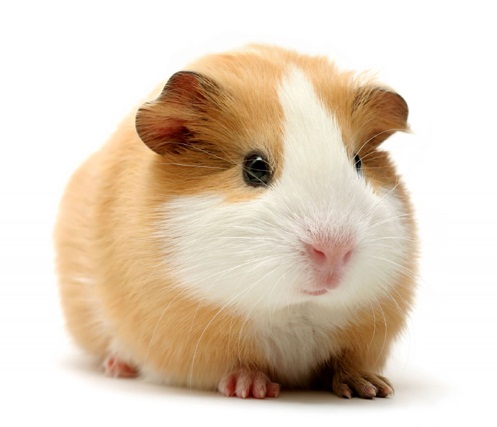
guinea-pig

Facebook apparently has been manipulating the feeds that some users get to see in order to measure how it the content affects the tone of their own posts.

You can read about the research here; I’m not publicizing it, because the Facebook’s research is an abuse of users and their trust. I don’t mind them reading my posts, for they own the service, and the service is in their name. I assume they will use my data and content to make money, but I didn’t agree to allow them to manipulate me, or what I write, feel, or think. I’m also not especially optimistic about the uses the results of such research might be applied to.

The researchers claim that the research is ethical because a computer program scanned for words that were considered either “positive” or “negative,” but the Facebook content wasn’t actually read. Facebook  terms of service state that user data may be used “for internal operations, including troubleshooting, data analysis, testing, research and service improvement.”

Since Facebook users agree to the terms of service, the researchers argue that this constitutes “informed consent” for their experiment.

Wrong.

Also ridiculous.

Continue reading

Ethics Quote of the Week: Prof. Robert Kolter

"Miss me? I'm baaaack!!!"

“Miss me? I’m baaaack!!!”

“The scientists doing this work are so immersed in their own self-aggrandizement, they have become completely blind to the irresponsibility of their acts.”

Robert Kolter, professor of microbiology at Harvard Medical School, condemning the work of Professor Yoshihiro Kawaoka of the University of Wisconsin-Madison and his research team, which managed to recreate the Spanish Flu virus that killed an estimated 50 million people in 1918.

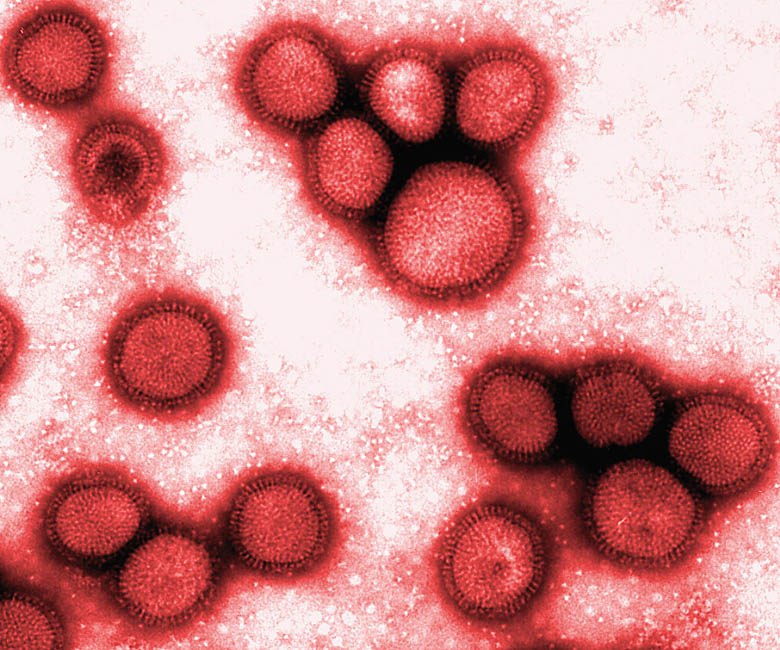
The reincarnated 1918 virus was recreated from eight genes found in avian flu viruses isolated from populations of wild ducks. Using a technique known as “reverse genetics,” Kawaoka’s team rebuilt the entire virus so that it was 97 % identical to the 1918 strain, identified from viruses recovered from frozen 1918 corpses.  Said Kawaoka: “The point of the study was to assess the risk of avian viruses currently circulating in nature. We found genes in avian influenza viruses quite closely related to the 1918 virus and, to evaluate the pandemic potential should such a 1918-like virus emerge, identified changes that enabled it to transmit in ferrets.”

And, in order to assess that risk, the research created a completely unnecessary one that if mankind proves fallible again, could, as various Stephen King and Michael Crichton novels and movies have shown, kill us all.

Eventually, one of these hubris-warped and ethics-free fools might just eradicate humanity…all in the interest of scientific inquiry, of course.


An Untrustworthy Study About Perceptions Of Untrustworthiness That Shows Something Else Entirely

Research is frequently polluted by confirmation bias; personally, I believe this is the case more often than not. A particularly vivid example is the work on “vocal fry,” described as “slowly fluttering the vocal cords, resulting in a popping or creaking sound at the bottom of the vocal register.” Supposedly a 2011 study determined that two-thirds of college women were doing it, and now a paper by Rindy C. Anderson, Casey A. Klofstad , William J. Mayew, and Mohan Venkatachalam announces the results of further research showing how harmful it is. I admit: I’ve now read a lot of stuff about vocal fry, which I had never heard of until recently, and I’m still unclear on exactly what the hell it is, other than “talking in an annoying fashion.” The Atlantic tells us that this is vocal fry, which means it consists of talking like Zooey Deschanel does here:

Got it? OK, now you can explain it to me.

Anyway, what the exact phenomenon is doesn’t matter to the ethics issue; all you have to know is that a respected, serious, scholarly study has spawned lots of media attention by claiming that its data shows that women and men who exhibit vocal fry in their speech patterns will tend to be hired less often than job interviewees who don’t, because employers view them as untrustworthy, among other things. (The study’s catchy title is “Vocal Fry May Undermine the Success of Young Women in the Labor Market,” because, as we know, women are all that matter these days, having had war declared on them and all.) Continue reading

Home-Grown Mengeles, And What We Must Learn From Them

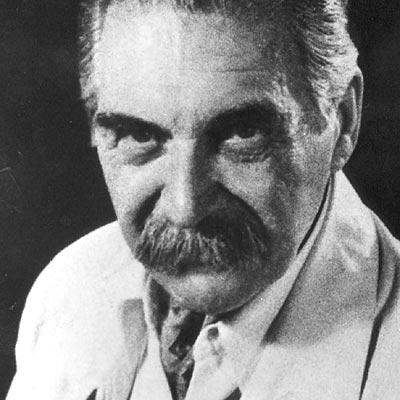
Josef Mengele: researcher, utilitarian, monster

We knew, or should have known, that this extremely ugly shoe was bound to drop eventually.

Last autumn, when the U.S. apologized for federal doctors infecting prisoners and mental patients in Guatemala with syphilis 65 years ago, it put us on notice that a vile and unethical cultural standard had taken hold of the American medical and scientific communities in the 20th century, one that held  it was “right” for the weakest, most powerless and most disposable of human beings to be tricked, coerced or bribed into serving as subjects for experiments that could lead to miraculous cures and treatments for the rest of the population. This–depriving human beings of their rights and lives in the interest of science—is “the ends justify the means” at its worst. But the Guatemala experiments proved that this was once flourishing and respectable in the U.S. scientific and medical research communities, so it would have been surprising if there weren’t more stories of home-grown Mengeles, and sure enough, there were. The U.S. acknowledged as much when it apologized for the Guatemalan tests. Now we have details. Continue reading

Ethics Dunce: Cancer Researcher Sook Shin

Sook Shin and her husband are respected cancer researchers at an Oklahoma University research lab, committing their lives to finding a cure for prostate cancer. The couple recently stopped at a Panera Bread restaurant for a quick meal, and returned to their car to find a window broken, and their Apple computer, carrying years of data—the product of thousands of hours and research dollars—including, they say, a possible cancer cure, gone. Tragically, they had not backed up the data. Continue reading

The Second Annual Ethics Alarms Awards: The Worst of Ethics 2010 (Part 2)

The final categories in the Worst of Ethics 2010. Coming up: The Best of Ethics, 2010.

(If you missed Part 1 of the Worst, go here.)

Worst Ethics Presentation: “Ethics in Politics: An evening with Former Governor Rod Blagojevich” (Presented to its students by Northwestern University) Continue reading

As Winter Strikes, Inconvenient Truths…Again

In the midst of what is being called the coldest winter in Great Britain since records began being kept, some wags have been unkind enough to tweak the “you’re all idiots for not agreeing that only world government can save us” climate change zealots by circulating a 2000 article that ran in the Independent, the nation’s most enthusiastic pro-global warming newspaper. Some excerpts: Continue reading

GlaxonSmithKline Inspires a Fun Game For Your Holiday Party: “Forcast That Ethics Scandal!”

Almost all ethics scandals and examples of outrageous unethical conduct are thoroughly predictable, whether they involve individual, organizations or institutions. The most obvious proof of this is in politics. Once we consider past patterns, current conditions, institutional habits and what we know about human nature, the question when a new political party takes over isn’t whether there will be instances of bribery, influence peddling, self-enrichment, and conflict of interest, but only which elected leaders will be caught at it. Sometimes even that part is easy: everyone should have been able to guess, long before they occurred, that Tom DeLay’s ethics-free philosophy of politics as warfare would lead him to commit serious misdeeds, just as the odds against former Florida Rep. Alan Grayson running a fair or civil campaign for re-election were prohibitively high. Similarly, sports scandals can usually be seen coming a long way off. Once New England Patriots coach Bill Belichik was caught making surreptitious videos of his team’s opponents’ practices, it was easy to guess that he wasn’t the only one, and that since both he and his team were so successful, it would be only a matter of time before a similar incident came to light. And it did, last week.

As I look through various Ethics Alarms posts, it is striking how many of them could have been written in advance, in fill-in-the-blank format. All you need to do is identify an industry with a history of ethics problems, a weak ethics culture, a trusting, under-informed audience, the potential for increased profit, power or influence, and a large population of corruptible, lazy, incompetent, venal, ambitious or cowardly allies. I’m sure a computer program could be developed, but for this holiday season, why not forecast next year’s ethics scandals as a party game? Challenge your guests: Which TV reality show will be shown to have completely manipulated “reality”? Which revered sports figure will be disgraced in a sex or drug scandal? Which Wall Street firm will be caught violating the “sacred principles” posted on its website? Which school will suspend or expel a student for violating the letter of an overly broad and horribly-written rule without actually doing anything wrong? Which universally accepted scientific research will turn out to be the result of manipulated data? Which embarrassments of the Obama Administration will only be reported by Fox News, and which outrages committed by Republicans will the same network ignore?

And, of course, where will TSA employees put their hands next?

This occurred to me as I read about the recent Big Pharma-manipulating-medical-practice scandal, involving drug giant GlaxonSmithKline, while slapping my forehead and shouting, “Of course! This was the logical next step!” Continue reading

Dr. James Watson: There, But For Red Tape, Goes Dr. Mengele

Dr. James D. Watson, Nobel Prize winner, will always have a place among the highest echelons of scientific achievement, no matter what thoughtless and dangerous things he says. Still, the co-discoverer of the double helix is slowly tarnishing his reputation by a series of gaffes. A few years ago, he opined that there was no way to avoid the conclusion that African-Americans just weren’t as intelligent, on average, as whites: the predictable uproar sent him into retirement. Now, as Watson reaps the well-deserved bounty of career honors in his eighties, he is endorsing the retreat from the standards of medical research ethics originally inspired by the diabolical human experimentation performed on helpless adults and children by nightmarish Nazi researcher, Dr. Josef  Mengele. Mengele believed that human beings could be reasonably sacrificed if the benefits to society and humanity generally were great enough, in his estimation, of course. Apparently, so does Watson. Continue reading

Unavoidable Bias in the Embryonic Stem Cell Research Controversy

In the embryonic stem cell research ethics debate, I come out on the “pro” side. Nonetheless, a New York Times article this morning shows clearly how thoroughly and unavoidably biased scientists and researchers in the field are, leading to the conclusion that the decision whether stem cell research is ethical or not, and whether, or to what extent, it should be permitted, cannot be left to them.

The article, by Amy Harmon, begins,

“Rushing to work at Cincinnati Children’s Hospital Medical Center one recent morning, Jason Spence, 33, grabbed a moment during breakfast to type “stem cells” into Google and click for the last 24 hours of news. It is a routine he has performed daily in the six weeks since a Federal District Court ruling put the future of his research in jeopardy. “It’s always at the front of my brain when I wake up,” said Dr. Spence, who has spent four years training to turn stem cells derived from human embryos into pancreatic tissue in the hope of helping diabetes patients. “You have this career plan to do all of this research, and the thought that they could just shut it off is pretty nerve-racking.” Continue reading