Those “Dissent Is Patriotic” Signs

My Alexandria, Virginia neighbors are fond of simple-minded and obnoxious virtue-signalling signs, as I discussed here.

Another one has started popping up, this one proclaiming “Dissent is Patriotic.” As a general proposition, little of value can be stated in three words, especially those with “is” in the middle. “Dissent is Patriotic” is a gross generality, and a sign like this bolsters the delusions of smug absolutists and the historically ignorant.

The ACLU has been pushing this slogan (to sell T-shirts, it seems), and it had a re-birth thanks to the NFL kneelers, who are in truth a perfect example of when dissent isn’t patriotic. Incoherent dissent isn’t patriotic: it makes all dissent look bad. Dissent based on hate, lies, or a desire to divide isn’t patriotic: it’s hateful, dishonest and divisive, which is to say harmful, and thus unethical.

Speaking of dishonesty, many of these signs use the phrasing you see on the left, which is a fake quote attributed to Thomas Jefferson. Attaching a dubious assertion to a much-admired historical figure is an unethical propaganda tactic employing a dishonest appeal to authority.  (This is a famous example.)

As Ethan Epstein wrote in The Weekly Standard,

Few if any Americans are associated with more apocryphal quotes than Thomas Jefferson, but the false notion that he said, “dissent is the highest form of patriotism” is among the easiest to dispel. Because Jefferson never would have said something so idiotic. Of course dissent can be patriotic, but it isn’t inherently so. What one is dissenting from matters. Were members of the German American Bund, who protested the U.S.’s anti-Nazi policies in the 1930s and ‘40s, enacting the “highest form of patriotism?”

Continue reading

Morning Ethics Warm-Up, 1/22/2018: The Returns Of A Terrible Idea, A Times Mania, And Lord Acton’s Observation

Morning!

1. Bad Ideas Never Die Dept. The Obama Administration  killed an unethical Bush Administration rule that permitted a wide variety of health care workers to refuse to administer treatments and procedures they found morally repugnant, what the Bush administration termed workers’ “right of conscience.” It was, and is, a terrible idea; The American Medical Association  explained why, in the context of opposing conscience outs for pharmacists, when it declared..

“RESOLVED, That our American Medical Association reaffirm our policies supporting responsibility to the patient as paramount in all situations and the principle of access to medical care for all people (Reaffirm HOD Policy)…

Now that bad idea and the same ethically warped principles are embodied in a new Trump administration policy that provides “religious freedom protections” for doctors, nurses and other health care workers who object to performing procedures like abortions and gender reassignment surgery. This is a sop to the Republican evangelical base. As I wrote here (actually partially quoting myself from an earlier article),

“Conscience clauses” came into being in the wake of the Supreme Court’s Roe v. Wade opinion legalizing abortion. Obviously that right to privacy ruling put Catholic hospitals in a difficult position, so the U.S. Congress passed the Church amendment (named after Sen. Frank Church of Idaho) in 1973. This provision allowed individual health care providers and institutions such as hospitals to refuse to provide abortion and sterilization services, based on moral or religious convictions. Most states adopted their own “conscience clause” laws by 1978. Conscience clauses are a terrible idea that encourage arbitrary professional misconduct. It is an example of how morally-based action can lead to unethical conduct….People who voluntarily undertake the duties of a job should either be prepared to fulfill those duties, take the consequences of not doing so, or not take the job in the first place.That is the ethical duty that one accepts when one agrees to do a job. “

President Trump doesn’t do ethics, and not being a deep thinker,  inconsistencies of principle don’t resister on him. The reason for requiring health care workers to perform their jobs regardless of whether some portion of it clashes with their religious beliefs, moral conviction, political passions or gag reflex is the same whether a doctor objects to abortions, a baker doesn’t approve of gay marriage , a restaurant owner doesn’t want to serve blacks, Hispanics, or Republicans, or an NFL football player is offended by the National Anthem. Society doesn’t work any other way. The religious freedom dodge easily turns into a cover for bigotry, harassment and oppression.

Nothing in the Constitution says that citizens have the right to hurt people when they practice their religion, or defy our laws, or refuse to perform the duties of their professions or employment while still getting paid because they cite religious conscience.

2. I Told You Not To Look Under That Rock! Dept. For some reason, I broke my own rule and skimmed a Paul Krugman column. What was I thinking? What is so digsuting about Krugman is his intellectual dishonesty, as he writes down to his readers using rhetorical tricks, rationalizations and lazy arguments that are 90% political bias and 10% substance at best. Here was the sentence that exploded my head,  stopped me from reading, as Krugman twisted reality to hold Republicans responsible for the government shutdown that was 100% caused by Senate Democrats blocking the continuing resolution to keep the government open:

“Protecting the Dreamers is, by the way, enormously popular, even among Republicans, who oppose deporting them by a huge margin. So it’s not as if the G.O.P. would be giving up a lot.”

So, as long as a provision is popular with its base, a party isn’t “giving up a lot” by supporting it—regardless of whether it is responsible, fair, smart, principled, or in the best interest of the country. Got it, Paul. This is the lowest common denominator theory of democracy being peddled to New York Times reader by its Nobel Prize-winning columnist: legislation by poll. Continue reading

The Unknown Ethics Hero Of The Hawaii False Alarm Fiasco

The story of the day was that this…

went out to cellphones across Hawaii on Saturday, setting off widespread panic .

Oopsie!  Nearly 40 minutes after it was issued, the Hawaii Emergency Management Agency cancelled the alert, which was a false alarm. The explanation was that somebody pushed the wrong button during a shift changeover.

“The public must have confidence in our emergency alert system,” the Aloha State’s governor, David Y. Ige, said. “I am working to get to the bottom of this so we can prevent an error of this type in the future.” Then, as he appeared on live TV answering questions from a reporter, a small, thin, middle-aged man standing with the governor said (I am quoting from memory),

“This was my responsibility. It should not have happened,  and we will be making sure this cannot happen again, and will make certain that a new system is installed that requires two separate human verifications before a warning is sent out.”

WOW! Continue reading

Ethics Hero: Orrin Hatch

Our political culture has come to a sad state when the simple act of retiring before obvious disability intervenes is an act of rare responsibility and courage. We are at that sad state, however, so the announcement by 83-year-old Utah Senator Orrin Hatch, the longest-serving Republican senator in American history, that he will not run for re-election in 2018 is worthy of salute. Hatch will leave the Senate at the end of his current term, after 42 years in office. He is giving up power, something so many find difficult to do.

Hatch has power now: he is the chairman of the powerful Senate Finance Committee.  He played a pivotal role in passing the Trump tax reform bill that passed  before Christmas, and decided that it was a fitting way to crown his historic Senate career. It isn’t exactly Ted Williams hitting a home run in his final at bat; for one thing, there is another year to go before Hatch’s term is up. Nonetheless, he is doing one of the hardest things for a p0werful figure to do, especially, it seems, today’s Senators in both parties,

More than half of the 18 Senators up for reelection in 2018 will be over the age of 65.  If they win, another six years in office would put Senators Feinstein, Nelson, and Sanders well into their 80s. By the 2020 elections, 21 of the 33 Senators running for reelection will be 65 or older. This is neither healthy for the country nor responsible, and the problem extends beyond the Senate. Over the past three decades,  the average age of a member of Congress has steadily increased. In 1981, the average age of a Representative was 49 and the average of a Senator was 53. Today, the average age of a Representative is 57 and the average of a Senator is 61.  House Democrats are especially antediluvian:  the average age of the Democratic House leadership is 72 years old, in contrast to the average age of Republican House leadership, 48 years. Continue reading

Yes, Catherine Gregory Should Be Fired

Jonathan Turley is fascinated with the issue of whether  faculty members and employees generally should lose their jobs over controversial conduct outside of the workplace, particularly when it involves political speech. “There remains an uncertain line in what language is protected for teachers in their private lives,” the George Washington law professor writes. As I’ve discussed here before, I don’t think it’s nearly as uncertain as Turley does. When a faculty member’s conduct or statements on social media make an objective observer think, “No competent, professional institution would hire someone like this,” it’s bye-bye and don’t let the door hit you on the way out.

Even Turley seems to waver in this ridiculous case.

Conservative commentator Lucian Wintrich was about to speak on the topic “It’s OK to Be White”—I LOVE that topic!— at the University of Connecticut when a protestor grabbed his notes. He in turn tussled with her, causing a near riot, and campus police arrested him.  The protestor was Catherine Gregory, associate director of career services  at Quinebaug Valley Community College.

Today the University came to its senses (or realized public opinion wasn’t going to allow it to get away with its attempt at liberal fascism) and dropped the charges against Wintrich  while charging Gregory.

What should happen to Gregory?

Gregory’s lawyer, Jon Schoenhorn argues that his client was justified in her actions because Wintrich’s views constitute “hate speech” and his actions “are beyond the First Amendment” in their insults to minorities. This is obviously nonsense, and I would argue it even qualifies as a frivolous and dishonest defense, an ethical violation. Unless the man is complete nitwit, he must know that there is no excluded variety of speech called “hate speech” that the First Amendment doesn’t protect. He’s lying, or he’s too incompetent to be a lawyer. Continue reading

Comment of the Day: “‘White Christmas’ Ethics Addendum: Battlefield Incompetence, Insubordination And More In The Holiday Classic”

To kick off the Not-Too-Early-To-Play-Christmas-Music Season, here is a Comment of the Day that adds another chapter to the Ethics Alarms commentary on “White Christmas,” the Bing Crosby-Danny Kaye musical film that is one of the five or six most resilient of the Christmas classics. The initial ethics analysis is here.

The post that spawned the latest take was a rare guest essay by Ethics Alarms veteran texagg04.

Now comes new commenter SykesFive to provide insight into the pivotal character of General Waverly, played by Dean Jagger. Among other things, he argues that one reason the general was so beloved was that he was poor general, treating the lives of his men as more important than his mission.

Here is his Comment of the Day on tex’s post, “White Christmas” Ethics Addendum: Battlefield Incompetence, Insubordination And More In The Holiday Classic:

I have a somewhat different take on this. I sometimes think I am the only person who thinks so much about the Waverly character.

As the scene opens, Major General Waverly is being relieved for frankly the only reason American unit commanders were relieved during the war: he didn’t take the objectives. That is failure. It could be lack of aggression or poor coordination or anything else, but ultimately it is failure and the commanding officer will pay the price. He will be shuffled off to a rear area command, or maybe just left to bum around the theater, and be out of the Army by the end of 1945 because his record will be so tarnished. He will be lucky not to revert to his prewar rank.

Waverly’s age suggests he was a company-grade officer during WWI and may or may not have seen combat during that conflict’s closing weeks, then spent decades idling in the interwar army. Apart from whatever happened in 1918, Waverly has no more combat experience than anyone else in the division. He is not an experienced commander by any measure. He had the right credentials–a few articles in service journals, no serious problems on his posts, and of course a West Point Ring–but had never really been tested as a field-grade officer. Again this is a common profile.This is a very common profile for WWII US Army division commanders.

So in 1940, let’s say Colonel Waverly seemed like a likely candidate for command of an infantry division in the expanding army. He did well enough with some trial commands–all during stateside training and expansion–and was promoted to one and then two stars. He seemed competent enough when the 151st Division was formed and went through let’s say nearly two years of intensive training in Texas or California or wherever. And so the division was sent to Europe in let’s say August 1944, then spent a couple months languishing in Normandy or the Pas de Calais region, during which time Waverly was a friendly presence at other officers’ headquarters as well as around his division. Bear in mind that at this point, and really for the whole war after the breakout from Normandy, the limit on American frontline strength was providing fuel and artillery shells. There were more men and tanks than could be sustained at the front. Continue reading

President Trump’s First Year: The Ethics Alarms Ethics Audit


I planned to do this on November 8, but other matters intervened. Properly I should wait until January, I suppose. Yet I don’t see the grades changing significantly in a month or two.

For the most part, this ethics audit doesn’t consider policy matters. Calling policies unethical is usually a cheap shot and an expression of partisan priorities. I believe that the DACA is unethical; many believe that killing it would be unethical. I could not make a useful analysis using these kinds of controversies.

To keep this simple, I’m going to use the relevant ethical values listed in the Josephson Institute’s Six Pillars of Character, and add some extra categories at the end. As a preface, I have to say that there aren’t many surprises here. I had already concluded long ago that the concept of ethics is meaningless to Donald Trump. In Three Circles terms, he has only one circle, his own, and a Core circle unmoored to either a formal code of ethics or public standards of conduct will only be ethical by accident. I was hopeful that, like other Presidents of dubious character and troubling pasts when they reached office, Trump might make a concerted effort to adopt more traditional Presidential ways. This was always a long-shot, and so far, I see no signs of it happening.

Here are President Trump’s ethics grades through November of his first term, with comments and explanations where needed: Continue reading

Ethics Dunce: The Walter Cronkite School of Journalism and Mass Communication

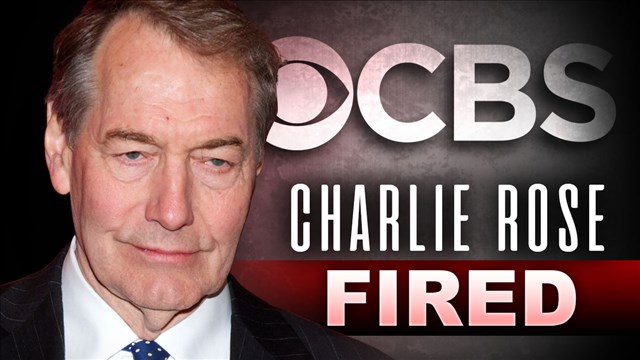
The Walter Cronkite School of Journalism and Mass Communication has boarded the Harvey Weinstein Ethics Train Wreck.

Is the body of Charlie Rose’s work as a journalist less impressive, valuable, expert, enlightening and professional because we have learned that he is an abusive, sexist, gross, harassing pig? Of course not.

That being the case, why is The Walter Cronkite School of Journalism and Mass Communication revoking the Walter Cronkite Award for Excellence in Journalism it bestowed on him in 2015? Let’s have the school’s explanation, shall we?

In the words of Dean Christopher Callahan:

We give the award each year based on the knowledge we have of a recipient at that time. When new information about a recipient surfaces, the question we ask is not whether the award would be given again with a new set of facts, but whether the transgressions are so egregious that they demand nothing less than a reversal of history.

I believe Mr. Rose’s actions of sexual misconduct reported by The Washington Post and other media outlets, which are largely unrefuted, rise to that level. The damage caused by Mr. Rose’s actions extends far beyond the news organizations for which he worked. The actions victimized young women much like those who make up the overwhelming majority of Cronkite students – young women who deserve to enter workplaces that reward them for their hard work, intelligence and creativity and where they do not have to fear for their safety or dignity. In rescinding this award, we hope to send an unequivocal message that what Mr. Rose did is unacceptable, and that such behavior – far too common in not just media companies but many organizations – must stop.

So now you know why. The school, and its dean, and everyone else involved in this decision, is craven, hell-bent on virtue-signalling, bereft of integrity, hypocritical, and intellectually dishonest. The school has never withdrawn an award or honor: are we really supposed to believe that there is an established procedure for considering whether or not one should be revoked in an instance of “new information” that has nothing whatsoever to do with the reason the honor was bestowed? Rose’s shame hardly did any lasting harm to the news organizations he worked for beyond the inconvenience of replacing him. He discriminated against women? Being the biggest cheese in William Paley’s all-male news room, Walter Cronkite’s treatment of women during the “Mad Men” error probably wouldn’t pass muster today, though I can’t picture Uncle Walter parading naked in front of female colleagues. (Fortunately I can’t picture Charlie doing that either). If Walter’s Juanita Broaddrick, reading about the slap-down of Rose, comes out with a credible accusation against the icon, will the Arizona State-based institution change its name to the Dan Rather sch…no, it can’t do that. Continue reading

From The “Ethics Movies That Drive Me Crazy Because I’ve Watched Them Too Often” Files: “Field Of Dreams”

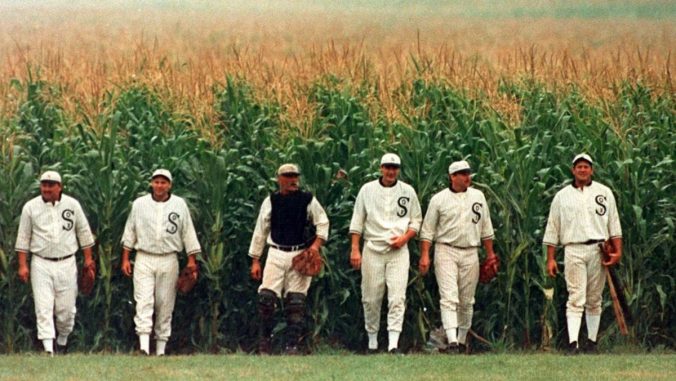
The end of the baseball season is hard for me, although it dovetails nicely into the hell of the holidays. The whitewater rush of our wedding anniversary, Thanksgiving, my birthday, pre-Christmas, Christmas, and New Years, along with the ethics business’s dead income period and resulting Marshall cash flow anxiety at the end of every year pretty much has me distracted until January, and Spring Training starts just six weeks after that. Early November has me in withdrawal, however, so I yielded to temptation and watched the 1989 baseball fantasy “Field of Dreams.” It is also an ethics movie of sorts, exploring the complexities of family, fathers and sons, forgiveness, sacrifice, faith and redemption.

Ethics Alarms has highlighted the annoying ethics problems in two classic films, “White Christmas” and “It’s a Wonderful Life.” Now it’s “Field of Dreams'” turn. Oh, I’m still a sucker for one of the most shamelessly manipulative movies ever, don’t get me wrong. I cannot, and I’ve tried, stop myself from getting choked up when Ray Kinsella (Kevin Costner) says to his incredibly gorgeous hunk of a father (Dwier Brown), long dead but miraculously returned to corporeal form and younger than his son,”Hey, dad? Wanna have a catch?”

See? I got choked up just typing that! (Damn movie.). From an ethics perspective, however, the film makes even less sense than the plot.

I’m going to assume, if you continue reading this, that you’ve seen the film. If you haven’t, see it. Don’t let my jaded observations spoil it. It sure works the first time.

Here are the aspects of “Field of Dreams’ that now drive me nuts.

  • Ray Kinsella is a reluctant and unenthusiastic Iowa farmer who lives with his wife, Annie (Amy Madigan), and daughter, Karin (Gaby Hoffman). In the opening narration, Ray explains his estrangement  from his father, John Kinsella, who was a baseball fanatic and who idolized Shoeless Joe Jackson, the disgraced star of the infamous Chicago Black Sox, who threw the 1919 World Series. By the end of his father’s life, Ray hadn’t seen his father for years. He is still feeling remorseful for refusing to play catch with his father, because rejecting baseball was a way to hurt his dad.

The Problem: The whole film’s premise (and that of the novel, “Shoeless Joe,” it was adapted from) is based on the popular fiction that Joe Jackson was unjustly banned from baseball for being part of the gamblers’ plot to fix the Series. This is untrue. Jackson accepted a bribe. He did not inform authorities. He knew his seven similarly-bribed team mates were trying to lose. He did nothing to stop them. he allowed the Series to be fixed, the fans to be betrayed and the fame itself to be brought to the brink of destruction. Jackson, who was illiterate and from all accounts appears to have had an IQ of about 85, argued that he tried to win despite taking the bribe. First, the evidence is questionable on that point.Although he  batted .375 against the Reds in the series, he failed to drive in a single run in the first five games, four of which the White Sox lost. That’s how you throw games without looking like you’re throwing games. Second, he was making the argument that stealing money from bad people isn’t still unethical. Joe probably believed that, but then he was an idiot.

  • . While walking through his cornfield one evening, Ray hears a whispering voice saying, “If you build it, he will come.” He decides, after the voice keeps pestering  him, that he is supposed to build a baseball field—with lights!—in his corn field, and that if he does, Shoeless Joe Jackson will return from the dead and play there. Or something.  Annie is dubious–ya think?—but lets him do it. After the field is finished and nothing happens for months, we see Ray and Annie going over their financial records:

RAY: How bad is it?

ANNIE: Well, given how much less acreage we have for corn, I’d say we’ll probably…almost break even.

RAY: Jesus.

ANNIE: We’ve spent all our savings on that field.

RAY: So what are you saying? We can’t keep the field?

ANNIE: t makes it real hard to keep the farm, Ray.

The Problem: And I said Shoeless Joe was stupid. NOW they are having this conversation? This is so irresponsible and incompetent, it defies description. Ray has a family. They have a little girl. Spending their savings on Ray’s whim and a ghostly and ambiguous whisper is the ethical equivalent of parents blowing their money on drugs. Through it all, Annie, who proudly styles herself as a Sixties veteran, is relentlessly cheery regarding her husband’s lunacy, and once Shoeless Joe appears on the cornfield diamond she’s all in. What, honey? Another voice is telling you to drive to Boston (from Iowa, remember) and talk famous recluse novelist Terrance Mann ( J.D. Salinger in the novel) to join your fantasy? You want to leave while we are trying to stay out of bankruptcy? Sure, go for it!

At the very least, they could have skipped the lights. None of the 1919 White Sox ever played in a night game; there were none then.

Continue reading

Morning Ethics Warm-Up, 11/9/17: Everyone Behaving Abysmally Edition

Let’s scream “Good Morning!” to the sky!

1 The FBI is now complaining that it’s too difficult to break into smartphones, since the Texas maniac, Devin Kelley, had one that has so far resisted cracking. By all means, let’s make sure we have no privacy from government intrusions into our lives and relationships. I’m sure—I really am sure—that the “think of the children!” mob and the “if it saves only one life!” brigade will happily surrender the right to privacy, which is, per the Supreme Court, is also in the Bill of Rights, just like the rights of free speech and the right to bear arms.

The solution is right in front of the FBI anyway.  Just take Kelley ‘s body on a plane trip to Bali, manipulate his dead thumb, and use it to unlock the phone.

2. I see little to choose from ethically between Facebook selling space for deceptive ads to the Russians and CNN selling time on their newscasts for a billionaire to make his personal, dishonest and ignorant demand that President Trump be impeached. I had heard and read about the ad, which is basically Maxine Waters’ warped version of the Constitution and the impeachment clause, with a little Richard Painter thrown in, but I assumed I would have to go online to see it. Nope, there it was this morning during a break on Headline News. Respectable news sources, not that CNN qualifies any more, have traditionally rejected factually misleading political ads from private interests, and a Constitutionally moronic rant from a rich guy with money to burn surely should qualify.

The rich guy is Tom Steyer, who apparently once was an intelligent human being even as you and I. His ad claims that “Donald Trump has brought us to the brink of nuclear war, obstructed justice, and taken money from foreign governments. We need to impeach this dangerous president.” Let’s see: the first is pure hysteria and an attempt to criminalize policy and international poker (I’d argue that the weak response to North Korea by the U.N. and previous administrations has been what has “brought us to the brink,” as well as, of course, the rogue country threatening nuclear attacks and firing missiles over Japan).

The second is a gonzo anti-Trump resistance theory that would be tossed out of any court, except maybe in Hawaii. The third is intentionally dishonest: this is the Emoluments Clause fantasy that holds the discredited theory a hotel owner has to be impeached if he doesn’t sell his hotels. Steyer’s ad also says that that Trump should be impeached for various tweets, half-baked opinions and comments. As one would expect from a  Democratic mega-donor, he apparently believes that speech qualifies as a high crime when it annoys progressives.

Naturally, again as one would expect, Steyer implies in his ad that Bill Clinton, who really did commit a crime as President and really did obstruct justice, was impeached by a Republican Congress for “far less.” This disqualifies him as a serious person.

3. Baseball fans know that Roy Halladay, a near-Hall of Fame pitcher with the Blue Jays and Phillies renowned for his durability until his arm fell off (metaphorically speaking), was killed this week when he crashed his single engine plane into the Gulf of Mexico. Observers say he was flying recklessly, and there is evidence that he wasn’t properly experienced to be operating the plane as he was. In Boston, radio sports jockey Michael Felger went on an extended rant excoriating the dead pitcher for being irresponsible, especially as a husband and father.  Here’s a sample: Continue reading