Unethical Quote Of The Millennium: Senator Harry Reid, Fick

“Romney didn’t win, did he?”

Senator Harry Reid to CNN’s Dana Bash, when she asked him whether he regretted his outright lie during the 2012 Presidential campaign accusing GOP nominee Mitt Romney of not paying any taxes at all for the past 10 years.

As bad as Reid looks, what lies beneath is infinitely worse...

As bad as Reid looks, what lies beneath is infinitely worse…

This is the Unethical Quote of The Millennium because it is literally impossible to say anything that demonstrates more contempt for ethical values. Moreover, Reid announced his ethical void on national TV with evident satisfaction and a complete lack of shame, making him a fick--someone who revels in being unethical.

In the old days, it was called “evil.”

Here, I’ll let Chris Cillizza, a Washington Post political reporter, explain what is so wrong with this despicable quote, the watermark of a totally corrupt political figure and  deplorable human being:

Continue reading

The Case Of The Too Candid Catholic Teacher

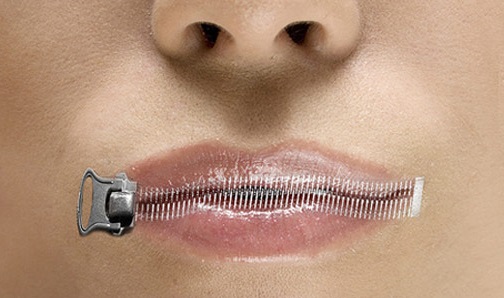
"You can unzip it, Patricia, when you work somewhere else...."

“You can unzip it, Patricia, when you work somewhere else….”

Apparently I missed another “media firestorm,” so allow me to catch up, particularly since the analysis of this story has been muddled beyond comprehension.

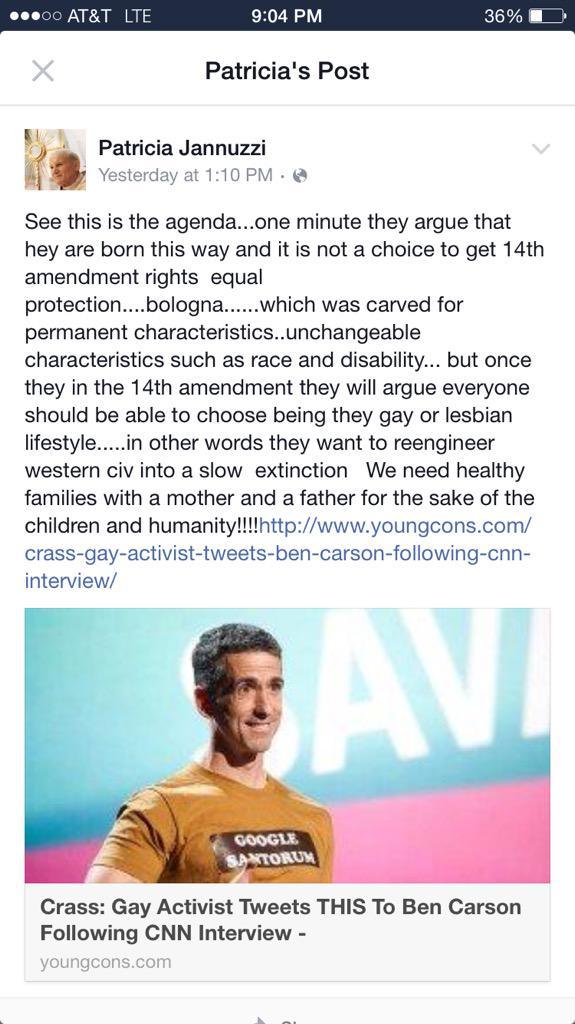
Patricia Jannuzzi, a religion teacher at Somerville’s Immaculata High School, posted this on her personal Facebook page:

jannuzzi-fb-post

This being the internet, after all, someone sent it far and wide, with resulting embarrassment to the school. Jannuzzi, a theology teacher with Immaculata for 33 years, was ordered to de-activate her Facebook page after an online petition   demanded that she be punished. Jannuzzi was placed on administrative leave,  and the school administration notified alumni, parents and students, in a letter that said in part,

“This episode has reflected not only on this teacher but, by extension, on Immaculata High SchoolWe regret deeply any hurt this has caused to any individuals and the negative light in which it has cast our school….Although these were posts to a personal social media page, Immaculata High School recognizes the need to ensure that our faculty, staff and students full understand the behaviors expected of them as members of our community and recognize our intolerance of discriminatory behaviors of any kind.”

Points: Continue reading

Ethics Hero: San Francisco 49ers linebacker Chris Borland,

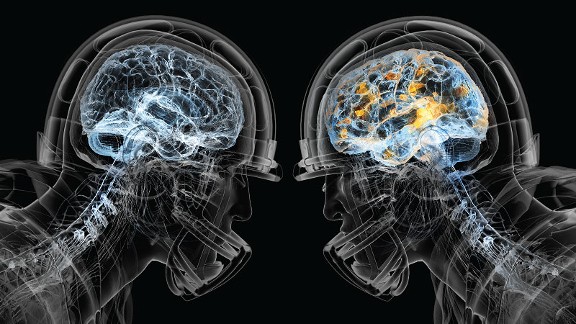
concussions NFL

It is indeed strange to call someone an ethics hero for taking reasonable steps to save his own life. In the case of Chris Borland, however, it is appropriate.

Borland, one of the NFL’s top rookies in 2014, announced that he is retiring after just one season he does not want to risk the long-term effects of repetitive head trauma.

Borland, 24, said  he made his decision after consulting with  concussion researchers, and current and former teammates, as well as researching  the relationship between football and neurodegenerative disease.

“I just honestly want to do what’s best for my health,” Borland told ESPN.  “From what I’ve researched and what I’ve experienced, I don’t think it’s worth the risk.” Continue reading

The Petraeus Deal and Justice In America

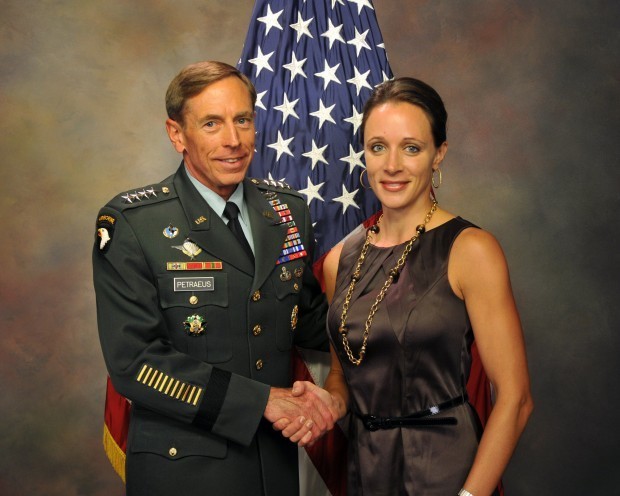
broadwell

I’m in a rush to get ready for a law firm seminar, so I’m going to mostly let Ken White at Popehat do my work for me, as he is very qualified to do in this case. In his comments on the David Petraeus plea deal, Ken quite appropriately raises questions of why such serious crimes as the acclaimed general and former CIA head engaged in do not warrant prison time, and he answers thusly: Petraeus is rich, famous and has powerful friends.

Ken obvious believes those aren’t good reasons, and I agree with him. Nor are the other rationalizations that the general has suffered enough, that he isn’t really a criminal, that the nation owes him, or that he is a valuable resource for the nation that we are better served by not storing behind bars.

I believe that Petraeus has less excuse for his conduct than the typical defendant, and that as a celebrity, war hero and tole model, his defiance of the law is more serious, and more deserving of punishment, than the majority of non-violent criminals who go to jail. Indeed, Petraeus had styled himself as a moral exemplar. I read yesterday—I don’t have time to find the link—that Edward Snowden’s lawyers sent a cheeky message to prosecutors that Snowden would be happy to accept a similar deal to Petraeus’s.  Exactly.

These incidents do terrible damage to the public’s trust in the justice system’s fairness, and they should. Plea deals like this, bought with lawyer fees, bias and influence, are unequivocally wrong.

March 1 Is “Remember What Drugs Cost Society Day”

Belushi

The District of Columbia is poised to completely legalize pot, which will be the most ringing of government endorsements of  societally destructive personal conduct, in a malfunctioning culture that should not be placed at further risk. This overwhelmingly black, poor, educationally-challenged and struggling population needs competent, trustworthy leadership and an injection of values.  It is a community, after all, that idolized the late Marion Barry, a mayor who smoked crack on the job, and never apologized for it. It’s not surprising that the adults in the District would tell the young African-Americans that it’s cool to spend their your money to get stupid, to avoid clear thought rather than practice it.

Every March 1, I watch this old clip (below) from Saturday Night Live  (it’s not on YouTube, so I can only link to it) , featuring the great, and thanks to recreational drugs, late John Belushi. It unfailingly makes me laugh out loud. It also makes me furious that a talent like this gave himself so little time to entertain us, because he killed himself with an insatiable appetite for illegal drugs.

For me, March 1 is “Remember What Drugs Cost Society Day.” Those arguing for our government placing a societal  seal of approval on these costs have yet to persuade me that it is ethical, wise or even sane to not just accept them, but to multiply them by a number unknown.

Here’s John Belushi (1949-1982), enlightening us about March around the world.

More Oscar Ethics: Ethical Quote (Graham Moore) and Unethical Quote (John Legend) Of The Month

“When I was 16 years old, I tried to kill myself because I felt weird and I felt different, and I felt like I did not belong. And now I’m standing here, and so I would like this moment to be for this kid out there who feels like she’s weird or she’s different or she doesn’t fit in anywhere: Yes, you do. I promise you do. Stay weird, stay different, and then, when it’s your turn, and you are standing on this stage, please pass the same message to the next person who comes along. Thank you so much!”

—-Graham Moore, 2015 Oscar winner for best adapted screenplay for the movie “The Imitation Game,” in his acceptance speech.

“We live in the most incarcerated country in the world. There are more black men under correctional control today than there were under slavery in 1850.”

John Legend, accepting the 2015 Oscar for Best Song for “Glory” from “Selma.”

Legend’s statement is technically accurate, but misleading in many ways, inflammatory, destructive, and irresponsible.

When you heard it, did you make the distinction between “in prison” and “under correctional control”? Most didn’t—I didn’t— and that was intentional. This is deceit. Correctional control  includes those in prisons, but also those in jails awaiting trial or serving short local sentences; those on parole; and others on probation.  Like all the fake and misleading statistics that fly around, this one is inflated to induce a “Wow!”  A person under probation or parole can live a completely normal and free life, if he or she can avoid breaking the law and some extra rules. Slavery it’s not. Continue reading

The Sixth Annual Ethics Alarms Awards: The Best of Ethics 2014

abstract door grand jury room

The Ethics Alarms Awards for the Best in Ethics 2014—sorry for the tardiness— are about 30% of the length of the Worst. Does this mean that the nation and the culture, not to mention the world, are doomed?

Not necessarily. I am well aware that most of the country is ethical, substantially fair and honest, diligent, and embodies ethical values in their every day dealings with you and me, and the world. We primarily hear, and to some extent, take note of, the corrupt, the irresponsible, the manipulative, the untrustworthy and the foolish. The Best Ethics list is smaller in part because only exemplary ethics gets publicity. I also should note that calling attention to unethical conduct and discussing it often does more to advance the mission of Ethics Alarms than confirming that right is right, though I sure wish there was more exemplary ethics to celebrate. Maybe the dearth of award winners here is my fault, and the result of my biases.

Boy, I hope so.

Here are the 2014 Ethics Alarms Awards for the Best in Ethics:

Most Important Ethical Act of the Year:

The Ferguson grand jury resisted public and media pressure to deliver a verdict of no indictment against police officer Darren Wilson, upholding the integrity of the justice system despite the injection of emotion, politics and race into a tragic incident where none of these belonged. Though the available evidence could never have supported a guilty verdict, it would have been easy and popular for the grand jury to make Wilson stand trial anyway, just as George Zimmerman did. Their reward has been to be attacked as fools and racists, but they did the right thing, when the wrong thing must have seemed very attractive.

Outstanding Ethical Leadership

The New York Yankees. (Bear with me now.) The Yankees are the most famous team in professional sports in the biggest sports market in the world. They make money without even trying. Yet when the team had a bad year and missed the play-offs in 2013, it committed nearly a billion dollars to re-building the team, a move that only makes sense in the quest to win games, not to maximize profit. Thus they prominently chose loyalty, mission and sportsmanship over greed. (The Yankees still missed the play-offs in 2014, too.) Then all year long the team placed a spotlight on Derek Jeter, their retiring hero, whose career and character single-handedly refutes the cynicism of sports critics fed up with the lack of character displayed by the Armstrongs, the Rices, the ARods, the Belichicks, the Winstons, the Paternos, and so many, many others. Finally, when two New York City police officers were assassinated after Al Sharpton, and the “Hands Up!” protestors, with the city’s own mayor’s support, had vilified the profession as violent, racist and untrustworthy, who will pay for the fallen officers’ children to go to college? The New York Yankees’ Silver Shield Foundation.  Add charity, compassion, civic duty and gratitude to the list of ethics values the New Your baseball club modeled for us. I know it seems odd and even trivial to follow up last year’s winner in this category—the Pope— with a sports franchise, but to paraphrase Babe Ruth’s famous rejoinder when the Yankees balked at his salary demands in 1930, saying he wanted to be paid more than then-President Herbert Hoover (“I had a better year that Hoover!”), the Yankees has a better year than the Pope.

Outstanding Sportsmanship

Jose Altuve, Houston Astros secondbaseman and American League batting champ….the right way. He began the final day of the 2014 season hitting .340, three points ahead of the Tigers’ Victor Martinez. If Altuve didn’t play in Houston’s meaningless last game, Martinez would have to go 3-for-3 to pass him, giving the DH a narrow .3407 average compared with Altuve’s .3399. By playing, Altuve risked lowering his average, providing Martinez with a better chance of winning the batting championship. Many players in the past have sat out their final game or games to “back in” to the prize, rather than give the fans a chance to watch a head to head battle injecting some much-needed drama into the expiring season.  Altuve, however, gave Martinez his shot. He played the whole game, had two hits in his four at-bats, and won the American League batting title on the field, not on the bench, as Martinez went hitless. The conduct, simple as it was, embodied fairness, integrity, courage, respect for an opponent, and most of all, respect for the game.

Best Apology

JESSICA_URBINA

 The Level #1 apology, according to the Ethics Alarms Apology scale, issued by Sacred Heart Cathedral Prep in San Francisco.The school had cruelly and needless embarrassed graduating senior Jessica Urbina (above), rejecting her inclusion in the yearbook because she chose to be photographed in a tuxedo rather than a dress, as the school’s dress code, which had not been previously made clear, demanded. I wrote…

“The rule is sexist, archaic, unthinking, prejudicial, arbitrary, cruel and wrong. The best way to change a rule that is sexist, archaic, unthinking, prejudicial, arbitrary, cruel and wrong is to break it, and see if those in charge have the sense and compassion to do the right thing. The administrators of Sacred Heart Cathedral High School flunked. I doubt that Jessica was even trying to provoke a confrontation: like any normal student, she wanted her image in the most important piece of memorabilia of her high school years to accurately portray her as she was, not as some alien ideal dictated by the Catholic Church. There was nothing to be achieved by banning the photo.”

The school reversed itself with grace and compassion. The apology is long, but a more humble or complete one would be unachievable. It achieved an ethical end to an ugly episode. You can read it here. Runner up: Writer Henry Rollins lovely and wrenching apology for his initial reaction to Robin Williams’ suicide.

Hero of the Year

Michael DeBeyer.  De Beyer has decided to sell his restaurant, which he opened more than 15 years ago and is worth an estimated  $2 million, to pay for whatever medical treatments are necessary to save the life of Brittany Mathis, 19. Brittany works for De Beyer at his Kaiserhof Restaurant and Biergarten in Montgomery, Texas, and  learned, in December 2013, that she has a 1.5 inch brain tumor.  She couldn’t afford the operation to find out whether the tumor was benign or malignant, and didn’t have health insurance. “I couldn’t live with myself; I would never be happy just earning money from my restaurant knowing that she needs help,” Michael told local reporters.

That’s what makes ethics heroes; really, really loud ethics alarms, combined with courage and caring.

Parent of the Year

NBA Star Kevin Durant’s Mom.

Most Ethical Celebrity

Matthew McConaughey. In a field notably sparse on exemplary ethics by celebrities, the 2013 Oscar winner for Best Actor stands out for a speech that was inspirational, thoughtful, and rife with ethics wisdom. It is worth recalling. Here it is:

Thank you. Thank you, thank you, thank you, thank you to the Academy for this—all 6,000 members. Thank you to the other nominees. All these performances were impeccable in my opinion. I didn’t see a false note anywhere. I want to thank Jean-Marc Vallée, our director. Want to thank Jared Leto, Jennifer Garner, who I worked with daily.

There’s a few things, about three things to my account that I need each day. One of them is something to look up to, another is something to look forward to, and another is someone to chase. Now, first off, I want to thank God. ‘Cause that’s who I look up to. He has graced my life with opportunities that I know are not of my hand or any other human hand. He has shown me that it’s a scientific fact that gratitude reciprocates. In the words of the late Charlie Laughton, who said, “When you’ve got God, you got a friend. And that friend is you.”

To my family, that who and what I look forward to. To my father who, I know he’s up there right now with a big pot of gumbo. He’s got a lemon meringue pie over there. He’s probably in his underwear. And he’s got a cold can of Miller Lite and he’s dancing right now. To you, Dad, you taught me what it means to be a man. To my mother who’s here tonight, who taught me and my two older brothers… demanded that we respect ourselves. And what we in turn learned was that we were then better able to respect others. Thank you for that, Mama. To my wife, Camila, and my kids Levi, Vida and Mr. Stone, the courage and significance you give me every day I go out the door is unparalleled. You are the four people in my life that I want to make the most proud of me. Thank you.

And to my hero. That’s who I chase. Now when I was 15 years old, I had a very important person in my life come to me and say “who’s your hero?” And I said, “I don’t know, I gotta think about that. Give me a couple of weeks.” I come back two weeks later, this person comes up and says “who’s your hero?” I said, “I thought about it. You know who it is? It’s me in 10 years.” So I turned 25. Ten years later, that same person comes to me and says, “So, are you a hero?” And I was like, “not even close. No, no, no.” She said, “Why?” I said, “Because my hero’s me at 35.” So you see every day, every week, every month and every year of my life, my hero’s always 10 years away. I’m never gonna be my hero. I’m not gonna attain that. I know I’m not, and that’s just fine with me because that keeps me with somebody to keep on chasing.

So, to any of us, whatever those things are, whatever it is we look up to, whatever it is we look forward to, and whoever it is we’re chasing, to that I say, “Amen.” To that I say, “Alright, alright, alright.” To that I say “just keep living.” Thank you.

Most Principled Politician
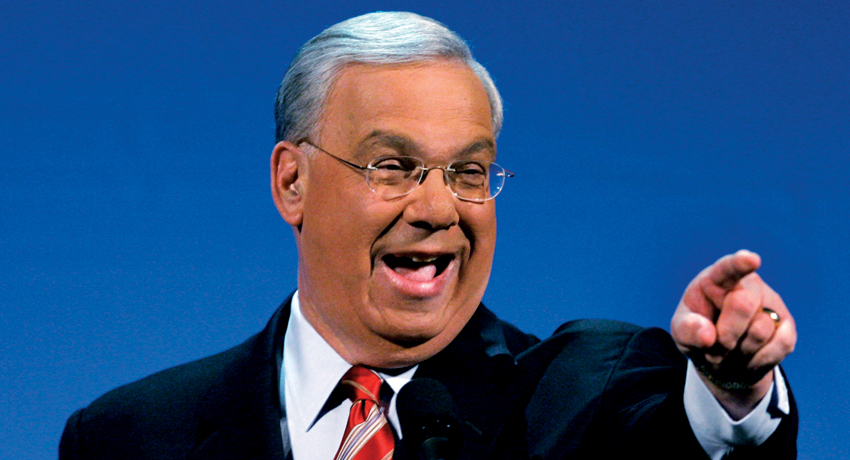
Thomas Menino

The late Thomas Menino, Boston’s beloved Democratic mayor for two decades (the longest in tenure in the city’s history), who retired last January and  died of cancer nine months later. Somehow I missed giving him the ethics send-off he deserved. Amazingly, he was the first Italian-American mayor in Boston’s history: the job has always been won by the city’s Irish machine. While mayors around the nation were embroiled in scandals and embarrassments, Menino undeniably improved the city, led it admirably in the aftermath of the Boston Marathon bombing in 2013, and left office with the admiration of conservatives as well as liberals despite being an aggressive agent of progressive policies.  His passion caused him to make some ethical missteps, such as joining other liberal mayors in telling Chick-Fil-A that it “wasn’t welcome” in Boston because of its owner’s anti-gay marriage sentiments. He joined Michael Bloomberg in creating Mayors Against Illegal Guns, and must share responsibility for some of the dubious tactics and misrepresentations of that organization. He also had a scandal or two involving political favors, but in 20 years, by my count, he had fewer than most Boston mayors had every year. In 2012, polls found that he had an approval rating over 80%, and left his position more popular than he entered it.  Boston is liberal, but it isn’t that liberal.

Most Ethical Company

Don’t ever let me do that again.

I just reviewed over a hundred posts about businesses and corporations from last year, and not one of them celebrated ethical conduct. The closest was, believe it or not, the Washington Redskins, for having the guts, orneriness and principles to stand against the forces of censorship and political correctness to refuse to change the name of their team and organization. It has been targeted as a symbolic scalp that race-baiters, grievance-hucksters and progressive bullies are determined to have hanging from their belts; the opponents of the team have recruited the U.S. government, and the pressure is tremendous. It would be so easy to change the name now, when support for the perpetually rotten team is at low ebb in Washington, D.C., but the principle is worth the battle. However, my gag reflex will not allow me to give this award to an NFL team, since by definition it must be engaged in so much else that is wrong.

So for a second straight year I’m going to send you to Ethisphere’s list of the most ethical companies in the world. Their criteria isn’t mine, but there’s got to be a genuinely ethical company of two on there somewhere. Let me know if you find it. Continue reading

STUPIDITY SATURDAY Bonus: The Deflategate Deniers, Excusers, Rationalizers and Corrupters

dumb football fan

[This post took so long to write that I am posting it on Sunday. Pretty stupid.]

Every few months an ethics story erupts that convinces me that I’m wasting my time. I started writing about ethics online in disgust over the Clinton-Lewinsky scandal, which revealed to me that no politicians, few journalists and a tiny minority of the public understood the difference between, right, wrong, and a desperate rationalization. I was aghast at the vigorously nodding heads on talk shows when some ethically-challenged dolt would say that “everyone lies about sex” (so it’s okay), or that because other leaders may have had illicit sex, that made it acceptable, or that Clinton deserved special dispensation because he was an effective and popular President, or that he and Lewinsky were consenting adults, or that personal conduct was irrelevant to the job, or that other Presidents had done worse. These were all just lazy, poorly reasoned and culturally corrupting rationalizations, but nobody except a derided few seemed to know it.

So I’ve been writing about these and other ethics issues, including rationalizations, for about 15 years, and nevertheless, when something like the Patriots cheating scandal arises, I hear the same unethical, ignorant crap, as if nothing has changed. And, of course, nothing has. All I can hope to do, in conjunction with others who don’t want to see society devolve into a Hobbesian Hell, is to try to convince enough rational people that we can, by constantly explaining, arguing, and pointing the way, just keep things as barely endurably corrupt as they are now.

I got depressed just writing that last sentence.

The issue regarding the New England Patriots giving their quarterback an edge by cheating—deflating the balls so he could throw more accurately–isn’t controversial or hard to understand. If the team broke a rule that relates to sportsmanship, the fairness of the competition and the integrity of the result, and it is hard to see how it didn’t, then the NFL should punish the team severely. [ The NFL, true to its black heart, has made it clear that its investigation will not allow a resolution of this until after the Super Bowl, meaning that it hopes the controversy will deflate. I’m sure it could resolve all questions and identify the accountable parties faster if it wanted to—it doesn’t want to.] To do otherwise essentially endorses cheating. Moreover, since the team involved has a head coach who has made it clear that he is willing to cheat (having been caught before), that coach must be held accountable for the unethical culture he has nurtured whether he was directly involved in this particular episode or not. This is truly Ethics 101, Management 101, Culture 101, Sports 101—let’s just call it “101.” Yet so many, from the elite among sportswriters to the public that devotes an obscene amount of their passion, time and money to following football just don’t get it. Continue reading

Comment of the Day: “Unethical Quote of the Month: Patriots Quarterback Tom Brady”

"Is this a deflated ball I see before me?"

“Is this a deflated ball I see before me?”

“Inflategate”—-the developing NFL scandal about the New England Patriots’ under-inflated, more easily thrown footballs in the team’s last play-off win and perhaps others—is a big deal to 1) people who hate the Patriots; 2) football fans who care about whether their game has any integrity and 3) people like me, who think there is no justification for cheating, in sports, in business, or in life. Those who argue that it’s “much ado about nothing,” usually without being able to quote a line or explain a plot turn from the Shakespeare comedy they’re alluding to, do so because 1) they are Barry Bonds fans; 2) they don’t know the difference between a football and a plantain, and don’t care. except that they wouldn’t want to eat a football by mistake; 3) they are typical NFL football fans and want to “oh, pshaw!”  anything that reflects badly on the sport that gives their brutal lives meaning, 4) they are John Edwards, or 5) they are members of the New England Patriots organization, and perhaps were involved in the ball deflation.

Pats quarterback Tom Brady (that’s how you know I’m from Boston: I call the team the “Pats”) gave a highly unconvincing press conference yesterday in which he maintained that he would never notice that the tool of his trade that he has plied approximately since he exited the womb felt different than usual, and, like his coach, the brilliant and soulless Bill Belichick, has no idea how the team’s balls got deflated. The credibility of that claim was severely undermined for me by Brady’s use (“This isn’t ISIS…”) of my least favorite rationalization of them all on the Ethics Alarms compendium, the infuriating #22:

The Comparative Virtue Excuse: “There are worse things” : If “Everybody does it” is the Golden Rationalization, this is the bottom of the barrel. Yet amazingly, this excuse is popular in high places: witness the “Abu Ghraib was bad, but our soldiers would never cut off Nick Berg’s head” argument that was common during the height of the Iraq prisoner abuse scandal. It is true that for most ethical misconduct, there are indeed “worse things.” Lying to your boss in order to goof off at the golf course isn’t as bad as stealing a ham, and stealing a ham is nothing compared selling military secrets to North Korea. So what? We judge human conduct against ideals of good behavior that we aspire to, not by the bad behavior of others. We should each aspire to be the best human being that we can be, not to just avoid being the worst rotter anyone has ever met.

Behavior has to be assessed on its own terms, not according to some imaginary comparative scale. The fact that someone’s act is more or less ethical than yours has no effect on the ethical nature of your conduct. “There are worse things” is not an argument; it’s the desperate cry of someone who has run out of rationalizations.

(Or someone whose coach had the equipment guy deflate the footballs.)

Now comes blogger Windypundit to expand on my derision of Brady’s embrace of #22 from a different and useful perspective. Here is his Comment of the Day on the post, “Unethical Quote of the Month: Patriots Quarterback Tom Brady”:

In a way, Brady has a point, but it’s not what he thinks it is, and it doesn’t cut in his favor. In the grand scheme of things, nothing that happens on the field of play is very important. In fact, most of the rules of sports are arbitrary — the location of the free throw line, the number of bases the runners have to tag, the pressure in the football. The rules don’t have any higher meaning. And that’s precisely why there’s no excuse for not following them.

The big issues — when you can disconnect the life support, when a cop can shoot an unarmed person, when the President can order a drone strike — are full of complications and nuance. It’s hard to come up with a clear set of rules that will apply in every possible situation. You may think you have it all figured out, and then a scenario arises that you never thought of, and your simple set of rules, if followed blindly to the letter, would produce a terrible result. So maybe after you think through all the consequences, you decide that you’ve found a valid exception, and you change the rules. Or maybe, if the matter is important enough and you believe the rules are immoral, you break the rules as an act of conscience.

But I can’t see that happening much in sports. There is no greater good that could be used to justify breaking the rules. What terrible result could arise from blindly following the rules of football to the letter? A team loses a game? That might cost the team a bit of money, and I can see where crazed fans would get upset, but you know what? Nobody dies if the Patriots don’t make the playoff. This isn’t ISIS after all.


Unethical Quote of the Month: Patriots Quarterback Tom Brady

Disappointed kid

“This isn’t ISIS. No one’s dying.”

–New England Quarterback Tom Brady, in the course of denying culpability in the latest New England Patriots cheating scandal.

Tom Brady now joins the Ethics Alarms Rationalization Spouter’s Hall of Fame, which I just started. You just can’t embody Rationalization #22, Comparative Virtue, or “It’s not the worst thing” any better than this obnoxious attempt to minimize the significance of Deflategate.

That’s the way to teach the kids to be fair competitors and good citizens, Tom! And does a star athlete whose attitude regarding cheating in his profession amounts to this fill you with trust in his integrity, honesty, and sportsmanship?

Not me.