STUPIDITY SATURDAY Bonus: The Deflategate Deniers, Excusers, Rationalizers and Corrupters

dumb football fan

[This post took so long to write that I am posting it on Sunday. Pretty stupid.]

Every few months an ethics story erupts that convinces me that I’m wasting my time. I started writing about ethics online in disgust over the Clinton-Lewinsky scandal, which revealed to me that no politicians, few journalists and a tiny minority of the public understood the difference between, right, wrong, and a desperate rationalization. I was aghast at the vigorously nodding heads on talk shows when some ethically-challenged dolt would say that “everyone lies about sex” (so it’s okay), or that because other leaders may have had illicit sex, that made it acceptable, or that Clinton deserved special dispensation because he was an effective and popular President, or that he and Lewinsky were consenting adults, or that personal conduct was irrelevant to the job, or that other Presidents had done worse. These were all just lazy, poorly reasoned and culturally corrupting rationalizations, but nobody except a derided few seemed to know it.

So I’ve been writing about these and other ethics issues, including rationalizations, for about 15 years, and nevertheless, when something like the Patriots cheating scandal arises, I hear the same unethical, ignorant crap, as if nothing has changed. And, of course, nothing has. All I can hope to do, in conjunction with others who don’t want to see society devolve into a Hobbesian Hell, is to try to convince enough rational people that we can, by constantly explaining, arguing, and pointing the way, just keep things as barely endurably corrupt as they are now.

I got depressed just writing that last sentence.

The issue regarding the New England Patriots giving their quarterback an edge by cheating—deflating the balls so he could throw more accurately–isn’t controversial or hard to understand. If the team broke a rule that relates to sportsmanship, the fairness of the competition and the integrity of the result, and it is hard to see how it didn’t, then the NFL should punish the team severely. [ The NFL, true to its black heart, has made it clear that its investigation will not allow a resolution of this until after the Super Bowl, meaning that it hopes the controversy will deflate. I’m sure it could resolve all questions and identify the accountable parties faster if it wanted to—it doesn’t want to.] To do otherwise essentially endorses cheating. Moreover, since the team involved has a head coach who has made it clear that he is willing to cheat (having been caught before), that coach must be held accountable for the unethical culture he has nurtured whether he was directly involved in this particular episode or not. This is truly Ethics 101, Management 101, Culture 101, Sports 101—let’s just call it “101.” Yet so many, from the elite among sportswriters to the public that devotes an obscene amount of their passion, time and money to following football just don’t get it. Continue reading
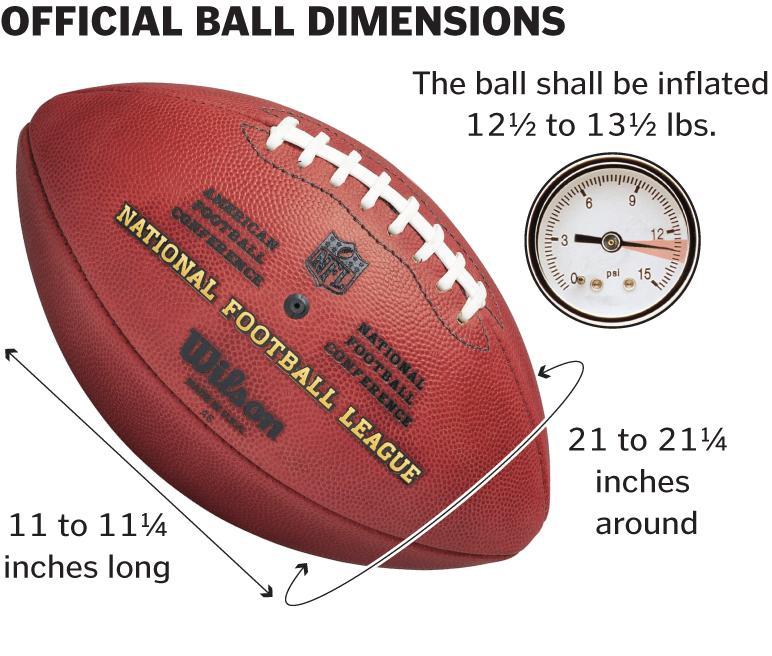
Deflategate Ethics Verdict: Prove It, Then Ban Bill Belichick

FOOTBALL

It looks as if New England Patriots head coach Bill Belichick cheated…again. If the NFL cared about such mundane matters as integrity, fairness, honesty and ethics, it would take the kind of appropriate action any other organization is obligated to take when the evidence shows that a high-performing member of the organization is a rotten apple: throw him out, or at least discipline him and his team severely.

Will the NFL do this to the most successful play-off head coach in its history?

Don’t make me laugh. Continue reading

Ethics Quiz: The New England Patriots’ Loophole Victory

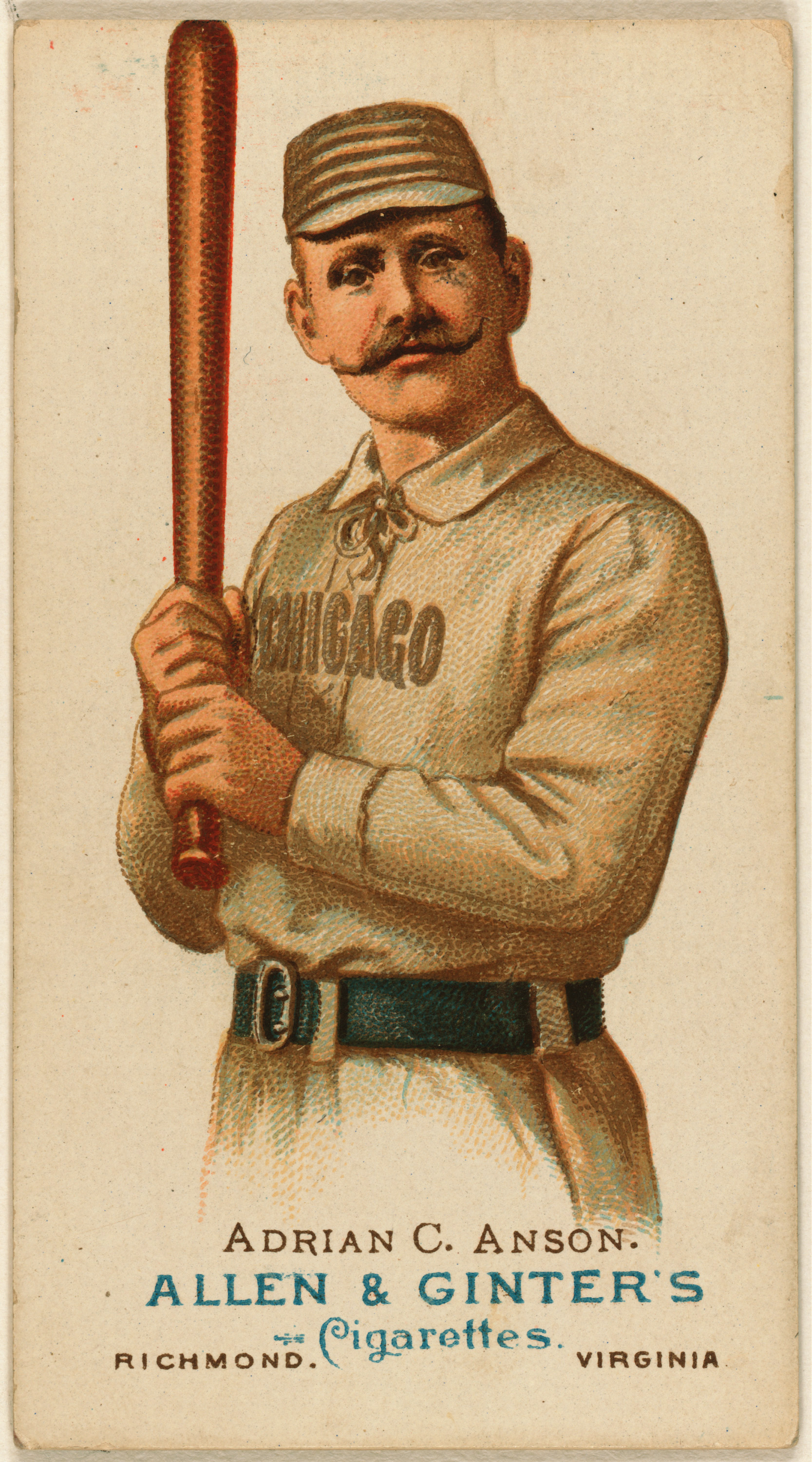
Cap Anson would have loved the Patriots strategy. If he wasn't dead, of course. And if they had football when he was alive....

Cap Anson would have loved the Patriots strategy. If he wasn’t dead, of course. And if they had football when he was alive….

On Saturday night, the New England Patriots ran a series of plays that exploited the complicated receiver eligibility rules, confusing the Baltimore Ravens and officials, and allowing the Pats, who were trailing badly, to get back into the game. They eventually won in a thriller.

Ravens head coach John Harbaugh was so upset during the sequence that he drew an unsportsmanlike conduct penalty. Later, he stopped just short of calling new England coach Bill Belichick a cheater. “[I]t’s a substitution type of a trick type of a thing,” Harbaugh told reporters after the game. “So they don’t give you the opportunity, they don’t give you the chance to make the proper substitutions and things like that. It’s not something that anybody’s ever done before. The league will look at that type of thing and I’m sure that they’ll make some adjustments and things like that.”  Indeed, the NFL will investigate whether the officiating crew gave the Ravens proper notice that an eligible Patriots player would be ineligible for a given play.

Let me quote NBC Sports to explain what happened: I barely understand it myself: Continue reading

Pineda-Pine Tar, Part II: Baseball Clarifies Its Bizarro Ethics Culture

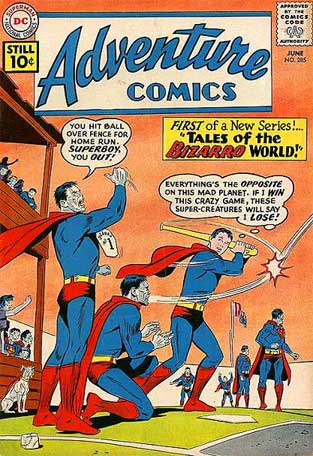
bizarro_world-baseballYou shouldn’t have to appreciate, care about or even understand baseball to find illumination in its latest ethics controversy, which shows how cultures can go horribly wrong, precluding exactly the values that any functioning entity must embrace to remain viable and healthy. For someone like me, to whom Baseball is Life, the whole thing just makes me want to jump out the window.

You will recall that a couple weeks ago, the sport embarrassed itself by making excuses and accepting lies regarding New York Yankees pitcher Michael Pineda being allowed to break the game’s rules against pitchers applying foreign substances (in this case, pine tar) on the baseball while pitching to the Boston Red Sox. I wrote about it here. I interpreted the post-incident consensus of the game and its pundits as “everybody does it, so let’s not make a big deal over a little infraction on a night when it was abnormally cold and hard to grip the ball.”  That’s unethical enough, but the truth, as revealed in Part II, is far worse.

Last night, fate had Pineda on the mound against the Red Sox again. Baseball’s ethics had already begun falling apart in chunks when Sox manager John Farrell, asked about whether he expected Pineda to cheat again (for that is what using pine tar on baseballs is—cheating. Official Rule 8.02 states: “The pitcher shall not apply a foreign substance of any kind to the ball.” ) answered that hopefully, if he did, he would be more discreet about it. Huh?

But Pineda was not discrete; in fact, he could not have been more obvious, or ridiculously so. After a rough first inning in which he gave up two runs, Pineda emerged from the dugout with a large, brown, greasy gob of pine tar on his neck. On TV. In nationally broadcast game. Against the same team that he was caught using pine tar against before. In that team’s home park.

In the Red Sox dugout, Manager Farrell and the team were laughing and rolling their eyes. Farrell finally shrugged, and walked out to complain to the home plate umpire, for it is an automatic ejection for a pitcher to be caught doctoring the ball. The umpire dutifully walked out to the mound—he had to have seen the offending gob before Farrell complained—and to add to the foolishness, checked Pineda’s glove, cap and jock strap before looking at the huge brown smear on his neck. Finally he did so, said, “That’s pine tar!” (in the previous game, Pineda told the press it was “dirt”) and threw him out of the game.

In subsequent interviews with Farrell and others, the explanation that emerged was this gibberish: “everybody” uses something to grip the ball better when it is cold (and often when it isn’t); hitters don’t mind because they don’t want to get hit. Pineda’s offense wasn’t that he used pine tar, but that, as Farrell suggested before the game, that he was “blatant” about it. That gave Farrell no choice, you see….even though his own pitchers also use foreign substances to grip the ball (in unequivocal violation of a baseball rule), and this sets his team up for “retaliation.”

I feel like I’m going crazy. Continue reading

The Abysmal Quality of Ethical Reasoning in Baseball: A Depressing Case Study

"Dirt."

“Dirt.”

The first bona fide ethics controversy of the 2014 baseball season has erupted, and it involves the team of my youth, the Boston Red Sox. It is not the controversy itself that is so noteworthy, for it is an old, old one: pitchers using foreign substances to doctor the balls so they dip, curve, and sing “Take Me Out To The Ball Game.” What is noteworthy is the reaction to the incident by players and the sports media, which has me feeling that as an ethicist, I need to think about following another sport. The ethics reasoning, or lack of it, is truly depressing.

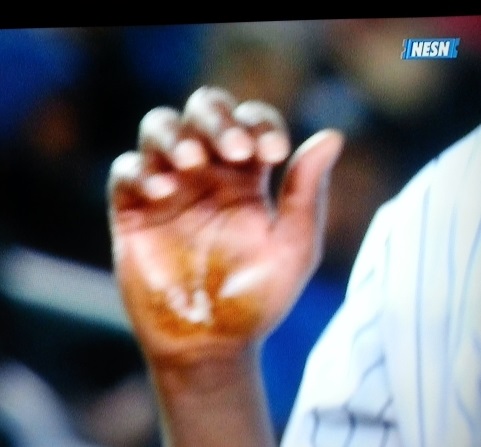
What happened was this: During last night’s Red Sox-Yankee game in Yankee Stadium, the Boston broadcasting team of Don Orsillo and Jerry Remy noticed a glossy brown substance on New York starting pitcher Michael Pineda’s pitching hand. It was very obvious, especially once the NESN cameras started zooming in on it.   “There’s that substance, that absolutely looks like pine tar,” play-by-play man Don Orsillo said. “Yeah, that’s not legal,” color commentator and former player Jerry Remy replied.

Indeed it isn’t.  According to rule 8.02(a)(2), (4) and (5), the pitcher shall not expectorate on the ball, either hand or his glove; apply a foreign substance of any kind to the ball; [or]  deface the ball in any manner.

The Red Sox, who probably knew about the gunk on Pineda’s hand, didn’t complain to the umpires, and just went about their merry way, losing the game. Asked about the stuff on his hand, Pineda demonstrated the full range of body language indicating that he was lying his head off. “It was dirt,’ he said. Later, when the ick appeared to be gone,  Pineda explained, he had just sweated his hand clean. Right. Whatever was on his hand—beef gravy, crankcase oil, chocolate syrup…the majority of pundits think pine tar—it wasn’t “dirt.” Pineda’s manager, Joe Girardi, was brazenly evasive.

The Yankee pitcher was cheating. This isn’t a major scandal, but cheating is cheating: sports shouldn’t allow cheating of any kind, because if a sport allows some cheating, however minor, it will encourage cynical, unscrupulous and unethical individuals on the field, in the stands, and behind keyboard to excuse all other forms of cheating, from corked bats to performance enhancing drugs. Cheating is wrong. Cheating unfairly warps the results of games, and rewards dishonesty rather than skill. Cheating undermines the enjoyment of any game among serious fans who devote energy and passion to it. Any cheating is a form of rigging, a variety of lying.

And yet, this clear instance of cheating, caught on video, primarily sparked the sports commentariat, including most fans, to cite one rationalization and logical fallacy after another to justify doing nothing, and not just doing nothing, but accepting the form of cheating as “part of the game.” I’ve been reading columns and listening to the MLB channel on Sirius-XM and watch the MLB channel on Direct TV since this episode occurred. Here are the reactions, my comments in bold:

  • This isn’t a new phenomenon. Show me the statute of limitations on ongoing misconduct, please. Also not new: torture, rape, adultery, incest, bribery and embezzlement. So what? That makes these things all right? Excuses society from trying to reduce their occurrence?

Continue reading

The Little Bald Girl, The Ethics Incompleteness Principle And The Ethical Way To Handle Obvious Anomolies

Kamryn Renfro with her friend: obviously a troublemaker.

Kamryn Renfro with her friend: obviously a troublemaker.

In Grand Junction, Colorado, Caprock Academy student Kamryn Renfro was banned from attending her school after shaving her head in support of a friend undergoing chemotherapy to treat neuroblastoma, a rare type of cancer. Academy administrators told Renfro’s family that they would not permit the little girl to return to class after spring break because her shaved head violated a school dress code requiring that female students’ hair to be “neatly combed or styled. No shaved heads.”

This is obviously the kind of anomalous situation that calls for, indeed screams out for, a compassionate exception. Any school administrator who couldn’t see that is not just unqualified for his or her post, but not sufficiently intelligent or rational to be trusted with the welfare of children, or, I would say, to take tolls in the Lincoln Tunnel. If there really were a competition to see which enforcement of a “no-tolerance policy” would stand as the most outrageous of all time, I would suspect that this would be an entree. (It still wouldn’t win, though.)

Continue reading

Ethics Hero: Major League Baseball

homeplate collisionsAt least one major league sport cares about its players’ health more than it does about highlight films.

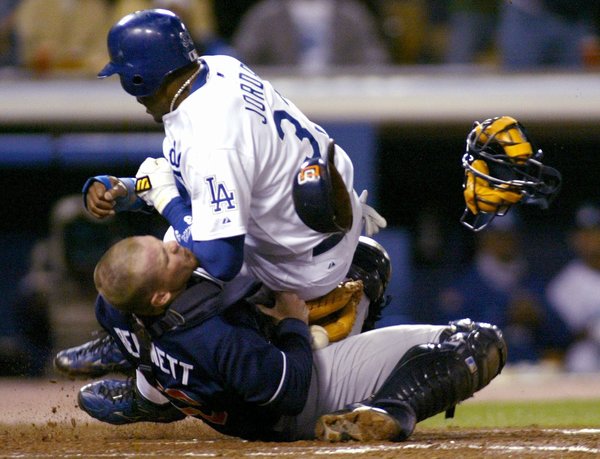
Today Major League Baseball announced that it will be banning collisions at home plate, one of the most exciting plays in baseball, and one of the most dangerous. The violent and unpredictable convergence of large human bodies created when runner and ball arrive at home plate nearly simultaneously as a catcher positions his body to receive a throw while blocking access to the plate have decided games and championships, but wrecked careers and, quite possibly, brains. Football’s frightening record of player dementia prompted baseball to check its records, and there was tell-tale evidence that concussions take their toll on ex-catchers as well.

Last season, for the first time, baseball required players suffering concussions to stay on a special disabled list until they were cleared to play after a head examination. The new ban represents more progress.

The rules change will probably take this form, according to ESPN: Continue reading

Ethics Hero: Umpire Jim Joyce…Again

Obstruction play

Last night, a close and exciting Game #3 of the baseball’s World Series ended in the most unsatisfying manner possible, especially for Boston Red Sox fans. The winning run in the bottom of the ninth inning scored because of an obstruction call at third base, made by umpire Jim Joyce, giving the victory in a tense battle to the St. Louis Cardinals. Although fans saw baserunner Allen Craig tagged out at home for the final out of the frame, sending the game into extra-innings, or so they thought, Boston third baseman Will Middlebrooks was ruled to have obstructed Craig from getting up and scoring from third on an errant throw, though both runner and fielder were caught in a tangle after a collision at third due to no fault of their own. The relevant rule says that if in the umpire’s judgement a fielder, regardless of fault or intent, impedes a runner trying to reach the next base, and that the umpire also concludes that the runner would have reached the base safely without the fielder’s impediment, then the runner will be awarded the base. This meant that Craig was awarded home plate, his team was awarded the winning run, and the game was over.

The obstruction was clear and undeniable, but in many sports, such a technical call would never be permitted to decide a crucial or championship game, and even in baseball, there are umpires who might not have the courage to make such an unpopular call. Rules, however, are rules, and a sport that suspends or alters its rules for entertainment value lacks integrity.

Baseball was fortunate to have an umpire at third base who has proved his integrity before, veteran Jim Joyce. Millions of Boston fans hate him ( though not quite as much as they hated umpire Larry Burnett, whose failure to make an interference call in Boston’s favor cost the Red Sox Game #3 of the 1975 Series) this morning, but the game they care about so passionately, in my view, has never looked better.

_____________________

Pointer: Craig Calcaterra

Facts: NBC Sports


Baseball Ethics And The Pitcher’s Fake Challenge: It’s All About Yu

Pitcher Yu Darvish plays Lucy...ethical?

Pitcher Yu Darvish plays Lucy…ethical?

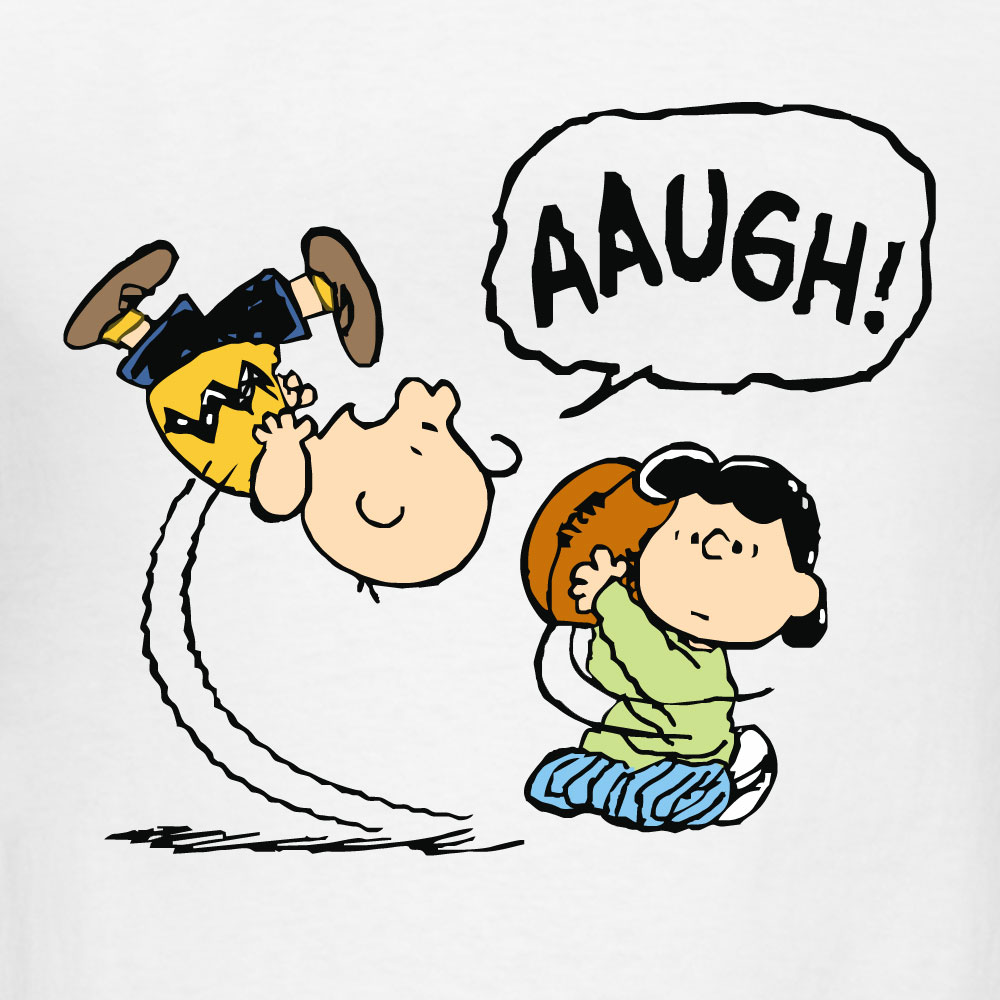
Texas Ranger ace Yu Darvish, in addition to being the only Japanese-Iranian major league baseball player and an Abbot and Costello routine come to life (“Who won the game?” “Yu did!” “Who did? “Not Who, Yu!”  “Me?” “Not you…Yu!” ), is apparently something of a trickster. In Saturday’s crucial game between the Rangers and the Oakland A’s, Darvish was facing A’s slugger Josh Donaldson, who had earlier in the season accused Darvish, a true flame-thrower, of being afraid to throw him his fastball. Darvish took up the challenge and as he prepared to throw his pitch to the Oakland thirdbaseman, shouted, “Fastball!” This, in the tine-honored traditions of the game, means that a pitcher is telling a batter that he can’t hit his best pitch, even when he knows what’s coming. It means, literally, “OK, hot shot, see if you can hit this, ’cause I’m throwing it right past you!”

Then Darvish threw Donaldson a curve.

The ruse didn’t work, for Donaldson got a hit. Still, Oakland’s dugout erupted, as the A’s expressed their belief that this was “bush league,” meaning an act consisting of unprofessional and unsporting conduct not specifically prohibited by the rules but nonetheless unfair and not worthy of big league players. Continue reading

Ethics Dunce: “Johnny Football”—True, But Now What? Maybe Hollywood Had The Solution

You don't know this actress, do you? There's a reason...

You don’t know this actress, do you? There’s a reason…

Texas A&M Aggies quarterback Johnny Manziel, a.k.a “Johnny Football,” ended last year by winning the 2012 Heisman Trophy, the first freshman ever to do so. He has spent the first 8 months of this year showing that he is an immature, arrogant kid with a dangerously inflated ego, with no sense of his obligations as a widely admired elite athlete, and little expertise in how to conduct himself responsibly and ethically.

A brief and incomplete sampling of his exploits:

  • In January, following his team’s  A&M’s Cotton Bowl win over Oklahoma, he visited the Winstar Casino in Oklahoma for some late-night gambling. He tweeted a photo with friends, waving money around. When the photo went viral on the web, sparking criticism, Manziel tweeted, “Nothing illegal about being 18+ in a casino and winning money…KEEP HATING!”
  • In March, Manziel was frustrated after throwing an interception during a spring football scrimmage, so he shoved aside a graduate assistant who happened to be in his way.
  • He was photographed with a fake tattoo of Texas A&M’s archrival Texas Longhorns, infuriating the fanatic fans of the Aggies. Continue reading