“The Only Answer”: An Ethics Hero, A Life Saved, And A Troubling Hypothetical

In this universe, a hero...and in an alternate one? I wonder...

In this universe, a hero…and in an alternate one? I wonder…

University of New Hampshire senior Cameron Lyle, a Division I college track and field competitor who excels in the shot put and hammer throw, has chosen to end his collegiate athletic career to save a stranger’s life.

He will donate his bone marrow today to a 28-year-old man suffering from acute lymphoblastic leukemia. Doctors told Lyle the man who will receive his marrow will live only six months without a transplant, and that there was a only one in five million chance for another non-family match. Yet the odds came up in his favor, thanks to  Lyle having his mouth swabbed to join a bone marrow registry two years ago. He was a perfect match.

Lyle says he never hesitated in his choice, once he was informed. “It’s just a sport,” he said. “Just because it’s Division I college level doesn’t make it any more important. Life is a lot more important than that, so it was pretty easy…It was kind of a no-brainer for a decent human. I couldn’t imagine just waiting. He could have been waiting for years for a match. I’d hope that someone would donate to me if I needed it.”

“He made his decision. He gave up his college season to do this. He’s a gentle giant,” Lyle’s mother said of her 6-foot-2-inch, 255-pound son. “He’ll do anything for anybody.”  Lyle’s coach Jim Boulanger, was also completely supportive, and, according to Lyle, came up with an instant Ethics Quote of the Month when the shot-putter told him of his plans.

“Here’s the deal,” Boulanger told Lyle. “You go to the conference and take 12 throws or you could give a man three or four more years of life. I don’t think there’s a big question here. This is not a moral dilemma. There’s only one answer.” Continue reading
Ethics Hero: Dick Hoyt

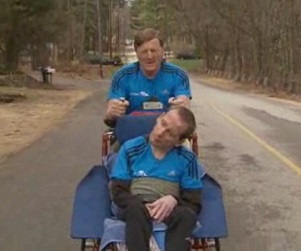
hoytsI don’t think I’ll have to explain why Dick Hoyt is an Ethics Hero.

Rick Hoyt has cerebral palsy and has been a quadriplegic since childhood. When he was in middle school, he told his father, Dick, that he wanted to compete in a charity marathon for a basketball player who had been paralyzed in an accident. Dick Hoyt agreed to push his son’s wheel chair in the race. When it was over, Rick told him, “Dad, when I’m ‘running,’ it feels like I’m not handicapped!” Touched and inspired, Dick Hoyt, 72, went on to push his son, now  51, in 1,091 events, including 252 triathlons, 70 marathons, 94 half marathons, and 155 five-kilometer races. They have never finished last. The father-son team is preparing to compete in their 31st Boston Marathon next week.

When they compete in the triathlons, Dick pulls his son in a boat tied to a cord as he swims, and pedals for him on a tandem bicycle for the cycle round. In 1989, the family set up the Hoyt Foundation which has the goal of helping disabled youths participate in activities that their disabilities would normally preclude.

Rick says his only wish is that he could make his dad sit in the chair and push him for once.

Every now and then, I learn about people whose kindness, selflessness and ethical instincts place me in awe.

Dick Hoyt is such an individual.

__________________________________

Facts and Graphic: Opposing Views

Why Is Criticism Of The Obama Family Vacations Considered Partisan?

Or perhaps "Lifestyles of the Tone Deaf and Hypocritical" is more descriptive

Or perhaps “Lifestyles of the Tone Deaf and Hypocritical” is more descriptive

I understand a lot of the partisan divide in perception and coverage of President Obama. I don’t understand this.

The President’s persistent practice of sending his family members off on lavish vacations on the taxpayers’ largesse is unequivocally tone-deaf, hypocritical, and wrong. It’s wrong. There’s no defending it. His children’s current trip to the Bahamas and a ski resort, thanks to the necessary Secret Service detail necessary to protect them, is going to cost over $100,000….the last Spring Break vacation for them did. Wrong. Unethical. Obviously unethical.

Why are partisans—and those who aren’t supposed to be partisans, but really are, like most of the press—defending it? They can’t, mind you, but they try anyway. Why?

I know how. They do it by attacking the critics. The Atlantic, for example, in a blog post by Phillip Bump, sneeringly ridiculed the factual reporting by Matthew Boyle on the Obama kids’ expensive vacations by noting 1) the reporter works for Breitbart, and Breitbart is scum 2) that the outrage ginned up by that site over Obamaphones was phony, and 3) reporters, by news media accord, aren’t supposed to report on where First Kids take vacations, citing all the other Presidential spawn that avoided media attention. Continue reading

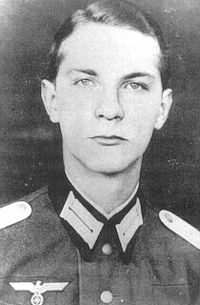
Ethics Hero Emeritus: Ewald-Heinrich von Kleist-Schmenzin

The first Nazi soldier Ethics Hero.

The SECOND Nazi soldier Ethics Hero!

Ewald-Heinrich von Kleist-Schmenzin didn’t accomplish anything heroic, but boy, did he try. The last surviving member of the most famous and closest call of the many failed plots to kill Adolf Hitler, von Kleist-Schmenzin is a ringing example of how the only difference between a a deathless hero and some guy with an unspellable name that you never hear of until he dies sometimes is just luck, and moral luck at that.

von Kleist-Schmenzin was 90 when he perished at his home in Munich this week, outliving almost all of his fellow conspirators in Operation Valkyrie by just short of seven decades. After that near-miss assassination attempt failed (because the bomb-in-a-briefcase dropped near Hitler’s feet by chief conspirator Claus von Stauffenberg was inadvertently moved just enough to save Der Fuhrer’s miserable life), von Kleist-Schmenzin managed to convince Gestapo interrogators that he wasn’t part of the plot, though in truth he was originally given the assignment of planting the bomb. He ended up in prison (the fact that his father was also involved in the plot and was one of those executed guaranteed that) and later was sent back onto the battlefield, but only random chance prevented him from being remembered as the man who ended the war…in fact, it foiled him twice. Continue reading

Ethics Dunces: The American Public

Is this a great country, or what?

Is this a great country, or what?

No surprises here, but still:

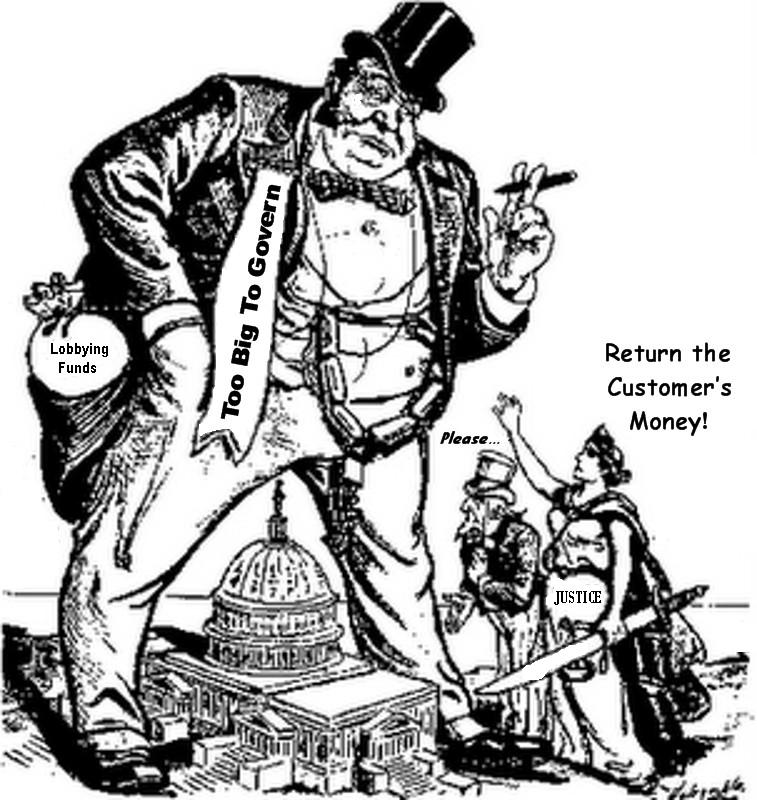
A sickening  McClatchy poll released today shows that a majority of the U.S. public opposes all measures that are necessary to address the nation’s debt and deficit crisis, except increasing taxes on the rich…which, by itself will be of minimal assistance in addressing the long-term problem. Its advantage, of course, is that it involves no sacrifices from the vast majority of the public.

Such irresponsible, lazy, ignorant and foolish judgment by the public, of course, would not be an insuperable problem in a properly functioning republic, in which dedicated, informed, selfless and courageous public servants were willing to come together, compromise, and make difficult but necessary decisions that might be unpopular with their constituents. Or if the nation had elected a skilled and persuasive national leader who could persuade the public to reject narrow, short-term self-interest as patriots and Americans, for the benefit of future generations.

We don’t have those things, however, so the public’s lack of responsibility, knowledge and common sense is, if not fatal, a serious threat to the national welfare and long-term viability of the United States.

At least we’ll have no one to blame but ourselves, and perhaps the Founders, for foolishly entrusting a representative democracy to a people too ignorant and selfish to keep it working.

___________________________________

Facts: McClatchy

Graphic: It is future

The Complete “It’s A Wonderful Life” Ethics Guide [UPDATED]

 Frank Capra’s 1946 masterpiece “It’s A Wonderful Life” is one of the great ethics movies of all time, perhaps the ethics movie of all time. In 2011 I prepared a guide through its complex ethics thicket. The post was divided into three separate posts, and I eventually combined them s0 readers can have the pleasure, if one can call it that, of watching the film like I do: having ethics arguments the whole way through. And now, here is your guide. Additions are welcome and encouraged.

1. “If It’s About Ethics, God Must Be Involved”

The movie begins in heaven, represented by twinkling stars. There is no way around this, as divine intervention is at the core of the fantasy. Heaven and angels were big in Hollywood in the Forties. Nevertheless, the framing of the tale advances the anti-ethical idea, central to many religions, that good behavior on earth will be rewarded in the hereafter, bolstering the theory that without God and eternal rewards, doing good is pointless.

We are introduced to George Bailey, who, we are told, is in trouble and has prayed for help. He’s going to get it, too, or at least the heavenly authorities will make the effort. They are assigning an Angel 2nd Class, Clarence Oddbody, to the job. He is, we learn later, something of a second rate angel as well as a 2nd Class one, so it is interesting that whether or not George is in fact saved will be entrusted to less than heaven’s best. Some lack of commitment, there—then again, George says he’s “not a praying man.” This will teach him—sub-par service!

2. Extra Credit for Moral Luck Continue reading

Reminder: July 2 Is “Thank Minnesota Day,” and Remember Gettysburg, Too.

Last year on this date, I posted about the injustice of historical memory, and how the heroic exploits of the Maine soldiers on Little Round Top commanded by Col. Joshua Chamberlain on the second day of the Battle of Gettysburg have all but obliterated recognition of the even more remarkable sacrifices made by the First Minnesota Volunteer Regiment that same day, when it took on the suicide mission of blocking a hole in the Union line against a Confederate force that outnumbered it five to one. Those Minnesotans quite possibly saved the United States of America at the price of their lives.

I see that some readers are finding that post today: let me make it easier for everybody. Here is the link. This a day for all of us to honor the heroism of the First Minnesota, and indeed all of the Americans, North and South, who fought for their nation, their states, their ideals and the soul of America in the Pennsylvania town of Gettysburg, on July 2, 1863. Continue reading

Estate Tax Ethics

This was not my father. For one thing, he was shorter.

My sister and I finally settled up the estate of our parents after over a year of paper signing, meetings with accountants, and mind-numbing calculations. The estate, as my folks wanted it, was divided 35%-35%-30%, with the last portion going into a trust for the three grandchildren. The amount of money in the estate was a shock to my sister and me, and a very pleasant surprise, though for all the problems the money will solve, we would have forfeited all of it to have Mom and Dad alive today. Still, being able to give over substantial assets to their children and grandchildren was one of their lifelong goals, and they would have been satisfied and proud that they succeeded so spectacularly.

My sister, a good, reliable liberal, asked me whether I felt guilty about the inheritance. I said yes, in the sense that I wish our parents hadn’t been so resolutely frugal in their retirement, and had spent more of the money they earned and saved on more of their own pleasure and enjoyment rather than squirreling it away for us. But did I feel any pangs of conscience because the money wasn’t going to Uncle Sam’s coffers?

Absolutely not. Continue reading

Ethics Hero Emeritus: National Guard Sergeant Dennis P. Weichel Jr. (1983 -2012)

There are those who say that human beings are incapable of truly altruistic conduct, and that everything we do, no matter how outwardly generous and selfless, is in fact self-serving. There are others, and I am among them, who believe that human beings have natural ethical instincts that lead them to sacrifice for the benefit of society generally, those in peril, and those who are weaker than themselves, especially children. Those instincts can be nurtured by our culture or extinguished by it, but I believe that they are there in most of us….for a while, at least, sometimes weak or dormant, but there, nonetheless.

They were obviously there in Specialist Dennis P. Weichel Jr. of Providence, Rhode Island, a National Guardsman serving in an Afghan province east of Kabul. On March 22, he left the 16-ton gun truck he was riding in to disperse local children who were wandering in front of his heavily armored convoy, searching for treasure, the brass shell casings that could be melted down for other uses or be sold.  Suddenly a small girl saw a casing and ran into the path of one of the huge military vehicles. Weichel, a father of three, dashed to her, grabbed her, and threw her to safety unharmed. The gun truck struck the Guardsman instead, fatally injuring him.

Weichel was engaged to be married. He is the first member of the Rhode Island National Guard to die in Afghanistan.

Nothing can erase the tragedy of the U.S. serviceman who turned mass murderer in Afghanistan a month ago, and Weichel’s heroism is unlikely to change any hearts and minds there. That wasn’t Weichel’s objective anyway. He saw a young life in danger and acted, risking his own. It would be a better United States if all of us were raised to react as he did, and if our culture more unambiguously encouraged our best instincts rather than our worst ones. The cliché mouthed by politicians is that our military combat personnel are fighting for American values. Dennis Weichel demonstrated that they also carry American values with them, and in his case, he displayed the very finest.

Weichel was promoted posthumously from specialist to sergeant and awarded the Bronze Star, which is appropriate, and Rhode Island’s flags are being flown at half-mast. The honor he most deserves, however, is to be remembered and emulated by the rest of us.

Ethics Hero: Pastor Thomas Keinath

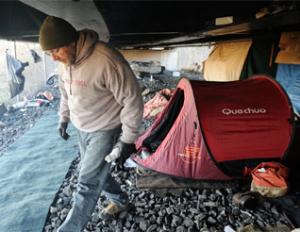
Rev. Keinath on holiday, under the overpass

Thomas Keinath is the pastor at Calvary Temple in Wayne, New Jersey, a so-called mega-church with a 2,000-plus seat sanctuary in an affluent community. It was time for him to take some vacation time, so he did. And what did he do?

Keinath spent his week off living with the homeless in the very un-affluent community of nearby Paterson, New Jersey. During the day, he wandered through the streets along with desperate, sick and destitute. At night, he stayed with them as they built fires to keep warm in freezing cold,  and slept with them, under a bridge, surrounded by discarded hypodermic needles.  He wrote down the life stories of the people he met, so he could learn from their life stories.

“I needed to understand what they were experiencing, and I needed to feel their pain.  How could I bring help or healing to the streets if I did not know what their needs are?” the pastor told reporters. Continue reading