Reader John Owens supplies perspective and expertise on carnivals and local fairs in his Comment of the Day regarding the post “Ethics Quiz: The Peculiar Ethics of Carnival Games.” Here it is: Continue reading
scams
Ethics Quiz: The Peculiar Ethics of Carnival Games
 The AARP website has a post about rigged carnival games, a topic that I have always found intriguing from an ethics perspective. The games…The Basketball Shoot, The Balloon Dart Throw, The Ring Toss, The Milk Bottle Pyramid, The Duck Pond and the rest…are rigged, and I can’t remember a time when I didn’t know they were rigged. It didn’t stop me from playing the silly things. A carnival is a state of mind, a flashback to the days of P.T. Barnum and flim-flam artists. An ethical carnival? Isn’t that an oxymoron? We eat terrible food, pay to go on disappointing rides, listen to barkers who we know are lying through their teeth, and play games that are scams in order to win cheesy prizes worth a fraction of what we paid out to win them and that we wouldn’t dream of buying outside a carnival anyway. That’s the carnival experience. It’s all unethical, and we consent to it.
Or is this just a rationalization? Is capitulation the proper ethical course, or should we carefully regulate carnival games, make sure all of the food is cholesterol-lite and sugar-free, and force the barkers to issue disclaimers and warnings like the recitations in TV drug commercials?
That’s your Ethics Alarms Ethics Quiz for the day, my friends:
Do traditional unethical practices become ethical in the culture of a carnival and similar environments, where the public voluntarily participates in and consents to its own victimization?
With cotton candy dancing in my head, corn dogs singing their siren song and images of the Wild Man of Borneo howling in my fevered brain, I have to confess that my inclination is to say, “Yes.”
And you?
_______________________________________________
Spark: AARP
Graphic: Photolibra
How to Tell Whether A Service Provider Will Cheat You, in One Easy Step!

Call. It won’t do you any good, but do call….
I was waiting at a stop light in the left lane when the light changed, and suddenly the boxy little truck with printing all over it look a sharp left turn from the right lane across mine, narrowly missing my car and requiring me to slam on the brakes. After laying on the horn, I saw that it was a truck for a local cleaning service, and voila! There, on the back door in bold print, was the legend: We care about safe driving! 1-888-555-SAFE. And the vehicle’s number, “515 DI.” For once I could actually use one of those numbers to report a reckless jerk on the road!
I have trouble memorizing numbers, so I repeated the information over and over again, out loud, as I drove home: it helped that the little truck was right in front of me most of the way. I reached home, ran up stairs to my office, wrote down the number to be sure, and dialed it.
It was a fake number. it wasn’t even a disconnected number. It didn’t connect to anything.
Now I’m wondering if any of those “How am I driving?” numbers are real, and I’ll say this: if your phone number is a lie, I’m not letting your employees clean my house, especially if they drive like that.
If only the name of the company had been on the back of the truck.
Never mind, though.
I’m going to find it.
Bad Mother, Bad Football Coach

RUN AWAY!!!
Item: Arkansas athletic director Jeff Long fired stellar Arkansas football coach Bobby Petrino, the married father of four, for having an affair with Jessica Dorrell with a comely 25-year-old subordinate and lying through his teeth about it to Long and the University of Arkanasa. Commenting on the scandal, ESPN’s Calvin Cowherd described Petrino as a “great football coach.”
Wrong.
Item: In White Plains, NY., Jessica Vega, 25, has been indicted on charges of fraud and grand larceny for falsely claiming that she was dying of leukemia to inspire her friends and the community to donate money, gifts and services to her for her”dream wedding” in 2010. Later, her husband, Michale O’Connell, discovered that the doctor’s letter she used as a prop was fake, and he divorced her. Now he’s living with her again, in Virginia, and the couple has had a second child. “She’s a good mom,” O’Connell explained.
Even more wrong.
We see this mistake all the time: observers separate core character and trustworthiness from an individual’s job performance. That cannot and should not be done, and to do it is dangerous and irresponsible.
Bobby Petrino, whose record since being hired at Arkansas had indeed been remarkable, is a miserable college coach, and not just because he is an untrustworthy and dishonest employee. In the incident that led to his dismissal, he conducted an inappropriate on-campus relationship with a woman, who was not his wife, and who Petrino had personally added to his football staff. Petrino did not disclose he was in a relationship with the woman when he hired her, raising various issues including misuse of University funds, and after he hired her, sexual-harassment.The two were in motorcycle accident, and Petrino attempted a cover-up by calling a friend in law enforcement, leaving the scene with his mistress, insisting to university administrators that she was not on the motorcycle with him at the time of the crash, and maintaining the lie that there was no relationship between them. He called a press conference to “clear the air” about the accident, and continued the falsehood.
As Arkansas knew when it hired him away from the NFL’s Atlanta Falcons, Petino had a long, long record of untruthfulness, mostly exhibited in his surreptitious job hunting while being under contract, including when he jumped from the Falcons mid-season.
Okay, he’s a liar—but doesn’t his football record prove he’s great at his job? No…because he’s an educator; he coaches students, young men, in whom he’s supposed to imbue the principles of good character. Petrino can’t do that, because his own character is swill. Having someone with Petrino’s propensity to lie and break laws, rules, and commitments when it suits his needs to do so can only warp young minds, and a coach that wins games at the price of nurturing liars and cheats doesn’t belong on any college campus. He’s not a “great coach,” but an ethics corrupter.
But he’d be a better mother than Jessica Vega, I think. What kind of monster tells everyone including her husband-to-be that she has terminal cancer so she can have a glamorous wedding? A very, very sick one, I assume. Someone whose values are rotted through, and for whom the depths of her perversity and heartlessness are incalculable. She not only shouldn’t be raising children; she shouldn’t be permitted in the same room with them, lest her vile, sociopathic sensibilities and utter contempt for others seeps into their young souls like industrial pollutants contaminating ground water.
Sure, she’s a good mother… if the objective is to raise Lucretia Borgia, Joseph Mengele, Pol Pot and Voldemort.
Mirlande Wilson Is My Favorite Ethics Dunce of All Time!
When we last left Mirlande Wilson, she was claiming, improbably, that although she had bought Mega Millions lottery tickets for her workplace pool at McDonald’s, the ticket she bought giving her over $250 million in jackpot winnings was hers alone.
This made her an Ethics Alarms Ethics Dunce. Now she says she has lost the ticket. This opens so many possibilities, all with their own ethical implications:
- She is lying, and never had the ticket, meaning that she is willing to make her co-workers think she cheated them to try to pull off an audacious scam. Dishonest and shameless.
- She did lose the ticket, but it was the pool ticket, and she is lying about that part of it. In this case, she was spectacularly irresponsible to lose a ticket worth millions to the persons who collectively bought it. And a liar. Dishonest, careless, greedy, irresponsible and untrustworthy.
- She did buy the ticket with her own money, and did lose it, and is just telling the truth, hoping to get a little sympathy. In that case, she deserves some. But buying a ticket for a mega-jackpot and losing it is still prima facie evidence that you shouldn’t live alone, or be left in the presence of pointy objects. Honest, careless and pathetic.
- She bought the ticket with the pool’s money, and knows that she won’t find it and can’t get the cash. She’s saying that the lost ticket was hers alone, hoping that her fellow workers won’t feel as terrible as she does, since it would be pretty terrible to gor back to a fast food job when you know you should be joining country clubs. She’s trying to spare them. Yes, that must be it. Noble, kind, and self-sacrificing.
- She bought the ticket with the pool’s money, and knows that she won’t find it and can’t get the cash. She’s saying that the lost ticket was hers alone, hoping that her fellow workers won’t try to kill her. Irresponsible, careless, dishonest, but understandable.
I can’t wait to see what happens next.
The Ethics Question That Is Driving Me Crazy
 I don’t like to poach advice columnist questions unless the columnist makes a mess of the answer. This is an exception, however. It is an ethics question like no other I have ever encountered, the ethics equivalent of Monty Python’s “killer joke.” It is driving me crazy.
The question came to Ariel Kaminer, the writer of the New York Times ethics advice column, “The Ethicist.” Kaminer is typically all over the map, and often makes simple ethics problems more complicated than they are, when she isn’t getting them wrong entirely. “The Ethicist” didn’t get this question wrong entirely, but she did write a long explanation that missed what was really remarkable about the question. The only answer that was absolutely required would have been, “WHAT???”
Here’s the jaw-dropping question, from a student:
“My school charged a dollar for students to bet, or “predict,” which team would win the Super Bowl. It was $1 for one team, and if you won, you would get a candy bar. If you bet $3, you could choose both teams and guarantee your candy bar. Is this legal or even morally right?”
WHAT???
The school (Where is this school?) is not only promoting gambling, it is promoting crooked gambling, or, if you prefer, attempting outright theft. It is encouraging students to spend a dollar on a 50% chance to win something that costs about a dollar! In addition to being a scam, the school is either… Continue reading
The Hard-Working Mr. McLaughlin
 Michael E. McLaughlin resigned as Chelsea, Massachusetts housing director last month, after it was revealed that he had manipulated his way into a $360,000 salary. Now it is being discovered, thanks to some investigative reporting by the Boston Globe, that McLaughlin wasn’t merely overpaid as perhaps the highest compensated state housing official in the nation. He apparently worked only 15 full days in Chelsea for the entire year, in an epic example of official deception and sloth at taxpayer expense.
The Globe’s smoking gun evidence consists of interviews and phone records, which clearly show that McLaughlin went to extraordinary lengths to avoid performing much work related to his job managing low-income housing in Chelsea. He didn’t appear in Chelsea for half the working days in 2011, choosing to spend 47 weekdays in Maine and Florida with his top assistant and “close personal friend” (ahem!), Linda Thibodeau. Then there were another 21 work days spent at conferences in warm cities like Phoenix to Miami, also usually with the comely Thibodeau to keep him company. Continue reading
The Twin Cities, Cheating CitizensTo Balance Their Budgets

I'm confused...I thought the police were supposed to arrest con artists, not be con artists!
Municipal governments are having a difficult time balancing budgets in these challenging economic conditions, but the twin cities of Minneapolis and St. Paul, Minnesota have devised a surprisingly effective way to pick up oodles of extra cash.
Steal it.
From its citizens.
I’m not kidding. City records show that St. Paul, for example, has kept nearly a quarter-million dollars from impound lot auctions this year that should have properly gone to vehicle owners. But the law requires the car owners to ask for their money, and both St. Paul and Minneapolis do their level best to keep that information from trickling through all the documentation and red tape. The St. Paul Police Department, which runs the St. Paul impound lot, sends owners of impounded vehicles a certified letter shortly after their car is towed. The letter includes citations to one city ordinance and five state laws that govern the towing, impoundment and auction of vehicles. Car owners have to look up the fifth state law cited and read that law’s fourth paragraph before learning of the right to a refund. And to do that, they have to know what they should be looking for—which the letter doesn’t tell them.
Cute, eh? Continue reading
The University of Illinois Law School Statistics Scam and the Responsibility of Being a Corporate “Person”
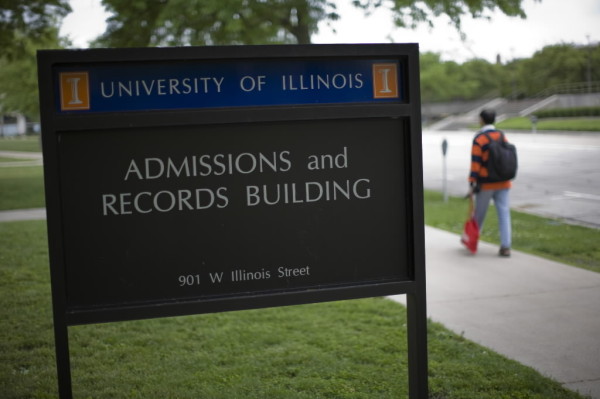 The scandal itself is self-explanatory. The ethical issue I am most concerned with is not, but it is more important than the scandals.
The University of Illinois has confessed that its law school reported and published inaccurate admissions data in six of the last ten years. An investigation determined that the law school reported false LSAT and GPA data for the class of 2008 and the classes of 2010 through 2014, and fabricated the acceptance rate data for the classes of 2008, 2012, 2013 and 2014, as a result of both overcounting the number of applicants and undercounting the number of admissions offers the law school made. The purpose of all this, of course, was to enhance the school’s rankings to bring it better applicants, which translate into more successful alumni and bigger gifts.
Solely responsible for the deceptions, the school says, was Paul Pless, the law school’s assistant dean for admissions and financial aid during that period, who resigned last week. Naturally, the 114-page report concludes with recommendations to improve the school’s oversight and controls and ensure a “culture of integrity and ethical conduct.” This will help persuade the American Bar Association, which is looking into the matter, not to punish the law school, since it has now seen the light…having been caught. Pless, you see, was most of the problem. Continue reading
Unethical Quote of the Week: Kim Kardashian

Whatever.
“After careful consideration, I have decided to end my marriage. I hope everyone understands this was not an easy decision. I had hoped this marriage was forever, but sometimes things don’t work out as planned.”
—-Kim Kardashian, reality star and cornerstone of the ongoing famous-for-being-famous Kardashian family media scam, announcing her sudden divorce filing –apparently explained to the celebrity gossip site TMZ before being revealed to her soon-to-be ex—-from husband Kris Humphries, to whom she had been married for 72 days.
In the dark days of the Great Depression, unscrupulous promoters held dance marathons across the country, the first “reality shows” since Nero fed Christians to lions for sport in the Roman Colosseum. Desperate people stayed on their feet dancing with only brief rest periods for thousands of hours, with participants getting meals for their suffering and the last couple standing getting a cash prize. Sadistic Americans paid admission fees to watch the carnage. One of the most popular gimmicks in the marathons was the fake wedding, in which the MC would proclaim that two of the courageous contestants had fallen in love, and would be married right on the dance floor. Continue reading
 Ethics Alarms